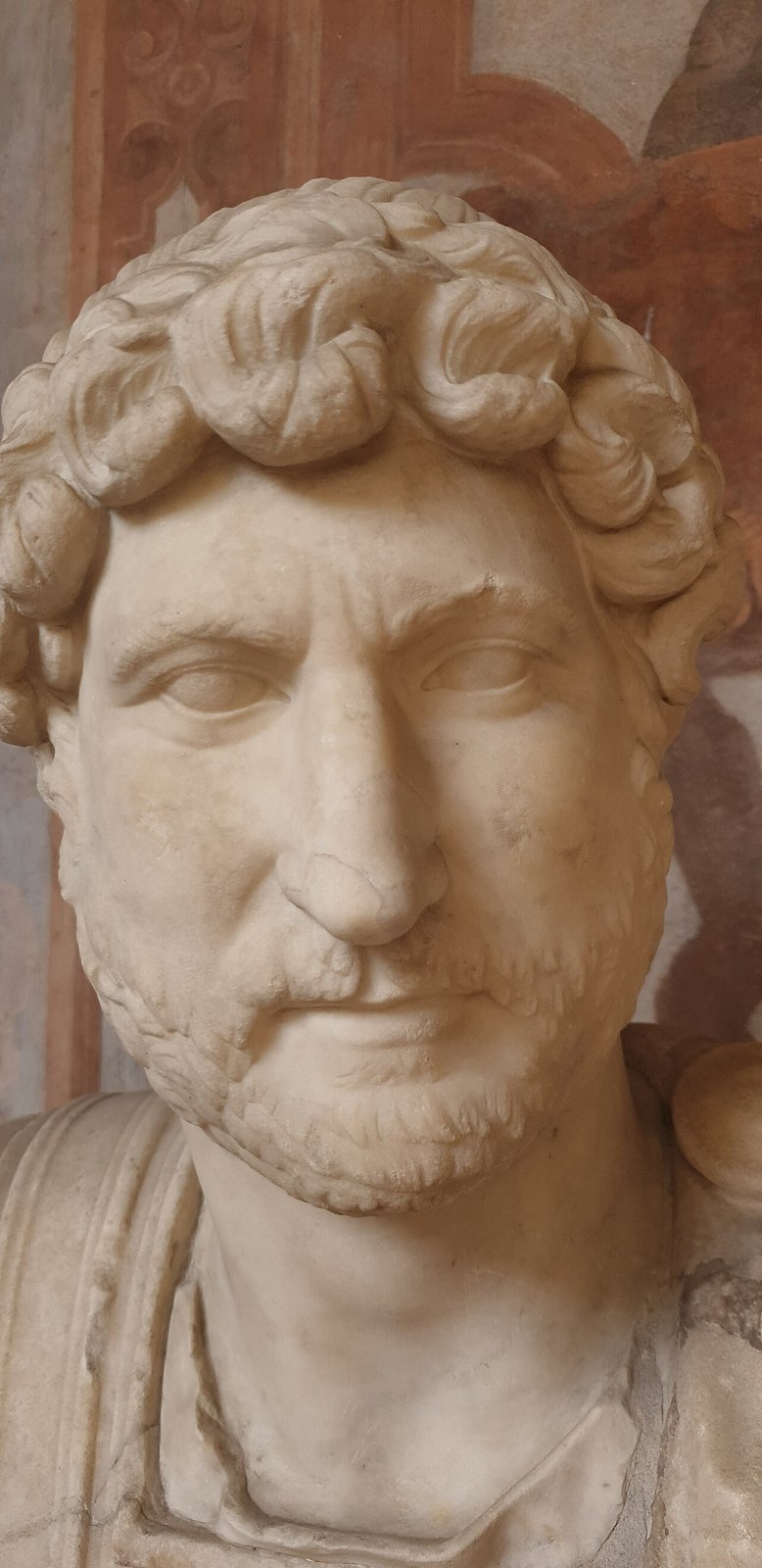
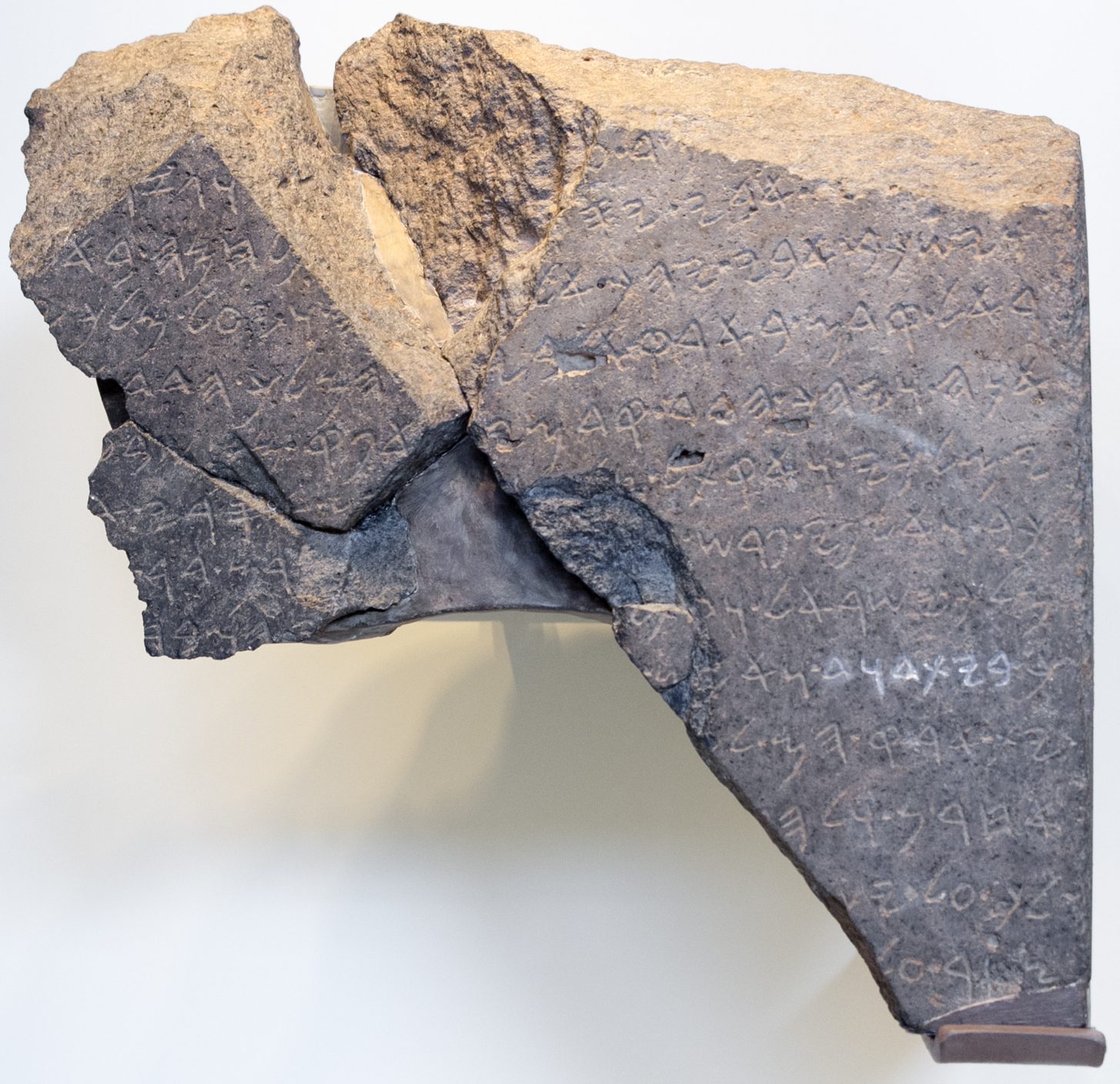
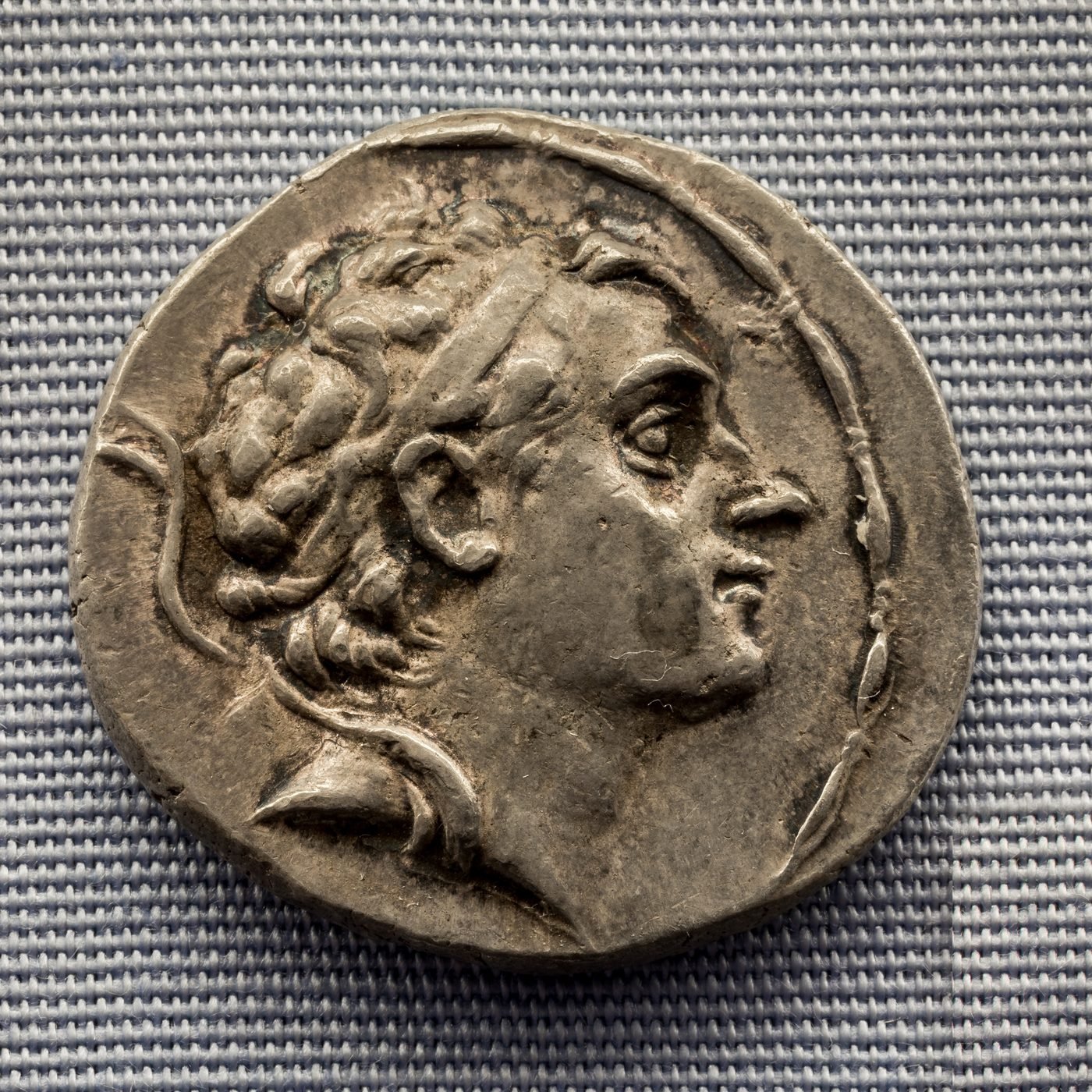
Pick up a coin of Antiochus IV Epiphanes - not difficult, the British Museum has them in the Coins and Medals department, and images float freely online - and you are holding the self-advertisement of a man who understood that money talks. Around the portrait runs the legend: ΒΑΣΙΛΕΩΣ ΑΝΤΙΟΧΟΥ, ΘΕΟΥ ΕΠΙΦΑΝΟΥΣ ΝΙΚΗΦΟΡΟΥ. King Antiochus, God Manifest, Bearer of Victory. The image of a Seleucid king with divine attributes pressed into silver, ready to circulate from Syria to the Persian Gulf. The coins worked exactly as intended. They also left a paper trail that his enemies could ridicule. The Jewish sources, noting the gap between self-description and reality, renamed him Antiochus Epimanes: the Madman. Both versions survive. Both are accurate, in their way.
The Seleucid Empire that Antiochus inherited in 175 BCE was one of the great successor states carved out of Alexander's conquests after his death in 323 BCE. At its height it ran from the Aegean coast of Anatolia to the borders of India - a multiethnic, multilingual empire held together by Greek administrative culture, Greek coinage, Greek city-planning, and the Greek language as the language of power. The Seleucids were not uniquely harsh rulers by ancient standards. They were a Hellenistic imperial bureaucracy, and their preferred tool for managing diversity was cultural absorption. Build a gymnasium. Adopt the calendar. Worship the gods of the court alongside your own. Most people they governed found this a reasonable trade.
A significant portion of the Jewish population of Judaea found it reasonable too. The Hellenisers - a loose designation for Jewish families, especially among the priestly and aristocratic classes, who embraced Greek culture enthusiastically - built a gymnasium in Jerusalem, under the shadow of the Temple. They sent their sons to compete in Greek athletic contests. They sought to have Jerusalem recognised as a Greek polis. This is not treason or betrayal in any simple sense; it is what ambitious people in a Hellenistic empire did to get on. The Books of Maccabees, written by people who opposed them, are our main sources for the Hellenisers, which means we should treat the portrait with appropriate caution.

A bureaucratic act and a desecration
What brought things to a crisis in 167 BCE was a specific collision of politics, internal Jewish conflict, and what appears to have been a significant miscalculation by Antiochus IV about how far he could push. The precise sequence of events is disputed - our main sources, 1 and 2 Maccabees, were written decades after the fact, with their own axes to grind - but the outline is clear enough. Antiochus, returning from a failed campaign in Egypt that had been aborted under Roman pressure, moved on Jerusalem. He desecrated the Temple: the altar was rededicated to Olympian Zeus, pigs were sacrificed in the sanctuary, the regular Temple service was banned, Sabbath observance and circumcision were prohibited under penalty of death, and Torah scrolls were burned. The persecution and rededication are reported in 1 and 2 Maccabees and Josephus; the surviving sources do not turn every reported act into independently established administrative policy.
From a Seleucid administrative perspective, this may have been intended as an assertion of control over a province that had become fractious - a display of sovereign authority in a situation where factions of the local population were already fighting each other for the high priesthood. The conflict between the Hellenising priestly faction and the traditionalists was already a civil war by the time Antiochus intervened; he may have seen himself as settling the matter by fiat rather than initiating a religious persecution for its own sake. This does not excuse what happened. It does help explain why it happened.
From a Jewish perspective, it was something else entirely. The Temple in Jerusalem was not an administrative building. It was the place where the divine presence dwelled, the axis around which the entire religious life of the nation turned, the one location on earth where sacrifice to God could properly be performed. The same act - installing a foreign altar, slaughtering pigs in the inner court - that looked from the Seleucid side like an administrative resolution looked from the Jewish side like the annihilation of the most sacred thing in existence. Two completely different readings of a single event. Both were real.
The Coins of Antiochus IV Epiphanes
Silver tetradrachms and bronze coins struck throughout the reign of Antiochus IV carry his portrait on the obverse and the legend ΒΑΣΙΛΕΩΣ ΑΝΤΙΟΧΟΥ ΘΕΟΥ ΕΠΙΦΑΝΟΥΣ ΝΙΚΗΦΟΡΟΥ on the reverse, typically alongside an image of Zeus enthroned or of Apollo. The "God Manifest" title was a new departure in Seleucid royal propaganda and represented a deliberate alignment with divine authority. Examples are held in the Department of Coins and Medals at the British Museum, London, and in the Israel Museum, Jerusalem. Seleucid-era coins and arrowheads have also been recovered in Jerusalem stratigraphic layers through excavations on and around the Temple Mount, providing physical evidence of the conflict period. The Mazar excavations and subsequent work have yielded examples from relevant layers.
British Museum, London; Israel Museum, Jerusalem; Temple Mount excavationsThe revolt - and what kind of revolt it was
The Maccabean revolt began in 167 BCE in Modein, a village northwest of Jerusalem, when a priest named Mattathias refused to make an offering at a newly erected pagan altar and killed both the Jew who stepped forward to comply and the Seleucid officer overseeing the proceedings. Mattathias and his five sons - Judah, Simon, Jonathan, John, and Eleazar - fled to the Judaean hill country and began a guerrilla campaign that, remarkably, worked.
Judah, who acquired the epithet Maccabee - probably from the Hebrew word for hammer - turned out to be a gifted commander. Over three years of fighting, his forces defeated a series of Seleucid armies sent against them, including forces under the generals Apollonius, Seron, and Lysias. In December 164 BCE, Judah retook Jerusalem. The Temple was cleansed of its desecrations, a new altar was built, new vessels were consecrated, and the regular sacrificial service was resumed. Eight days of celebration followed. This is Hanukkah.
The Books of Maccabees are honest enough about the other dimension of the story: this was also a civil war. Jews who had cooperated with the Seleucids, Jews who had adopted Greek ways enthusiastically, Jews who simply wanted to stay out of the conflict - all of them appear in the text, and many of them suffer. 1 Maccabees describes Maccabean forces killing apostate Jews, tearing down illegal altars, circumcising uncircumcised children by force. The war against the Seleucids and the war within Jewish society were the same war, fought at the same time, with the same weapons. The tidy narrative of freedom fighters against oppressors is technically accurate and significantly incomplete.
The object in the glass case
Now we come to the lamp. The hanukkiyah - the eight-branched lamp (nine, with the shamash, the helper candle) used to celebrate Hanukkah - is the most immediately recognisable object associated with the festival, and the one most likely to be encountered in a museum collection. But there is a slight problem with putting the Seleucid-period hanukkiyah in a glass case: no lamp positively dated to the Maccabean period and specifically associated with the rededication festival has been identified. The clay lamps most often shown as Hanukkah lamps are Roman-period, from after the destruction of the Second Temple in 70 CE - small clay lamps with eight spouts arranged around a central bowl, simple and functional, made for a practice that was already well established by the time they were produced. The Israel Museum in Jerusalem and the Jewish Museum in New York both hold fine examples of this Roman-period type; when the practice first produced dedicated lamps is not established by the evidence available here.
What this means is that the physical hanukkiyah in the glass case is a trace of the festival's longevity, not of its origin. The practice of lighting eight lamps over eight nights - one added each night, kindled at the doorway or the window, visible from the street - was old enough by the Roman period to have generated its own material culture. The object exists because the practice persisted. The practice persisted because it did not depend on the Temple to sustain it.
This is the quiet marvel of Hanukkah. In 70 CE, the Romans destroyed the Second Temple - the very sanctuary the Maccabees had fought to reclaim two and a half centuries earlier. Every festival and religious practice tied to Temple sacrifice either ended or was radically transformed. Hanukkah was not tied to Temple sacrifice. It was tied to a lamp. You could light a lamp anywhere. The Romans burned the Temple to the ground and Hanukkah continued without interruption, because the thing it commemorated - the rededication - was embedded in a domestic practice, portable and repeatable. It did not need a building.
Two stories about what happened
There are two distinct accounts of what Hanukkah commemorates, and they do not entirely agree with each other.
The first account is in 1 Maccabees 4:36-59 and 2 Maccabees 10:1-8. These are the primary historical sources - the earliest written accounts of the rededication of the Temple after the Maccabean victory. They describe eight days of celebration, the construction of a new altar, the dedication of new sacred vessels, and the joy of the priests and people at the restoration of proper worship. Second Maccabees explicitly compares the eight days to the festival of Sukkot, suggesting that the period was modelled on an existing template of joyful festival observance. Both books are clear: this is a victory celebration and a rededication ceremony. There is no mention of oil.
The second account is in the Talmud Bavli, tractate Shabbat, at folio 21b. The passage opens with a question - "What is Hanukkah?" - and answers with the story that has defined the festival in popular consciousness for more than a thousand years. When the Maccabees entered the Temple, they found only a single cruse of oil bearing the seal of the High Priest, enough for one day. Miraculously, it lasted for eight days, by which time fresh oil could be prepared. The eight-day festival was instituted to commemorate this miracle. The Talmudic passage was written down somewhere between the 4th and 6th centuries CE, recording traditions of uncertain age, possibly very old, possibly not.
The gap between these two accounts is a genuine historical puzzle. The earliest texts know nothing of the oil miracle. The later tradition knows it as the central meaning of the festival. The most cautious position is that both things may be true in some sense: the festival began as a celebration of military victory and Temple rededication, and later acquired a theological reframing that located its meaning in divine providence rather than human military prowess. Whether this shift was early or late, and why it occurred, is a matter of ongoing scholarly discussion. The object in the glass case - the lamp - quietly embodies both stories at once.
1 Maccabees 4:36-59 - The Rededication
The earliest surviving account of what became Hanukkah. Judah and his brothers determine to go up to the Temple, cleanse the sanctuary, and rededicate it. A new altar is built of unhewn stones; new sacred vessels are made. On the 25th of Kislev - three years to the day after the desecration - the new altar is dedicated with songs, harps, lutes, and cymbals. The celebration lasts eight days. The passage ends with Judah, his brothers, and the whole congregation of Israel decreeing that the days of the rededication be kept each year for eight days, with joy and gladness. Written probably in Hebrew, survives in Greek translation; the earliest historical account of the festival's institution. No mention of oil.
1 Maccabees 4:36-59; written c. 100 BCE, survives in GreekTalmud Bavli, Shabbat 21b - The Oil Miracle
"What is Hanukkah? Our Rabbis taught..." - the Talmudic passage opens with a formal introduction to a received tradition. The Maccabees enter the Temple after their victory and find it defiled. They search and find a single cruse of oil, sealed with the High Priest's seal, sufficient for only one day of use in the menorah. A miracle occurs: the oil burns for eight days, until new pure oil can be prepared. From this, the Sages of the next generation established eight days of Hanukkah with Hallel (praise) and thanksgiving. This is the origin narrative of the oil lamp as the festival's central symbol. Redacted as part of the Babylonian Talmud; the oral traditions it records may be considerably older, though the date of their origin is not established.
Talmud Bavli, Shabbat 21b; Babylonian Talmud, redacted c. 400-600 CEWhat the Seleucids left behind
Antiochus IV died in 164 BCE, possibly in Persia, possibly during a campaign to replenish his treasury at the expense of a temple there - the sources are not fully consistent on the details. His empire continued for another century before Rome absorbed the last of it. The dynasty produced no lasting cultural institutions and no texts of its own that survive. What the Seleucids left in Jewish history is a festival.
This is not quite the legacy they intended. The coins of Antiochus IV, pressed with his divine title, are now studied objects in museum collections, handled by curators with cotton gloves. The empire that minted them is a chapter in ancient history curricula. The festival that emerged from the revolt against them is observed by Jewish communities around the world, every December, in the same form - lamps lit in windows, one added each night, eight nights in total - it has taken for at least a thousand years and probably longer. Antiochus wanted his name spoken with reverence. It is spoken, when it is spoken, in the context of a story about why he failed.
The lamp in the glass case is a quiet object. Clay, Roman period, eight spouts, simple enough to be mass-produced. It does not look like the emblem of a great historical argument. It is not trying to. It was made to hold oil and burn it, one spout per night, for eight nights, in fulfilment of a practice that had already been going on for a long time before it was made, and that has gone on for a long time since. The Seleucid Empire needed temples and armies and bureaucracies and coinage to exist. The festival that the Maccabees founded in defiance of it needed a lamp.
The Seleucid Empire needed temples and armies and bureaucracies. The festival founded in defiance of it needed a lamp.
Further reading