A civilisation lost its central building and did not become a ruin. That is the first fact worth admiring. Jerusalem fell, the Temple was destroyed in 70 CE, sacrifice could no longer organise Jewish life, and yet the story did not collapse into elegy. It changed medium. What had once required one mountain, one priesthood, one altar, began to live in study houses, in arguments, in memory trained hard enough to survive distance, and then in a book vast enough to carry a people.
The name of that book is the Talmud, though that needs saying properly. The Talmud is not a single voice speaking from a mountaintop. It is the Mishnah and the Gemara together: the Mishnah, edited under Judah ha-Nasi at the beginning of the 3rd century CE, and the Gemara, the centuries of explanation, challenge, inference and reply that gathered around it in the academies of the Land of Israel and Babylonia. It is a page built to hold motion. One text in the middle, generations talking round it.

The written oral law
The Mishnah was already a daring move. Rabbinic tradition had long treated the Oral Law as precisely that - oral, taught from teacher to student, supple enough to be carried in people rather than shelves. Yet by Judah ha-Nasi's day the old conditions were gone. Rome had crushed Judaea, the centre of Jewish life had shifted north into Galilee, and dispersion was no longer an episode but a structure. Britannica's summary is sober on the point: the Mishnaic effort culminated in the compilation of the Mishnah at the beginning of the 3rd century CE, drawing heavily on earlier collections and making one official text out of much scattered material.
That act did not freeze Judaism. It gave it a spine. Six orders, tractates arranged by subject, law made memorable by form. The Mishnah did not try to be everything. It was terse, compressed, often almost severe. Which is why it generated the next great Jewish form almost immediately: commentary that was not commentary in the mild sense, but commentary as contest. The amoraim - the expounders of the Mishnah - took the text line by line and worried it gloriously. What does this ruling assume? What verse supports it? What if another tannaitic source says the opposite? What if the case changes? What if the language itself shifts under your feet?
This is where the Jewish genius for disciplined disagreement found its cathedral. The Gemara does not merely announce conclusions. It preserves the road to them. It lets you hear the scrape of the chairs.
The Munich Talmud, Cod.hebr. 95
The Bayerische Staatsbibliothek identifies Cod.hebr. 95 as the world's only remaining almost entirely preserved manuscript of the Babylonian Talmud, save for two missing leaves. Copied in France in 1342, it later entered the Munich collection from the Augustinian priory at Polling. A people can lose kingdoms and still keep its library intact enough to read itself back together.
Bayerische Staatsbibliothek, Munich - Cod.hebr. 95Two Talmuds, one centre of gravity
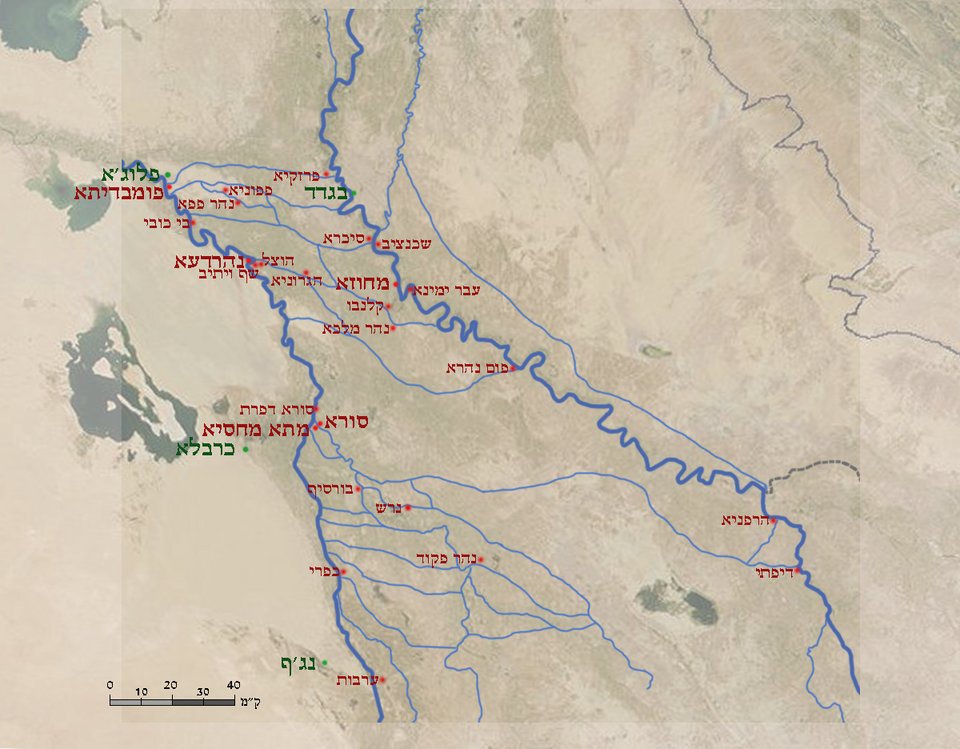
There are, properly speaking, two Talmuds. The Jerusalem Talmud - more accurately the Palestinian Talmud, because it was formed chiefly in the Galilee rather than in Jerusalem itself - grew out of academies at Tiberias, Sepphoris and Caesarea. The Babylonian Talmud grew in Babylonia, first around Sura and Nehardea, then in the larger network that included Pumbedita, Mahoza and Naresh. Both are running commentaries on the Mishnah. Both are works of astonishing communal memory. They are siblings, not rivals.
But siblings do not always inherit equally. The Yerushalmi is earlier and briefer. Britannica notes that it was not subjected to final redaction, and that its discussions are often incomplete. The Bavli went on longer. Its academies were large, durable and densely connected. Students moved from one centre to another; Babylonia and the Land of Israel remained in conversation; material crossed back and forth. Pumbedita, Britannica says, stressed casuistry - the hard pleasure of precise legal reasoning - while Sura emphasised breadth of knowledge. Between them they produced something larger than either temperament alone.
That larger thing became the centre of gravity for Jewish life. Not because somebody issued a branding exercise, but because the Bavli was fuller, more worked over, more portable in the useful sense. You could carry it to Kairouan, Worms, Fez, Salonika, Vilna or London and still enter the same argument. No land title required. Open the page, and home begins again.
Tradition, of course, likes names. It says Rav Ashi and Ravina brought the Bavli to its close. Those names matter. Rav Ashi headed Sura and became the emblem of ordering genius. Ravina, in the traditional reading, stands beside him at the edge of completion. Yet the actual historical process seems slower and less theatrical, which is usually how real civilisations work. Layers accumulated. Editors arranged. Later scholars connected passages, clarified transitions and, perhaps, decided between conflicting opinions. The page we inherit is less a single finish line than a long settling of sediment into form.
The Temple had required one address. The Talmud required only readers. That was the more portable architecture.
Bomberg's first complete printed Bavli
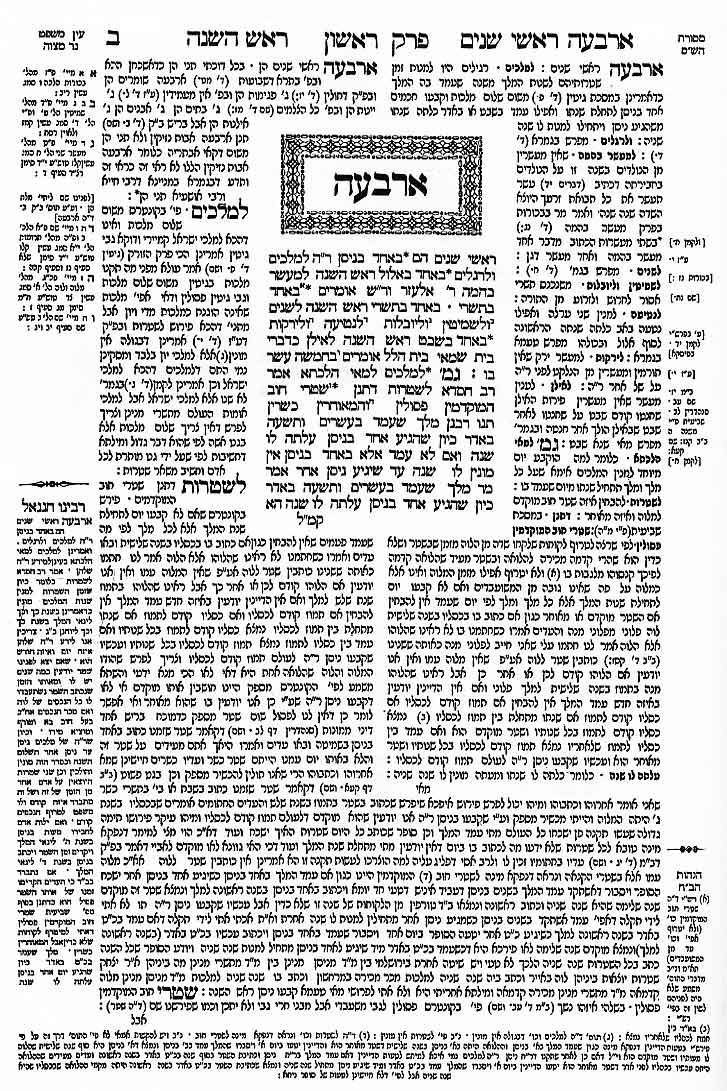
The Bayerische Staatsbibliothek notes that Daniel Bomberg's first printed edition of the Babylonian Talmud, published in Venice in nine volumes from c. 1520 to 1523, set standards for page design that remain binding today. The Talmud text at the centre, Rashi on the inner margin, Tosafot on the outer - a visual grammar pioneered by the Soncino printers from 1483 and made durable for all later editions by Bomberg's standardised pagination. The library holds a well-preserved specimen of that first edition.
Bayerische Staatsbibliothek, Munich - 2 A.hebr. 258A sea you could carry
The image of the Talmud as a sea is not accidental. It behaves like one. You do not march through it in straight lines. You enter, soundings are taken, currents meet, a legal problem opens suddenly into a story, a scriptural verse becomes a lever, a minority view survives because somebody thought it should still be heard. Even where the halakhah settles, the record of how it settled remains. Jewish civilisation did not only preserve its laws. It preserved its reasoning.
That is the deeper answer to the old question of what replaced the Temple. Prayer did, yes. The synagogue did. The table did. But so did a method - a habit of collective thought tough enough to survive geography. Once the centre of holiness was no longer only a place, it could become a practice. Study itself became service. Argument became continuity. One generation could hand the next not merely rulings, but the trained instinct for how to think with them.
This is why the Bavli matters beyond scholarship, even beyond law. It is a machine for continuity. It allowed Jewish communities separated by deserts, seas and hostile governments to inhabit the same conceptual room. A child in Yemen and a merchant in Mainz did not share a court or a sovereign, but they could share a daf. For fourteen centuries that has been no small thing. It is not metaphorical patriotism. It is a portable homeland in working order.
And because Jewish civilisation cannot resist improving its own shelving, the Bavli's printed form became part of the inheritance too. Bomberg's Venice edition fixed the look of the page so successfully that later centuries kept it. Open a standard Talmud now and you are looking, in structure, at a 16th-century act of typographic consolidation preserving a 5th- and 6th-century act of intellectual consolidation preserving a 2nd- and 3rd-century act of legal consolidation. Jews do love a well-layered page.
What was actually built
It would be sentimental to say the rabbis stopped mourning the Temple. They did not. Jewish liturgy remembers it, Jewish fasting remembers it, Jewish law remembers it. But it would be equally false to imagine that exile only diminished. In Babylonia, exile became productive. Away from Jerusalem, the academies of Sura and Pumbedita discovered a form of permanence that could survive without sovereignty. That is not second best. It is a different kind of greatness.
So when we say the Babylonian Talmud was completed around 500-600 CE, what we really mean is that a people finished building one of the most resilient cultural instruments in history. Not a fortress, not a palace, not a monument for tourists. A page. A portable republic of memory and law. A civilisation compact enough to sit on a shelf and large enough to outlast the shelf, the room, the street, the city and the empire outside.
The last proof is the ordinary one. Somewhere, as ever, a volume is open on a kitchen table, and the homeland is there.
Further reading