Jewish civilisation has an old talent for carrying serious things in portable form. Covenant in a scroll. Memory in a blessing. Argument on a page. Yosef Karo did something similar for law. He looked at a legal tradition spread across Talmud, geonic rulings, medieval commentaries and local custom, and he did not decide it ought to remain gloriously unmanageable. He decided it ought to be usable. The result was the Shulchan Arukh - the Set Table - a code brief enough for practice, clear enough for ordinary use, and confident enough to state the ruling without making the reader fight through the whole forest every time.
That compression mattered because Karo was a child of rupture. Born in Spain in 1488, he was four when the expulsion of 1492 drove his family out. Britannica's account places the family first in the Iberian aftershock and then in the Ottoman world, where Karo studied, taught and wrote before moving to Safed around 1536. Safed was then a remarkable place - a centre of Talmudic study, legal writing and kabbalah, crowded with exiles who had brought Iberian learning east and were now rebuilding Jewish life in another key. Karo did not spend his life describing loss. He spent it building after it.
His first great construction was not the short code that made him famous, but the vast one that made the short code possible. In the Beit Yosef, his long commentary on Jacob ben Asher's Arba'ah Turim, he gathered authorities, compared them, sifted them, and worked towards decision. Britannica notes that he standardised his rulings chiefly through three towering predecessors - Isaac Alfasi, Maimonides and Asher ben Jehiel - while also deciding difficult questions on his own authority where necessary. It was scholarship at warehouse scale. But warehouses are not tables, and Karo knew the difference.

The shorter book was the harder gift
The Beit Yosef took decades. A standard summary of the book's history places its writing from 1522 at Adrianople to 1542 at Safed, with printing following in Venice in the 1550s. That long work is where Karo shows his full machinery - sources laid out, disagreements weighed, conclusions reached. The Shulchan Arukh, completed later and published in Venice in 1564-65, is the distilled form. Same legal mind, far less furniture.
That was the daring move. Jews are often happy to honour complexity. Karo honoured it, then abridged it. He kept the four-part structure of the Tur - daily life and prayer, dietary law and ritual boundaries, marriage law, civil law - but wrote in the register of decision. If you needed to know what to do, here it was. No apology, no fog, no theatrical modesty about the possibility of reaching a conclusion. A table, in other words, not a quarry.
There was, naturally, a price for such clarity. Karo's system leaned Sephardi in both source base and habit. That was not a scandal. He was a Sephardi jurist writing from Safed after the Iberian expulsions, and the whole point of a code is that it actually codes. But Ashkenazi custom was not a decorative side note. It had its own durable authorities, usages and instincts, and Europe's Jewish communities were not about to mislay them merely because a better organised book had arrived from the eastern Mediterranean.
Beit Yosef
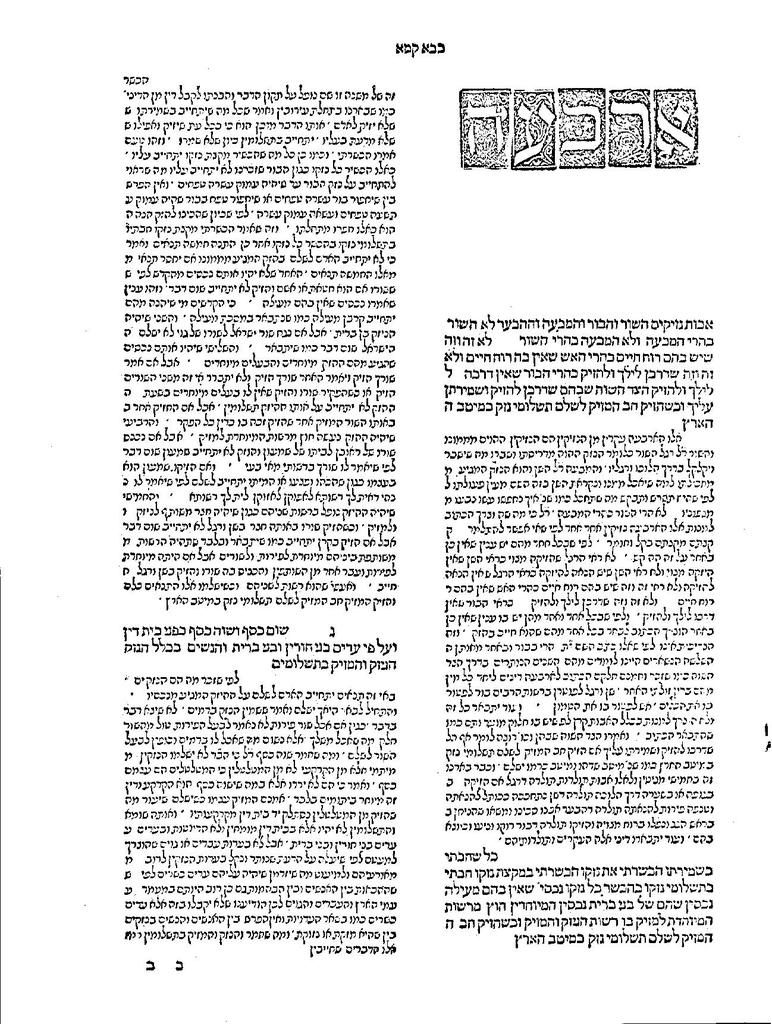
Karo began the long commentary later known as Beit Yosef at Adrianople in 1522 and completed it at Safed in 1542; it was printed in Venice between 1550 and 1559. Organised as a commentary on Jacob ben Asher's Arba'ah Turim, it gathers talmudic, geonic and medieval legal authorities at serious length. The short book that changed Jewish life was built on a very long one first.
Encyclopaedia BritannicaThen Krakow answered
This is where the story becomes properly Jewish. Moshe Isserles of Krakow - the Rema - had been working on his own legal commentary, the Darkhei Moshe, when Karo's Beit Yosef appeared. Seeing the scale of what Karo had already done, he changed course. Rather than compete by building another whole table, he added a tablecloth. His glosses, the Mappah, marked where Ashkenazi custom differed from Karo's rulings and where Ashkenazi authorities needed to be heard in the room.
Britannica's summary is neat and decisive: Karo's code provoked Isserles' criticism for its Sephardi bias, and Isserles' Mappa, published in 1571, made it acceptable to Sephardi and Ashkenazi Jews alike. Later printed editions carried both together. That is the point worth dwelling on. The triumph of the Shulchan Arukh was not that one camp beat the other. It was that print made them sit together on the same page. Karo's ruling in the centre, Isserles' gloss in a different type, disagreement preserved but domesticated into shared use.
That page did something larger than settle law. It taught a dispersed people how to remain one people while not pretending to be identical. Safed and Krakow were not the same world. Their melodies, customs and inherited authorities were not the same either. But once the Sephardi code and Ashkenazi gloss travelled together, a Jew in Salonika and a Jew in Poland could at least begin from the same legal furniture. The argument survived. So did the family.
The mystical Karo matters here because he prevents the standard modern mistake. We like to sort old Jewish thinkers into tidy drawers: legal mind here, mystic there, practical codifier on one shelf and ecstatic visionary somewhere in the attic. Karo refused the filing system. The same man who wrote the most practical code in Jewish life could also imagine himself addressed by heaven in the night. Safed in the 16th century made that combination less odd than it now sounds. In that town, law and mysticism were not enemies. They were neighbours.
The book became universal not when it abolished difference, but when it printed difference on the same page.
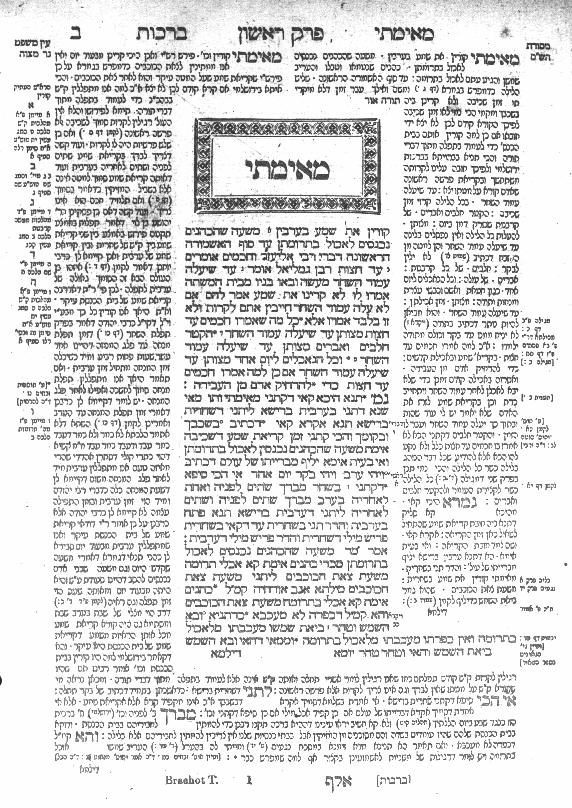
The first printed Shulchan Arukh
The National Library of Israel catalogues the first printed edition of Karo's Shulchan Arukh as a Venice publication of 1564-1565, a condensed code drawn from his larger Beit Yosef. The work was authored at Safed and moved west into print in the usual Jewish way - written in one diaspora, typeset in another, then carried everywhere.
The National Library of IsraelThe Mappah enters the page
Britannica dates Isserles' Mappa to 1571, and later printed editions of the Shulchan Arukh carried his Ashkenazi glosses together with Karo's base text. The page itself became the settlement: Sephardi ruling in the main line, Ashkenazi correction where needed, neither erased. Jewish law did not stop arguing. It learned better typography.
Encyclopaedia BritannicaWhy the code held
Codes do not always win. Sometimes they arrive too early, or too rigidly, or too nakedly as an act of central control. Karo's held because it answered a real need. After expulsion, migration and the multiplication of printed books, Jewish communities needed something portable, standard and serious. The Shulchan Arukh was exactly that. It did not replace learning at the top end - great scholars still argued with it, around it and through it - but it gave the wider Jewish world a stable common text for practice.
It also held because Isserles did not refuse it. He absorbed it. That is a subtler form of victory than conquest. The Ashkenazi world could have treated Karo's code as foreign furniture and left it outside. Instead it annotated, qualified and inhabited it. Once that happened, the combined page became harder to dislodge than either tradition standing separately. The same printed leaf could now carry memory from Castile and memory from the Rhineland, decision from Safed and custom from Krakow. A scattered people saw itself in stereo and called it law.
That, in the end, is why the arguments never count against the book. They count for it. Jews did not come to love the Shulchan Arukh because it ended dispute once and for all. They loved it because it created a common surface on which dispute could continue without tearing the people apart. The table was set. The family still talked over it. Somewhere, then as now, the code lay open beside bread, candles, children, and the next question.
Further reading