The order was signed in Granada on 31 March 1492. Ferdinand and Isabella gave the unconverted Jews of their realms a few hard months to choose: baptism or departure. Spain did not become empty of Jews all at once - many had already been forced into conversion in the century before, and many more converted now rather than go - but the effect was still enormous. Tens of thousands left. The older figures of several hundred thousand have been revised sharply down by historians; many now put the expelled nearer forty thousand, though the totals are genuinely argued over. The map is not. In the first years after 1492, the refugees of Sefarad were in Ottoman ports, Moroccan courtyards, Italian counting houses, and Portuguese baptisteries. Dutch trading streets and the Atlantic world became major western Sephardi settings later. The expulsion is the headline. The more interesting story is what happened next.
This matters because 1492 is too often told as a full stop. It was a wound, certainly. It was also a dispersal event of extraordinary creative force. The Sephardi world that emerged after it was not a mere after-image of Spain, faint and nostalgic and waiting to die. It was busy. It built synagogues, presses, trade networks, legal schools, liturgical traditions, kitchens, songs, family names, and whole civic quarters. It carried old Spain by sea and then turned it into something larger than Spain had intended to keep.

The hinge in Granada
The Alhambra Decree did not banish the Jews because the monarchy had suddenly discovered they existed. Spain's Jewish communities had already been battered by the massacres of 1391, by pressure on converts, and by the Inquisition's obsession with whether conversos were secretly still Jews. The decree says so with remarkable frankness. Its stated aim was to stop Jews influencing New Christians to "Judaise". That is the bureaucratic phrase. The human meaning was simpler: the state had decided there was no place left for open Jewish life.
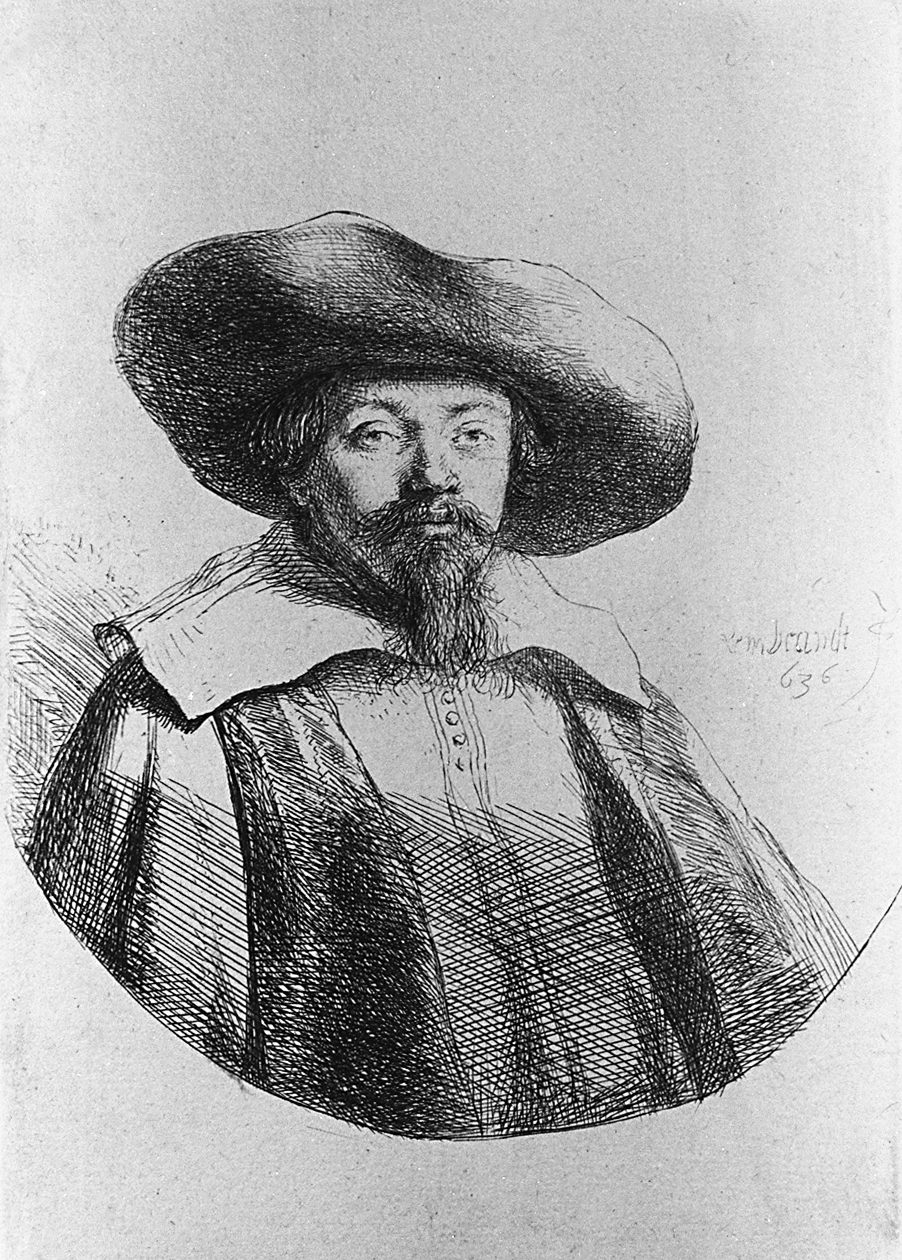
Isaac Abravanel, financier, statesman, and later one of the great biblical commentators of the Sephardi world, was among those who tried to stop it and failed. He then joined the departing. His own life is a decent guide to the wider pattern: out of Iberia, into Italy, onward again. The exiles did not go in one neat convoy to one safe destination. They scattered according to proximity, money, permission, luck, relatives, ships, and which ruler at that moment had enough sense to welcome useful people.
The Alhambra Decree
Issued at Granada by Ferdinand II of Aragon and Isabella I of Castile, the decree ordered the expulsion of unconverted Jews from their realms by the end of July 1492, later extended by a few days. Its own preamble explains the motive: not race in the modern sense, but the fear that Jews were sustaining Jewish practice among conversos. The decree did not create the crisis from nothing. It turned a century of pressure into law.
Edward Peters translation / Library of CongressEast, where the doors were open
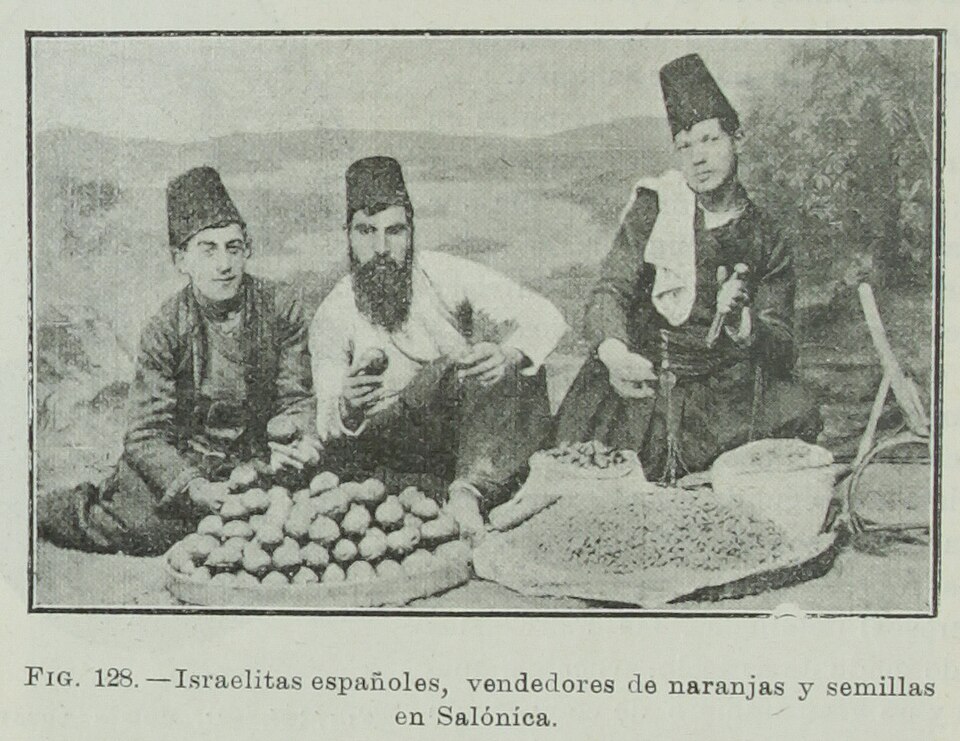
The best-known destination was the Ottoman Empire, and for good reason. The Ottoman state did what sensible states sometimes do: it recognised talent when it saw it. Refugees from Spain settled in Constantinople, Salonika, Edirne, and, in later generations, Izmir. Salonika became one of the great Sephardi cities of the early modern world, so thoroughly Jewish in language and rhythm that later writers would call it the Mother of Israel. Safed, in Ottoman Galilee, became something else again - a hill town remade by refugees and newcomers into a centre of law, mysticism, and Hebrew printing. The same scattering that looked, from Granada, like an ending looked, from Salonika or Safed, like infrastructure.
This is where Ladino matters. Judeo-Spanish - old Iberian speech carried east and altered by Hebrew, Turkish, Greek, Arabic and time - became the portable homeland. Spain had pushed the Jews out. The language refused to leave with less than the whole house. For centuries it held lullabies, market talk, responsa, jokes, proverbs, newspapers and prayerbook instructions across the eastern Mediterranean. A country can exile a people. It is much harder to evict a syntax.
North Africa received another large share. Fez absorbed refugees almost at once. Tetouan, rebuilt and repopulated in the generations after 1492, became one of the most recognisably Sephardi towns in Morocco. There, too, the exiles did not arrive in a vacuum. They joined older Jewish communities, argued with them, married into them, traded through them, and changed them. Diaspora is not a clean sheet. It is layering.
Italy offered a different future. Venice mattered because commerce mattered, and exiles who knew maritime trade, law, languages and credit instruments are rarely unemployed for long. Livorno, later in the sixteenth century, offered unusually generous privileges and became one of the most dynamic Sephardi ports in the western Mediterranean. If Salonika was an eastern capital of the Sephardi world, Livorno was one of its western engines.
The expulsion was the hinge. The Sephardi world was what swung open.
Portugal closes the side door
Many Jews who fled Spain first crossed into Portugal, only to lose that refuge within a few years. Manuel I's 1496 expulsion order became, in practice, mass forced conversion in 1497: Jews were prevented from leaving and baptised as New Christians. This is why the western Sephardi story does not run in a straight line from Spain to Amsterdam. It runs through Portugal, coercion, secrecy, and then, in later generations, re-emergence.
F. J. F. Soyer / History of the Jews in PortugalWest again, and across the ocean
That western route is one of the most striking parts of the story. The Jews expelled openly from Spain in 1492 and the New Christians coerced in Portugal in 1497 are related but not identical histories. Some of those Portuguese converts and their descendants eventually left Iberia for Antwerp, Venice, Ferrara, Hamburg and Amsterdam, where they could edge back into open Jewish life. By the seventeenth century Amsterdam's Portuguese Jewish community was wealthy enough, settled enough and confident enough to build the Esnoga - one of the great Sephardi synagogues of Europe. That building is a direct architectural answer to expulsion: we are still here, and apparently we build in brick now.
The Atlantic widened the pattern. Through Portuguese and Spanish New Christian networks, Sephardi lives reached Brazil, the Caribbean, and New Amsterdam. Sometimes the return to open Judaism happened quickly, sometimes not at all, sometimes only after another migration. The New World did not receive one uniform Sephardi people arriving under one label. It received merchants, families, crypto-Jews, open Jews, people halfway between identities because power had kept them there. Even so, the line back to 1492 is visible.
And through all of it, what persisted was not merely memory of loss but a habit of making worlds. The Sephardi dispersal gave the Jewish people new geographies without surrendering old ones. Salonika spoke Ladino. Safed made law and mysticism. Fez and Tetouan folded Iberia into the Maghreb. Venice and Livorno turned refuge into commerce. Amsterdam turned return into visibility. The Atlantic turned the whole thing outward again.
The Portuguese Synagogue, Amsterdam
Completed in 1675, the Esnoga in Amsterdam was built by a Sephardi community formed largely by former conversos and their descendants from Spain and, especially, Portugal. It is not a relic of 1492 but one of its long consequences - the western Sephardi world made visible in timber, brick, candles, and civic self-possession.
Portuguese Synagogue, AmsterdamSpain, carried offshore
The old country did not vanish. It was miniaturised and distributed. In the east it survived in Ladino for roughly five centuries, in speech and song and print. In the west it survived in surnames, liturgy, mercantile habits, and a complicated Iberian memory held by people who no longer lived there and sometimes had never lived there at all. This is one of the stranger achievements of the Sephardi story: Spain remained culturally present inside communities that Spain had expelled.
So the right way to read 1492 is not as a single catastrophe frozen in place. It is as a hinge between one Jewish geography and another. The decree in Granada mattered because it broke something old. The diaspora that followed mattered because it proved the break was not the end of the sentence. The Sephardi world was made by scattering, but not by loss alone. It was made by reception, adaptation, confidence, language, law, memory, and the old tribal refusal to confuse displacement with disappearance.
That is why the last image here should not be a gangplank or a courtroom or a royal seal. It should be a table somewhere in Salonika, or Safed, or Tetouan, or Amsterdam, where people still spoke a Spanish their rulers no longer controlled, blessed wine in a rite carried over water, and discovered that home, once again, had learned how to travel.
Further reading