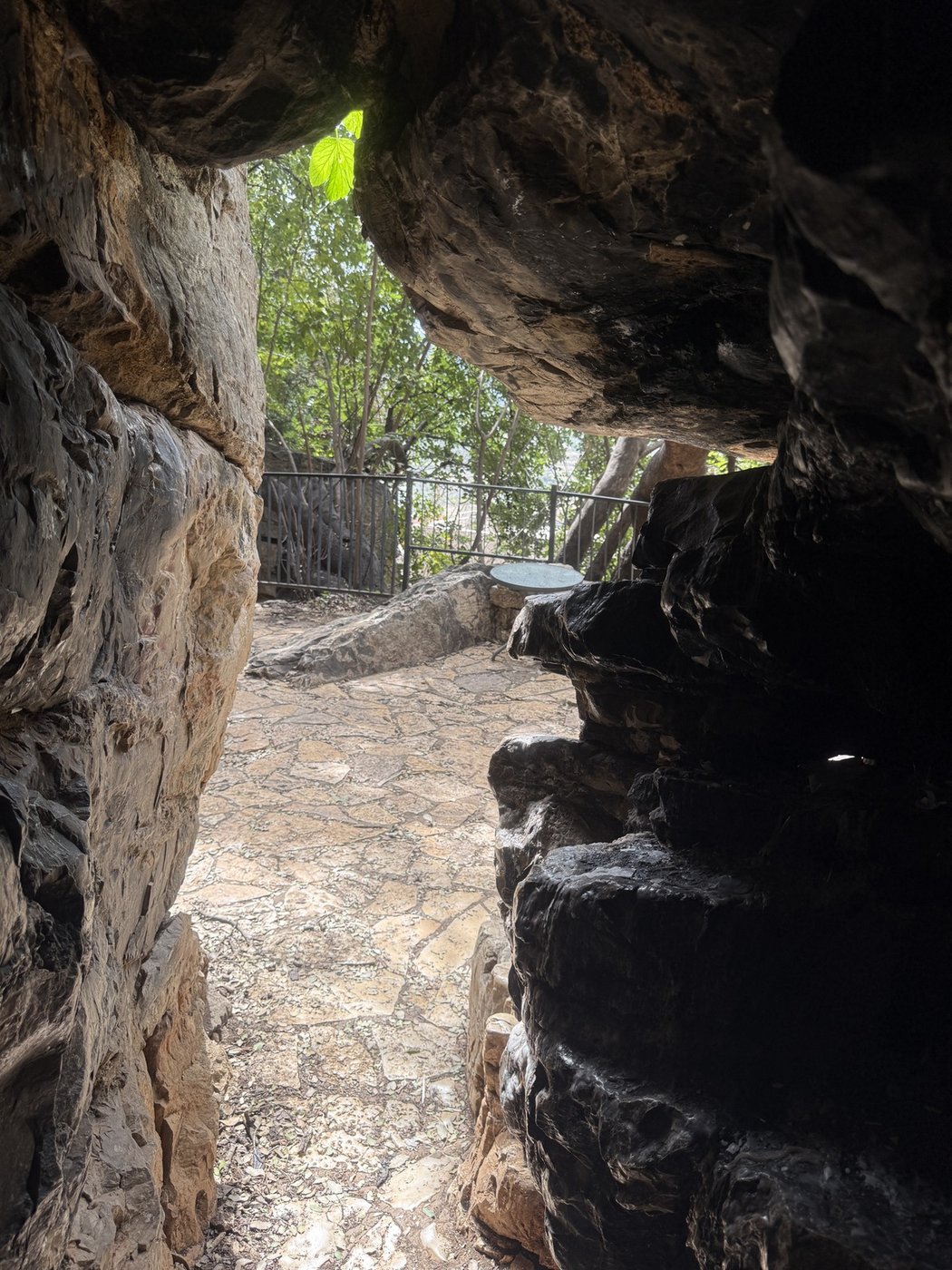
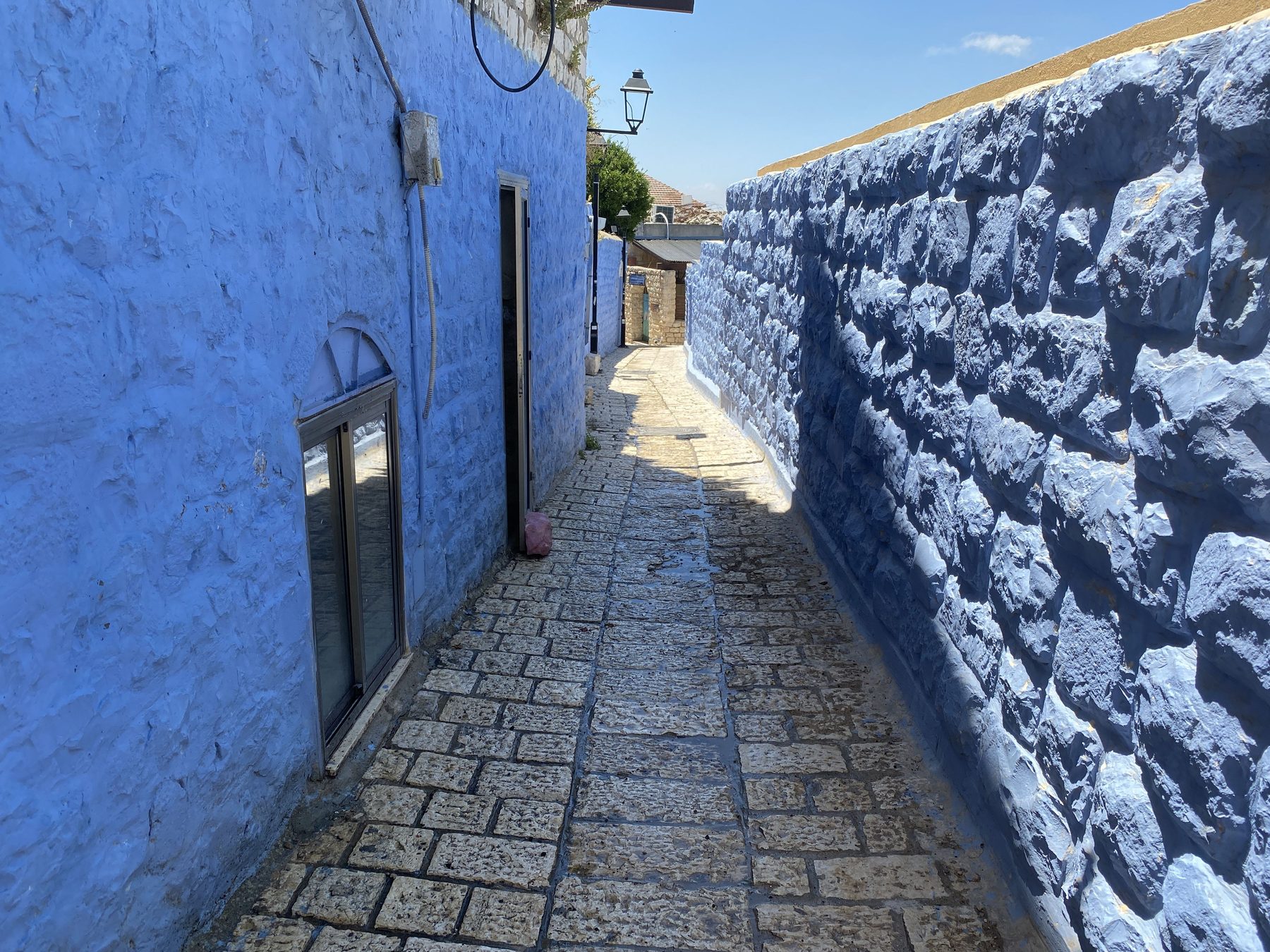
Not every centre looks like an empire. Some look like a hillside market town, wind on the ridge, alleys too narrow for grandeur. Safed - Tzfat, high in the Galilee - became, in the 16th century, exactly that kind of centre. Under early Ottoman rule it drew exiles, scholars, printers, merchants and visionaries until this small place, far from the usual capitals, held one of the most remarkable gatherings of Jewish legal and mystical talent in the Jewish world - and, for Kabbalah, the leading one of its age. A town that ought to have been peripheral became, for a brilliant stretch of time, the place where the Jewish future was being written.
Its timing mattered. The expulsions from Spain and Portugal had torn up old arrangements and scattered learned families across the Mediterranean. Ottoman rule created room for rebuilding. Safed was not only holy by association with the Galilee of the rabbis. It was also economically alive, tied to the regional wool trade and able to support serious study. Into that combination came Joseph Karo, Moses Cordovero, Shlomo Alkabetz and, briefly but explosively, Isaac Luria. One wrote law with durable clarity. One systematised the inherited mystical tradition. One turned Sabbath longing into song. One gave exile and fracture a cosmic grammar. Together they made a hill town feel like the centre of the world.
A town crowded with serious people
Joseph Karo is sometimes remembered only as the author of the Shulchan Arukh, as if the code floated free of place. It did not. Safed gave him the social world in which a dispersed people could be gathered back onto one legal page. His great code was written there, in a town where exile had not produced paralysis but concentration. If law needs quiet authority, Safed supplied it.
Moses Cordovero - the Ramak - gave the town its first great mystical architecture. In Pardes Rimonim, he gathered the sprawling kabbalistic inheritance and organised it into a coherent system. Cordovero's Safed is disciplined, synthetic, almost municipal in temperament. He takes radiant fragments and makes a map. Then Isaac Luria, the Ari, arrives and the map catches fire. He taught in Safed for only a short time, but long enough for his students to carry away a creation story vast enough to answer catastrophe without trivialising it.
Lurianic Kabbalah is often reduced to three famous terms, but they deserve to be heard in full seriousness. Tzimtzum names the divine contraction that makes room for a world. Shevirat ha-kelim, the breaking of the vessels, names the primordial shattering that leaves sparks of divine light trapped in fractured reality. Tikkun names the work of repair. This is not decorative mysticism. It is a theology that lets a broken people describe a broken world without surrendering either God or hope. Safed did not treat these ideas as ornaments. It lived inside them.
The Sabbath bride walks out of town
If Safed had only produced books, it would still matter. But the town did something more intimate and harder to achieve. It exported a mood. Shlomo Alkabetz composed Lecha Dodi there, the hymn that welcomes the Sabbath as bride and queen. The poem is local in origin and universal in destination: born in a Galilee town, sung now in synagogues everywhere Jews gather on Friday night. This is one of Safed's great achievements - not merely to think beautifully, but to make beauty repeatable.
The custom associated with the Safed kabbalists of going out to the fields to greet the Sabbath carries the same genius. It turns theology into posture. The divine presence is not met only indoors, under lamplight and legal text, but outside, facing the hills, as if holiness were arriving over the ridge. From that sensibility grew Kabbalat Shabbat as a service: psalms, invitation, turning towards the coming day as one would turn towards an honoured guest. The Jewish world kept it because it recognised itself in it immediately.
That may be the most touching thing about Safed's golden century. A town with no army, no court and no imperial apparatus managed to alter the emotional texture of Jewish time. Every Friday evening that Jews rise for Lecha Dodi, every turn to the door, every melody that gives the Sabbath a face rather than a date, carries some trace of that hillside experiment. Many places produced scholars. Safed taught the world how to feel the seventh day.

The Shulchan Arukh leaves Safed for print
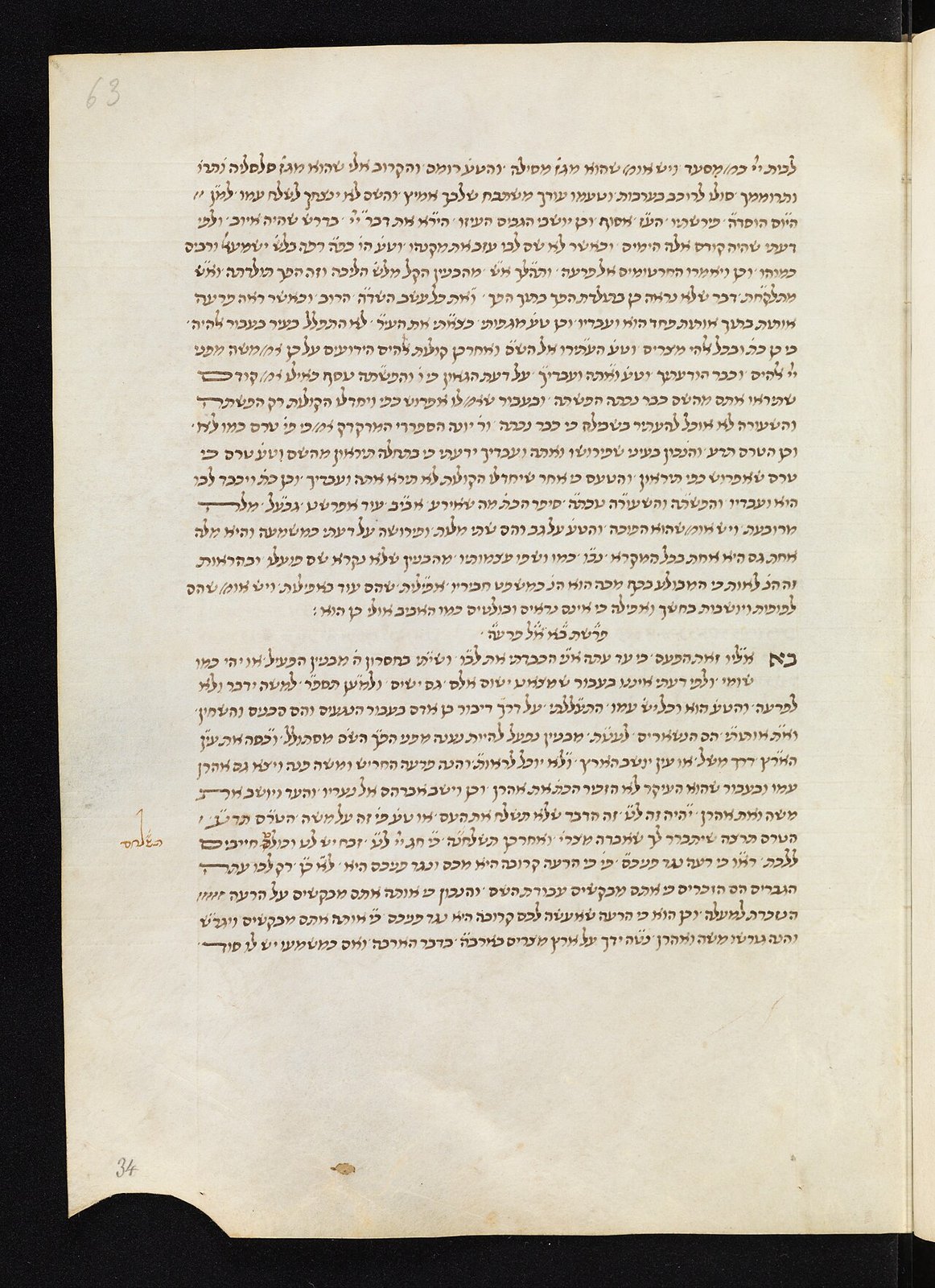
Joseph Karo's Shulchan Arukh, written at Safed and printed in Venice in 1565-1566, condensed a vast legal inheritance into a code portable enough for daily life. The full legal story belongs to its own piece. What matters here is the location: one of Judaism's defining books was authored in this Galilee town during its century of concentration, then carried outward through print to the wider diaspora.
National Library of IsraelRespecting the mystics on their own terms
It is easy, in modern prose, to patronise old mysticism by translating it immediately into psychology, metaphor or folklore. Safed deserves better. The men of this town did not think they were decorating Judaism with symbols. They believed they were describing reality at its deepest level - the relation between divine abundance, cosmic fracture and human action. One can study that historically without flattening it spiritually. The task is not to pretend every reader shares the theology. The task is not to smirk at it either.
That is why Safed's century belongs beside, not underneath, the more familiar histories of law and commentary. The same town that nourished Karo's code also nourished the kabbalists whose ideas reshaped prayer, intention and the inner life of mitzvot. The Zohar and the older kabbalistic inheritance supplied essential language. Safed made that language civic. It became the atmosphere of a place.
Golden ages are usually noisy in retrospect. This one was quiet: study houses, songs, manuscripts, conversations after dusk, a community going out to the edge of town to greet a queen no empire could see. Then the concentration thinned, as concentrations do. But by then Safed had done enough. It had written law, ordered mysticism, and taught the Jewish world to walk into Sabbath as if towards a beloved guest.
Lecha Dodi enters the liturgy
Shlomo Alkabetz composed Lecha Dodi in Safed, and the poem appears in late-16th-century prayer-book evidence linked to the new Friday-night rite. The associated custom of welcoming the Sabbath bride and the developing Kabbalat Shabbat service spread rapidly through the Jewish world. A local liturgical innovation became global habit within a remarkably short span.
Piyut; National Library of IsraelCordovero systematises, Luria revolutionises
Moses Cordovero completed Pardes Rimonim in Safed in 1548, offering the fullest synthesis of pre-Lurianic Kabbalah. Isaac Luria reached Safed around 1570 and died there in 1572, after a brief teaching career whose impact vastly exceeded its duration. In one town, within a generation, Jewish mysticism received both its great summary and its most disruptive new cosmology.
Encyclopaedia Britannica; My Jewish LearningFurther reading