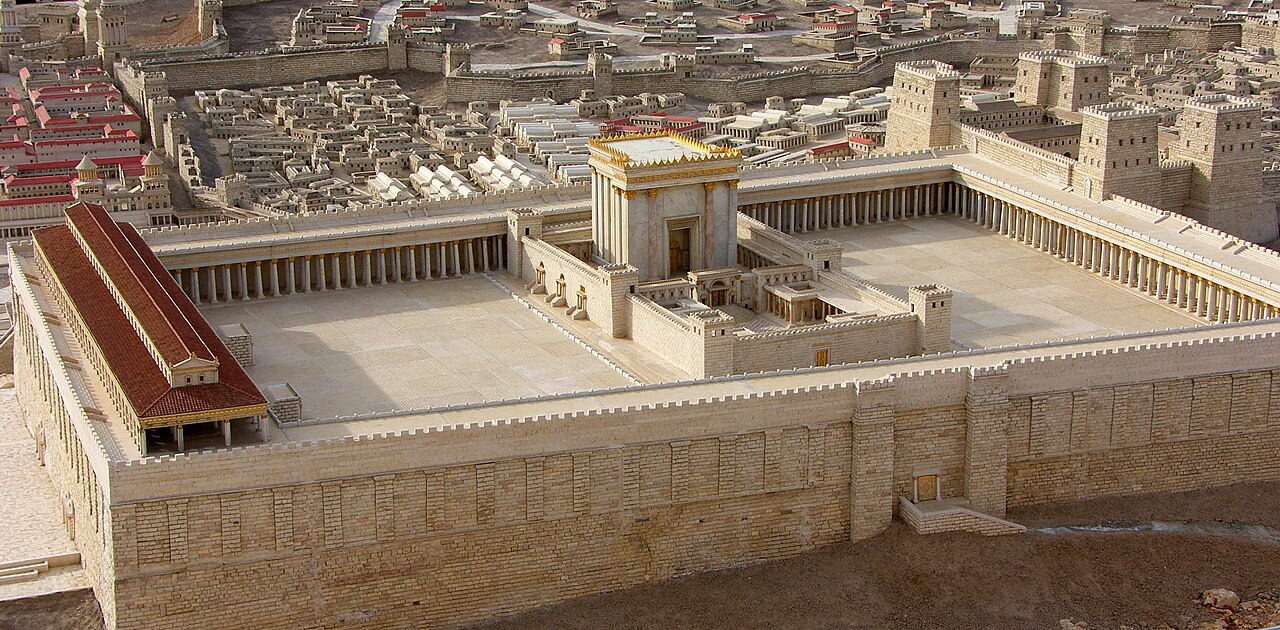
Somewhere around the year 64 CE, a man named Joshua ben Gamla was serving as High Priest in Jerusalem - a political appointment, contentious, probably purchased - and he did something that the Temple itself, for all its grandeur, had never managed to do. He issued a decree. Every province, every town, every village: there should be teachers, and children should be brought to them at six or seven, and no child should grow up without the Torah in his head. The Temple was still standing when he gave the order. Within six years it was rubble. The schools outlasted it by two thousand years.
The story the tribe carries is simple and proud: we became the people of the book because someone decided we should be. The destruction that might have ended us instead sharpened us. A religion built around a single building in a single city was forced, by catastrophe, to become something that could be carried - in scrolls, in memory, in the mouths of children reciting in classrooms from Alexandria to Babylon. The Temple fell. The schoolhouse didn't.
That story is worth telling carefully, because its truth is larger than its literal accuracy. The ideal of universal Jewish male literacy - the norm that every boy should learn to read, study, and hand the tradition forward - is one of the most consequential educational ambitions in the ancient world. Whether it was achieved immediately, or over centuries, or imperfectly even then, matters less than the fact that it was set. Norms shape behaviour across generations. This one shaped a civilisation.

May he be remembered for good
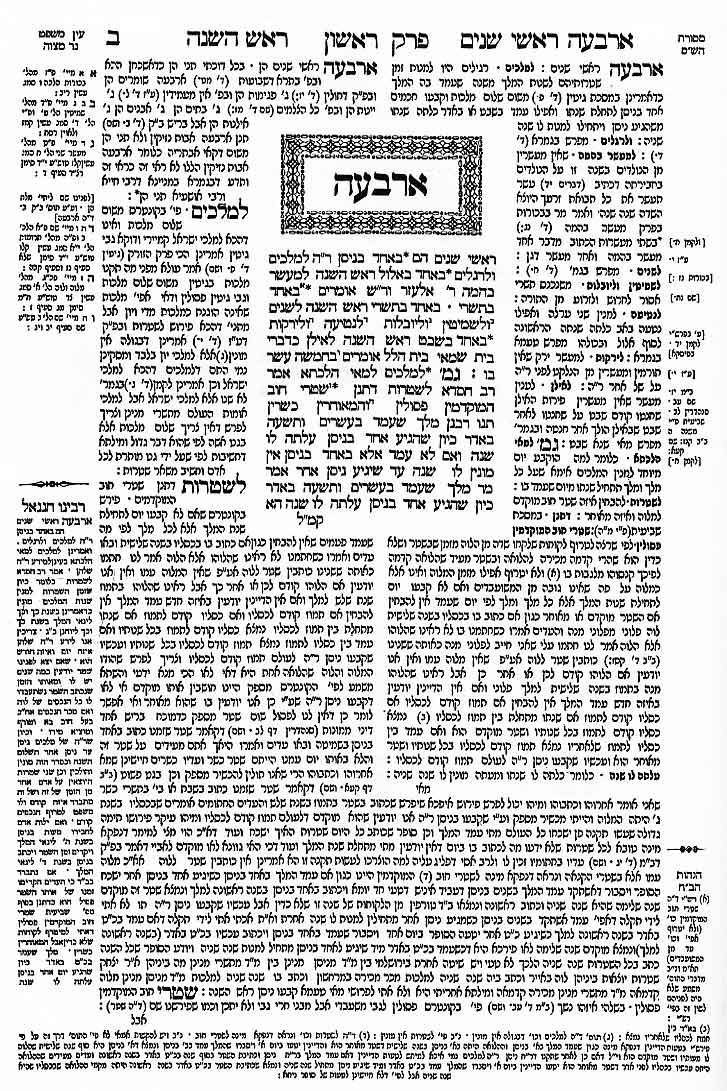
The passage in the Talmud is brief and direct. Before Joshua ben Gamla's decree, the arrangement was ad hoc: a father who could teach his sons did; a father who couldn't, or who had died, left them untaught. A generation earlier, the Sages had tried to address this by establishing teachers in Jerusalem - but only in Jerusalem. Children from elsewhere had to come to the capital or go without. Then Joshua ben Gamla issued his ordinance: teachers of children should be established in every province and every town, and children should be brought to them at six or seven years old.
The Talmud's verdict on this is unambiguous. "Truly," says Bava Batra 21a, "that man is remembered for the good, and his name is Joshua ben Gamla, for were it not for him the Torah would have been forgotten from Israel." That sentence was written - or at least compiled into the Talmud - after the destruction. The Sages looking back knew what had happened. They understood that a network of local schools, established before the catastrophe, had given the tradition somewhere to live after the Temple was gone. They were grateful in the way that people are grateful when they realise a choice made long ago was the choice that saved everything.
The institution that stepped forward after 70 CE was not a single building but a pair of them: the synagogue and the study house, the bet knesset and the bet midrash. Prayer replaced sacrifice. Study replaced ritual. The Sages at Yavne - gathering around Rabbi Yochanan ben Zakkai, who had, by one account, been smuggled out of besieged Jerusalem in a coffin - began the extraordinary work of rebuilding Judaism in text and argument rather than stone and fire. The schools that Joshua ben Gamla had seeded across the provinces were the substrate into which that rebuilt tradition could grow.
Bava Batra 21a - The School Decree
The Babylonian Talmud records that Joshua ben Gamla, High Priest before the destruction of the Second Temple, ordained that teachers of children should be appointed in every province and town, and that children should be enrolled from the age of six or seven. The text credits him explicitly: "were it not for him the Torah would have been forgotten from Israel." The decree predates the destruction of 70 CE; its institutional consequences unfolded in the centuries after. The passage also records earlier, partial reforms - teachers in Jerusalem, later in district capitals - giving the decree its proper context as the completion of a process, not a bolt from the sky.
Babylonian Talmud, tractate Bava Batra; Steinsaltz editionA religion that moved house
To understand what Joshua ben Gamla's decree made possible, you have to understand what the Temple's destruction actually threatened. The Temple wasn't simply a very important building. It was the operating system of the religion - the place where sacrifice happened, where the priesthood exercised its function, where the calendar's great moments were enacted. There was, in principle, no Judaism without it. The Psalms say so: "By the rivers of Babylon we sat and wept; how could we sing the Lord's song in a strange land?" The question is rhetorical and anguished. It expects the answer: we can't.
The answer the rabbis gave was: watch us.
Prayer replaced the burnt offering. The study of the law replaced the performance of it. The Passover Seder, rebuilt in the Haggadah as a table ritual, replaced the Temple's slaughter of the paschal lamb with a meal that could be held anywhere - and was, from Morocco to Minsk, from Baghdad to Buenos Aires. And underpinning all of it was literacy - or at least the aspiration toward it. You cannot pray in the tradition without words. You cannot study without reading. You cannot transmit without teaching. The school was not a supplement to the new Judaism; it was its engine.
The study house in particular became something extraordinary: a place where argument was not just permitted but required. The Talmud itself is the record of those arguments - centuries of rabbis disagreeing in a form that preserves both sides, that treats the minority opinion as worth keeping, that assumes the conversation is never entirely finished. It's the tribe's own information architecture, and it runs on the assumption that every participant can read.
The economic historians Maristella Botticini and Zvi Eckstein, in The Chosen Few (Princeton University Press, 2012), offer a striking argument from the outside: that the schooling norm established after 70 CE is the best explanation for why Jewish communities across the medieval world shifted so markedly into urban, literate, commercially complex occupations. Their argument - contested, as economic history arguments should be - is that the educational transformation was the root cause of the demographic and economic divergence that made Jewish communities distinctive across the medieval diaspora. Not persecution, not divine providence: the decision that every Jewish boy should be able to read.
The Botticini-Eckstein argument carries its own complications - it can read, uncharitably, as a purely instrumental account of why Jews educated their children, as though the tradition were a clever career move rather than a form of devotion. The tradition itself is unambiguous that learning Torah is its own purpose. But the argument matters here because it shows how seriously modern scholars take the educational transformation: not as a cultural footnote, not as an internal religious matter, but as one of the most consequential policy decisions in the history of any community anywhere.
The Temple fell. The schoolhouse didn't. A religion built around one building became something that could be carried in children's heads.
The Academy at Yavne
After the destruction of the Temple, Rabbi Yochanan ben Zakkai established a rabbinic academy at Yavne (also known as Jamnia), on the coastal plain west of Jerusalem. This is the institutional moment at which the bet midrash - the study house - becomes the successor institution to the Temple. Here the rabbis developed the practices that would carry Judaism forward: fixed prayer texts to replace sacrifice, the canonisation of scripture, the early architecture of what became the Mishnah. The choice of Yavne was not glorious; it was deliberate. A small town, away from the ruins, with space to think. The tradition records ben Zakkai petitioning the Roman general Vespasian: "Give me Yavne and its sages" - the first of three requests in the Talmud's telling (Gittin 56b), the others being the preservation of the Gamliel dynasty and physicians for Rabbi Tzadok. He didn't ask for Jerusalem back.
Rabbinic sources; Martin Goodman, Rome and Jerusalem (2007)What was built in children's heads
The phrase "people of the book" is later - it appears in Islamic usage, referring to Jews and Christians as possessors of scripture - but it catches something real about what the rabbinic transformation produced. The tribe that emerged from the destruction was not the same as the one that entered it. It was smaller, stripped of its priestly hierarchy, bereft of its central institution. It was also, gradually, defined by something the Temple had never quite managed to make of it: a community whose ordinary religious practice required reading.
Not every community achieved this at once, or equally. The school decree was an aspiration before it was a reality, and in some places it remained aspirational for a very long time. What it did was set the direction. Every generation that heard the passage in Bava Batra - "were it not for him the Torah would have been forgotten" - understood that teaching children to read was not an optional extra. It was the core defence. The tribe had lost its building. It would not lose its text.
There is something almost architectural about what the schoolroom did in those centuries: it substituted for the Temple as a place where the sacred was reliably encountered, where the tradition was transmitted, where the child encountered his inheritance for the first time. The Temple had been singular, fixed, destructible. The schoolroom was everywhere, portable, and could be rebuilt from nothing more than a teacher and a handful of children on a bench. The Romans could take Jerusalem. They couldn't take the bench.
The Talmud's debt to Joshua ben Gamla is, in the end, the debt of everything that survived. The text that records his decree was itself the product of the very educational tradition he initiated - preserved, argued over, elaborated, transmitted through precisely the network of teachers and students his ordinance had called into being. The Talmud remembers him for good because the Talmud is the proof that he was right. A people that loses its Temple can survive. A people that loses its schools loses everything else with them. He knew this before the Romans knew they were coming.
The destruction was answered with schools. The tribe rebuilt in children's heads what it had lost in stone, and what it built there was harder to burn.
Further reading