It is nine verses long, and it has outlived every empire it mentions. Psalm 137 is the shortest masterclass in exile ever written: a poem that begins in tears, hardens into a vow, and ends in a fury so raw that synagogues have argued for centuries about how to read its final lines aloud. The Babylon that carried Judah off is dust. The psalm composed on Babylon's riverbanks is still sung at weddings, set by composers, quoted by protesters and, against all odds, played on the radio. A captive song that refused to die in captivity. There is no better introduction to how this tribe remembers.
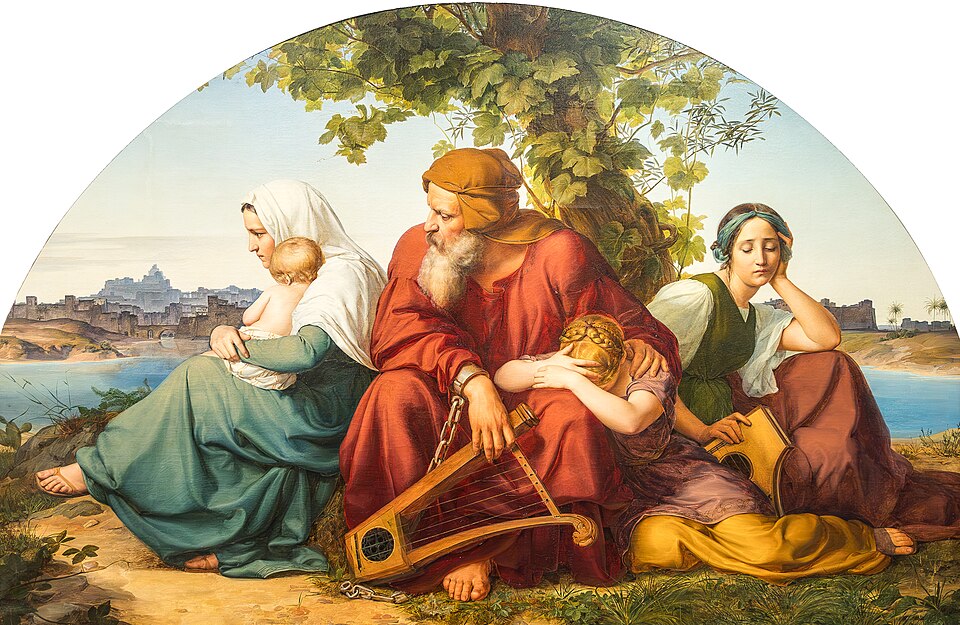
The setting is precise. The Temple in Jerusalem has been destroyed, the elite of Judah deported east, and the exiles are sitting by the canals of Mesopotamia when their captors ask them to perform. Sing us one of the songs of Zion, they say - entertain us with your ruined city. And the psalm's answer is the hinge of the whole Jewish posture toward exile: it will not perform its grief, but it will not forget it either. It hangs up its harps, and remembers anyway.

Three movements, one vow
Read it slowly and the psalm falls into three parts. First the weeping: the exiles by the water, the hung-up harps, the captors demanding a song. Then the vow, and it is one of the most quoted oaths in any language - "If I forget you, Jerusalem, let my right hand wither; let my tongue cleave to the roof of my mouth if I do not set Jerusalem above my highest joy." Then the curse, an unsparing cry for judgment on Edom and Babylon that ends in violence the poem makes no attempt to soften. Grief, oath, fury. The psalm does not resolve them into comfort. It leaves them standing, which is part of why it has never felt safely ancient.
That middle vow became liturgy in the most intimate way. To this day, the line about setting Jerusalem above one's highest joy is recited at Jewish weddings, often just before the groom breaks a glass - a deliberate fracture in the happiest hour, so that even joy carries the memory of the ruined city. A poem written in defeat became the sentence a couple says at the summit of their lives. That is not morbidity. It is a tribe refusing to let its centre be forgotten, even when, especially when, things are going well.
An exile poem that names its own moment
Psalm 137 is a nine-verse lament set in the Babylonian exile that followed the destruction of the First Temple in 586 BCE. It is one of the rare psalms to state its circumstances directly: the rivers of Babylon, the captors' demand for a song, the vow never to forget Jerusalem. The Hebrew text and commentaries are preserved in the Book of Psalms and accessible through Sefaria's digital library.
Book of Psalms · SefariaThe vow that entered the wedding
The psalm's central oath - "If I forget you, Jerusalem, let my right hand wither; let my tongue cleave to the roof of my mouth" - is recited in Jewish practice at the very height of celebration. It is associated with the wedding ceremony, customarily near the breaking of the glass, so that the memory of the ruined city is folded deliberately into the happiest moment of a life. A lament became a vow, and the vow became a fixture of joy.
Psalms 137:5-6 · SefariaThe song that would not stay put
Few texts have travelled further. Psalm 137 has been set by Renaissance and Baroque composers, sung in churches that read it as their own exile, quoted in the rhetoric of liberation movements, and - most improbably - turned into a global pop hit by way of Jamaican reggae and German disco. The phrase "by the rivers of Babylon" has become one of the most recognised images of dispossession in world literature, borrowed by people who have never opened a Bible. Each new setting changes the melody and keeps the wound. That is the test of a true exile song: it can be lent to anyone's sorrow without losing its own address.
What endures is the psalm's strange refusal to lie. It does not promise that the exiles will be fine. It does not tidy its anger. It insists only that Jerusalem will not be forgotten, and then it proves the point by being remembered for two and a half thousand years. The harps came down off the trees eventually. The song never did.
A poem written in defeat became the sentence a couple says at the summit of their lives. The harps came down off the trees. The song never did.
Further reading