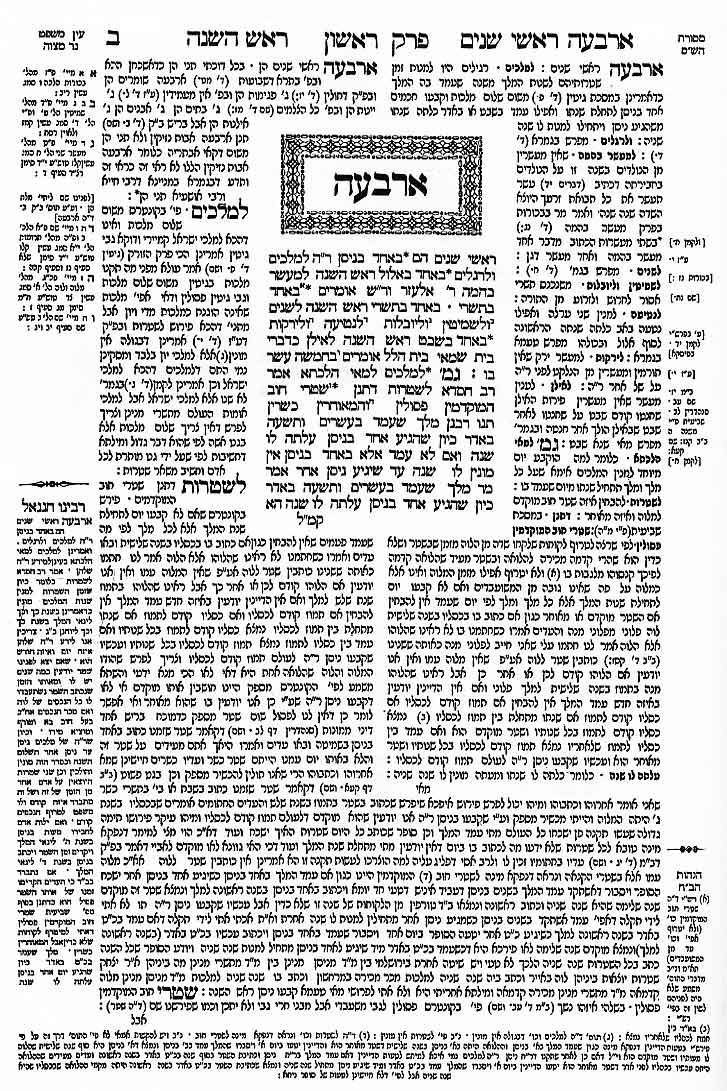
The rabbis who rebuilt Jewish life after the catastrophe of 70 CE were in no doubt about what had caused it. Not Rome - Rome was merely the instrument. The Talmud gives the verdict plainly, in tractate Yoma: the Second Temple was destroyed because of sinat chinam, baseless hatred. The people of that generation observed Torah, kept the commandments, and practised loving-kindness. They still tore each other apart. That, says the tradition, was the sin that mattered most, and it's a judgement worth sitting with - not because it's the only explanation, but because it comes from inside. This is the tribe's own reckoning with its own worst moment.
The story of Judea's last two centuries isn't a tragedy imported from outside. It's a story of a people fully alive - building, arguing, praying, trading, revolting, writing, governing - doing all the things that real polities do. And then, under the pressure of an empire that brooked no rival loyalty and factions that couldn't stop fighting each other long enough to notice, it collapsed. The archaeology doesn't let us look away. Neither does the Talmud.

The dynasty that won independence, then couldn't stop fighting itself
Begin with the Hasmoneans, because nothing that comes after makes sense without them. In 167 BCE, a rural priestly family from Modiin - the Maccabees, the children of old Mattathias - launched a revolt against the Seleucid ruler Antiochus IV and, against every reasonable expectation, won. They purified the Temple, established independence, and eventually declared themselves both high priests and kings. A priestly family ruling as a royal dynasty: already an argument waiting to happen, since the Torah had kept those two offices firmly separate. But for about a century it worked, more or less.
Then it didn't. By the first century BCE the dynasty was eating itself. Two brothers - Hyrcanus II and Aristobulus II - went to war over the throne, and in doing so handed Rome exactly the opening it needed. In 63 BCE the Roman general Pompey was besieging Jerusalem as an invited arbiter of a family quarrel. He walked into the Temple's holiest room, the Holy of Holies, looked around, touched nothing, and left. It was, in its way, the most unsettling insult possible: here is your most sacred space, and it doesn't impress me enough to loot. From that moment Judea was, in the deepest sense, under new management. The Hasmoneans kept the high priesthood for a while longer. The real power was elsewhere.
The builder-king
Into this situation stepped Herod, son of the Idumean chief minister Antipater, appointed King of Judea by Rome in 37 BCE. He was, by any measure, extraordinary. He rebuilt the Temple on a scale that made its predecessor look modest - a platform the size of thirty football pitches, retaining walls that are still standing, stones so massive that engineers still argue about how they were moved. He built Caesarea Maritima from nothing, complete with an artificial harbour using concrete poured underwater - a technique Rome had pioneered, deployed here on the Mediterranean edge of the world. He built Masada as a palace-fortress in the desert, stocking it with enough supplies to outlast any siege. He built because he could, and because building told a story about who he was.
What the building couldn't do was settle the question of legitimacy. Herod was not from a priestly family. He was not from a Judean family at all - his father was Idumean, his mother Nabataean, and the Idumeans had been forcibly converted to Judaism only a generation before. He was king at Rome's pleasure, which everyone knew, and he ruled with the paranoia that tends to accompany that condition. He had the last Hasmonean king executed, and then the last Hasmonean prince, and then his own sons. His buildings are everywhere. His dynasty barely outlasted him.
Masada
Herod's desert palace-fortress on a rock plateau above the Dead Sea, excavated by Yigael Yadin between 1963 and 1965. The site preserves Herod's mosaic floors, fresco-painted walls, and a sophisticated rainwater cistern system capable of storing forty million litres. After 70 CE a group of Sicarii - a faction Josephus treats as distinct from the Zealots - held the site against Rome until 73 CE. Yadin's excavations found the remains of Jewish fighters, their last possessions, and ostraca that may be the lots described in Josephus's account of the final night. The layers of luxury and defiance sit on top of each other, neither cancelling the other out.
Israel Antiquities Authority; Masada National ParkThe parties
Roman rule, and the Herodian dynasty that mediated it, sharpened the factional lines that had been forming since the Hasmoneans. By the first century CE, Judean public life was organised around four main parties - Josephus's framing, and he names them as such in Antiquities Book 18. They disagreed about almost everything.
The Sadducees were the temple aristocracy - priests, large landowners, the families that ran the sacrificial system and filled the Sanhedrin. They accepted the written Torah and not much else; they rejected the oral tradition and had no patience for doctrines like resurrection of the dead, which they considered a late invention. They were the establishment. They collaborated with Rome when necessary, because the temple's continuity was worth more to them than symbolic defiance. When the Temple fell, the Sadducees fell with it - their whole identity was bound up in a building that no longer existed.
The Pharisees were the party of the study house rather than the altar. They taught in synagogues, interpreted the law expansively, embraced the oral tradition, and believed in resurrection and divine reward and punishment. They were popular with ordinary people in a way the Sadducees never quite managed, because they were talking about a Judaism that could function anywhere, not just in Jerusalem. The rabbis who rebuilt after 70 CE - the founders of what we now call Judaism - were the Pharisees' heirs. They were, in retrospect, the party with the longest future.
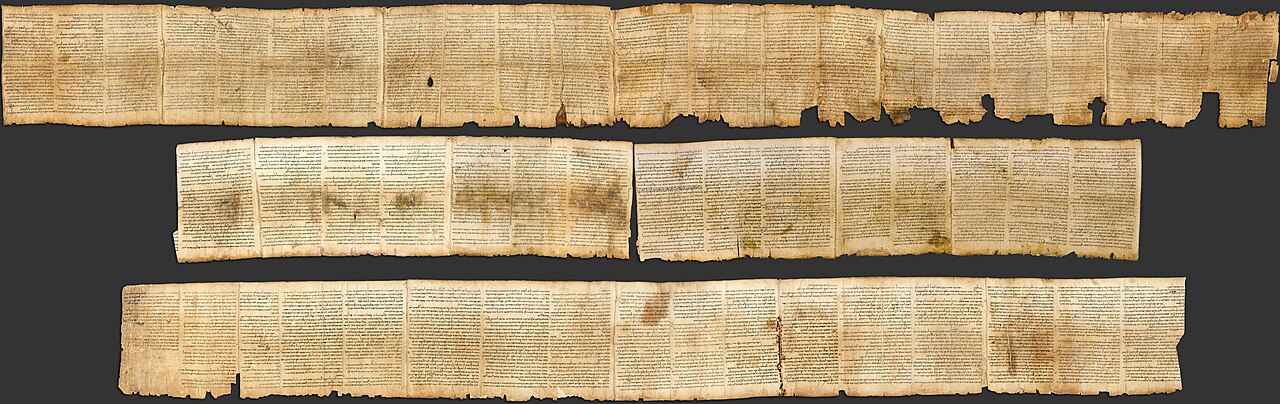
The Essenes withdrew from the argument altogether. They considered the Jerusalem temple priesthood irredeemably corrupt and set up their own communities - austere, communal, meticulous about purity - in the desert and in towns across Judea. The community at Qumran, on the Dead Sea shore, left behind the library we now call the Dead Sea Scrolls. Their War Scroll describes an eschatological battle between the Sons of Light and the Sons of Darkness; it is not a subtle document. They believed the end was coming. In their own way, they were not wrong.
The Zealots, and the Sicarii alongside them, held that Jewish sovereignty was a religious obligation and Roman rule an intolerable blasphemy. Josephus treats the two as distinct groups: the Sicarii - from the Latin sica, the short dagger they carried hidden under their cloaks - emerged earlier and were defined by targeted assassination. They killed Roman collaborators, Jewish collaborators, and eventually each other. They were the spark, though not the only fuel, for what came next.
The revolt, and the civil war inside it
The Great Revolt began in 66 CE with a tax dispute and a massacre, and within months had become something that surprised everyone, including its leaders. Roman forces were routed at the Battle of Beth Horon. An emperor, Nero, sent his best general, Vespasian, to sort it out. For a year or two, an independent Jewish state functioned - minting coins, appointing commanders, writing decrees. One of those commanders was a priestly aristocrat named Yosef ben Matityahu, appointed to defend the Galilee. He would later be known to history as Flavius Josephus, the historian of the very war he participated in and then survived by changing sides.
Inside Jerusalem, while Vespasian was systematically subduing the country, the factions were destroying each other. John of Gischala controlled the Temple Mount; Simon bar Giora held the Upper City; Eleazar ben Simon held the Temple's inner court. They fought each other with the same energy they were supposed to be directing outward. And then, in the winter before Titus arrived with his legions, the factions burned the grain stores. Josephus records it - Jewish War, Book V - with the horror of a man who knew exactly what it meant: enough wheat to feed Jerusalem for years, destroyed so that no rival faction could use it. By the time the Roman siege walls went up in spring 70 CE, the city was already starving.
The siege lasted five months. Titus breached the walls, burned the Temple in August, and spent another month taking the Upper City. What was left - the stones, the people, the institutions - was distributed or sold or killed. The High Priest's family died in their burning house on the hill. We know this because the archaeologists found her.
They burned the grain stores so that no rival faction could use them. By the time the Roman siege walls went up, the city was already starving.
The Burnt House
A basement apartment in the Upper City of Jerusalem, sealed in a moment by the fire that destroyed it in September 70 CE and not opened again until Nahman Avigad's excavations from 1969. Among the ash and collapsed masonry: stone weights, glass vessels, iron spear, and the arm bones of a young woman, her hand still reaching towards the steps. An inscribed weight links the house to the Kathros family - a priestly dynasty whose conduct the Talmud records with pointed disapproval, noting that the priestly families enriched themselves at the people's expense. The stone identifies the family. The ash records the end. The Talmud supplies the irony.
Burnt House Museum, Jewish Quarter, JerusalemThe source and its problem
Almost everything we know about the period 66-73 CE comes from Josephus, and Josephus is a problem the tradition has never quite resolved. He was a general who surrendered to Vespasian, predicted the general's rise to emperor (a prediction of considerable convenience), and spent the rest of his life as a pensioner of the Flavian dynasty, writing histories of the war he'd lost. His Jewish War is brilliant, detailed, and shot through with the anxieties of a man justifying himself to several audiences at once. He blames the extremists - the Zealots, the Sicarii - for the catastrophe, which lets him off the hook and lets Rome off the hook simultaneously. He describes the grain-burning, the factional murders, the cannibalism in the siege, with a reporter's eye and a collaborator's guilt.
And yet. The Burnt House is there. Gamla is there - a Zealot stronghold in the Golan that Vespasian destroyed in 67 CE, so completely and finally that it was never rebuilt, and archaeologists found the ballista stones still lying where they landed. The Arch of Titus is there, in Rome, carved with the temple menorah being carried in triumph through the city - the best-dated depiction of a temple object in ancient art, carved by the enemy who took it as a trophy. (The Arch has its own story in this series.) The archaeology confirms enough of Josephus that historians use him carefully rather than not at all. A compromised witness is still a witness.
What the argument became
Here is the thing the tradition holds onto, and which the history earns: the same argumentative energy that tore the polity apart did not die with the Temple. It moved. Yochanan ben Zakkai, the Pharisee sage, was smuggled out of besieged Jerusalem in a coffin - this is the story the Talmud tells - and asked the Roman general for one thing: Yavneh, and its scholars. A small town. A study house. Permission to argue.
The permission was granted. And at Yavneh, over the following decades, the Pharisee tradition built what would become rabbinic Judaism - a form of Jewish life that didn't require a temple, a king, a piece of territory, or even a continuous community in one place. It required a text, a tradition of interpretation, and an argument conducted across generations about what the text meant. The Talmud is that argument written down: two hundred years of disputation, preserved with a scruple that records the losing position alongside the winning one, because the tradition held that both were words of the living God.
The factionalism of first-century Judea was sinat chinam - hatred for nothing, the rabbis said, which is the worst kind. But the capacity for argument that drove it was not abandoned; it was rehoused. The Sadducees and the Zealots and the Sicarii vanished with the world that had made them. The Pharisees took the argument into the study house and kept it going. They're still going. The next piece in this series is about what they built there.
Further reading
Story & Stone · The Tribe of Learning Nº 1
Next: The Decree That Made a People Read →