Consider the peculiar position of a people who predate almost everything around them. The Romaniotes - Greek-speaking Jews indigenous to the lands of the eastern Mediterranean - were established in Greece before the rise of the Roman Empire, before the spread of Christianity, and several centuries before the rabbinical tradition as we know it took its mature form. When Paul of Tarsus arrived in Thessalonika and Corinth in the first century CE and found synagogues already waiting for him, the communities he encountered had been there for generations. They called themselves Romanioi - Romans, Byzantines, citizens of the empire in which they lived - and the name stuck. They are the Romaniotes, and they are the oldest Jewish community in Europe.
This is an extraordinary fact that tends to be obscured by the more visible history of Sephardic Jewry, which arrived in Greece after the expulsion from Spain in 1492 and rapidly transformed cities like Thessaloniki into predominantly Sephardic centres. The Romaniotes predate the Sephardim by at least seventeen centuries. They also predate the Ashkenazim. They are, in some respects, the trunk from which European Jewish history grew - a community rooted in the soil of Hellenism, shaped by the encounter between Torah and Greek philosophy, and possessed of a liturgical tradition so old that it has no clear origin point we can name. It was simply always there, as the sea was always there, and the olives.
To meet the Romaniotes is to encounter Jewish life in one of its oldest known configurations: Greek-speaking, Mediterranean, formed in a world before the great dispersals that reshaped the Jewish map. The story of what they built in that world - and what persisted - is one of the more quietly astonishing stories in Jewish history.

Who the Romaniotes are
The name Romaniotes derives from Romanioi, the term by which the inhabitants of the Byzantine Empire - the eastern Roman Empire - referred to themselves. For the Jews of the Byzantine world, it was a natural self-designation: they were subjects of the empire, Greek-speaking, formed by centuries of Hellenic culture, and distinct from the Jewish communities to the west (who would become the Ashkenazim) and from those of the Iberian peninsula (who would become the Sephardim). They were the Jews of Rome's eastern half - of Constantinople, of Thessaloniki, of Ioannina, of Corinth, of Arta, of Chalkis on the island of Euboea.
Their distinctiveness is not merely geographical. The Romaniotes developed their own liturgical rite - known as Minhag Romania, the custom of Romania, meaning the Byzantine world - which differs from both the Sephardic and Ashkenazic rites in significant respects: in prayer texts, in the order and form of services, in the distinctive liturgical poetry (piyyutim) composed in a mixture of Hebrew and Judaeo-Greek, and in the Torah cantillation system, which follows its own set of trope melodies distinct from the Sephardic and Ashkenazic systems. A Romaniote Shabbat service sounds unlike any other Shabbat service in the world. It sounds like something very old being said in its original voice.
Their language, too, was their own. Judaeo-Greek - also called Yevanic, from the Hebrew word for Greece, Yavan - was a Greek-based Jewish vernacular written in Hebrew characters, used for everyday life, for religious commentary, and for poetry across many centuries. It was not modern Greek; it was a living language that had developed alongside the community's particular existence, carrying Hebrew and Aramaic loanwords and reflecting the specific texture of a Jewish life lived inside a Greek-speaking world. By the twentieth century, Yevanic was nearly extinct; today it survives mainly in liturgical contexts and in the memories of elderly community members. But it was spoken, read, and written across many centuries - one of the longer-running Jewish vernaculars in the historical record.
Two thousand years in the same place
The antiquity of Jewish settlement in Greece is not a matter of tradition alone - it is documented. Greek inscriptions from the third and second centuries BCE attest to Jewish presence across the eastern Mediterranean; the Letter of Aristeas, composed probably in the 2nd century BCE, attests to a Greek-speaking Jewish community in Alexandria with connections to the broader Hellenistic world. By the time of the Maccabean period, Jewish communities were established in mainland Greece, Asia Minor, and the Aegean islands. The Acts of the Apostles - written in the late first century CE and describing events of the 50s CE - records synagogues already functioning in Thessalonika and Corinth, and a Jewish place of prayer in Philippi: communities with their own organisation, their own leadership, their own established rhythms of prayer and study. These communities predate Paul's arrival; he finds them, he does not found them.
These communities predate Paul by an unknown but substantial interval. They predate Christianity in Greece entirely. They were already old when the Roman Empire was young. Their persistence through what followed - Roman rule, Byzantine Christian rule, Arab incursions, the Crusades, the transition to Ottoman governance in 1453 and after, and then the complex pressures of the modern period - is a record of endurance that no brief accounting can fully credit.
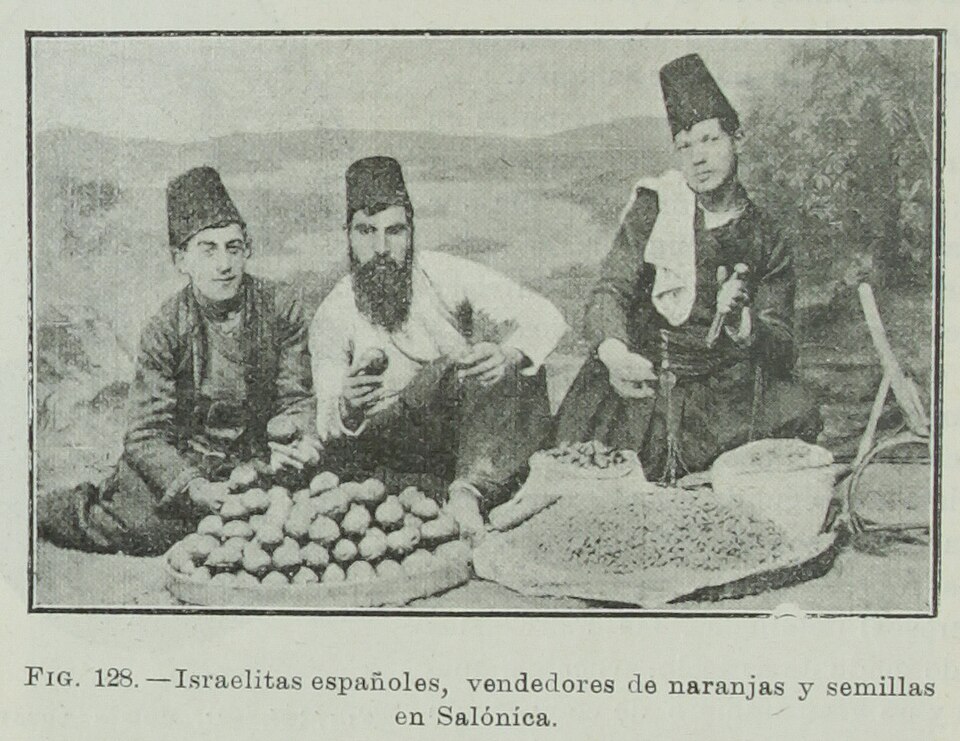
The specific communities varied enormously over this long span. Some were absorbed into larger Sephardic populations after 1492 and lost their distinct rite over the following generations. Others, in cities where the Romaniotes remained numerically and culturally significant, maintained their distinctiveness with remarkable tenacity. Among those, the community of Ioannina - the capital of Epirus, in north-western Greece - is the most studied, the best documented, and the most distinctive survival of the Romaniote tradition into the modern world.
Their synagogues were already ancient when Paul arrived to preach. The Romaniotes did not inherit Europe's Jewish history - they began it.
Ioannina: the keeper of the rite
The city of Ioannina sits on the western shore of Lake Pamvotis, in the mountainous region of Epirus that forms the north-western edge of mainland Greece. It is a city with a long history of Ottoman cosmopolitanism: for centuries it was home to Greeks, Turks, Albanians, and Jews, all negotiating the particular social grammar of a provincial Ottoman city at the crossroads of several worlds. The Romaniote Jewish community of Ioannina - known in Yiddish-influenced usage as Janina, and in the community's own self-designation as Yanya - was, within this context, a community of considerable character.
The Ioannina community maintained the Romaniote rite in full when other communities had allowed it to be diluted or displaced. Their Pesach Seder differed from the Sephardic Seder in specific customs that scholars of Jewish liturgy have carefully documented: the order of the Haggadah reading, the particular songs used, the way the bitter herbs were handled. Their Purim celebrations had their own local flavour. Their Torah scroll was chanted in the Romaniote cantillation, not the Sephardic. In a broader Jewish world where the Sephardic rite had become, after 1492, the dominant presence in Greek Jewish life, Ioannina was the place where you could still hear what Greece had sounded like before 1492.
The community's synagogue in Ioannina - a substantial institution whose origins predate the current building, which took something like its present form in its 1829 rebuilding, most probably over the ruins of an older synagogue - was the centre of this preserved life. Community leadership, charitable organisations, the house of study: all were organised around the synagogue as the axis of communal existence. Under Ottoman rule the community managed its own internal affairs with considerable autonomy, paying taxes to the Ottoman administration and otherwise conducting its life by its own lights.
In the 19th and early 20th centuries, like many eastern Mediterranean Jewish communities facing the pressures of political transition and economic change, the Ioannina community began to emigrate. Greece was changing; opportunity and family connections pulled people toward New York. By the early decades of the 20th century a substantial Romaniote community from Ioannina had established itself on the Lower East Side of Manhattan - and had done something remarkable: they built a synagogue.
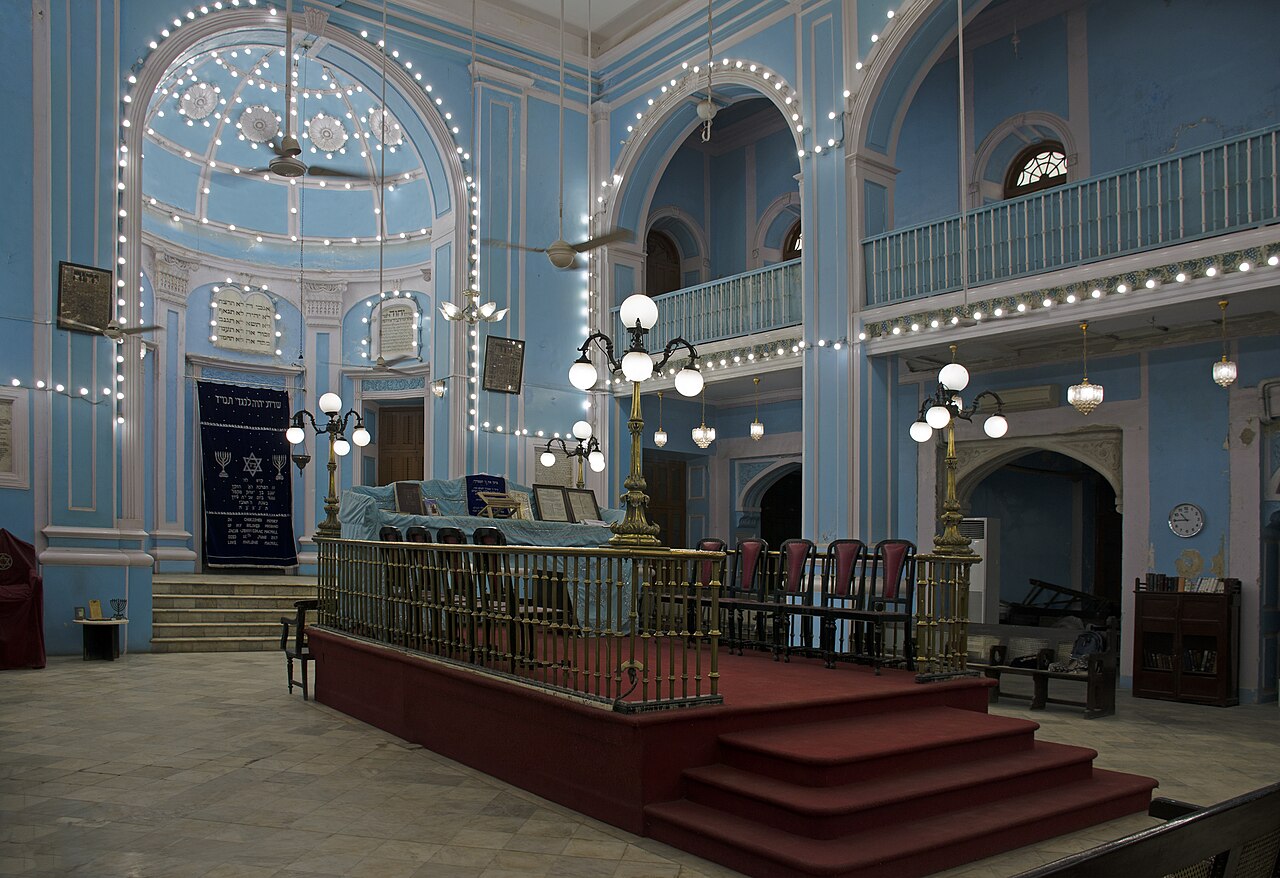
Kehila Kedosha Janina, 280 Broome Street, New York
Romaniote Jews from Ioannina (Janina) began settling on the Lower East Side of Manhattan in significant numbers in the late 19th and early 20th centuries. In 1906 they founded Kehila Kedosha Janina - the Holy Community of Janina - as their congregation. The current synagogue building at 280 Broome Street was constructed in 1927. It is the only Romaniote synagogue in the Western Hemisphere and one of the few institutions in the world where the Minhag Romania - the Romaniote liturgical rite - is regularly practised. The synagogue is listed on the National Register of Historic Places. It remains active, holding regular services and maintaining a small museum documenting Romaniote and Ioannina Jewish history. The congregation has made a sustained effort to document and preserve the Romaniote rite, including its cantillation system and piyyutim, given the devastation of the original Ioannina community in 1944.
280 Broome Street, Lower East Side, Manhattan, New York · Founded 1906 · Building constructed 1927 · National Register of Historic Places · Active congregation1944, and what came after
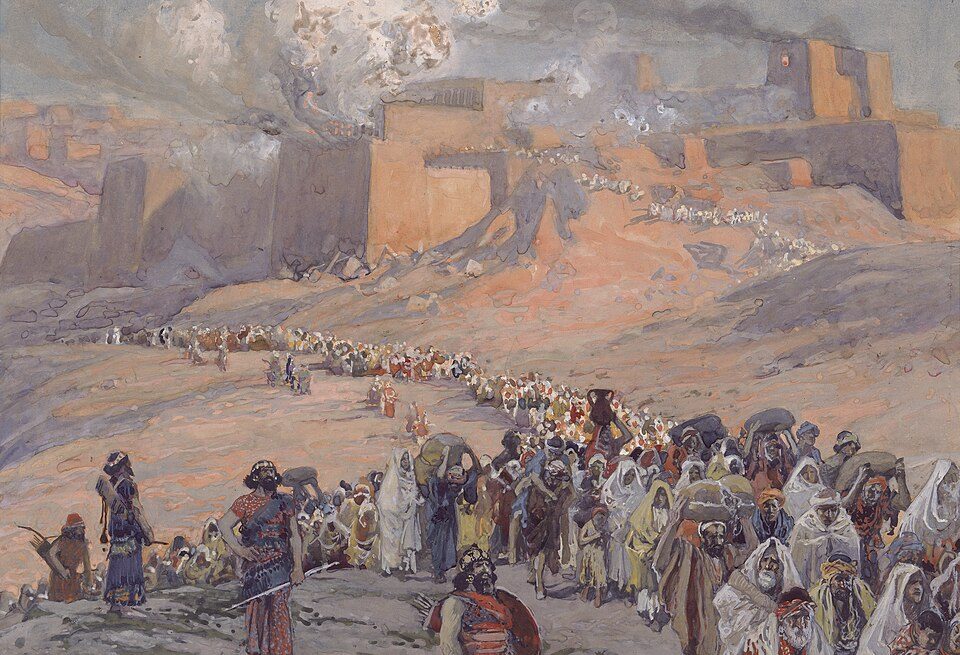
The community that had persisted in Ioannina for over two thousand years was destroyed in a single action in the spring of 1944. On 25 March of that year - Greek Independence Day - German occupying forces rounded up the Jewish community of Ioannina. Approximately 1,850 people were deported to Auschwitz-Birkenau. Very few survived. The community that had maintained the Romaniote rite intact, that had carried Judaeo-Greek through the Ottoman centuries, that had resisted absorption into the Sephardic majority for five hundred years after 1492, was gone in a morning.
This fact belongs in the account and nowhere else: not as the point of the story, but as its most devastating fact. The thread did not break entirely. The emigrants who had gone to New York before the war were still there. They had their synagogue on Broome Street. The Romaniote community of Ioannina had, without knowing it, backed up its tradition in a second location, and that location survived. From the New York community, and from the small number of Ioannina survivors who returned and from Greek Romaniote communities elsewhere, something of the life was rebuilt.
Today a small Romaniote presence exists in Athens and Thessaloniki. The Ioannina community itself was partially reconstituted in the decades after the war by survivors and their descendants. The synagogue in Ioannina still stands. And on Broome Street in Manhattan, the Minhag Romania is still chanted in the same cantillation that the Romaniotes have used for longer than anyone can trace - the same trope that was old when Paul of Tarsus arrived in Corinth and found the synagogue already there.
The Deportation of the Ioannina Community
On 25 March 1944, under German occupation, the Jewish community of Ioannina was rounded up and deported. Approximately 1,850 people were transported to Auschwitz-Birkenau. The date - Greek Independence Day - was not accidental; the German authorities chose it deliberately. Very few of the deportees survived. The destruction of the Ioannina community in 1944 represented the near-total elimination of one of the oldest continuously inhabited Jewish communities in the world - a community with documented roots in ancient Greece, whose members had maintained a distinct liturgical rite, language (Yevanic), and communal identity for more than two thousand years. The Romaniote community in Ioannina had survived Roman rule, Byzantine Christian legislation, the Crusades, and five centuries of Ottoman governance. It did not survive the German occupation of 1944. The record of the deportation is held in multiple archival sources, including Yad Vashem documentation and Greek state records.
Ioannina (Janina), Epirus, Greece · 25 March 1944 · Auschwitz-Birkenau · Yad Vashem; Greek state archivesThe thread that runs through
There is a particular quality to the Romaniote story that distinguishes it even within the remarkable gallery of Jewish communal survivals. Most diaspora communities are defined by movement - by the journey from somewhere to somewhere else, by the founding of a new home in new circumstances. The Romaniotes are defined by staying. They were in Greece before Greece as we know it existed. They were there when Byzantium rose and when it fell. They were there when the Sephardim arrived and reorganised the Jewish world around them. The Romaniotes did not scatter and find a new home; they were already home, and they stayed.
That staying produced a culture of extraordinary specificity. The piyyutim they composed - liturgical poems in a mixture of Hebrew and Judaeo-Greek, set to melodies that bear no relation to the Ashkenazic or Sephardic repertoire - are documents of a complete literary tradition, conducted in a language now nearly vanished, preserving a sensibility that formed at the intersection of Torah and the Hellenic world and never quite became anything else. Scholars who have studied the Romaniote liturgical tradition have noted its archaic features: elements that appear to predate the Geonic period, usages that suggest a line of transmission running back to the synagogal life of late antiquity without significant interruption.
What persists is therefore not merely a community but an argument: that Jewish life is not a single thing with a single sound and a single history, but many things, many sounds, many histories running in parallel across twenty-five centuries of recorded time. The Romaniotes make this argument simply by existing - by continuing to chant the Torah in their own cantillation, by keeping the Minhag Romania alive in a synagogue on Broome Street, by being present in Athens and Thessaloniki and Ioannina as they have been present, in one form or another, since before the common era began.
The thread of persistence - worn thin in places, catastrophically broken in 1944 - runs forward still. Not triumphantly; the community is small and the losses immense. But the Minhag Romania is not a museum piece. On Shabbat at Kehila Kedosha Janina, the prayers go up in the same voice that has always been theirs: ancient, specific, stubbornly alive.
Further reading