The first American morning did not usually begin at Ellis Island. It began the day after, on a Lower East Side stair that smelled faintly of pickled herring and wet wool, when a family woke in a room too small for dignity and started anyway. A father went looking for work. A mother worked out where to buy bread, coal and patience. A child discovered that English was not a theory but a noise heard in the street, at school, in the shop, and soon enough at home. This was the great landing ground of the eastern European migration - the few crowded Manhattan blocks where the Yiddish world unpacked itself, argued with America, and became American without quite ceasing to be itself.
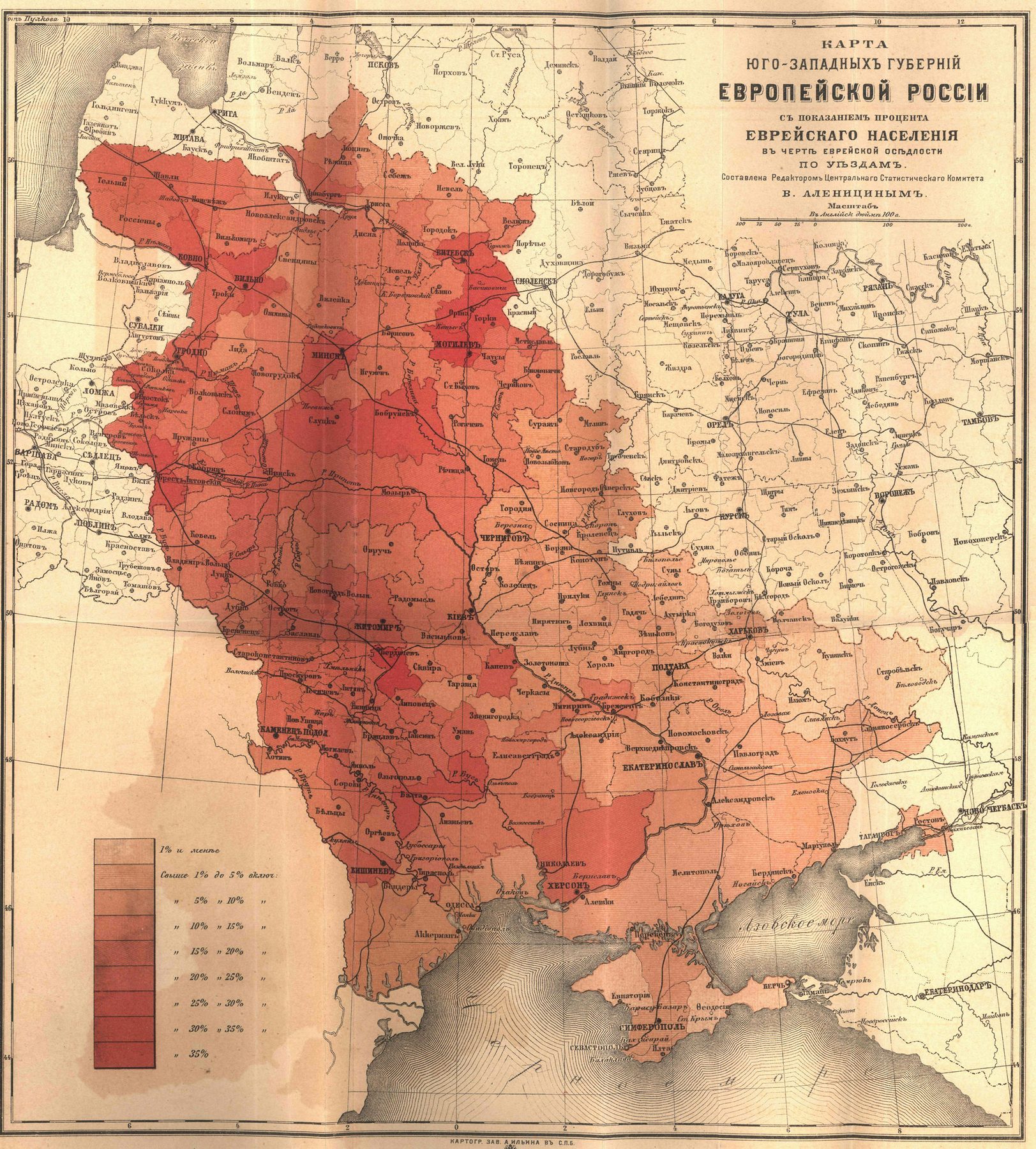
Between the 1880s and the quota laws of 1924, roughly two million Jews left the Russian Empire and neighbouring parts of eastern Europe for the wider world, with the United States taking the largest share. New York received them in volume, and the Lower East Side received New York's overflow of nerve, accent and ambition. By the 1910s, and certainly by around 1920 depending on how one draws the neighbourhood's edges, the Jewish population of the wider Lower East Side ran into the hundreds of thousands. Commonly cited figures land around 400,000. Density figures wobble with geography and method. The scale does not wobble. For a while, this was the largest Yiddish-speaking urban concentration on earth.

The tenement and the wager
The hard fact of the place was compression. Families slept, cooked, sewed, nursed babies, took in boarders and planned futures inside rooms that left little spare space for furniture, never mind privacy. Yet it matters what these rooms were for. They were not the end of a story. They were the first foothold in a new one. The Lower East Side tenement was a machine for temporary compression in the service of permanent ascent. People came in poor, worked like mad, saved what they could, moved a little further out, and sent their children further still.
Work was everywhere. The garment trade ran through the neighbourhood like an electric current - first in apartments and small shops, later in lofts and factories. Pressers, finishers, operators, cutters, cloakmakers, capmakers. Men and women both worked, often in different rhythms, sometimes in the same room. Children helped too, because families do what families must. There was grit in plenty. There was also agency. These immigrants were not merely being processed by an industrial city. They were learning how to use one.
And because Jews rarely suffer density in silence, the neighbourhood generated institutions almost at once. Landsmanshaftn bound people from the same old-country town into mutual aid societies. Synagogues appeared above shops and in former churches. Hebrew schools, burial societies, loan funds, political clubs and health charities followed. Henry Street Settlement opened in 1893 not because the Lower East Side lacked energy, but because it had so much human material pressing against the limits of old urban arrangements. The place was crowded. It was also organisationally brilliant.
97 Orchard Street goes up
The five-storey tenement at 97 Orchard Street was built in 1863. Tenement Museum research records 22 original apartments and notes that builder Lucas Glockner paid extra for comparatively advanced amenities: privies draining into the sewer system and a water spigot supplied by the Old Croton Aqueduct. Advanced is a relative term here. It was still a tenement.
Tenement MuseumInk, theatre, and the making of a public
The neighbourhood did not only house Jews. It made a Jewish public. The Yiddish press translated America into comprehensible form and then argued with it in splendid detail. The most famous of the papers, the Forverts or Forward, began publication in 1897 and became far more than a newspaper. It was advice column, parliament, employment guide, school of politics, and daily proof that immigrant Yiddish was capable of discussing everything under the sun. If America was going to be understood, it would first have to be rendered into mameloshn.
The theatre did the same work in a louder register. Second Avenue became Yiddish Broadway - not a metaphor dreamt up later, but a real theatrical district whose audiences wanted comedy, melodrama, operetta, Shakespeare in translation, and a chance to see the old world mocked and dignified in the same evening. A neighbourhood that read this much was never going to settle for silence after supper. From these stages and editorial rooms came habits of speech, performance and ambition that travelled uptown and west - into Broadway, radio, the film business, and the wider American century that Jews would help write in outsized type.
Even the food acquired institutions. The kosher deli fed workers at speed and in quantity. The appetizing store solved the old dietary grammar of meat and milk with New York ingenuity, making smoked fish, cream cheese, herring and bagels into a civilised category of its own. Russ & Daughters, founded on the Lower East Side in 1914, survives because the form was sound. A people who can turn breakfast into an archive are not going anywhere.
The first issues of the Forverts
The National Library of Israel's Historical Jewish Press archive preserves the Forverts from its first year of publication, 1897. The paper began in New York as a Yiddish daily and grew with the immigrant city that read it. A press archive is one of the best ways to watch a neighbourhood think in public, one argument at a time.
National Library of Israel - Historical Jewish PressHeat, reform, and the turn in the road
The hardship was real and should be stated plainly. Workshops locked doors. Fire escapes failed. Air was bad, hours were long, tuberculosis was a neighbour, and a week's pay might vanish in rent and food before Friday came round again. Still, this is not a portrait of passive suffering. The same neighbourhood that supplied labour also supplied organisers, readers, donors, litigants, union women, union men, and a ferocious public appetite for reform. When the system proved cruel, the Lower East Side did not merely endure it. It produced people who fought it.
The Triangle Shirtwaist Factory fire of 25 March 1911 was not on the Lower East Side proper, but it belongs to this world completely. Many of the dead were young Jewish and Italian immigrant workers from the same New York labour pool, and the fire fixed in the public mind what industrial negligence actually looked like when set alight. Cornell's Triangle Fire archive states the central fact without decoration: within eighteen minutes, 146 people were dead. The aftermath helped drive factory inspection, workplace safety reform, and a sharper union politics. Briefly and honestly, that is what a turning point looks like.
By then, another turning had already begun. Success in immigrant neighbourhoods often means departure from them. Families moved to Brownsville, the Bronx, Brooklyn more broadly, then Queens and the suburbs after them. The Lower East Side's triumph was not that everyone stayed. It was that so many could leave on better terms than they arrived. The first American-born morning became the first school certificate, the first office job, the first train ride back to visit parents who still spoke better Yiddish than English, and eventually the first generation for whom downtown Manhattan was family memory rather than permanent address.
These blocks were cramped, but they were not small. They held the rehearsal room of American Jewish life.
The Triangle Shirtwaist Factory fire
Cornell University's Kheel Centre states the essential numbers starkly: near closing time on 25 March 1911, a fire broke out at the Triangle Waist Factory in New York City, and within eighteen minutes 146 people were dead. The archive frames the fire not only as tragedy but as documentary evidence, preserving original sources on labour, safety, and reform. History, when it wants to, can count its victims exactly.
Cornell ILR School - Kheel CentreThe first American-born morning
What remains most impressive is the upward motion without the loss of character. The Lower East Side did not produce a blank Americanisation in which the old world simply evaporated. It produced a Jewish America with institutions, accents, humour, foodways, philanthropy, union memory, literary taste and an instinct for argument. It also produced children who could walk out the door into public school and come back with a different posture from their parents - less frightened of the city, more native to it, already halfway to elsewhere.
That is the real portrait. Not only pushcarts and poverty, though both were there. Not only sweatshops and sermons about sweatshops, though those were there too. The deeper truth is more cheerful and more formidable. In a very short historical span, a migrant people landed in a few overworked blocks of Manhattan and turned them into a launch platform. The result was the garment unions, yes, and the Yiddish papers, and the theatres, and the deli counter, and the move out to the boroughs. It was also a new kind of American confidence - urban, Jewish, comic, literate, slightly noisy, very productive - that would echo far beyond Orchard Street.
So keep the last image where it belongs: not at the gangplank, and not in the fire, but on an ordinary morning after arrival, when a child of immigrants goes downstairs, steps into New York, and begins saying the future in an American voice.
Further reading