There are Konkan villages south of Mumbai where the neighbours still remember the oil-pressers who did not work on Saturday. It was noticed before anyone asked for an explanation. The families were respected craftsmen, familiar in the village economy, present at harvest and at market - and every week, on the same day, the stone press stood still. The day of rest was not a secret. It was simply a fact about these particular families, as recognisable as the shape of their houses. The Marathi term the neighbours used was Shanwar Teli: Saturday oil-pressers. It was not a term of contempt. It was a term of observation. These people rested on Saturday. That was a thing about them that everyone knew.
What the neighbours may not have known, and what the Bene Israel themselves held in a form pared down by centuries of isolation, was the full weight of what Saturday meant. The community had been on the Konkan coast for long enough that the specific theological architecture of Shabbat - the Talmudic elaboration, the liturgy, the accumulated rabbinic commentary - had been simplified almost to its essential core. But the core was intact. They rested. They circumcised their sons. They abstained from fish without fins and scales. They observed the festivals. And at the great moments of life - birth, marriage, a journey completed, a festival arrived - they made an offering of sweetened rice and fruit and flowers, and they prayed to Eliyahu Hannabi, Elijah the Prophet, who they understood to be their intercessor and protector. The practice had no parallel in any other Jewish community in the world. And it was unmistakably Jewish.
This is the Bene Israel - the Children of Israel - of Maharashtra: one of the great quiet stories in the history of Jewish survival, and one of the great open questions in the history of how Jews came to be where they are.

What they kept, and what they did not keep
The most striking thing about the Bene Israel, when the wider Jewish world first came into serious contact with them in the eighteenth century, was not what they had lost. It was how much they had kept.
They kept Shabbat - from Friday evening to Saturday night, week after week, generation after generation, in Konkan villages where there was no synagogue and no rabbi to enforce or explain it. They kept kashrut in the form that had survived the journey - specifically, they did not eat fish without fins and scales, the marker of the dietary laws that was most easily observed without a rabbinic infrastructure. They circumcised their sons on the eighth day. They observed the major festivals, particularly Rosh Hashanah and Yom Kippur, which they knew; they observed Passover in a form. They maintained a theological understanding that was monotheistic and recognisably Jewish, with a strong veneration of Elijah the Prophet as the community's particular protector.
What they did not keep - because the knowledge had not survived, or had never reached them - was also significant. They did not know Hanukkah. They did not know Purim. They did not know the full rabbinic prayer liturgy in the form that had developed over the centuries in the academies of Babylon and Palestine. They did not have a Talmud. They did not have a prayer book. What they had was old, and stripped, and intact: the Shabbat, the dietary laws in their basic form, circumcision, the festivals in outline, and Elijah.
The community that European and other Jewish traders and scholars encountered in the Konkan was not a degraded version of normative Judaism. It was a very old layer of it, preserved in a place that had kept it from being added to. It is as if you found a room in a house where the building had been extended repeatedly over two thousand years, and the room at the back had the original walls still standing - not because anyone had tried to preserve them, but because the builders had simply not reached that part.
The Malida: rice, fruit, flowers, and Elijah
At a birth, a marriage, a return from a long journey, the arrival of a festival: the Bene Israel family gathers. They prepare a dish of flattened rice - poha, beaten until soft - mixed with grated coconut, raisins, sugar, and spices: a careful, fragrant preparation, the kind that takes time and intention. They bring fruit, and flowers. They arrange the offering on a large plate or tray. And then they pray to Eliyahu Hannabi - Elijah the Prophet - asking for his blessing, his intercession, his protection over whatever has brought them together at this moment.
This is the Malida. There is nothing quite like it anywhere else in the Jewish world.
Elijah is not an unusual figure in Jewish tradition - he appears throughout rabbinic literature as the forerunner of redemption, the prophet who never died but was taken up to heaven, the one who will return to announce the Messiah. He has a cup set aside for him at the Passover seder. He is invoked at the end of Shabbat in the Havdalah ceremony. He is associated, in the folk traditions of many Jewish communities, with miraculous intervention in times of need. But the Bene Israel relationship with Elijah is different in character: more central, more personal, more specifically protective. He is their prophet in a way that goes beyond the general Jewish veneration of the Tishbite. The Malida is offered to him directly, at the turning points of life, as a community that has been counting on him for a very long time.
Where the Malida comes from - whether it emerged from an ancient Jewish practice, or developed in dialogue with the votive offering traditions of the Konkan, or is something altogether its own - is a question scholars have not resolved to general satisfaction. What is clear is that it is entirely Jewish in its referents: Elijah, the Hebrew prayers, the life-cycle occasions that trigger it. The form is Konkan; the theology is Jewish; the result is Bene Israel, and only Bene Israel.
The Malida continues to be performed today - in Mumbai, in the Konkan villages where a handful of families remain, and in the diaspora: in Israel, in the United Kingdom, in the United States, wherever Bene Israel families have carried it. A ritual that developed, in some form, in Konkan villages that are older than most nation-states has followed the community to Lod and Ramla and wherever else the community has settled. Elijah, as always, has been called upon to travel.
The Malida · Offering to Elijah the Prophet
The Malida is a Bene Israel ceremony performed at life-cycle events (births, marriages, bar mitzvahs), at festivals, and at moments of thanksgiving or safe return. It consists of an offering of flattened rice (poha) mixed with grated coconut, raisins, sugar, and spices, together with fruit and flowers, accompanied by Hebrew and Marathi prayers addressed to Eliyahu Hannabi (Elijah the Prophet). The ceremony has no direct parallel in any other Jewish tradition. It is classified by scholars as a distinctively Bene Israel practice that combines Jewish theological referents - Elijah as intercessor - with a form of votive offering consistent with the ritual culture of the Konkan coast. The Malida is observed in both religious and secular Bene Israel households and has been maintained in diaspora communities worldwide, including in Israel, the United Kingdom, and the United States. It is the single most distinctive marker of Bene Israel religious culture.
Bene Israel practice · Active observance · No parallel in other Jewish traditions · Maintained in diaspora communities worldwideThe Konkan villages: oil, coconut palms, and Saturday
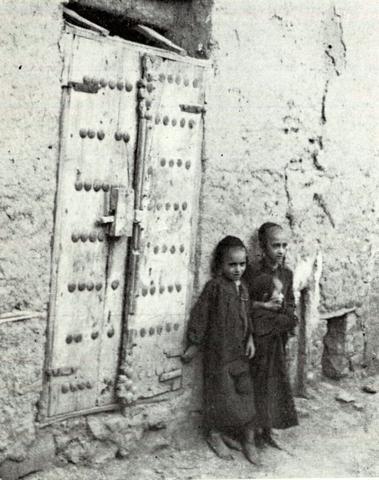
The Konkan coast is a strip of green between the Western Ghats and the Arabian Sea - a landscape of laterite soil, coastal rivers, rice paddies, and, in the Bene Israel villages, coconut palms and sesame fields. It is a landscape that was, for most of the community's history, their entire world. The villages in the area around Alibag - Navgaon, Pen, Panvel, Revdanda and a scatter of others - were home to families who had been pressing oil since before anyone in the village could remember. The community's trade was the pressing of sesame oil, a skilled and physically demanding craft that used heavy stone mills. They were good at it. They were known for it. And every Saturday, they stopped.
The Saturday rest was the community's most visible marker to the outside world - more visible, in a village context, than circumcision or dietary practice, because it happened publicly and predictably, once a week, every week. A neighbour who traded with the Shanwar Teli knew that Saturday was not a day for business. The Marathi community around them absorbed this fact into their understanding of who these families were. It was not a problem. It was a feature of the landscape, like the shape of the hills.
Within their villages, the Bene Israel maintained a community structure that was recognisably Jewish in its social grammar even without a rabbi to govern it. There were community elders. There were those with more learning and those with less. Knowledge of Hebrew prayers was passed from generation to generation, simplified and in some cases altered by centuries of oral transmission without a written text to correct against - but passed, none the less. The boys were circumcised. The girls were raised with the expectation that they would keep what their mothers kept. The community reproduced itself, in isolation, for as long as the community can remember having been there.
The origin question: a shipwreck on the Konkan coast
The Bene Israel's own tradition on the matter of origins is vivid and specific. They say they are descended from Jews who fled persecution in Judea - the persecution, in the community's telling, of Antiochus IV Epiphanes, the Seleucid king whose desecration of the Temple and suppression of Jewish practice precipitated the Maccabean revolt in the second century BCE. Their ancestors, the tradition holds, were among those who fled by sea - and were shipwrecked off the Konkan coast, losing most of their number and most of their possessions, including the religious texts and the fuller forms of the tradition. The survivors came ashore near what is now Alibag. They buried their dead - seven couples, the tradition says, and the cemetery at Nawgaon is still shown as the burial ground of those first arrivals. And then they built lives in the Konkan, and stayed.
This is tradition. It cannot be verified from any documentary source. The specific events - the shipwreck, the seven couples, the Galilean origin - belong to the category of community memory that carries emotional and theological truth regardless of its historical verifiability. What it asserts is an ancient Near Eastern Jewish origin, an event of rupture and survival, and a continuous thread of Jewish identity from that point to the present. These assertions may well be substantially accurate, even if the specific narrative cannot be confirmed.
Modern scholarship has approached the question from several directions. The absence of a distinct Jewish vernacular is one line of evidence: the Bene Israel speak Marathi as their mother tongue, with Hebrew prayer vocabulary, but there is no preserved Jewish language of their own - no Judeo-Marathi, no trace of a Hebrew or Aramaic vernacular of the kind that other ancient diaspora communities preserved. This is consistent with very early and very deep integration into the Marathi-speaking world, which is itself consistent with an ancient arrival. The Cochin Jews, by comparison, preserve a distinct Judeo-Malayalam variety; the Bukharan Jews speak Juhuri; the Djerban Jews maintained a specific liturgical tradition. Communities that kept a distinct language tended to have maintained stronger connections to the broader Jewish world. The Bene Israel had not.
Contact: the Cochin Jews and the wider world
In the eighteenth century, something changed. The Bene Israel, who had been living in effective isolation from the wider Jewish world for as long as their history can trace, came into significant contact with another Indian Jewish community: the Cochin Jews of Kerala, particularly those from the Paradesi congregation, who arrived in Bombay as traders.
The encounter was one of recognition and complication in roughly equal measure. The Cochin Jews recognised the Bene Israel as Jews - they saw the Shabbat observance, the circumcision, the dietary practices, the festival observance, and they understood what they were looking at. But they also saw a community that did not know the prayer book in its full form, that had no knowledge of Hanukkah or Purim, that had customs - the Malida, above all - that had no parallel in any tradition the Cochin Jews knew. Questions were raised. Questions about lineage. Questions about the purity of the community over the centuries of integration into Konkan village life. The Cochin Jews had their own hierarchies and their own rigorous sense of communal definition, and they brought those sensibilities to their assessment of the Bene Israel.
The Bene Israel experienced this as condescension from a community they regarded, not unreasonably, as relative newcomers to India compared with themselves. Whatever the merits of the Cochin Jews' lineage concerns, the Bene Israel had been in the Konkan considerably longer than the Cochin community had been on the Malabar coast - or at least, that is what the Bene Israel's tradition maintained, and there was nothing to disprove it. The tensions that developed in this period between the two communities were not trivial; questions of status and recognition in the Bombay Jewish community persisted into the nineteenth century and beyond.
What the contact also brought, and this is the other side of the encounter, was connection to the broader Jewish world. Through the Cochin Jews, and later through contact with Sephardic and Baghdadi Jews who came to Bombay, the Bene Israel gained access to prayer books, to fuller forms of the liturgy, to awareness of the traditions and communities they had not known existed. They learned Hanukkah. They learned Purim. They encountered the Talmud. They did not abandon the Malida. They added the layer that the isolation had kept from them, and they kept what they had always had.
Bombay: soldiers, lawyers, and the synagogue on Samuel Street
Under British rule, the Bene Israel moved into Bombay in significant numbers, and Bombay returned the gesture. The city offered something that the Konkan villages had not: the structures of a colonial administration that was, by the standards of the era, relatively indifferent to religious identity and actively interested in literate, numerically capable, reliable subjects for its military and bureaucratic apparatus. The Bene Israel were all of these things. They had been, in their own society, the kind of people who kept obligations and remembered obligations. They transferred these qualities to the colonial context with considerable success.
They served in the British Indian Army. The Bene Israel produced soldiers across multiple generations of the colonial period, and military service became one of the defining occupations of the community in the British era - a pathway to stability, status, and a relationship with the governing power that provided a degree of security unusual for a minority community. They also moved into the civil service, the medical and legal professions, and the arts. The first Indian Jew elected to the Bombay Legislative Council was a Bene Israel - a fact that the community has noted, with some pride, as evidence of their integration into the civic life of the city on terms of genuine participation rather than mere toleration.
And they built synagogues. The most important is the Sha'ar Harahamim - the Gate of Mercy - on Samuel Street in the Mandvi neighbourhood of old Bombay, completed around 1860. An earlier synagogue on a different site near what is now CSMT had stood since 1796; the Mandvi building that survives today dates to that later construction. It is the oldest surviving Bene Israel synagogue in Mumbai, and it is one of the more beautiful buildings of its period in the city: a tall, light-filled space with a women's gallery, ornamental woodwork, and the particular quality of a building that was built to last and has. It was designated a Grade I heritage building by the Mumbai Heritage Conservation Committee - the highest level of protection - and it continues to function as an active place of worship for the small community that remains.
The Bene Israel built other synagogues too, in Bombay and in the Konkan villages - at Alibag, at Pen, at Panvel, at Thane. They built a school. They built a community hospital. They produced artists and writers who worked in Marathi and English and Hebrew. They were, by the nineteenth and early twentieth centuries, a community that had moved from the village oil-press to the professional middle class within two or three generations, without losing the Malida and without forgetting the Konkan.
Sha'ar Harahamim · Gate of Mercy Synagogue
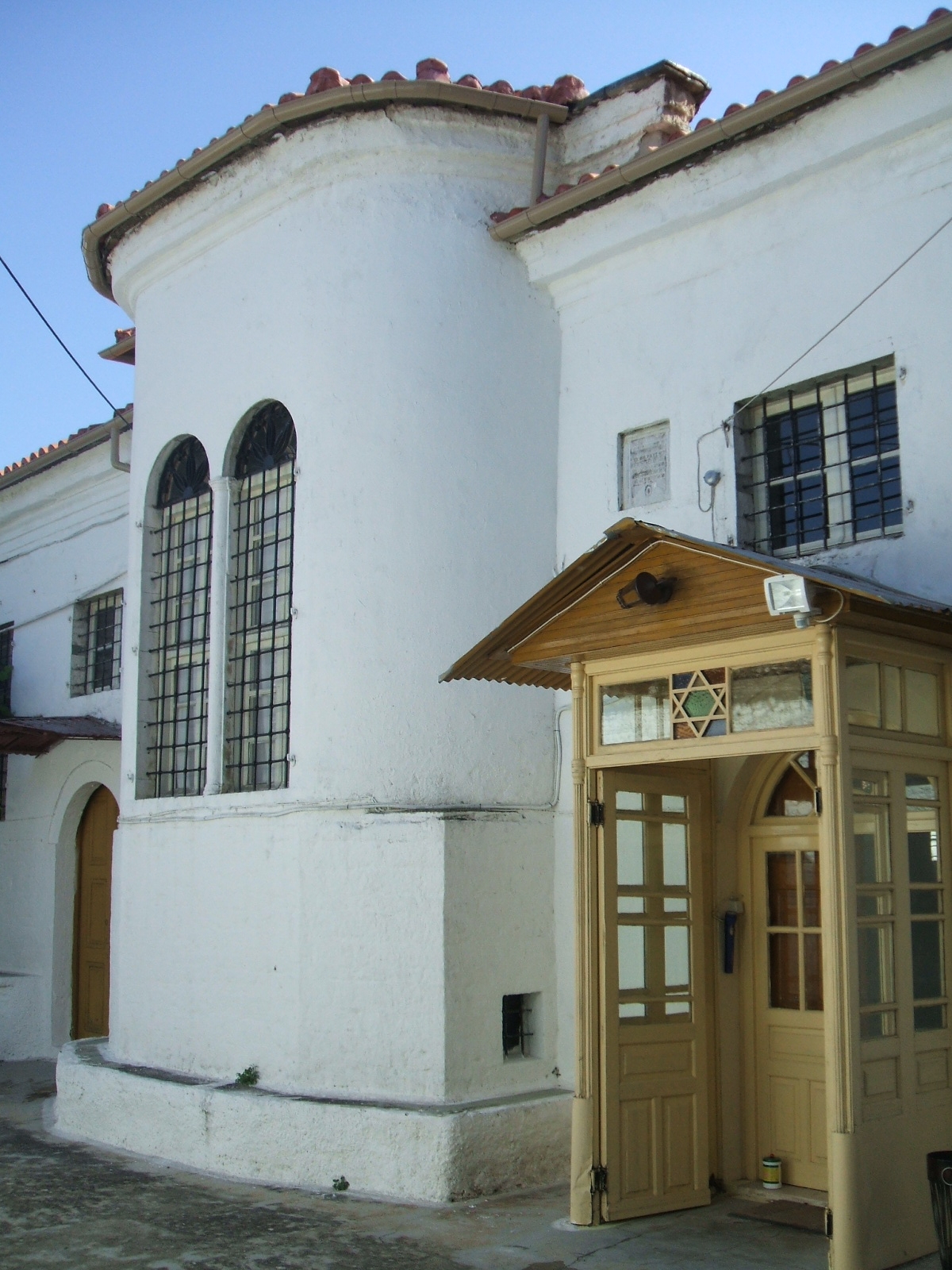
The Sha'ar Harahamim (Gate of Mercy) synagogue stands at 254 Samuel Street, Mandvi, in the old quarter of Mumbai. The current Mandvi building dates to approximately 1860. An earlier Sha'ar Harahamim synagogue stood on a different site near what is now CSMT from 1796; the Mandvi structure that survives today is its successor. It is the oldest surviving Bene Israel synagogue in Mumbai. The building is a tall, rectangular structure on a raised plinth, with an arched entrance and a women's gallery above. The interior preserves much of its original woodwork and is oriented toward Jerusalem. The synagogue served as the principal place of Bene Israel worship in Bombay through the community's period of greatest growth in the nineteenth and early twentieth centuries. Following the large-scale emigration of the Bene Israel to Israel after 1948, the congregation shrank dramatically; the building was listed as a Grade I heritage structure by the Mumbai Heritage Conservation Committee, the highest category of heritage protection in the city. It continues to hold Shabbat and festival services for the small remaining Bene Israel community in Mumbai and receives tourists and scholars. The surrounding Mandvi neighbourhood retains elements of its historical character, though the Jewish presence that once animated Samuel Street has largely departed.
254 Samuel Street, Mandvi, Mumbai · Current building c. 1860 · Grade I Heritage, Mumbai Heritage Conservation Committee · Active congregationTo Israel, and what was left behind
When the State of Israel declared independence in 1948, the Bene Israel had, arguably, a stronger claim than almost any other diaspora community to be among the original intended beneficiaries of the Zionist project: they were ancient, they were unambiguously Jewish in their practice, and they had been praying toward Jerusalem for as long as anyone could remember. They began emigrating in the 1940s and 1950s, and the emigration accelerated through the 1960s. By the end of the twentieth century, the community in India had contracted from the tens of thousands who had populated the Bombay synagogues and the Konkan villages to a few thousand scattered between Mumbai and a handful of surviving village communities.
In Israel, the Bene Israel community is estimated at between 70,000 and 80,000 people, concentrated in Lod, Ramla, Dimona, and Tel Aviv, as well as in other cities. They arrived, in many cases, to a reception that involved some of the same questions about lineage and practice that the Cochin Jews had raised two centuries earlier in Bombay. There were, in the 1960s, rabbinical rulings in Israel that questioned the status of some Bene Israel marriages - a controversy that generated protests, a hunger strike, and eventually a resolution in the community's favour. The community has not forgotten this episode. It is part of the story of what it means to arrive, after centuries of survival, and still be asked to prove yourself.
The Bene Israel in Israel have established themselves, as they established themselves in Bombay - with deliberate, quiet thoroughness. They have community organisations, cultural associations, and a continuing religious life that preserves the distinctive markers of Bene Israel practice: the Malida is still performed at births and marriages, at festivals and homecomings. Elijah the Prophet is still called upon. The sweetened rice and the flowers are still prepared, in apartments in Lod and in houses in Ramla, by families who learned the ceremony from their grandmothers in the Konkan.
For centuries without a rabbi or a prayer book, the tradition survived in its barest and most essential form. They kept Shabbat. They abstained from forbidden fish. They circumcised their sons. They called on Elijah at the turning points of life. It was enough.
The Saturday oil-pressers
There is a way of thinking about the Bene Israel that starts with all the things they did not have - no prayer book, no rabbi, no Talmud, no knowledge of Hanukkah, no preserved Jewish vernacular language - and reads the community's history as a story of loss and impoverishment. This is the wrong way to think about it.
The right way starts with what they kept, and with how extraordinary it is that they kept it. In Konkan villages, across centuries that left no documentary trace, without a rabbinic structure to enforce or explain the obligations, without any connection to the rest of the Jewish world, a community maintained the Shabbat, maintained circumcision, maintained the dietary laws in their essential form, maintained the festivals, and maintained a specific, loving relationship with Elijah the Prophet that they expressed in a ceremony no other Jewish community had ever performed. They did all of this because it was what they were. It was what their parents had been, and their grandparents, and as far back as the memory went. The Konkan coast was where they lived. Judaism was what they were. The Malida was how they celebrated it.
The stone press stood still on Saturday. Not because a rabbi had told them to stop. Not because a community council had enforced the law. Because that was the day of rest, and it had always been the day of rest, and they were the people for whom Saturday was the day the press stood still. Their neighbours knew this about them before they knew it about themselves in any theological sense. They were simply, and permanently, and without the slightest trace of apology, the Saturday oil-pressers.
In the Sha'ar Harahamim synagogue on Samuel Street, on a Saturday morning, the small remaining Bene Israel community of Mumbai gathers for prayers. The Hebrew is chanted in the community's own accent - shaped by Marathi, shaped by centuries of oral transmission, shaped by the particular way that this community has always said these words in this place. The prayers are the same prayers that the wider Jewish world knows. The accent is their own. And afterwards, at a meal, or a celebration, or a gathering of family, the Malida may be prepared - the sweetened rice, the fruit, the flowers, the call to Elijah.
The community in India is small now. The community in Israel is large. And wherever the Bene Israel are, they are what they have always been: the Children of Israel, the Saturday oil-pressers, the people who came ashore on the Konkan coast from wherever they came from, and never stopped being Jews in the only form that had survived the journey.
Further reading