There is a small mark shaped roughly like a reversed question mark that sits above the Hebrew word for "and he said" in perhaps a billion Torah books in print today. It is called a zakef katon. It tells the reader two things simultaneously: pause here - this phrase ends - and sing this. The syntactic information and the musical instruction are the same mark. You cannot separate them. You cannot read the text without doing both at once. The mark has sat above that word in roughly the same position for over a thousand years, in every Jewish community on earth, from the mountainous quarters of Sana'a to the cold study houses of Vilna. What it sounds like when you sing it - that part has gone its own way.
This is the first thread in a series about the tribe's music. It goes from here - the oldest layer, the marks fixed in Tiberias when the Western Roman world was already gone - to Psalm 137 on the disco floor, which is where the thread eventually ends up. The music kept travelling. It always had somewhere to go.

Punctuation you can sing
The te'amim - the cantillation signs, called trope in the Yiddish-inflected English of the synagogue, ta'amim in modern Hebrew - are one of the stranger inventions in the history of writing. They were fixed by the Masoretes, a community of Jewish scholars working primarily in Tiberias on the western shore of the Sea of Galilee, somewhere between the seventh and tenth centuries CE. The Masoretes were not composing: they were preserving. The text of the Hebrew Bible had been transmitted orally, chanted from memory, for centuries before they set about encoding it. Their job was to make sure it stopped drifting.
What they produced is, structurally speaking, a dual notation system. Each te'am - each individual sign - does at least three things. It marks the stressed syllable of its word. It acts as a punctuation mark, showing the reader which words cluster together, where a phrase ends, where a verse breathes. And it prescribes a melodic gesture: not a full tune, but a contour, a rise or fall or ornament that belongs to this sign and no other. The word zakef means something like "upright" or "raised" - the sign was named for its shape, or perhaps for the quality of the phrase it marks. Either way, you could not remove the musical instruction without destroying the syntax, and you could not ignore the syntax without losing the music. The two were designed to be inseparable.
There are twenty-eight te'amim in the standard system used for the twenty-one prose books of the Hebrew Bible, and a related but distinct set for the three poetic books (Psalms, Proverbs, Job). They were standardised to a degree extraordinary in a pre-printing world, transmitted with the Masoretic text itself and accepted across every Jewish community by the thirteenth century. The marks in a Yemenite Torah and a Polish Torah are the same marks. The communities that used them had not been in contact for many centuries. The Masoretes had done their work well.
The Aleppo Codex - cantillation by Aaron ben Asher
The Aleppo Codex (known in Hebrew as the Keter Aram Tzova, the Crown of Aleppo) is the oldest near-complete manuscript of the Hebrew Bible. Its vocalisations and cantillation marks were added by Aaron ben Moses ben Asher of the Tiberian Masoretic school - the same family tradition that produced the definitive form of the te'amim system. Maimonides, writing in the twelfth century, declared the Aleppo Codex the authoritative reference for the correct text of the Torah. The marks it contains are not an innovation but a codification: the Tiberian Masoretes were transcribing an oral tradition they had received, not inventing one. Every cantillation sign in every Torah scroll read aloud in a synagogue today - in Tel Aviv, Brooklyn, Buenos Aires, or Casablanca - descends from this document.
Israel Museum, Jerusalem - Shrine of the Book (lower floor)What fifteen centuries of separation sounds like
The marks travelled everywhere the text travelled. The melodies attached to those marks did not travel in the same way, because melodies travel through living contact - through teachers and pupils, through the sung performance in a specific room - and the communities that carried the Masoretic text were separated from one another for a very long time.
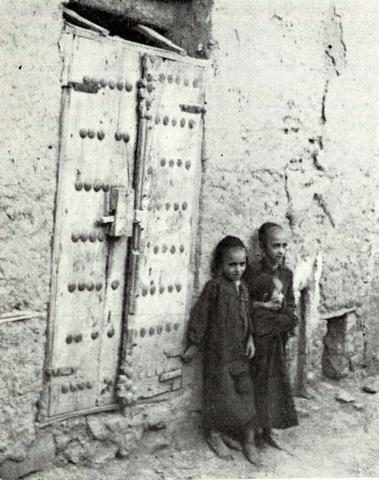
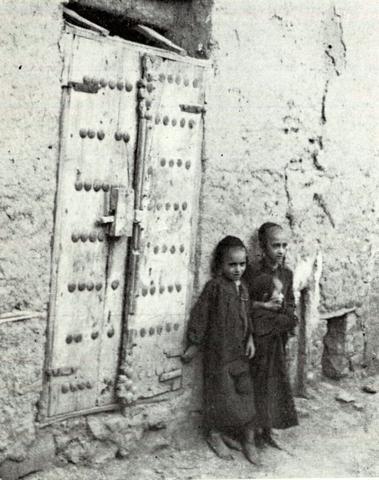
The Yemenite Jewish community is thought by scholars to have been isolated from the main currents of rabbinic interchange - from Babylon, from the Land of Israel, from the later European academies - for centuries on end. Their cantillation uses the same marks, but the melodic gestures assigned to each sign are strikingly distinct from Ashkenazi or Sephardi practice. Scholars have described the Yemenite tradition as among the most conservative, on the grounds that its isolation insulated it from the musical fashions of other regions - particularly the medieval European modal and harmonic influences that shaped Ashkenazi chant. Whether "conservative" here means "ancient" in any recoverable sense is, as we'll see, a harder question.
Ashkenazi cantillation - the sound most familiar to anyone raised in a North American or European synagogue - absorbed centuries of contact with Christian plainchant and European folk modes. Its characteristic rising and falling figures have a quality that music historians recognise as related to medieval European church music, whether through borrowing, parallel development, or some combination. Sephardi practice, shaped by centuries in the Iberian peninsula and then by the Ottoman world, has its own flavour again: a different modal palette, different ornaments, different phrasing. And the Babylonian-Iraqi tradition, which scholars consider particularly important for understanding the pre-medieval layer, has a character distinct from all of them - more syllabic, less melismatic, with a directness that some researchers have linked to what the Talmudic academies of Babylon may have sounded like.
Four traditions, one set of marks, four ways of reading what those marks mean in sound. The notation system was rigorous enough to survive separation intact. The music was human enough to adapt.
The man with the phonograph
In 1905 a cantor from Latvia named Abraham Zvi Idelsohn arrived in Jerusalem. He was twenty-two, trained as a hazzan in the old tradition, and he had noticed something that had been overlooked: the Jewish communities arriving in the new city from Yemen, Babylon, Persia, Bukhara, and elsewhere each carried entirely distinct musical traditions, many of them unrecorded and in danger of disappearing as communities urbanised and mixed. He decided to record them.
Between 1907 and 1913 Idelsohn made over a thousand recordings on wax cylinders, working his way through the major communities then present in Jerusalem. The recordings later formed part of the foundation of the National Sound Archive at what is now the National Library of Israel. He spent the next two decades turning those recordings, and additional fieldwork, into a ten-volume comparative study: the Thesaurus of Oriental Hebrew Melodies, published volume by volume between 1914 and 1932.
Volume one was the Yemenite Jews. Then Babylonian, Persian and Bukharan, Moroccan and Oriental Sephardi, and then the European traditions - German, Eastern European, Hasidic. Over eight thousand melodies. And throughout, Idelsohn was doing something that no one had done systematically before: comparing. He was listening for the family resemblances.
What he found - or claimed to find - was an underlying unity. The cantillation practices of communities separated by a millennium of geography shared, in his analysis, a common core of melodic contours. Yemenite chants and Ashkenazi chants, to take the most striking comparison, contained modal patterns that, in Idelsohn's view, pointed to a shared origin somewhere before the communities' paths diverged. He believed the origin was Palestinian - that what he was hearing in the Yemenite quarter of Jerusalem was closer to the ancient song of the Land of Israel than anything the European academies had preserved.
The marks in a Yemenite Torah and a Polish Torah are the same marks. What they sound like when sung - that part went its own way.
What Idelsohn got right, and where he stopped
Idelsohn's comparative project has not gone unchallenged. Later ethnomusicologists have pointed out that his framework was shaped by the Zionist project he was part of: he wanted the Oriental communities' music to be the ancient root, because that served a narrative about the Land of Israel as the musical home of all Jewish traditions. His transcriptions were also made under field conditions that were, by modern standards, imperfect - a Yemenite cantor singing into a wax cylinder in 1911 was not performing in his natural liturgical context. And the argument that melodic similarities prove common ancient origin is, strictly speaking, an argument by analogy. Similar does not prove identical. Related does not prove unbroken.
What modern scholarship does accept is rather more modest and rather more interesting: the shared te'amim system demonstrates a genuine common transmission. The marks themselves are the proof - not of shared ancient melody, but of shared ancient text. Every community, wherever it ended up, was reading and chanting from a document shaped by the same Tiberian scholars, the same Ben Asher tradition. The musical divergences happened on top of that shared foundation. The foundation held.
Idelsohn's recordings, whatever their analytical limits, remain invaluable as documents of traditions that were already fading when he found them. The Babylonian community he recorded in Jerusalem no longer exists as a living musical culture in anything like its early twentieth-century form. The wax cylinders are, for some of what they captured, the only record left.
Thesaurus of Oriental Hebrew Melodies - A. Z. Idelsohn
Abraham Zvi Idelsohn (1882-1938) published his ten-volume Thesaurus of Oriental Hebrew Melodies (in German, Hebräisch-orientalischer Melodienschatz) between 1914 and 1932. Volume 1 (1914) covered the Yemenite tradition; subsequent volumes addressed the Babylonian, Persian, Bukharan, Daghestani, and Oriental Sephardi traditions before turning to the European communities - German, Eastern European, and Hasidic practice. The Thesaurus catalogues over eight thousand melodies and remains the foundational comparative study of Jewish liturgical music. Idelsohn's original recordings from 1911-1913, made on wax cylinders in Jerusalem, are held at the National Library of Israel (Music Collection, catalogued as Mus. 4) and have been partly digitised. His broader archive - manuscripts, correspondence, unpublished studies - was donated by his family to the same institution.
National Library of Israel, Jerusalem - Music Collection and National Sound Archive (Mus. 4)The child at the lectern
A thirteen-year-old standing at the Torah lectern today, chanting their portion, is doing something that thirteen-year-olds have been doing for more centuries than almost any other specific act of transmission in the tribe's repertoire. The marks above each word are the same marks that Aaron ben Asher fixed in Tiberias. The gesture of reading from the scroll in public - the hand following the silver pointer along the parchment, the throat producing not quite speech and not quite song but the thing that the tradition requires of this text in this context - is recognisable across every community, however different the actual melody.
The melody varies enormously. A bar or bat mitzvah child in a Yemenite congregation learns a cantillation that a child in an Ashkenazi synagogue would not recognise by ear, even though both are reading the same marks. The marks are the text. The melody is the tradition. And the traditions diverged not through forgetting or failure but through the ordinary human process of living in different places for a very long time.
Idelsohn heard the family resemblance across that divergence, and he was not wrong to hear it - even if his explanation of its origins was contested. What he understood, standing in Jerusalem in 1911 with a wax cylinder and a borrowed phonograph, was that all these communities were singing from the same page. The page that Aaron ben Asher had checked and annotated and signed off on, a thousand years before. The song had changed. The text had not. And the marks that told you how to sing it were, in every scroll, exactly the same.
Further reading
Story & Stone · The Music Thread Nº 1
Next on this thread: Rivers of Babylon - where the music thread ends up →