Stand in Kaifeng today and it takes some imagination. The city is a flat inland sprawl on the southern bank of the Yellow River, surrounded by cornfields and the occasional Song-dynasty pleasure park reconstructed for tourists. Nothing announces the eight hundred years during which a Jewish community lived, prayed, and flourished here - studied Torah and the Analects in the same week, raised sons who became imperial officials, rebuilt their synagogue after each flood, and carried on. They were as Jewish as any community on earth, and they were as Chinese as the river beside them. The same story, in a key no one had ever heard it sung before.
The community almost certainly arrived from the Persian-speaking world - merchants from Iran or Central Asia, possibly from the Bukharan Jewish communities that had settled along the Silk Road, travelling east along the trade routes that fed the Song empire's hunger for spices, dyes, and cotton cloth. The prayer books they brought with them contained Judeo-Persian rubrics, linguistic fingerprints of where they'd come from. The 1489 stele - the community's own account of its origins, inscribed in Chinese - records that they presented Western cloth as tribute to an emperor who welcomed them warmly and urged them to settle at Bianliang, the old name for Kaifeng. The emperor's exact words, as the stele preserves them: "You have come to Our China; reverence and preserve the customs of your ancestors." They took the instruction seriously, on both counts.
The first synagogue went up in 1163, under the Southern Song. They called it the Qingzhen Si - the "Pure and True Temple" - a name that mapped neatly onto the Chinese term for mosques as well, since both communities shared the distinction, in Chinese eyes, of avoiding pork and bowing toward a distant holy city. Whether the community found this comparison amusing, the stele does not record.

The same text, the same calendar
What the community practised at Kaifeng is recognisable to any Jew anywhere. They read from a Torah divided into the weekly portions. They observed Pesach and Sukkot and Yom Kippur. They circumcised their sons. They maintained a bet din - a rabbinic court. Their prayer books used the standard liturgy, annotated in Persian. The calendar they kept was the Jewish calendar, not the Chinese one. Across every adaptation, every accommodation to the world they'd entered, the core remained intact: Torah, Shabbat, the festivals. The same story, in Chinese dress.
The dress, though, was genuinely Chinese. By the Ming dynasty the community had fully absorbed Confucian education and were competing in the imperial examination system - the meritocratic ladder of classical learning and rigorous testing that was the route to power and status in China. More than twenty community members held formal degrees. Ai Tian, who passed the provincial examination in 1573, is the most documented: he later encountered the Jesuit Matteo Ricci in Beijing, and the two men spent a confused and rather delightful afternoon each thinking the other was a member of their own tradition. Ai Tian assumed Ricci must be a Jew because he was not Buddhist; Ricci assumed the Chinese scholar might be a Christian because he didn't bow to Buddhist statues. They were both wrong and the conversation was presumably interesting.
The Kaifeng Stele
A stone tablet erected by the community at their synagogue in 1489, now one of three surviving steles (1489, 1512, and 1679) in the Kaifeng Museum. Written in classical Chinese, it recounts the community's origins, their audience with an emperor, and the construction of their first synagogue in 1163. It names them as followers of "the religion of Israel" - yicileye jiao - and states that their scripture contained 53 portions. It is the earliest substantial document of Jewish life in China written in Chinese, and it was written by the community about themselves. That matters.
Kaifeng Museum, Henan Province, ChinaFlood and rebuilding
The Yellow River is not a gentle neighbour. It has changed course more than a thousand times over recorded Chinese history, and it has twice submerged Kaifeng almost completely. The Jewish community rebuilt after every disaster with a stubbornness that any other Jewish community in the world would have recognised immediately as house style.
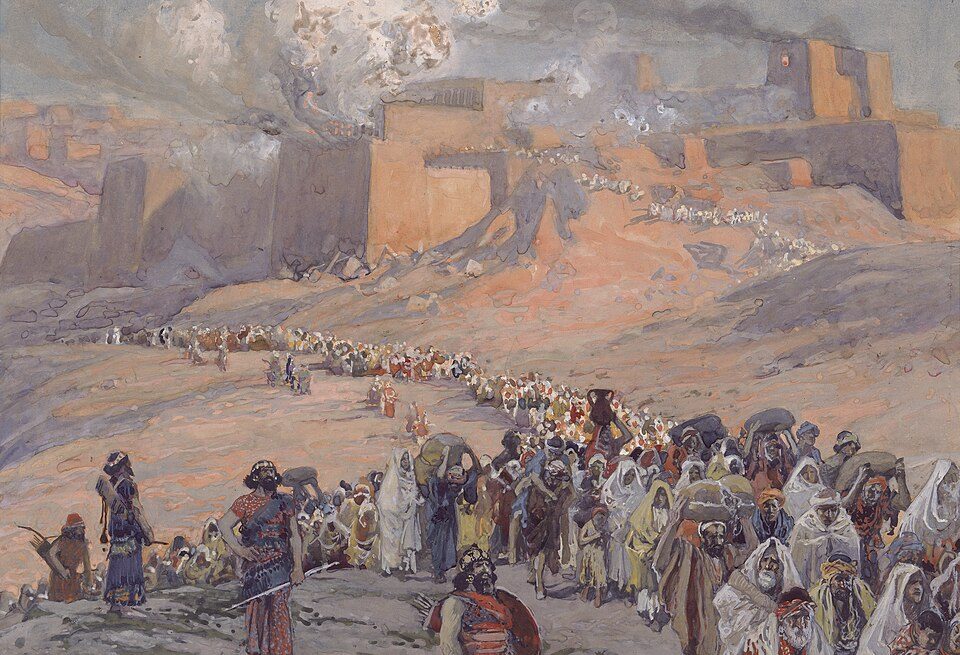
The 1461 flood destroyed the first synagogue. They rebuilt. A fire consumed the replacement around 1600. They rebuilt again. In 1642 the catastrophe was deliberately engineered: the Ming governor, desperate to break a rebel siege, ordered the Yellow River dikes cut. The resulting flood drowned tens of thousands of Kaifeng's residents and swept the synagogue away entirely. Most of the Torah scrolls were lost to the water. What was salvaged - fragments, damaged parchment, whatever could be rescued from the mud - was assembled into a single complete Torah, and from that rebuilt text the community rebuilt their religious life. The brothers Zhao Yingcheng and Zhao Yingdou, both holding high imperial office, financed and directed the reconstruction. The new synagogue was dedicated in 1663 and remained the community's centre for two centuries more.
It's worth pausing on those brothers. Zhao Yingcheng's Hebrew name was Moshe ben Abram. He had mastered the Confucian classics, passed the imperial examinations, held the rank of mandarin - and he funded a synagogue. He kept a private Torah scroll. He could read it. This is the thing that the community's story keeps insisting on, in wave after wave of accommodation and integration: the core remains. Carry the text through the flood and dedicate the new building when the water recedes.
The fading, when it came, was gradual rather than sudden. There was no expulsion, no massacre, no dramatic rupture. The community simply ran out of rabbis. The last man who held that role - the dates given by different sources vary between 1800 and 1810 - died without a successor who could read the Torah well enough to take his place. The scholars had gone into the imperial examination system and the great Confucian tradition had done what it was designed to do: it had educated its students so thoroughly that their primary identity became scholar, then Chinese, then Jew. By the mid-nineteenth century, Western missionaries visiting Kaifeng found a community that remembered its origins, observed some of the forms, but could no longer read the language. They bought Torah scrolls and Hebrew manuscripts from families who could no longer use them - one of the great quiet losses in the history of the book. Several of those scrolls are now in libraries in Europe and America. The community stayed.
The same story the tribe carries everywhere - Torah, Pesach, the covenant. In Kaifeng, it was written in Confucian ink.
The Kaifeng Torah Scroll (Add MS 19250)
One of six Torah scrolls purchased from the Kaifeng community by missionaries in 1851 and presented to the British Museum in December 1852. The scroll - ninety-five strips of thick sheepskin sewn with silk thread rather than the customary sinew - bears the letter bet and was dedicated to the Tribe of Shimon. It was most likely made between 1643 and 1663, during the period of rebuilding after the great flood, which would make it a direct product of the Zhao brothers' reconstruction effort. Seven Kaifeng Torah scrolls in total are known to survive, held in European and American libraries - six were among those retrieved by missionaries in 1851; a seventh was acquired separately. This one has been fully digitised.
British Library, London (Add MS 19250)What persists
The synagogue building itself fell into ruin in the 1860s, its stones gradually pilfered for building material in the way of abandoned structures everywhere. The site is a residential neighbourhood now. But the descendants are still in Kaifeng - perhaps a thousand people who know what their family name means, who keep the memory, who have spent the past two decades doing something the community hasn't done in two centuries: actively reclaiming the inheritance.
Since the 1990s, small groups of Kaifeng descendants have been studying Hebrew, learning Jewish practice, and - in some cases - making the journey to Israel. Organisations like Shavei Israel have facilitated the emigration of dozens of young people who wished to return, undergo conversion, and settle. It is not a simple process: the Law of Return requires documented Jewish lineage, and documentary evidence from a community that stopped keeping formal records two hundred years ago is hard to produce. Some have converted and stayed; others have returned to Kaifeng. The Chinese government's attitude to the community has fluctuated, and the 2020s have brought new pressures on open religious practice inside China.
None of this is the end of the story. It's the next chapter. A young woman in Kaifeng knows that her surname - Ai, or Zhao, or Shi - belongs to one of the seven original clans the community organised itself into, each one corresponding to a tribe of Israel. She may or may not be able to read the Torah scroll that her ancestors commissioned. But she knows it exists. She knows where it is. And in a London reading room, digitised and open to anyone with a laptop, the sheepskin scroll with the silk thread still holds its text - every word of it intact, in the same order it's always been, the same as the one in your kitchen drawer at Pesach.
Further reading
Story & Stone · Diaspora Portraits Nº 1
Next portrait: Cochin - the same story, on the Malabar coast →