In old Georgian-Jewish towns the difference could be heard before it was explained. The language was qivruli - Judaeo-Georgian, Georgian in its bones and thick with Hebrew words. The table smelled of khachapuri, beans, herbs, walnut, pickles, slow meat, festival sweetness. The songs rose in the same mountains and market streets as everyone else's, then bent toward synagogue and Sabbath. This was not a Jewish community perched nervously on Georgian soil. It belonged to the place with the ease of something that had been there for a very long time indeed.
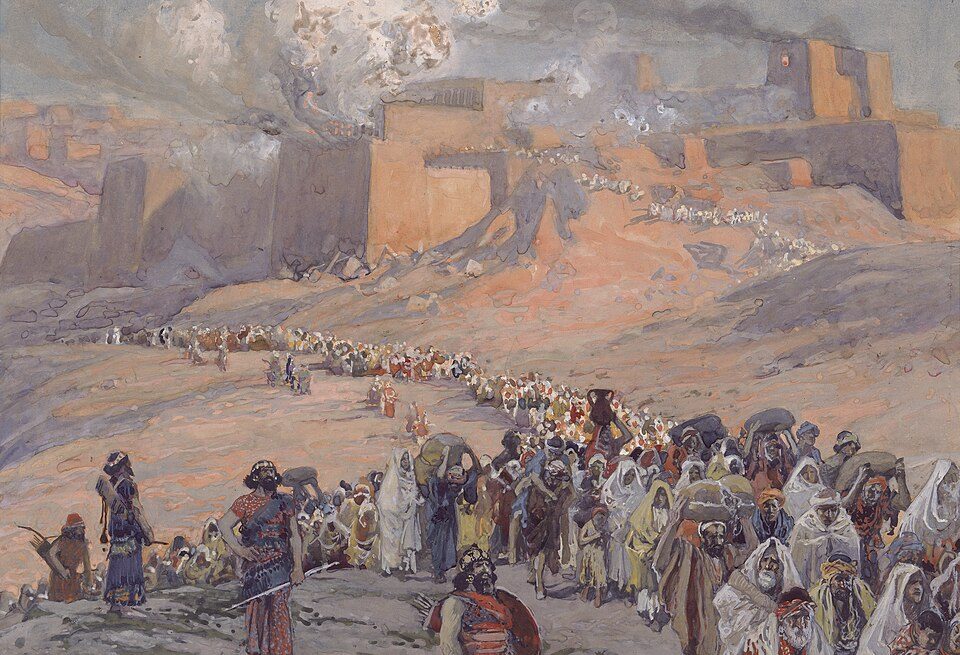
That antiquity is part of the community's self-understanding. Georgian Jews have long told their origins as reaching back some twenty-six centuries, to the Babylonian exile after the destruction of the First Temple. The story matters because it expresses how Georgian Jews see themselves: not as a late fragment of empire, but as an ancient branch of the diaspora, old enough to have roots in the land and memory in the same breath. Historians treat the claim more carefully. The tradition is old, but the securely documented record is later. That is not an insult to the story. It is simply the difference between inheritance and paperwork.

A Jewish life in a Georgian key
For centuries Georgian Jews lived in towns whose names recur like a family litany: Tbilisi, Kutaisi, Oni, Akhaltsikhe, Surami, Sachkhere, Tskhinvali. They kept Jewish law, but they did so in a recognisably Georgian social world. Their dialect was Georgian, written in Georgian or Hebrew letters. Their clothing, hospitality codes, and table manners sat close to those of their Christian neighbours. Their piety had its own tone - conservative, communal, strongly family-bound, less shaped by the intellectual storms that remade so much Ashkenazi Europe. The Haskalah barely touched them. Socialism touched them less than it touched others. The old forms held.
That closeness to Georgian society is one of the most striking parts of the portrait. Georgian-Jewish memory preserves not a fairy tale of perfect harmony, but a remarkably strong tradition of coexistence. The community's history is often described as marked by comparatively little antisemitism before the Russian imperial period, and by a deep integration into Georgian language and local life without disappearance into it. That balance is hard to manage. Georgian Jews managed it for a very long time. They were not a hidden people, and they were not merely tolerated passers-by either.
The Great Synagogue of Tbilisi
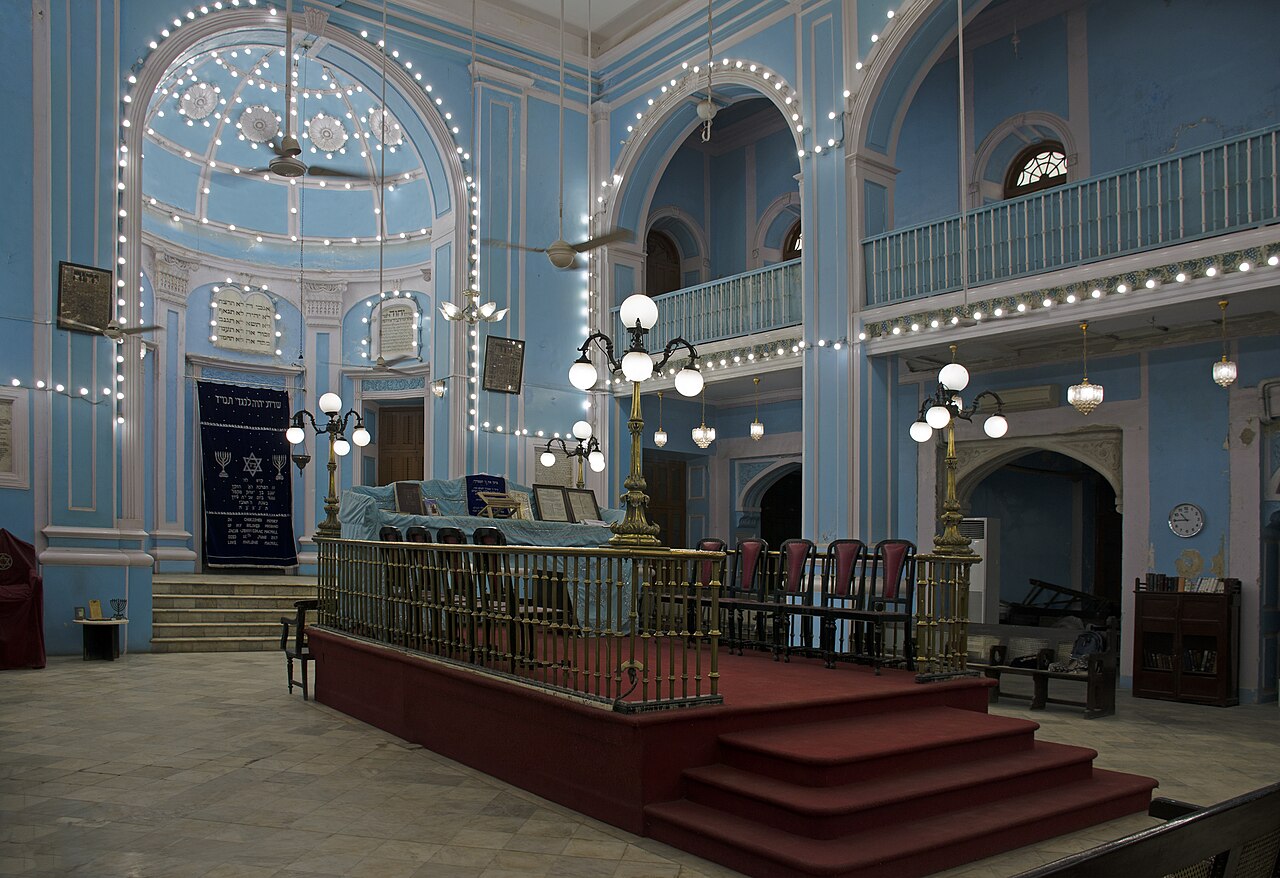
The great red-brick synagogue on Kote Afkhazi Street in Old Tbilisi was begun in 1904 and completed by 1911 by Georgian Jews from Akhaltsikhe who had moved to the capital; Historic Synagogues of Europe lists the building date as 1904-1913. It is the best-known public face of Georgian-Jewish Tbilisi: large, confident, and still active. One does not build like that if one thinks of oneself as temporary.
Historic Synagogues of Europe / Great Synagogue (Tbilisi)Tbilisi, and the towns behind it
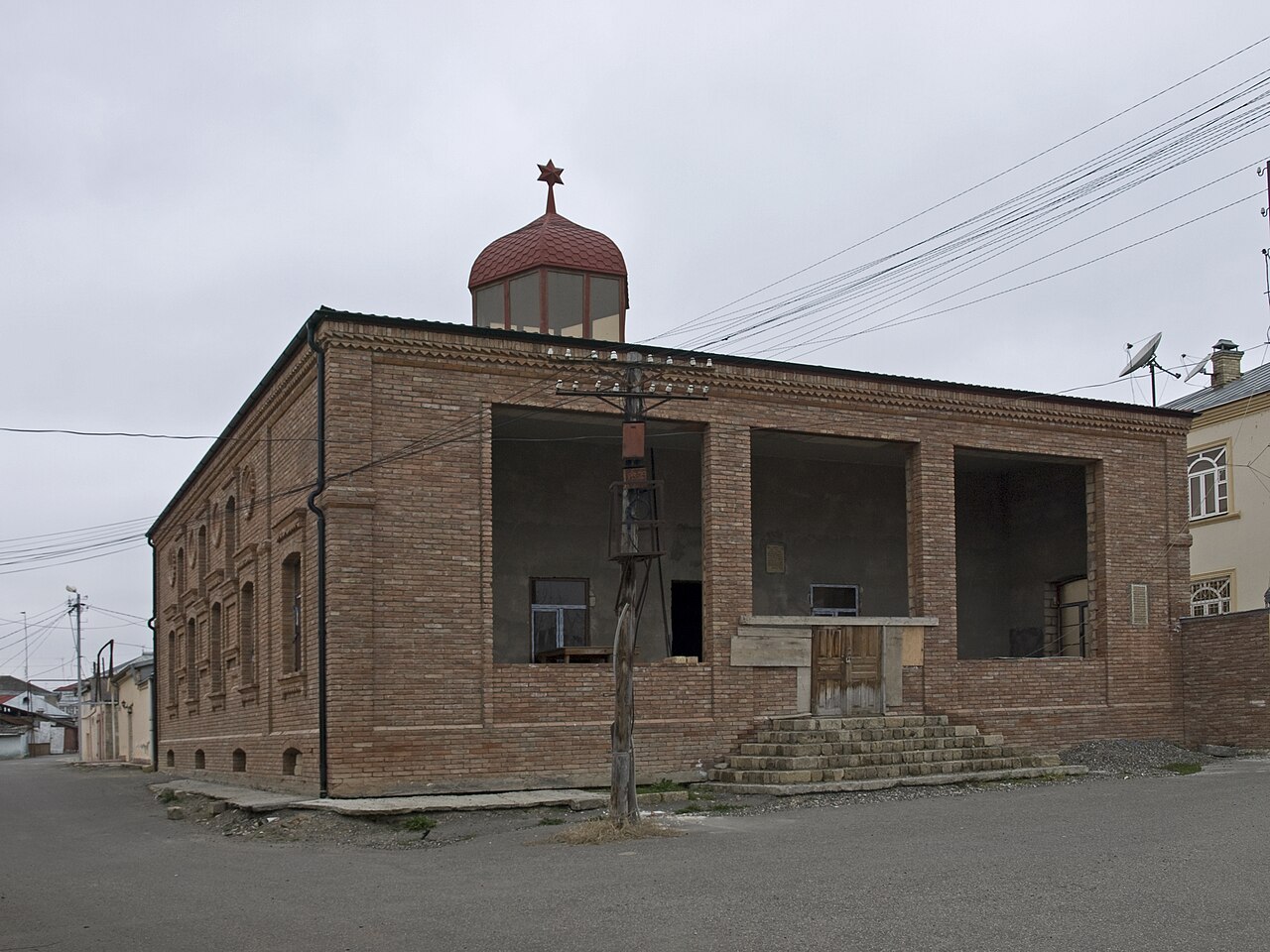
Tbilisi became the natural centre because capitals usually do, but the Georgian-Jewish world was never only metropolitan. Its depth lived in the provincial towns whose communities were dense enough to shape the rhythm of local life. Akhaltsikhe in the south-west had one of the strongest old communities and gave Tbilisi many of the families who later built its main Georgian synagogue. Oni, in the Racha highlands, kept a magnificent synagogue far larger than the shrunken town around it now requires. Kutaisi held another major concentration. To write only about Tbilisi would be like writing only about the harbour and forgetting the inland vineyards.
The synagogues tell the story in stone and timber. The upper synagogue in Akhaltsikhe bears an 1862 inscription, while some secondary sources give 1863 as the completion date; it is among the oldest extant synagogue buildings in Georgia. Oni's synagogue, completed in 1895, remains the oldest functioning one. Tbilisi's main Georgian synagogue belongs to the early twentieth century, when provincial families who had moved to the capital gave themselves a house of prayer with urban scale. Different buildings, different dates, same civilisational point: this was a rooted Jewish society with local confidence and its own architecture.
The contrast with Ashkenazi Jews in Georgia sharpened in the nineteenth and twentieth centuries. Under Russian rule, and then in the Soviet period, Ashkenazi Jews arrived in larger numbers in Tbilisi and other cities. They brought Yiddish or Russian, different liturgical accents, different educational habits, different political experiences. Georgian Jews did not confuse the two communities, even when outsiders did. The Georgian-Jewish self was already well formed. It was eastern, local, traditional, and proud of being native to Georgia in a way the newer urban Ashkenazi population was not.
Akhaltsikhe and Oni keep the provincial record
The upper synagogue in Akhaltsikhe bears an 1862 inscription, while some secondary sources give 1863 as the completion date; the synagogue at Oni was completed in 1895 and remains the oldest functioning synagogue in Georgia. Their survival matters because they anchor Georgian-Jewish history outside the capital. The archive is not only paper. Sometimes it is a building that refused to leave.
Historic Synagogues of Europe / Oni Synagogue / Akhaltsikhe SynagogueFrom ancient diaspora to mass aliyah
Then came the great turn. After 1967, as Jewish identity sharpened across the Soviet world, Georgian Jews became conspicuous even among Soviet Jews for how openly and collectively they wanted to leave for Israel. Their aliyah was often communal rather than individual. Families moved in chains, then in clusters, then almost as whole town societies. By the late Soviet decades and especially after the collapse of the USSR, the Georgian-Jewish population of Georgia thinned with startling speed. A community that had seemed ancient in place proved just as ancient in instinct: when the road to Zion opened, it took it.
This near-total aliyah altered the geography but not the identity. Today the larger share of Georgian Jews live in Israel, with major communities in cities such as Ashdod, while a much smaller remnant remains in Georgia. Tbilisi still has synagogues, memory, and the calm weight of old presence. But many of the towns that once rang with Georgian-Jewish speech now keep only the synagogue, the cemetery, and the names. Diasporas do not always end by being destroyed. Sometimes they end by going home in such numbers that the old country suddenly sounds quieter.
That is the Georgian-Jewish paradox and triumph together. One of the world's oldest diasporas built a life so local that it felt native, then carried that life almost whole into Israel without surrendering its flavour. The language, the songs, the table, the family codes, the fierce distinction from the Russian Jews, the affection for Georgia itself - all of it crossed the sea. Ancient does not always mean static. Sometimes it means portable.
Further reading