There had been yeshivas before Volozhin, of course. The Jewish people did not wait until the 19th century to discover a room, a table, and a difficult page of Talmud. What changed in the small Lithuanian town of Volozhin in 1803 was the scale of the bet. Rabbi Chaim of Volozhin, foremost disciple of the Vilna Gaon, took an old Jewish instinct and gave it a new institutional form. Torah study was not merely what a promising young man did before he became a rabbi, a merchant, or something practical. It could be the thing itself. Full-time. Organised. Funded by a far-flung public. Serious enough to draw students from across the Jewish world and exacting enough to send them back out as the leadership of generations.
That is why Volozhin became known, without much exaggeration, as the mother of yeshivas. Not because it was first in every literal sense, but because it became the model. Mir, Telz, Slabodka, Brisk, and the later Lithuanian world all stand somewhere in its shadow. So do countless study halls in Jerusalem, בני ברק, Brooklyn, and Lakewood, whether they say so aloud or not.

The Gaon's student builds in stone
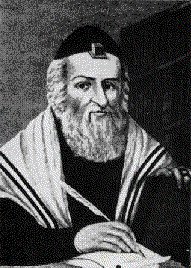
Rabbi Chaim ben Yitzchak of Volozhin was born in 1749 and became the leading disciple of Rabbi Elijah of Vilna, the Vilna Gaon. From the Gaon he absorbed a style of learning that prized textual precision, breadth across rabbinic literature, suspicion of empty cleverness, and a fierce confidence that the tradition could bear close reading. When the Gaon died in 1797, Rabbi Chaim did not inherit an office so much as a charge.
Six years later he founded Yeshivat Etz Chaim in Volozhin. The first cohort was small - tradition says ten local students supported at the founder's expense - but the principle was large. This was to be a standing institution rather than a rabbi's temporary circle. Students would come not because they lived nearby but because the place itself had become a destination. Donors would support learning they might never see with their own eyes. The centre of gravity shifted from town rabbi with a few select pupils to academy with its own discipline, schedule, prestige, and widening catchment.
There was joy in that confidence. A people scattered across an empire was still able to endow a house whose raw material was attention. No grand estate. No regiment. Just a building full of young men arguing over a folio and believing, with unnerving seriousness, that this was a civilisation's central labour.
Nefesh ha-Hayyim, first edition
The first edition of Rabbi Chaim's best-known work was printed in Vilna and Horodna three years after his death. The title page presents the book not as a casual notebook from a famous rabbi but as a durable theological statement. Later readers treated it that way. Among other things, it gave classic expression to the idea that Torah study sustains the world and that the learned life is not an ornament to Judaism but one of its engines.
First edition of Nefesh ha-Hayyim (Vilna and Horodna, 1824)The method and the scale
The Volozhin method was not mystical vagueness in an impressive hat. It was disciplined Talmud study, pursued with breadth and endurance. The Lithuanian yeshiva style that later generations would take for granted - formal sedarim, institutional leadership, an academy supported by donations, a student body drawn from many towns rather than one - took recognisable shape here. At its height the yeshiva counted several hundred students. That number matters less for its arithmetic than for what it meant: a provincial town was suddenly hosting one of the great intellectual concentrations of Jewish Europe.
Volozhin's seriousness also helps explain its theological tone. Rabbi Chaim's Nefesh ha-Hayyim defended a world in which study itself was sacred labour. It was not anti-prayer, and certainly not anti-piety. It simply refused to yield the crown. Learning was not the vestibule before religious life began. Learning was religious life at full voltage.
That put Volozhin in tension with two powerful neighbours. One was Hasidism, whose leaders taught joy, fervour, and attachment to the righteous rebbe. The other was the Haskalah, the Jewish Enlightenment, which pressed for broader intellectual horizons and, often, a different relationship to traditional authority. Volozhin did not ignore either pressure. It argued with both, and in the process clarified itself.
Against Hasidism, Volozhin stood for learning as the highest common currency of leadership. That did not make Hasidism unserious, still less contemptible. It meant the two camps ranked religious excellences differently. Against the Haskalah, Volozhin refused the proposition that modernity required downgrading Torah to one subject among many. Yet the contact was real. Some students read beyond the walls. Some later moved in maskilic or national directions. A great academy attracts argument the way a lamp attracts moths.
Volozhin made Torah study into a full-time vocation and then taught half the Jewish world how to build around it. That is what a mother institution does.
The yeshiva house still stands
The historic Volozhin yeshiva building survives in Valozhyn, in present-day Belarus. Modern documentation and restoration work have confirmed the durability of the structure and its place in the architectural record of Jewish Eastern Europe. Buildings do not prove legends, but they do save us from pretending the thing was abstract. This one had walls, windows, and a front door, which is how most revolutions begin when Jews are involved.
Centre for Jewish Art, Hebrew University of JerusalemThe closing and the dispersal
In 1892 the Russian authorities forced the issue. The state demanded a more substantial secular curriculum and closer regulation. The Netziv, Rabbi Naftali Zvi Yehuda Berlin, who then headed the yeshiva, would not recast the institution on those terms. Volozhin closed. The event lands heavily in memory because it feels symbolic: the empire meeting a beit midrash and deciding the latter ought to behave more like a state school.
But the important thing is what happened next. The model did not die. It dispersed. Other Lithuanian yeshivas - Mir, Telz, Slabodka, Brisk, and more besides - carried forward the Volozhin assumption that Torah learning could be organised as a total vocation and a public trust. The institution shut; the grammar survived. By the time the building fell silent, its intellectual children were already speaking in other towns.
That is why the story ends in confidence rather than grievance. Volozhin mattered because it changed the social form of Jewish learning. It took the Gaon's exacting textual world and built a durable human machine for transmitting it. The closure in 1892 was real. So was the afterlife. If you walk today into a Lithuanian-style yeshiva anywhere in the world - into its rhythms, its assumptions, its high view of sustained study - you are walking into a room Volozhin helped design.
Rabbi Chaim wrote a theology. Then he built a timetable for it. That may be the more Jewish achievement.
The closure order
By 1892 the Volozhin yeshiva was closed under pressure from the Russian authorities, who demanded expanded secular studies and tighter supervision. In Jewish memory the episode became a defining collision between the autonomy of the beit midrash and the modern state's appetite for management. The school shut. The pattern it had established did not.
Jacob J. Schacter, The Torah U-Madda JournalFurther reading