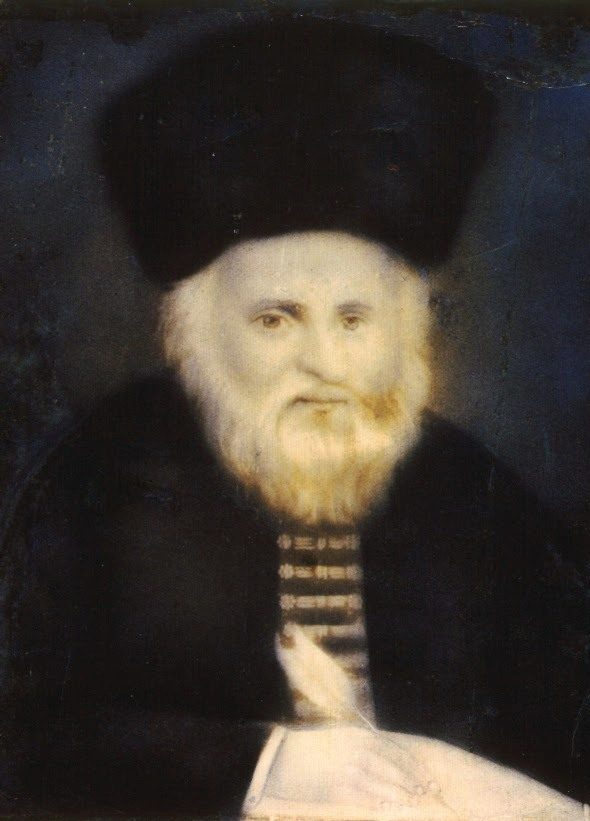
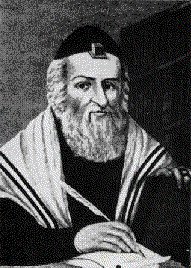
Not every religious revolution arrives with a manifesto. Sometimes it arrives with a tune, a crowded room, and the unnerving suggestion that heaven is listening just as closely to the carter as to the prodigy. That was the nerve of Israel ben Eliezer, the Baal Shem Tov - the Master of the Good Name - who lived in Medzhybizh in Podolia, in what is now Ukraine, and died in 1760. The movement that grew from his teaching would become Hasidism. Its first public claim was not that learning didn't matter. It was that the covenant had more doors than one.
That claim landed in a Jewish world that knew hardship well enough: poverty, distance from centres of learning, the ordinary humiliations of being small in somebody else's empire. The Baal Shem Tov answered none of this with self-pity. He answered it with intensity. He taught that a Jew serves God not only in study, but in prayer thick with feeling, in joy held as discipline, in melody, in fellowship, and in devekut - cleaving to God so steadily that the wall between weekday life and sacred life grows thin. In later Hasidic language this became avodah b'gashmiyut, service through the physical world. Bread, breath, dancing, work, tears, the whole inconvenient human kit - none of it lay outside the field of worship.

Joy as a serious thing
This is where people go wrong with Hasidism if they only glance at it from the pavement. They see dancing and assume lightness. They hear stories about shepherd boys and simple innkeepers and assume anti-intellectualism. The Baal Shem Tov's teaching was not a shrug at scholarship. It was a refusal to let scholarship become a caste marker between one Jew and another. The simplest person's heartfelt prayer, later Hasidic tradition insists, rises as surely as the scholar's. A scholar without humility may even be worse off. The point was not to flatten excellence. It was to deny that God could be monopolised by the educated.
That meant prayer changed temperature. Earlier Jewish piety had never lacked fervour, but Hasidism made inward heat a public method. Joy was not a garnish on worship. It was part of worship's engine. Collections of teachings attributed to the Baal Shem Tov and his circle, including Tzava'at HaRivash and later Keter Shem Tov, repeatedly turn back to this theme: sadness paralyses, joy opens, and prayer said with life in it travels further than prayer merely recited correctly. If that sounds obvious now, that's partly because Hasidism made it sound obvious.
And the teaching widened from prayer to the world itself. Hasidic thought, drawing on Kabbalah, treated divine presence as immanent rather than politely distant. If God suffuses creation, then matter is not a distraction to be escaped at all costs. It can be used, raised, redirected. Eating can be coarseness or gratitude. Singing can be performance or attachment. A table can be furniture or an altar of sorts. That is the audacity of avodah b'gashmiyut: not that the body becomes holy automatically, but that holiness may be worked through the body rather than in spite of it.
The Medzhybizh town censuses
Moshe Rosman's work on the Baal Shem Tov's historical footprint points to a thin but important documentary trail in Medzhybizh. In local records a holy man in the town is listed in 1740 as a "kabbalist", in 1742 and 1758 as a "baal shem", and in 1760 as a "baal shem doctor". It is not a full biography. It is better than that, in a way: a set of municipal scratches showing that the legend had an address.
Moshe Rosman, Founder of Hasidism: A Quest for the Historical Ba'al Shem TovWhat we know, and what we inherit
Here the story must separate itself cleanly from the record. The Baal Shem Tov is one of the central figures of Jewish memory, but the firm documentary evidence for his life is sparse. Modern historians such as Moshe Rosman have worked hard to recover the historical man from town records, contemporary references and the earliest layers of testimony. Hasidic tradition, for its part, has preserved something no archive can: the felt shape of the man as disciples and grandchildren wished him remembered. Neither register should impersonate the other.
What can be said with confidence is that by the 1740s Medzhybizh had become his centre, and that disciples gathered there. What can also be said is that the movement did not remain an intimate circle for long. The Baal Shem Tov himself left no authored book that can be treated as a clean autograph statement of doctrine. His teaching survives in sayings reported by disciples, in anthologies printed after his death, and in stories that move, with open lack of embarrassment, between memory and miracle. That is not a defect peculiar to Hasidism. Founders often arrive to history already wrapped in devotion. The tribe keeps both the wrapping and the man.
From Medzhybizh to everywhere
The Baal Shem Tov's genius was not only personal. It was transmissible. Among the figures who carried the movement outward, none mattered more than Dov Ber, the Maggid of Mezeritch, who died in 1772. Leadership passed first, briefly, to the Besht's son Tzvi (Tzvi Hersh), who held the role for roughly a year before Dov Ber became the movement's organiser and spokesman. If the Besht gave Hasidism its pulse, the Maggid gave it form. Around him gathered a generation of disciples who would plant the movement across eastern Europe: in Volhynia, Galicia, Poland, Lithuania and beyond. From those circles came the lineages and courts that later Jews would recognise by family names and town names - Chernobyl, Karlin, Breslov, Chabad, and many more.
This is where the figure of the tzaddik, or righteous leader, became central. Hasidism did not imagine holiness as a private hobby. It organised communities around living exemplars, later called rebbes, whose task was not only to interpret law or deliver sermons but to gather, elevate, direct and hearten. That produced the dynastic map still recognisable today. Critics saw danger in this. Devotees saw a human bridge sturdy enough to carry ordinary people across distances they could not cross alone.
It also changed the emotional architecture of Jewish community. A court was a place of teaching, yes, but also of song, table fellowship, petition, blessing, storytelling and embodied presence. The rebbe was not merely a lecturer with a better chair. He was the centre of a lived religious weather system. That model could be abused, because all human models can be. But its staying power tells you something plain. Jews do not keep institutions for two and a half centuries out of whim.
Shivchei HaBesht
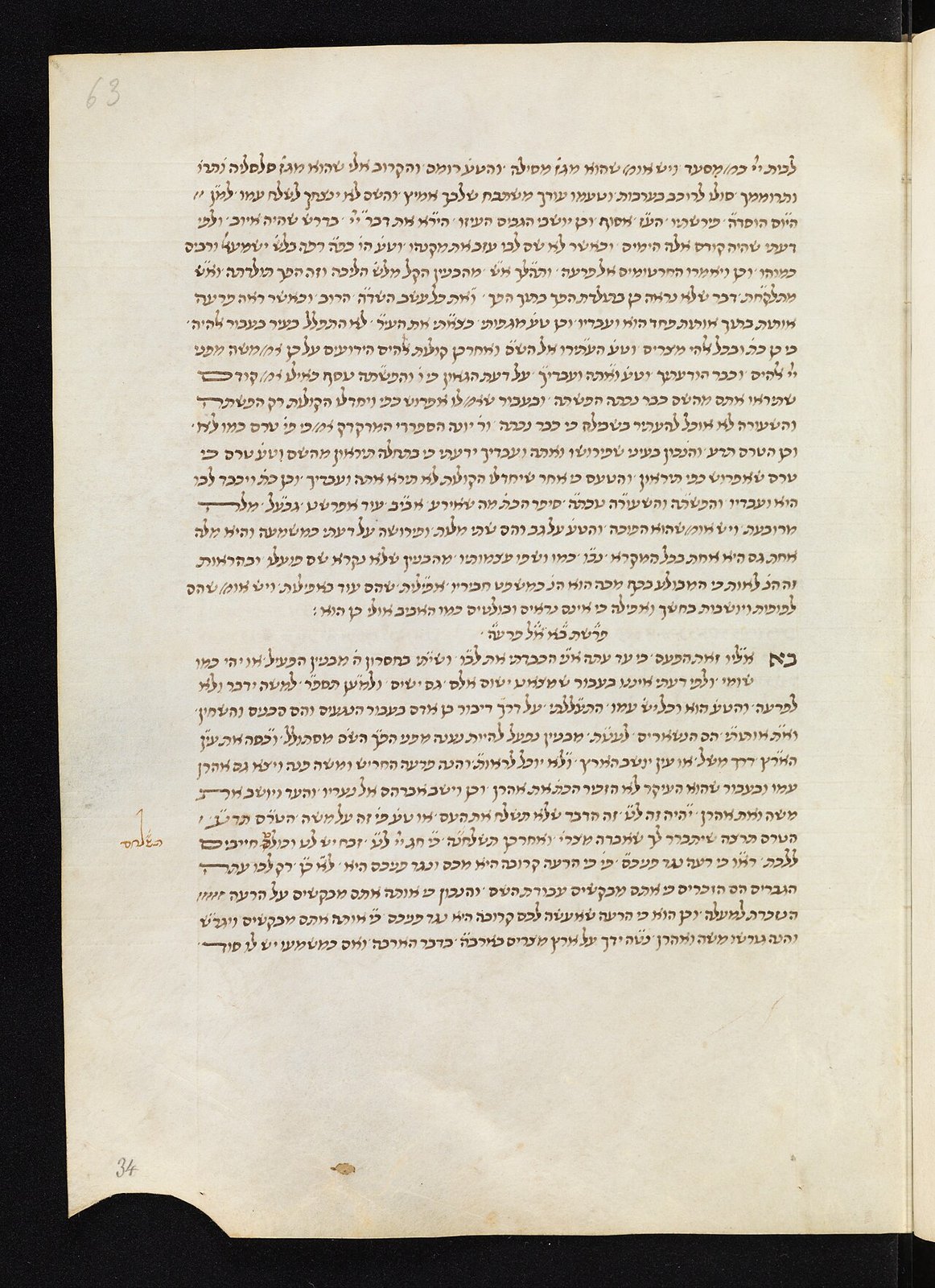
The early hagiographic collection Shivchei HaBesht - "In Praise of the Baal Shem Tov" - was first printed in Hebrew at Kopys in 1814; Yiddish translations followed in 1815. It is the great storehouse of Besht stories: wonders, journeys, sharp sayings, rescues, holy intimacies and comic turns. It is indispensable and not straightforwardly documentary. The book tells us less about civil administration than about how early Hasidim wanted their founder remembered. That, too, is a historical fact.
Shivchei HaBesht, Kopys editionThe argument the tribe was big enough to hold
Hasidism did not spread into empty space. It spread into communities with rabbis, scholars, habits, anxieties and standards of their own. The sharpest opposition came from the Mitnagdim, the "opponents", above all under the influence of the Vilna Gaon. In Vilna and beyond, anti-Hasidic decrees were issued in 1772 and again in 1781. The objections were real. Opponents feared ecstatic prayer unmoored from discipline, the social power of charismatic leaders, changes in liturgical custom, and what looked to them like dangerous overreach in mystical language.
None of this should be reduced to caricature. The Mitnagdim were not simply joyless bores sent to ruin the dancing. Hasidim were not simply unserious enthusiasts skipping the hard work. This was a serious family argument about how a Jewish life should be ordered: study and hierarchy first, or fervour and accessibility pushed far more openly to the front; caution around charisma, or trust that charisma could be harnessed for sanctity. The Jewish world proved larger than the dispute. Both traditions endured. Both changed. Neither disappeared.
The provocation was not that learning had ceased to matter. It was that heaven had more doors than one.
The grave at Medzhybizh
The Baal Shem Tov's grave is in the old Jewish cemetery at Medzhybizh, where an ohel marks the site and pilgrims still come. The town in present-day Khmelnytskyi Oblast remembers him not as an abstract founder but as one of its dead. Stones have the advantage of staying put while arguments travel. This one has done both.
Old Jewish cemetery, MedzhybizhWhat stayed alive
What began in Medzhybizh did not remain there, and it did not remain only 18th century either. Hasidic dynasties still live, teach, marry, sing, argue, split, reconcile, publish and bury their dead under names first rooted in that eastern European map. Their theological accents differ. Their customs differ. Some are inward, some expansive, some courtly, some fierce. But the original wager remains recognisable: that ordinary Jews are not the outer ring of the covenant, that joy is a form of strength, and that attachment to God may be cultivated in the thick of lived life rather than after escaping it.
That is why the Baal Shem Tov matters beyond piety and beyond nostalgia. He helped give Jewish history one of its most durable answers to constriction. Not flight from the world, and not surrender to it either, but the insistence that the world can be worked on from within - by prayer, by song, by fellowship, by the refusal to concede spiritual dignity only to the learned few. It was a bold answer. It still is. Somewhere in that answer there is still a room in Medzhybizh, crowded and singing, making joy behave like a discipline and not a mood.
Further reading
Story & Stone · Faith & Idea
Next on the shelf: the Vilna Gaon and the learned argument against Hasidism →