Pick a century. Somewhere in the land, a Jew is already up. In late Roman Sepphoris he is walking to a study house. In Tiberias a few centuries later, a scholar is setting tiny signs above and below Hebrew letters so the Bible can still be read properly. In medieval Jerusalem, a handful of Jews gather in a damaged city because a handful is still a community if it prays. In Safed, type is inked and pressed into paper in Hebrew. In Hebron, the old courtyard opens again at dawn. The scale changes. The fact doesn't.
This matters because so much Jewish history is told as if the land disappears between catastrophes and returns only when the headlines do. It doesn't. The record never gives us silence long enough to call absence. It gives us communities big and small, strong and poor, sometimes flourishing, sometimes reduced to a minyan and a stubborn habit, but there. The forms of life change - Temple, academy, synagogue, courtyard, printing house - and the thread keeps going.

Galilee after the ruin
After the destruction of the Second Temple and the crushing of the Bar Kokhba revolt, Jewish life in the land did not end. It shifted north. Galilee became the great workshop of rabbinic Judaism. Sepphoris - Tzippori - emerged as one of its chief towns. Rabbi Judah ha-Nasi, associated with Sepphoris in the early third century, gave the Mishnah its enduring form at just the moment when Jewish life required structure more than grandeur. The Temple was gone. The arguments were not. Thank God for that.
Tiberias then took its turn. The Sanhedrin's last seat was there. The Jerusalem Talmud - really a Galilean work despite the name - was compiled in the academies of the land, above all in Tiberias and Caesarea, with Sepphoris in the same scholarly world. That is continuity in one of its most recognisable Jewish forms: not only living in a place, but turning life in that place into text. If Jerusalem had been the mountain, Galilee became the long table where the pages were arranged.
The archaeology fits the books. Synagogues continue to appear. Hebrew and Aramaic continue to appear. Sepphoris in late antiquity was not an after-image of Jewish life but one of its centres. Tiberias remained a major Jewish city for centuries. The geography had changed. The people had not.
The synagogue at Sepphoris
Excavators uncovered the remains of a synagogue on the northern side of Sepphoris, with a mosaic floor that includes Jewish liturgical imagery and Hebrew inscriptions. It is not a theory about Jewish communal life in Galilee. It is a synagogue floor, in a Jewish town, from late antiquity, laid down by people who expected to be there next week as well.
Tzippori National ParkThe scholars of Tiberias
Then comes one of the quiet marvels of Jewish history. Between roughly the eighth and tenth centuries, the Masoretes of Tiberias - above all the Ben Asher family and their circle - refined the vocalisation, accentuation and transmission of the Hebrew Bible. Their work gave durable shape to the text that Jews across the world would read. The signs are tiny. Their consequence is enormous.
It is worth lingering here, because this is precisely the sort of thing that gets lost when people talk in slogans. Tiberias was not merely a place remembered in prayer. It was a living Jewish scholarly centre under early Islamic rule, productive enough to standardise how Scripture should sound in Jewish mouths. A city does not do that if it is a memory only. A community does not do that if it is absent.
The Aleppo Codex, written in Tiberias around 920 in the Ben Asher tradition and later trusted by Maimonides, is one of the clearest witnesses. Jewish continuity in the land is sometimes imagined as sentiment. Here it is as punctuation.
The Aleppo Codex
A medieval Hebrew Bible manuscript written in Tiberias and associated with Aaron ben Asher's Masoretic tradition. Maimonides later endorsed the Ben Asher text as the most reliable. The surviving codex now in Jerusalem is one of the strongest material links to the Tiberian scholars who fixed the biblical text in the form Jews still use. Not bad for the work of margin notes.
Israel Museum, JerusalemJerusalem was never only a longing
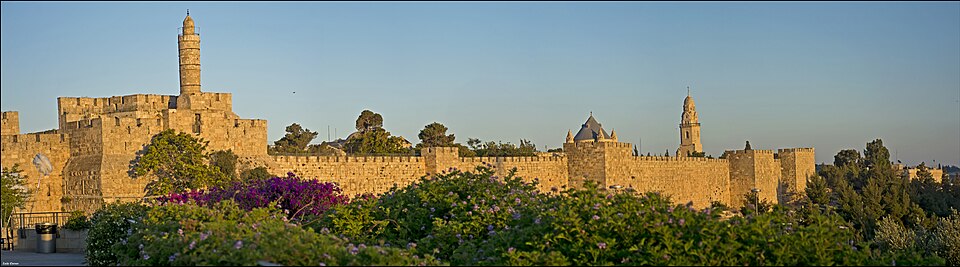
Medieval Jerusalem could be battered, thinly populated and politically marginal, but it was not erased from Jewish life. Pilgrims came. Scholars came. Small communities persisted. In 1267 Nachmanides arrived and wrote the most famous account. In the traditional version of the letter attributed to him, he found the city desolate and only two Jewish brothers, dyers by trade, living there - and yet he also described Jews gathering on Sabbaths and festivals, and a synagogue being re-established from ruins. That combination is the whole point. Reduced is not the same thing as gone.
Even when Jerusalem was poor in Jews, it was not empty of them. The same holds for the wider land. Tiberias still had a Jewish community in the twelfth century. Safed had one before its great sixteenth-century flowering. Hebron's community, too, appears in the record well before modern times, with old families, scholars, pilgrims and courtyards of prayer. These were not always large centres. They did not need to be. Continuity is not a population contest.
And when the record thickens again, it thickens in recognisably Jewish places. Jerusalem. Safed. Tiberias. Hebron. The names recur because the people recur.
By the early modern period, the line grows brighter. Safed became one of the great Jewish towns of the Ottoman world - a centre of law, mysticism, commerce and song. Joseph Karo was there. Moses Cordovero was there. Isaac Luria was there. So was a printing press, which is a more terrestrial sort of holiness but no less convincing as evidence that people intended to stay and work.
The line does not run as a triumph. It runs as a habit. Century after century, Jews are still there to pray, study, print, bury, rebuild and begin again.
The Hebrew press at Safed
In 1577 Eliezer ben Isaac Ashkenazi established a Hebrew printing press in Safed, with sources often naming Abraham ben Isaac Ashkenazi as his partner; it is generally described as the first known Hebrew press in the land and the first printing press in West Asia. A town does not become a centre of Hebrew printing by accident. It happens because scholars, patrons, readers and apprentices are already there, and because they expect more books to be needed next year.
Museum of Printing, SafedThe Old Yishuv
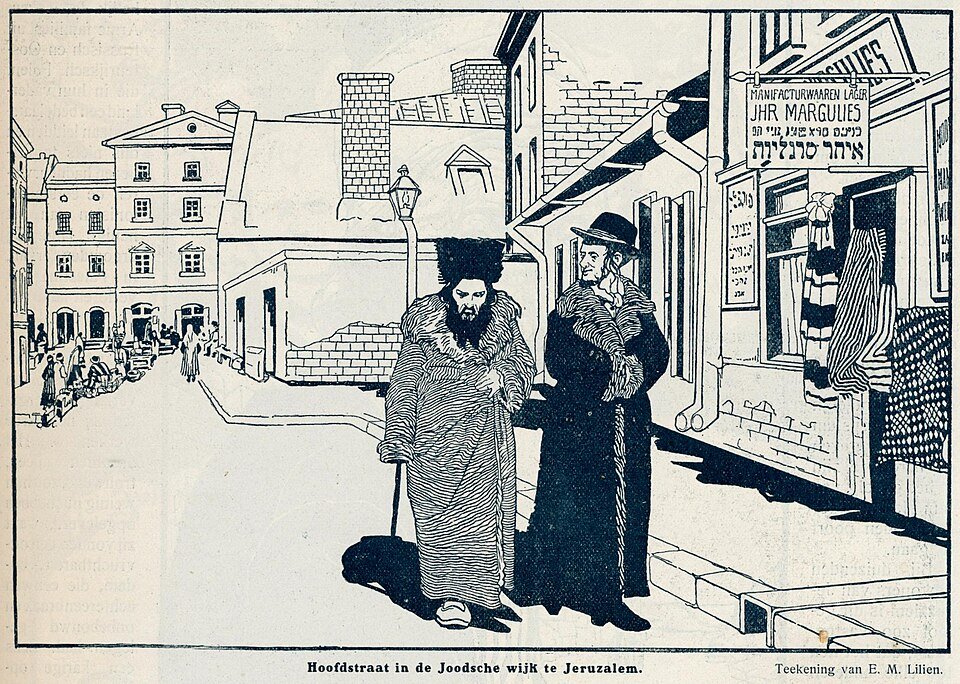
Long before political Zionism had a name, the Old Yishuv was already living in the land. Not as a single bloc and not in a single style. There were Musta'arabi Jews whose families had been there for centuries, Sephardim who arrived after the expulsions from Spain and Portugal, and later Ashkenazim who joined them. Their centres were the four holy cities - Jerusalem, Hebron, Safed and Tiberias - with smaller communities elsewhere. Some lived from trade, some from crafts, some from charity sent by the diaspora, many from a mixture of all three. None of that makes them less real. It makes them human.
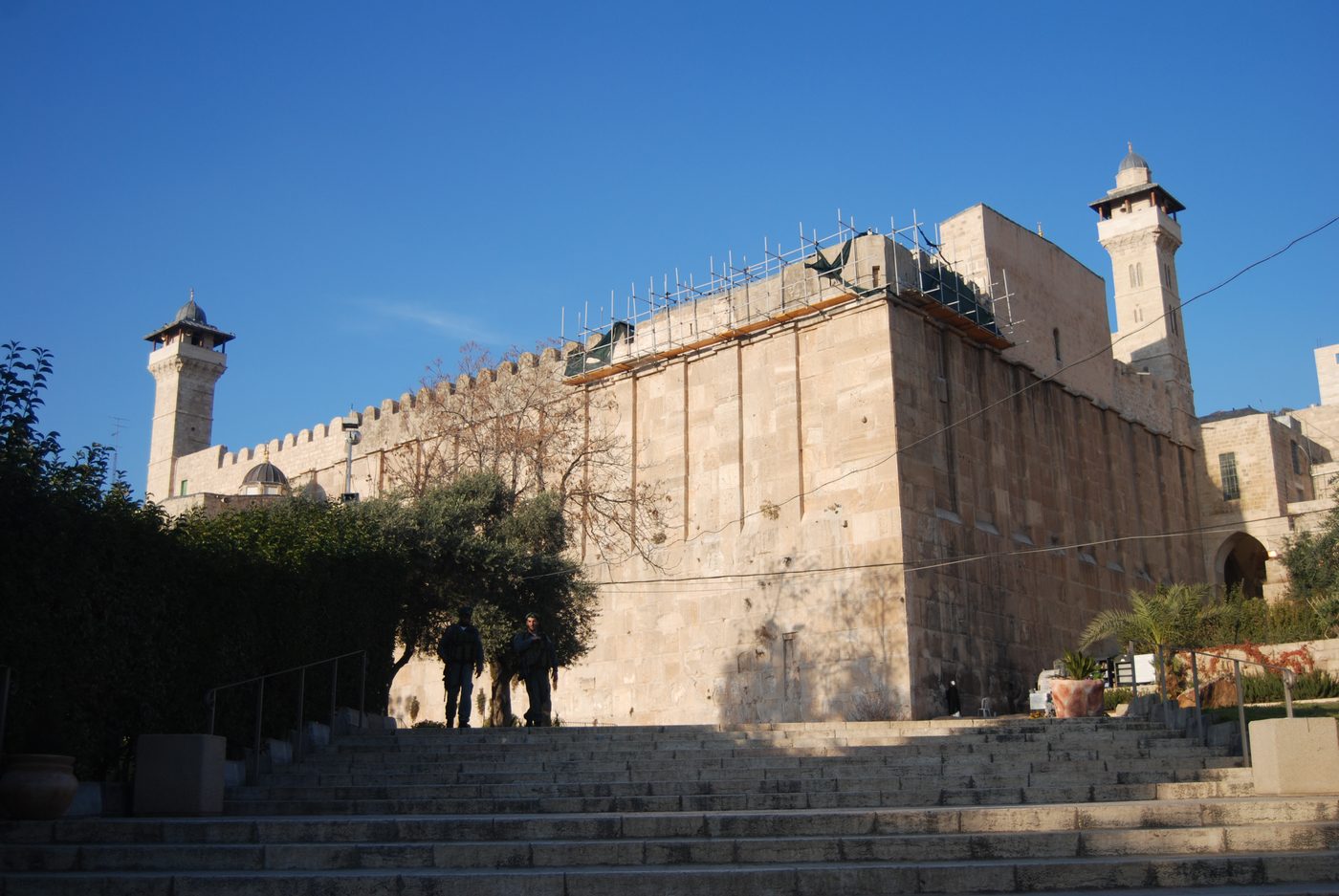
They prayed in Jerusalem. They studied in Safed. They rebuilt after earthquakes in the Galilee. They kept Hebron's old Jewish courtyard alive until the modern age. They quarrelled, naturally. They sent emissaries abroad. They welcomed newcomers and argued with them. They were not a preface to the story. They were the story in one of its longest chapters.
That is the quiet fact at the heart of the matter. Jewish life in the land did not vanish after antiquity and then reappear in modernity like a theatre trick. It persisted in changed conditions and changed numbers, but persisted. Sometimes in famous centres. Sometimes in small congregations. Sometimes in grandeur, often in poverty, nearly always with books. The historical record shows recurring Jewish presence in the land across many centuries, with no clear evidence of a total break, but the surviving sources are too fragmentary to prove presence in every single year. Only a people continuing to do what it had the audacity to call normal.
The line does not run as a triumph. It runs as a habit - old, disciplined, cheerful when it can be, faithful when it must be. Morning prayer in Jerusalem. Study in Tiberias. A press in Safed. A courtyard in Hebron. The same people, still awake.
Further reading