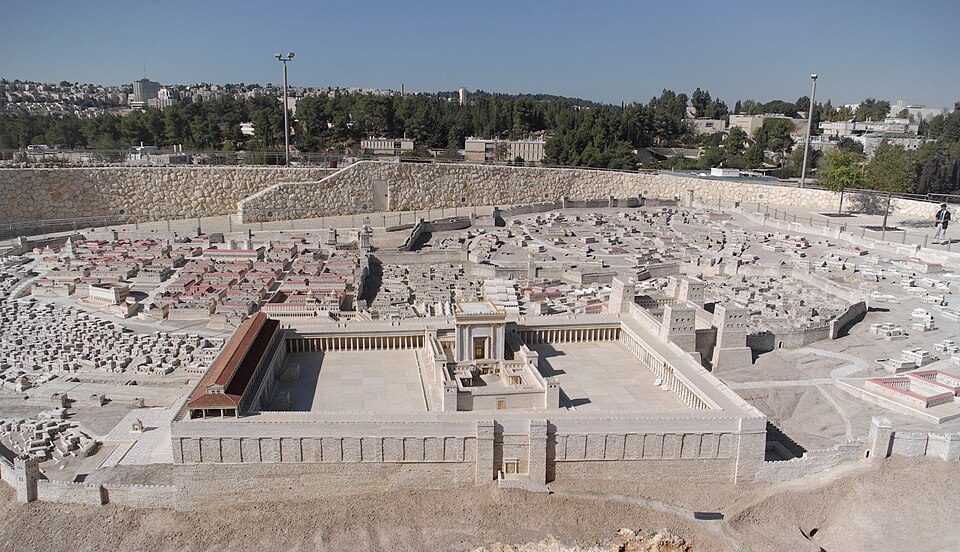
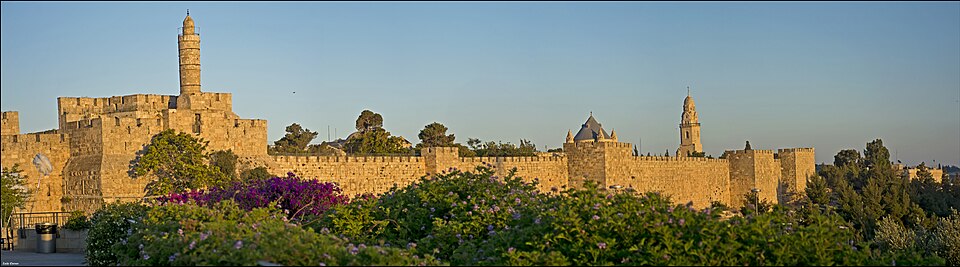
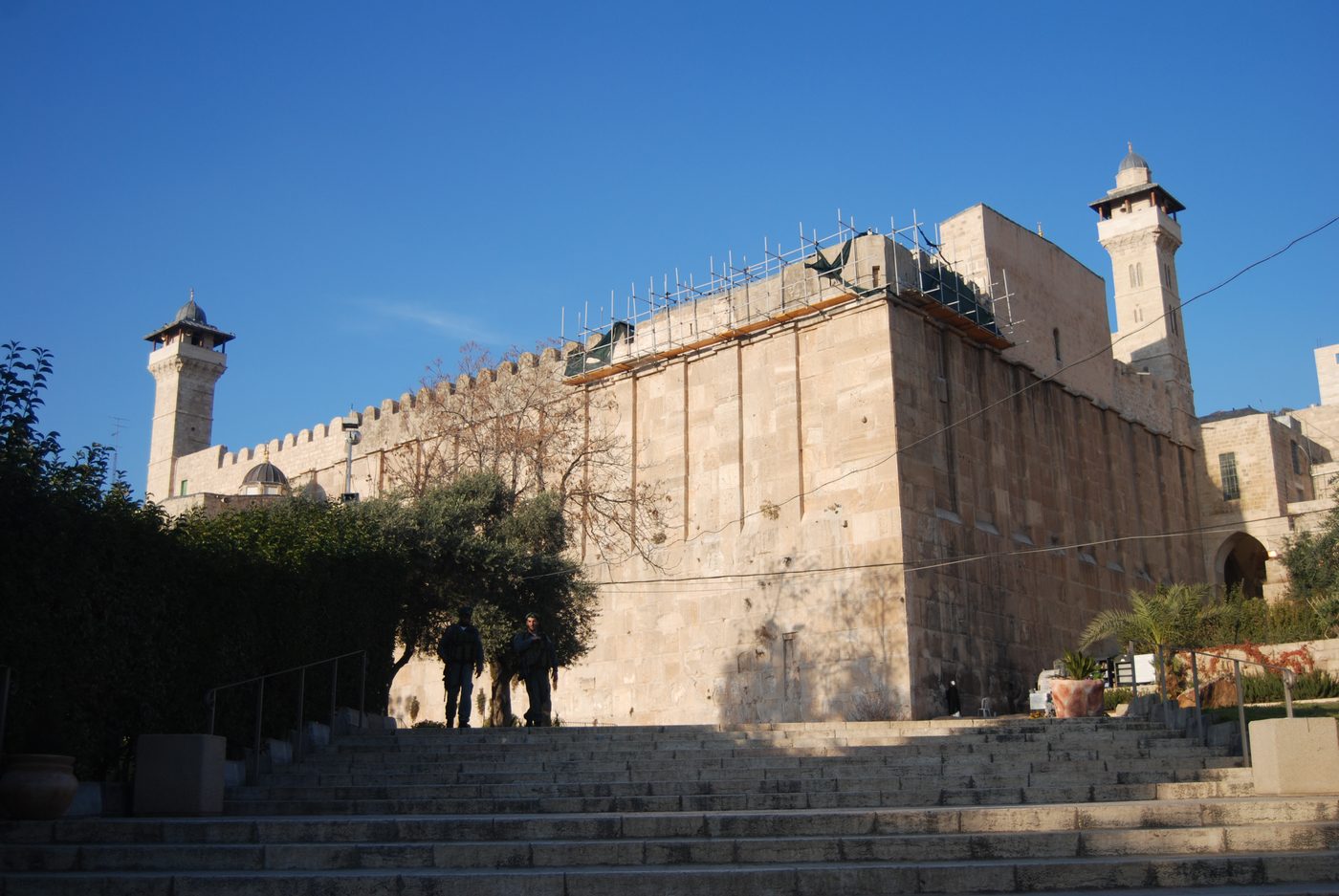
There is a tidy version of the story in which the land sits empty in Jewish memory, kept alive only by prayer and longing in some far-off parlour, until modern Zionism arrives at the end of the nineteenth century and wakes it up. It is a clean story, and it is wrong. For all the centuries that memory was doing its work abroad, there were also Jews on the actual streets. They prayed at the actual Wall, buried their dead in the actual ground, kept synagogues open in towns you can still walk through. They were poor, learned, dependent, quarrelsome, pious and stubborn. In other words, alive. That continuous, unglamorous, on-the-ground presence is what historians later named the Old Yishuv, to distinguish it from the New Yishuv of the Zionist waves that followed.
The word yishuv just means settlement, the settled Jewish community of the land. The label Old came afterwards, applied by the newcomers, and it carries a faint condescension the old community did not earn. These were not relics waiting to be rescued. They were the link that kept the chain unbroken - the people who made sure that when the modern movement spoke of return, there was somewhere with a Jewish pulse already in it to return to.
Their world had a particular geography. Above all it clustered in the four cities tradition holds holy: Jerusalem for the Temple and the Wall, Safed for the mystics who had turned it into the capital of kabbalah, Tiberias for the graves of the sages and the old Sanhedrin, and Hebron for the Cave of the Patriarchs. Between them they held the memory of the land in place, one funeral, one Torah lesson, one ritual bath at a time.

Two communities under one sky
The Old Yishuv was never one thing. Its older layer was Sephardi and Mizrahi - Ladino-speaking descendants of the Spanish expulsion and Arabic-speaking Jews long settled across the Ottoman world, who were subjects of the empire, spoke its languages, and lived inside its legal arrangements with a fluency that came from belonging there. Onto that older community came waves of Ashkenazim from eastern Europe: Hasidim and their opponents, the disciples of the Vilna Gaon known as Perushim, arriving in the late eighteenth and early nineteenth centuries to live and pray and die in the holy land. The two communities did not always get on. They had different languages, different rites, different rabbis, and frequent quarrels over the one resource they all depended on, which was money from overseas.
That dependence has been used against them, then and since. Much of the Old Yishuv lived on the halukka, the organised charity sent by Jewish communities abroad to support those who studied and prayed in the holy cities on everyone's behalf. Critics, including some later Zionists, sneered at a community living on alms rather than its own labour. The sneer misses the point. Maintaining a Jewish presence in a poor Ottoman backwater, in cities of real hardship and recurring plague, was itself a service the diaspora was glad to pay for. Someone had to keep the lamps lit at the Wall. These were the people who did.
And they did more than pray. By the middle of the nineteenth century the community in Jerusalem had outgrown the cramped Jewish Quarter of the Old City, and in 1860 the first neighbourhood was built outside the walls - Mishkenot Sha'ananim, funded by the British Jewish philanthropist Sir Moses Montefiore, its windmill still standing. It was the seed of modern Jewish Jerusalem, and it was planted by the Old Yishuv, not by the movement that gets the credit.
A Jewish majority returns to Jerusalem
By the middle of the nineteenth century Jews had become the largest single community in Jerusalem. Western travellers and consular reports of the 1850s and 1860s record a Jewish plurality in the city, and by the Ottoman and British counts of the following decades Jews were a clear majority of its inhabitants - well before the political Zionist movement existed. The presence the Old Yishuv maintained was not symbolic. It was demographic fact on the ground.
Ottoman and consular records, JerusalemSafed, the city of the mystics
If Jerusalem held the centre, Safed held the imagination. In the sixteenth century, after the expulsion from Spain, this small Galilean hill town became, improbably, the most creative place in the Jewish world. The codifier Joseph Karo wrote the Shulchan Aruch there, the legal code that still governs observant Jewish life. Isaac Luria, the Ari, taught a kabbalah there so original it reshaped Jewish mysticism for everyone who came after. The Friday-night hymn Lecha Dodi, sung in synagogues across the world to welcome the Sabbath, was written in Safed by Shlomo Alkabetz, who used to walk out into the hills at dusk to greet the Sabbath as a bride.
That golden age did not last - earthquakes, plague and decline followed - but it left Safed permanently marked as one of the four. The point is worth holding onto. The Old Yishuv was poor and dependent, yes. It was also capable, in its best moments, of producing work that the whole Jewish world still lives inside. Continuity is not the same as stagnation. Somebody was keeping the place warm, and now and then they were doing it brilliantly.
The Shulchan Aruch and Lecha Dodi
Joseph Karo completed his legal code, the Shulchan Aruch, in Safed; first printed in Venice in 1565, it remains the standard code of Jewish law. In the same town Shlomo Alkabetz composed the Sabbath hymn Lecha Dodi, still sung at the Friday-night service in synagogues worldwide, and Isaac Luria taught the Lurianic kabbalah that reshaped Jewish mysticism. The Old Yishuv did not only preserve. In Safed it created texts the whole Jewish world still uses.
Shulchan Aruch, Venice 1565The land kept ordinary
The real achievement of the Old Yishuv was to keep the land from becoming only an idea. It is easy to revere a place from a distance, to weep for it once a year, to face it in prayer and never go. Harder, and more important, is to live there - to deal with Ottoman officials, pay rent, raise children, bury parents, argue with neighbours, and do it all in towns of genuine hardship. The Old Yishuv kept Jewish presence ordinary, and ordinariness is the most durable thing there is. Longing can be done from anywhere. Living can only be done in one place.
When the modern movement arrived with its new vocabulary, it did not write on a blank page. It wrote on a land that had Jewish streets, courtyards, synagogues and graves already in it, maintained by people who had never left. The proud version of the story includes both. The dreamers who came to build, and the stubborn old community who had kept the address occupied so that there would be somewhere to come back to.
The exiles abroad kept the memory alive. The Old Yishuv kept the place alive, which is harder.
Further reading