A standard page of Talmud is one of the tribe's most confident pieces of design. The text sits in the middle. Rashi is tucked close on the inner margin, like the indispensable teacher leaning over your shoulder. Opposite him, on the outer side, come the Tosafot - not calm, not linear, not especially interested in staying in their lane. They ask why this line here says one thing when another tractate seems to say the reverse. They pull a sugya fifty pages away into the room. They refuse to let an easy answer leave early. The page looks settled. The thought on it absolutely isn't.
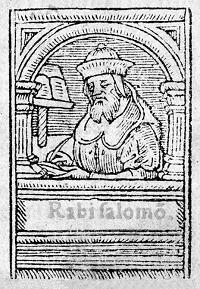
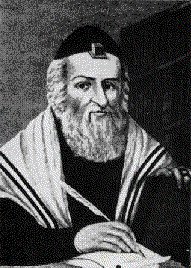
The school behind those outer-margin notes arose in the generations after Rashi's death in 1105. Its first great figures were his own grandsons, above all Rabbi Jacob ben Meir, known as Rabbeinu Tam, born around 1100 and dead in 1171, and his older brother Rabbi Samuel ben Meir, the Rashbam, born around 1085. They belonged to the Jewish world of northern France, but not to northern France alone. The routes of learning ran through Champagne, Normandy, the Rhineland and back again. Teachers, rulings, manuscripts and objections travelled well, which is another way of saying that arguments did.
Rashi's gift had been clarity. He explained the line in front of you - the hard word, the unspoken assumption, the turn in the argument that would otherwise leave a student stranded. The Tosafists inherited that clarity and then did something more dangerous with it. They treated the whole Talmud as one interlocking conversation. If a passage in Berakhot jarred against one in Pesachim, or a sugya in Bava Kamma seemed not to sit neatly with one in Ketubot, that wasn't an inconvenience to be ignored. It was the work.

From commentary to method
The difference is worth saying plainly. Rashi is usually trying to tell you what the passage means. The Tosafists are usually trying to tell you why this passage can still be true once every other awkward passage has been invited in to complain. Their unit of thought is larger. Not the sentence. Not even the sugya. The tractates together.
That shift produced the form still recognisable in the printed Tosafot: a question, then a contradiction, then an answer sharp enough to keep both texts standing. Sometimes the answer is a distinction between cases. Sometimes it is a matter of sequence, intention, legal category or scope. Sometimes it is the sort of rescue operation that leaves you admiring the nerve as much as the logic. But the governing instinct remains the same: the Talmud is not a heap of statements. It is a system, and systems have to be made to cohere.
Rashbam matters here precisely because he was not simply Rabbeinu Tam's supporting cast. In Bible commentary he pressed hard for peshat, the plain sense. In Talmud he belonged to the same family habit of close reasoning, but with a different temperament. Rabbeinu Tam, by contrast, became the presiding genius of the early Tosafist world. Later tradition remembered him not only as a formidable decisor, but as the mind that made contradiction productive. His surviving work Sefer ha-Yashar is a fine clue to the whole enterprise: it is deeply concerned with reconciling difficult talmudic passages and with resisting clever textual surgery when thinking harder would do.
The Bomberg Talmud page
Daniel Bomberg's complete Babylonian Talmud, printed in Venice between 1519 and 1523, fixed the page form that later editions followed: the talmudic text in the middle, Rashi on the inner side, Tosafot on the outer. The arrangement had precedents in earlier Soncino tractates, but Bomberg made it normative across the full Shas. The page became a map of authority that students still know by heart.
Wikimedia Commons · File:Berakhot2a.jpgNorthern France, with the Rhineland listening in
The Tosafists are often described as a French phenomenon, which is true and not quite enough. Their great schools stood in places like Ramerupt, Troyes, Dampierre and Sens, but the intellectual weather was shared with the Rhineland communities that had shaped Ashkenazi learning before them. This is why the Tosafot feel both local and networked. They are rooted in the teaching hall and already thinking continentally.
That habit was strengthened by circumstance. Medieval Ashkenaz lived by memory, letters, travelling scholars and a degree of intellectual stubbornness that deserves to be called one of the tribe's renewable resources. A contradiction noticed in one town did not stay there. Nor should it. If the Talmud was to function as the engine of halakhic life, then its rough edges had to be worked over in public, repeatedly, by people who trusted the text enough to press it hard.
The result was not merely a body of notes. It was a pedagogy. To learn in the Tosafist manner was to assume that difficulty was not a failure of study but its beginning. The student was being trained not just to remember rulings, but to move between passages, build distinctions, detect collisions and live without panic inside a dense argument. That mental habit outlived every one of the French schools that first sharpened it.
Which is why the contrast with Rashi should not be overdone. The Tosafists did not replace him. They stood opposite him. Rashi remained the indispensable guide to what the text is saying. The Tosafists became the masters of what the text must now answer for elsewhere.
Rashi explains the line in front of you. The Tosafists ask what happens when that line collides with another fifty pages away. That second move became the engine of Ashkenazi study.
Rabbeinu Tam's Sefer ha-Yashar
The work most closely associated with Rabbeinu Tam survives in an imperfect printed tradition, but its profile is unmistakable. Sefer ha-Yashar, first printed in Venice in 1544 and later reprinted in Vienna in 1811, is concerned with reconciling apparently contradictory talmudic rulings and with preserving the received text against unnecessary emendation. In other words, the book behaves exactly as a Tosafist should.
Jewish Encyclopedia · Sefer ha-Yashar traditionThe argument that stayed on the page
Later generations edited, selected and rearranged the Tosafot, so the printed versions are not a stenographic transcript of one room in Ramerupt or Troyes. They are a curated inheritance from several schools and several centuries. Even so, the family resemblance is obvious. The outer margin keeps teaching students how to think.
That is the real legacy of Rashi's heirs. Not simply more commentary, and not merely a famous typography. They created a discipline of reading in which the Talmud is presumed to answer to itself across distance. It is a daring assumption. It has also proved astonishingly durable.
So the standard folio still stages the old arrangement. The text in the middle. Rashi close in. Tosafot leaning outwards, dragging the rest of the canon into court. It is one of the most Jewish sights there is: clarity on one side, argument on the other, and study refusing to choose between them.
Further reading