Imagine three scholars in the same city, reading the same Torah, reaching entirely different conclusions about what it demands - and each one convinced that the other two have missed the point so badly it borders on apostasy. That was Jerusalem in the first century CE. Not a quiet city of piety, but a place of intellectual ferment and genuine theological fury, where the question of how to be Jewish was open, contested, and alive in a way it hadn't been before and perhaps hasn't been since. Josephus, who lived through the end of it, called the main groupings "philosophies" - the word a Greek-speaking man reaches for when he means people who argue about first principles. It's not a bad word for them.
The three philosophies were the Sadducees, the Pharisees, and the Essenes. They agreed on very little. They disagreed about the authority of tradition, the fact of resurrection, the purity of the priesthood, and the correct response to Roman rule. They were all, in their different ways, serious about God. And then, in 70 CE, the Temple burned, and the argument was abruptly sorted by history. Two of the three streams vanished. The third did not. Understanding why is, in some sense, understanding everything about what Judaism became.

The first stream: the priests and the written word
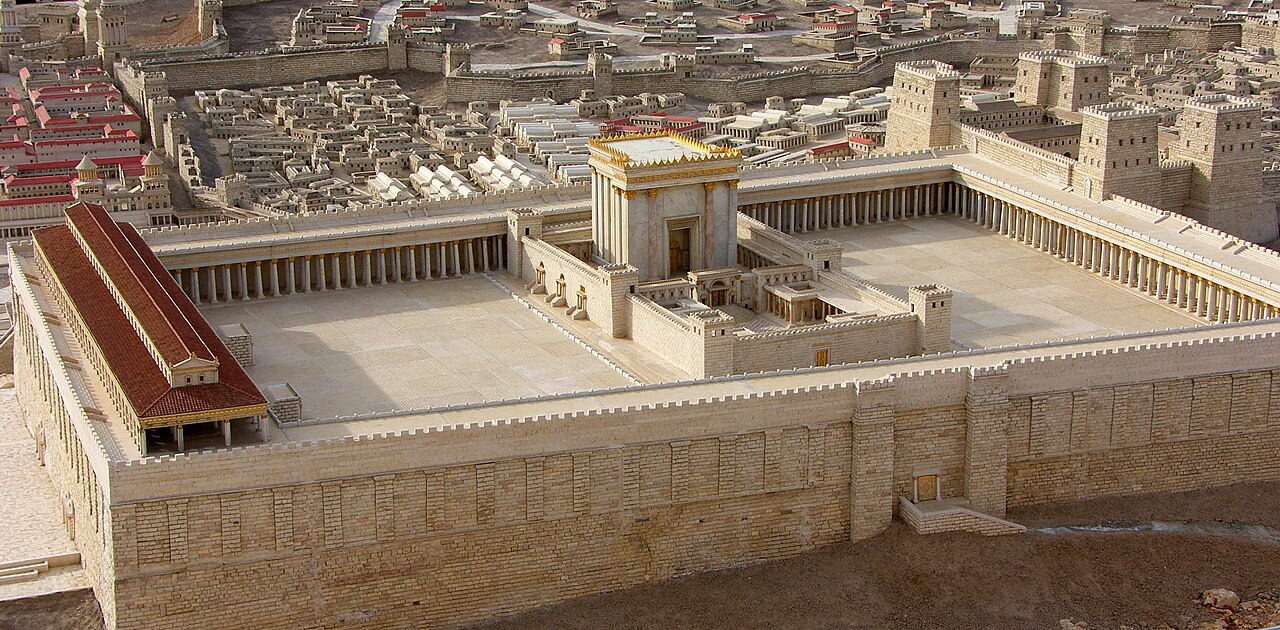
The Sadducees were, in the bluntest terms, the establishment. Drawn from the priestly aristocracy and the wealthy landowning families who orbited it, they controlled the Temple, ran the sacrificial system, and dominated the Sanhedrin - the highest Jewish court and legislative body. Their name is probably connected to Zadok, the high priest in Solomon's time, though scholars dispute the exact derivation. What isn't disputed is their position: they were the people the Temple was built for, and they acted like it.
Their theology matched their institutional conservatism. They accepted the written Torah - the five books of Moses - as authoritative, and they rejected the oral tradition that the Pharisees had built alongside it. If it wasn't written down by Moses, it wasn't law. They also rejected the resurrection of the dead, which they considered a late and unwarranted innovation, along with a developed angelology and a doctrine of divine providence shaping individual lives. Josephus is careful to note this in Jewish War: the Sadducees "take away the belief of the immortal duration of the soul, and the punishments and rewards in Hades." For them, this world was the one that mattered, the Temple was where it was sanctified, and the job was to keep the system running.
That pragmatism extended to politics. The Sadducees were, by and large, willing to accommodate Rome, because the Temple's continuity was worth more to them than symbolic defiance. It was a rational calculation. It was also, in retrospect, a wager on a building. When the Temple fell in 70 CE the Sadducees fell with it - their whole identity, their theology, their authority, and their purpose were inseparable from the institution that no longer existed. We have no Sadducee texts. We know them largely through their opponents. A theology built on a place has no portable form.
The second stream: the portable religion
The Pharisees are the group history remembers most unfairly, which is saying something given the competition. The word entered English as a synonym for hypocrisy, courtesy of the Christian gospels, which were written in the aftermath of a period when the Pharisees and the early followers of Jesus were competing for the same audience - Jews trying to work out what Judaism meant after the Temple's destruction. Polemic has a long half-life. It's worth setting it aside.
What the Pharisees actually were was a movement of teachers and interpreters who built a Judaism that could function anywhere. They taught in synagogues rather than at the altar. They developed the oral tradition - the accumulated body of interpretation and ruling that applied Torah to daily life in the real world - and they treated it as equally authoritative with the written text. They believed in resurrection, in angels, in divine providence working through individual lives. Josephus, who presents himself as having briefly studied with them before the revolt, notes their popular appeal: "These have so great a power over the multitude, that when they say anything against the king, or against the high priest, they are presently believed." They were the party that spoke to ordinary people, because they were building a Judaism ordinary people could practise outside the Temple's shadow.
This turned out to be the most important design decision in Jewish history. When the Temple fell and the priestly system with it, the Pharisees already had the architecture for what came next. According to later rabbinic tradition, Yochanan ben Zakkai, the Pharisee sage, was smuggled out of besieged Jerusalem in a coffin, and asked the Roman general Vespasian for one thing: Yavneh, and its scholars. A small town. A study house. Permission to argue. Whether the account is literally true or a later idealisation, the outcome it describes is real: the permission was granted, and at Yavneh the tradition that became rabbinic Judaism was assembled. The Mishna, the Talmud, the whole apparatus of study-centred Jewish life - these are the Pharisees' legacy, carried out of Jerusalem in a scholar's head rather than in stone.
When the Temple fell, the Pharisees already had the architecture for what came next. They'd been building a Judaism that didn't need a building.
The third stream: the desert library
The Essenes took a different view of the entire problem. The Jerusalem Temple, in their judgement, was already corrupt - its priests illegitimate, its calendar wrong, its rituals compromised. Rather than arguing from within or reforming from the margins, they withdrew. Josephus describes several Essene communities in towns across Judea, all living under a shared discipline of communal ownership, strict purity, celibacy in at least some communities, and an asceticism that impressed even him: "These Essenes reject pleasures as an evil, but esteem continence, and the conquest over our passions, to be virtue." They were, in their own telling, the true Israel, preserving righteousness until the end that was surely coming.
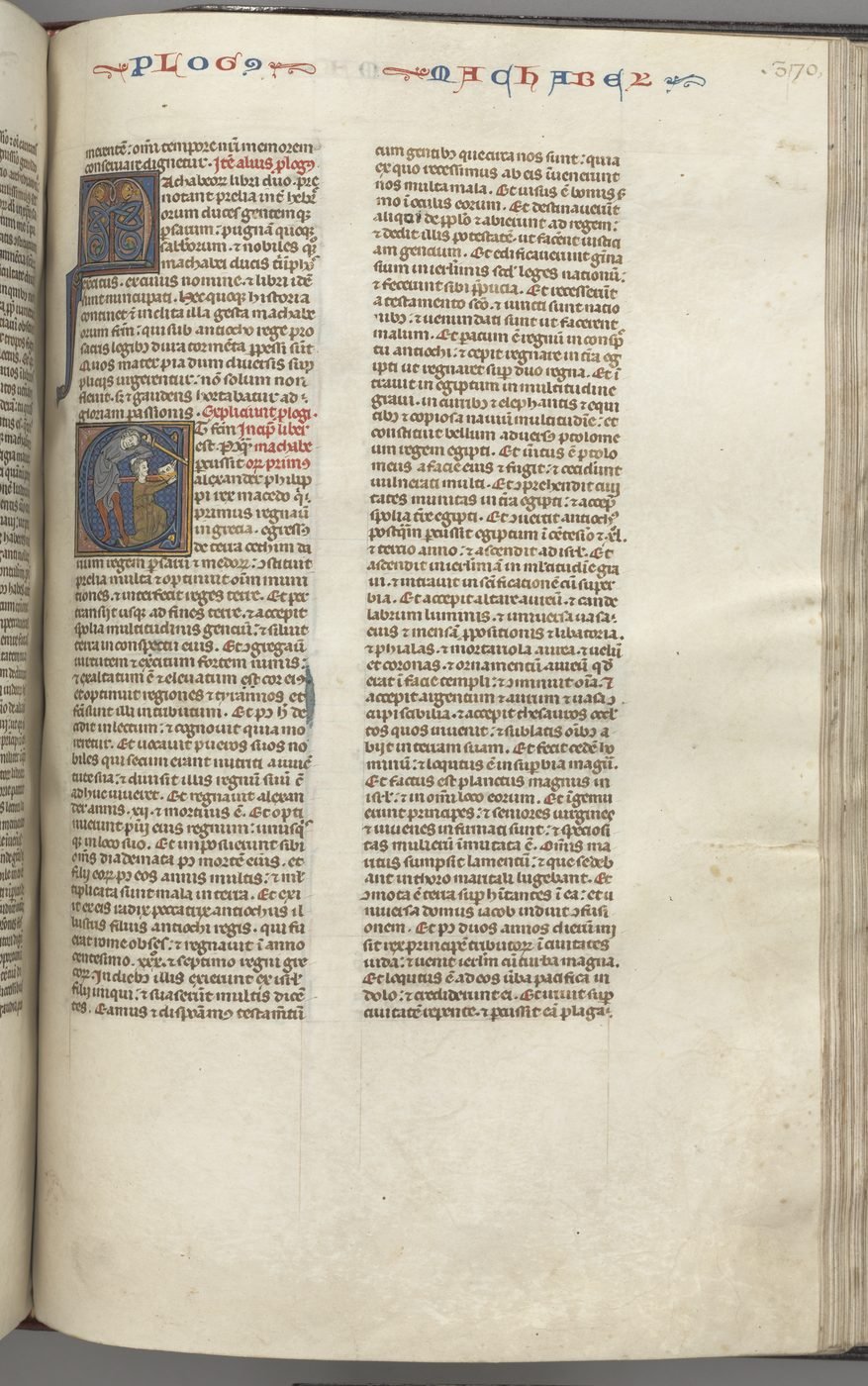
One such community - the dominant scholarly view links Qumran with the Essenes, though the identification is disputed; Norman Golb argued that the scrolls came from Jerusalem libraries rather than a resident community - lived at Qumran, on the north-western shore of the Dead Sea, in a settlement that has been excavated since the 1950s. And this community, or whoever deposited the library, did something that turned out to matter enormously: they built a library. Hundreds of scrolls, containing the oldest known Hebrew manuscripts of the books of the Hebrew Bible, the community's own rule books and hymns and legal codes, and texts like the War Scroll - a detailed, urgent description of the final eschatological battle between the Sons of Light and the Sons of Darkness. They believed the end was approaching. They prepared accordingly. Sometime before or during the Roman advance, some of the scrolls were placed in clay jars and hidden in the caves above the settlement - though not all were found in jars, and the precise link between the scrolls and the settlement remains debated. Then history overtook them.
The scrolls stayed hidden for roughly nineteen centuries. In 1947 a Bedouin shepherd - the story goes that he was looking for a lost goat - tossed a stone into a cave on the cliffs above Qumran and heard the sound of breaking pottery. What he'd found, distributed across eleven caves in subsequent years, was the largest surviving library from the Second Temple world: 981 manuscripts, including fragments of every book of the Hebrew Bible except Esther, and a window into a form of Judaism that had otherwise left almost no trace. The Essenes, as a living movement, were gone. Their library was not.
The Dead Sea Scrolls
Nine hundred and eighty-one manuscripts recovered from eleven caves near Khirbet Qumran on the north-western shore of the Dead Sea, discovered between 1947 and 1956. The collection includes the oldest extant Hebrew manuscripts of the books of the Hebrew Bible - the Great Isaiah Scroll, dating to around 125 BCE, is a thousand years older than any previously known Hebrew manuscript of Isaiah - alongside sectarian texts unique to the community: the Community Rule, the War Scroll, the Thanksgiving Hymns, and the Temple Scroll. In 1954, Yigael Yadin, acting through an intermediary, purchased four scrolls advertised in the Wall Street Journal; in 1955 these were reunited with the three scrolls already acquired by Eleazar Sukenik for the Hebrew University. Many of the best-known scrolls have been displayed in the Shrine of the Book at the Israel Museum, Jerusalem, since 1965; holdings are also held at the Jordan Museum in Amman. The Bedouin shepherd who found the first cave reportedly received less than thirty pounds sterling for his discovery.
Shrine of the Book, Israel Museum, Jerusalem; Jordan Museum, AmmanThe fourth, and briefly
Josephus adds a fourth philosophy to his account in Antiquities, Book 18, and he's not flattering about it. Founded by Judas the Galilean at the time of the Roman census of 6 CE, this movement held that God alone was Israel's ruler and that paying tribute to Caesar was an act of apostasy. "These men agree in all other things with the Pharisaic notions," Josephus writes, "but they have an inviolable attachment to liberty, and say that God is to be their only Ruler and Lord." He traces a direct line from Judas's rebellion to the catastrophe of 66-70 CE, blaming the movement - later associated with the Zealot and Sicarii currents, though Josephus does not equate the fourth philosophy with all who later bore the Zealot name - for lighting a fire that eventually consumed the city. He may be partly right. He certainly had reasons to think so.
Josephus: Jewish War and Antiquities of the Jews
Flavius Josephus - born Yosef ben Matityahu in Jerusalem around 37 CE, appointed Jewish commander in the Galilee, captured by Rome in 67 CE, pensioner of the Flavian dynasty thereafter - is the primary classical source for the three movements. His Jewish War (c. 75 CE) describes the Essenes in extended and admiring detail in Book 2, chapter 8 (sections 119-166). His Antiquities of the Jews (c. 94 CE) returns to all four groups in Book 18, chapter 1. He is the only first-century author to describe all four philosophies at length, and he had the significant advantage of having grown up inside the world he was describing. He also had the significant disadvantage of being a Roman collaborator explaining that war to his patrons. Historians use him carefully rather than not at all. Both books are available in William Whiston's 1737 translation; the standard academic English edition is the Loeb Classical Library translation (Thackeray, Marcus and successors).
Primary source: Josephus, Jewish War Books 2, 5; Antiquities Books 13, 18The stream that didn't dry up
Seventy CE is one of those hinges on which everything turns. The Temple burns in August. The Sadducees lose the institution their identity depended on and disappear from history within a generation - no texts, no successors, no tradition. The Essenes lose their settlement at Qumran, probably to the Roman Tenth Legion on its way south, and scatter; within decades there's no community to speak of. The Sicarii end at Masada in 73/74 CE, where the last holdouts - Josephus identifies them as Sicarii, and the archaeologists have found the ostraca that may be their final lots - choose death over capture.
The Pharisees are different. They're already built for exile. Their Judaism travels in a text and in the minds of the people who've memorised it. At Yavneh, the scholars who gather around Yochanan ben Zakkai begin the long process of encoding the oral tradition in writing - the Mishna, redacted around 200 CE, and eventually the Talmud, which is the Mishna plus centuries of commentary, debate, minority opinion preserved alongside majority ruling, argument conducted across generations about what it means to live well and honestly in a world that doesn't always co-operate. The Talmud is, among other things, a monument to the principle that the losing argument is worth recording. It takes the Sadducean position, dismisses it, and writes it down. It gives the dead stream a voice, at the price of the last word.
What survived 70 CE was not the movement that controlled the building, or the movement that retreated to the desert to wait for the end, or the movement that fought to keep Rome out at sword's point. What survived was the movement that had decided, long before the crisis, that Judaism was an argument you could take anywhere. They took it everywhere. Three streams entered the first century. One came out the other side. We are, most of us, downstream from the Pharisees - and the argument, as promised, is still going.
Further reading
- Jewish Virtual Library: Pharisees, Sadducees and Essenes
- Encyclopaedia Britannica: The Dead Sea Scrolls
- Israel Antiquities Authority: Dead Sea Scrolls - Discovery and Publication
- Josephus, Jewish War 2.117-2.166 (Whiston translation) - the three philosophies described
- Wikipedia: Dead Sea Scrolls
- My Jewish Learning: The Jewish Sects of the Second Temple Period