When Antiochus IV marched into Judaea and tried to abolish the Torah in 167 BCE, most people made the calculation that survival required. A few did not. Among the ones who refused was a group the Books of the Maccabees call the Hasidaeans - Hasidim in Hebrew, the pious ones, the devoted ones. They were not a new movement in the sense of having been invented that week. The word hasid runs deep in biblical Hebrew, describing a person bound by loyalty and love to their covenant obligations. But the crisis of the Maccabean revolt brought them into the open as an identifiable company, with a name and a collective will.
They appear in the story at exactly the right moment to show what they were made of. Mattathias the priest had struck the first blow and fled to the hills. The Hasidim, described in 1 Maccabees 2 as a company of mighty men of Israel, each one who offered himself willingly for the law, gathered around the Maccabees and added their numbers to the revolt. But they were never simply soldiers in someone else's army. They were there because Torah was the cause, not because the Hasmonean family happened to lead it. When those two things came apart - as they eventually did - so did the Hasidim's alliance with the victors.
The record
1 Maccabees 2:42-43 (composed c. 100 BCE, preserved in Greek translation) names "a company of Hasidaeans" joining the Maccabean revolt: "mighty men of Israel, every one who offered himself willingly for the law." The same passage notes they were reinforced by all who fled from evil. This is the first explicit, named reference to a Jewish pietist group in surviving literature. The text is available in critical editions via the Septuagint corpus and in English translation from the Revised Standard Version and the New Revised Standard Version Updated Edition (2021).
The Hasidim's moment of independence comes in a detail that is easy to miss. Once the immediate crisis over the priesthood appeared to be resolved - specifically, once a legitimate high priest named Alcimus was installed in Jerusalem around 162-161 BCE - a portion of the Hasidim separated from the Maccabees and made peace with the Seleucid general Bacchides. The reasoning is legible from the inside: if the legitimate religious leadership is restored, the war is won on the only terms that matter. That Alcimus then executed sixty of the scribes who had trusted him is one of the grimmer facts of the period, and it showed how badly the Hasidim had misjudged the political moment. But the judgment they made first - that religious restoration mattered more than military or national victory - was consistent with everything they had stood for.
That consistency is what makes the Hasidim worth more than a footnote. They were not merely brave. They were principled about what the bravery was for. The Maccabees would found a dynasty, coin money, and extend Judaea's borders by conquest. The Hasidim, or the streams that flowed from them, would eventually insist that none of that was the point. Torah observance, interior devotion, and the scrupulous life of a covenanted person - that was the point. The dynasty could govern if it liked. The pious would stay focused on something more durable.
The record
1 Maccabees 7:12-16 describes scribes approaching the Seleucid general Bacchides and high priest Alcimus to seek peaceful terms, on the basis that a priest from Aaron's line had come. Alcimus then seized and killed sixty of them "in one day." The historian Elias Bickerman, in his study The God of the Maccabees (originally published 1937, English translation Brill, 1979), argued that this episode reflects a genuine split within the Hasidim between those willing to accept Seleucid-backed priestly legitimacy and those who were not. The passage is primary; Bickerman's reading is the most influential modern framing of it.
Most scholars now read the Hasidim as an upstream confluence from which two quite different rivers eventually ran: the Pharisees, who would carry their project of popular Torah observance into the synagogue and the academies, and the Essenes, who concluded that the compromise-ridden world was too impure and retreated toward the desert and a stricter discipline. Neither group calls itself Hasidim in its own sources, and the relationship is debated. But the impulse - that being Jewish is primarily a practice of devotion, not a matter of territorial power - runs continuously from the pious ones of the second century BCE all the way through the rabbinic world that followed. It is one of the great creative inheritances of the Maccabean crisis, found not among the warriors who won it but among the company who kept asking what exactly they were fighting for.
The record
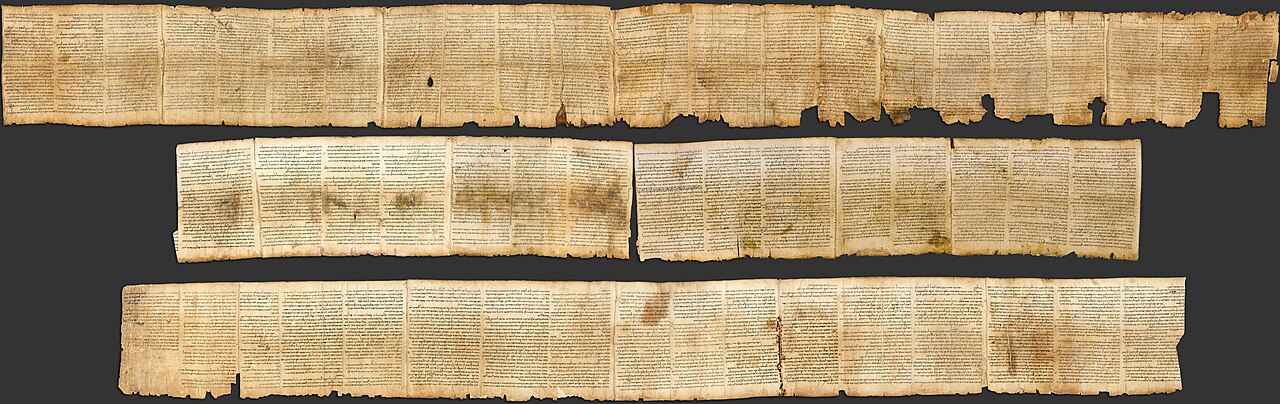
The connection between the second-century BCE Hasidim and later movements is examined in detail by John Kampen in The Hasideans and the Origin of Pharisaism: A Study in 1 and 2 Maccabees (Scholars Press, 1988). Kampen surveys the primary evidence and cautions against too neat a genealogy, but confirms the Hasidim as the earliest identifiable Jewish pietist movement in the Second Temple period. The Dead Sea Scrolls, discovered at Qumran between 1947 and 1956 and now housed at the Israel Museum, Jerusalem, have prompted ongoing comparison between the Qumran community's self-understanding and the Hasidim, though no text in the scrolls uses the term to describe the community itself.
The name hasid would be taken up again, centuries later, by quite different movements - medieval German Hasidei Ashkenaz and the 18th-century Hasidism of the Baal Shem Tov among them. That recycling is itself a form of testimony. Each generation that reached for the word was reaching for the same thing: a version of Jewish life in which devotion is the centre of gravity, and where the question "what does it mean to be pious?" is treated as the most serious question a person can ask. The pious ones of the Maccabean revolt did not answer that question once and for all. They asked it loudly enough that it has never been dropped.