The ketubah is one of Judaism's most practical pieces of tenderness. Before it became an illuminated showpiece, before gold leaf climbed around its borders and zodiac wheels turned above the text, it was a legal document in Aramaic. Its job was plain. A husband undertook binding obligations to his wife - food, clothing, conjugal responsibility, and a fixed financial settlement payable if the marriage ended by divorce or widowhood. The romance is real enough, but the first order of business is law.
That legal seriousness is part of the pride of the thing. Rabbinic Judaism did not leave a wife to vague assurances or good intentions. It wrote the marriage down. The standard form is traditionally linked to Shimon ben Shetach in the Second Temple period, and the later Mishnah and Talmud treat the ketubah not as decorative frosting but as a structure of protection. The document gave substance to the husband's promises and weight to the cost of dismissal. The marriage had poetry, certainly. It also had paperwork, which in this case is another form of honour.

Law first, beauty after
The ketubah sits inside a long rabbinic effort to make marriage not merely ceremonial but accountable. The husband's obligations are not airy sentiments. They are specified. The amount due to the wife is specified too, with standard sums and local additions developed through communal custom. That is why tractates and codes care about it so much. A ketubah is not an accessory to the wedding. It is part of what makes the marriage legally inhabitable.
This is also why the document matters in tone as much as content. It protects the wife without pretending to modern categories it did not claim for itself. It belongs to an older world, but one with a clear instinct here: the woman is not to be left empty-handed if the marriage ends. The husband enters the union under written obligation. Jewish law considered that a point of civilisation, and rightly.
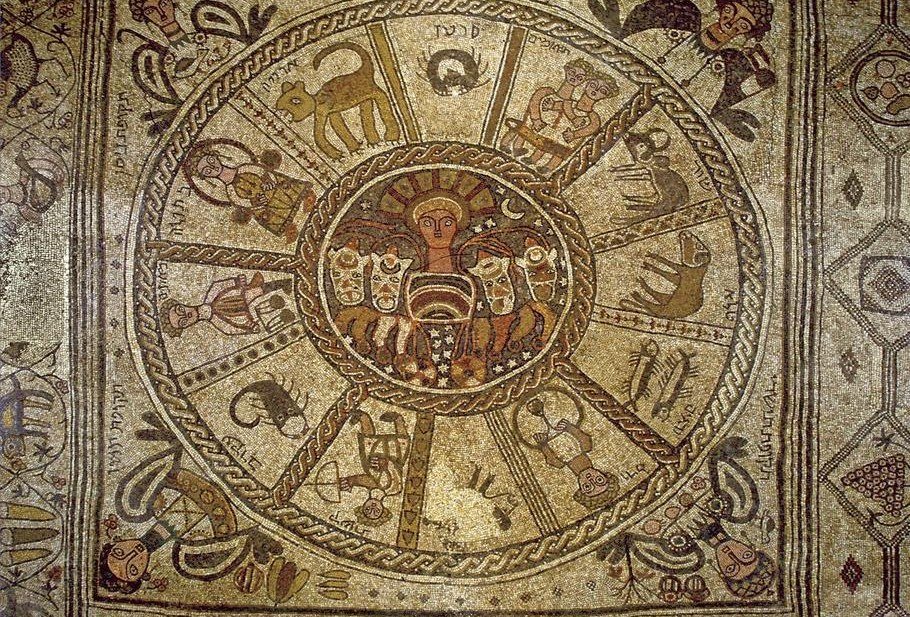
Then, in time, the contract acquired a second career. From the late medieval world and especially in the seventeenth and eighteenth centuries, Jewish communities began dressing the legal text in visual magnificence. Italian centres such as Venice, Rome and Livorno are particularly famous for it. So are Sephardi and Mizrahi traditions that framed the contract with arches, birds, biblical scenes, curling foliage, gold, micrography and sometimes a full zodiac overhead. A legal safeguard for a woman was transformed into a work of art and hung on the wall. Joy entered by way of illumination.
Babatha's Ketubba
Among the documents from the Cave of Letters is the marriage contract of Babatha, a Jewish woman from the province of Arabia. Written in Aramaic and dated to 124 CE, it is among the earliest surviving Jewish ketubot from the land of Israel. (Older Jewish marriage documents survive too, notably the fifth-century BCE Aramaic contracts from Elephantine in Egypt.) It is not lavishly illuminated. It is something better for the historian: hard proof that the legal instrument itself was alive in the Roman period, doing its sober work in the lives of actual Jews.
Israel Antiquities Authority / Cave of Letters archiveWhy it ended up on the wall
Once the text was standard and the legal core secure, communities had room to lavish attention on the page around it. The result was not frivolous. A ketubah is kept by the bride and retained as the document of the marriage. It therefore lives in the home, not only in the archive. If Jews were going to live with a contract for decades, they might as well make it handsome. This is one of the more appealing features of the civilisation: it rarely sees a contradiction between seriousness and ornament.
Italian Jewish workshops and patrons were especially deft at this. Renaissance and baroque visual languages appear in ketubot with remarkable confidence - architectural frames, columns, putti-like flourishes translated into Jewish terms, gilded crowns, heraldic arrangements of the tribes, and scenes from scripture. Livorno's Sephardi world helped carry that taste through Mediterranean networks. Elsewhere, in North Africa, the Ottoman lands, Persia, Yemen and Iraq, the surrounding styles changed but the instinct remained. The marriage text was not hidden away. It became a displayed memory of the household's founding moment.
The ketubah does something very Jewish. It turns obligation into beauty without relaxing the obligation. Law at the centre, gold at the edges, and a home built round both.
The standard text in rabbinic law
The Babylonian Talmud attributes the standard ketubah arrangement to Shimon ben Shetach, explaining that a substantial settlement should stand against easy divorce. The Mishnah and Talmud then treat the ketubah as a regular legal instrument, setting out principal sums and related obligations. In other words: the beauty came later, but the legal backbone was already old, argued over and carefully maintained.
Sefaria / Tractate KetubotItalian and Mediterranean illuminated ketubot
Surviving ketubot from Venice, Rome, Livorno and related Sephardi networks show the contract in its full decorative flowering. Library and museum collections preserve examples with painted arches, medallions, vegetal borders, biblical tableaux, zodiac motifs and gold. These are not modern wedding keepsakes invented for Etsy. They are early-modern Jewish legal documents that entered the room dressed for company.
National Library of Israel / Beinecke LibraryThe lived object
That is the part worth lingering over. The ketubah is not a museum object by nature, though many fine ones ended up there. It is a household object. It begins beneath the chuppah, passes into safekeeping, and then often takes its place on the wall where family life actually happens. Meals, arguments, babies, repairs, guests, years. The legal founding paper of the home becomes one of the home's visible furnishings. Not many civilisations have managed that trick so gracefully.
And the thing still lives. Contemporary couples commission new ketubot in every imaginable style, from strict traditional Aramaic forms to bilingual and modern adaptations, but the old logic remains legible. Marriage is not only declared. It is recorded. The record protects, and the protection can be beautiful. That is not a contradiction. It is the whole point.
Further reading