There are Jewish cities of scholarship, Jewish cities of refuge, Jewish cities of stubborn continuity. Livorno was something slightly different and almost more startling: a Jewish port of confidence. In early-modern Leghorn, a Sephardi merchant could be rich without pretending not to be Jewish, learned without retreating from commerce, and public without rehearsing fear. That is a rare sentence in diaspora history. It deserves to be said plainly.
The Medici transformed a small coastal settlement into a planned free-port city on the Tuscan coast. The rulers of Florence wanted a working harbour, a customs magnet, and a free port that could siphon trade from older rivals. So they offered the thing merchants actually notice - privilege. In 1591 and again in 1593, Ferdinando I de' Medici issued the Livornina charters, inviting foreign merchants to settle in Livorno with extensive guarantees. For Jews from Iberia and the long afterlife of the expulsion, the offer had a special charge. Here, many of those who had lived as New Christians, or whose parents had, could return to Judaism in the open. Here, they could own property, conduct trade, organise a community, and live publicly as Jews under unusually broad Medici protections in a city without a ghetto. Not equality in the modern sense, of course. Something older and more practical: protected usefulness, widened into habit.

A harbour where Jews could breathe
What the Livornina made possible was not merely safety but social posture. In many places a Jew might be tolerated as an exception, a useful financier, a doctor under licence, a merchant who knew when to keep his head down. Livorno offered a broader stage. Sephardi Jews became central to the town's commercial life because the town had been designed to reward people exactly like them: multilingual, mobile, creditworthy, connected from North Africa to Amsterdam, from the Atlantic islands to the Levant. Coral, grain, wax, hides, cloth, sugar, books, bills of exchange, shipping intelligence - all of it moved more efficiently when handled by people who already belonged to several worlds at once.
That openness shaped the street as well as the ledger. Portuguese remained important in communal life for generations, while Ladino appeared in translations and left traces in the Judeo-Livornese speech later called Bagitto. Hebrew scholarship flourished because patrons, rabbis, teachers, and printers could all find one another in the same city. Livorno became one of the great Western Sephardi centres, but with a different mood from Amsterdam. Amsterdam has the gleam of return in the north. Livorno has sea-salt in its beard and invoices in its pockets. It is less famous in the popular imagination and more deeply braided into Mediterranean traffic. That too is a kind of grandeur.
The Livornina invites the merchants in
Ferdinando I de' Medici issued charters in 1591 and 1593 granting extensive privileges to foreign merchants settling in Livorno. For Jews, especially Iberian Sephardim and former conversos, the terms were remarkable: protection for residence and trade, freedom from some ordinary civic burdens, and room to live publicly as Jews in a city built to attract commercial talent. Medici idealism was never the point. Medici revenue was. Sometimes history improves because somebody wants the customs receipts.
Medici charters / Livornina privilegesThe merchants and the printers
Livorno's Jews were not only middlemen shuttling goods from quay to warehouse. They helped stitch together a wide commercial web that linked Tuscany to the Maghreb, the Ottoman world, northern Europe, and the Atlantic basin. Coral was one of the classic trades, with Livornese Jews active in the circuits that moved Mediterranean coral toward North African and Asian markets. Grain and textiles mattered. So did brokerage, insurance, and the sort of multilingual, family-based trust that keeps a shipment moving when states are quarrelling. In port cities, clever paperwork can be as valuable as cannon.
Then there were the books. Livorno developed a major Hebrew printing industry, one of the city's great claims on Jewish memory. Prayer books, halakhic works, responsa, Bibles, scholarly editions, and texts destined not only for Italy but for Sephardi communities around the Mediterranean moved through its presses. The city became a place where commerce funded learning and learning fed prestige, which in turn attracted more scholars, more students, more booksellers, and more argument. This is the proper Jewish circular economy.
That atmosphere also produced intellectual figures of real weight. In the nineteenth century Elijah Benamozegh, one of Livorno's most distinguished rabbis, embodied the city's confident blend of tradition, cosmopolitanism, and speculation. By then the high tide had begun to ebb, but the old port still knew how to produce a mind with windows open to several worlds.
A port that printed for the diaspora
Livorno became one of the major centres of Hebrew printing in the western Mediterranean. Its presses issued liturgical works, rabbinic texts, and editions used far beyond Tuscany, especially across Sephardi and North African networks. In Jewish civilisation, a printing town is never just a printing town. It is a warehouse for continuity.
Hebrew printing / Sephardi book tradeThe synagogue and the city's long exhale
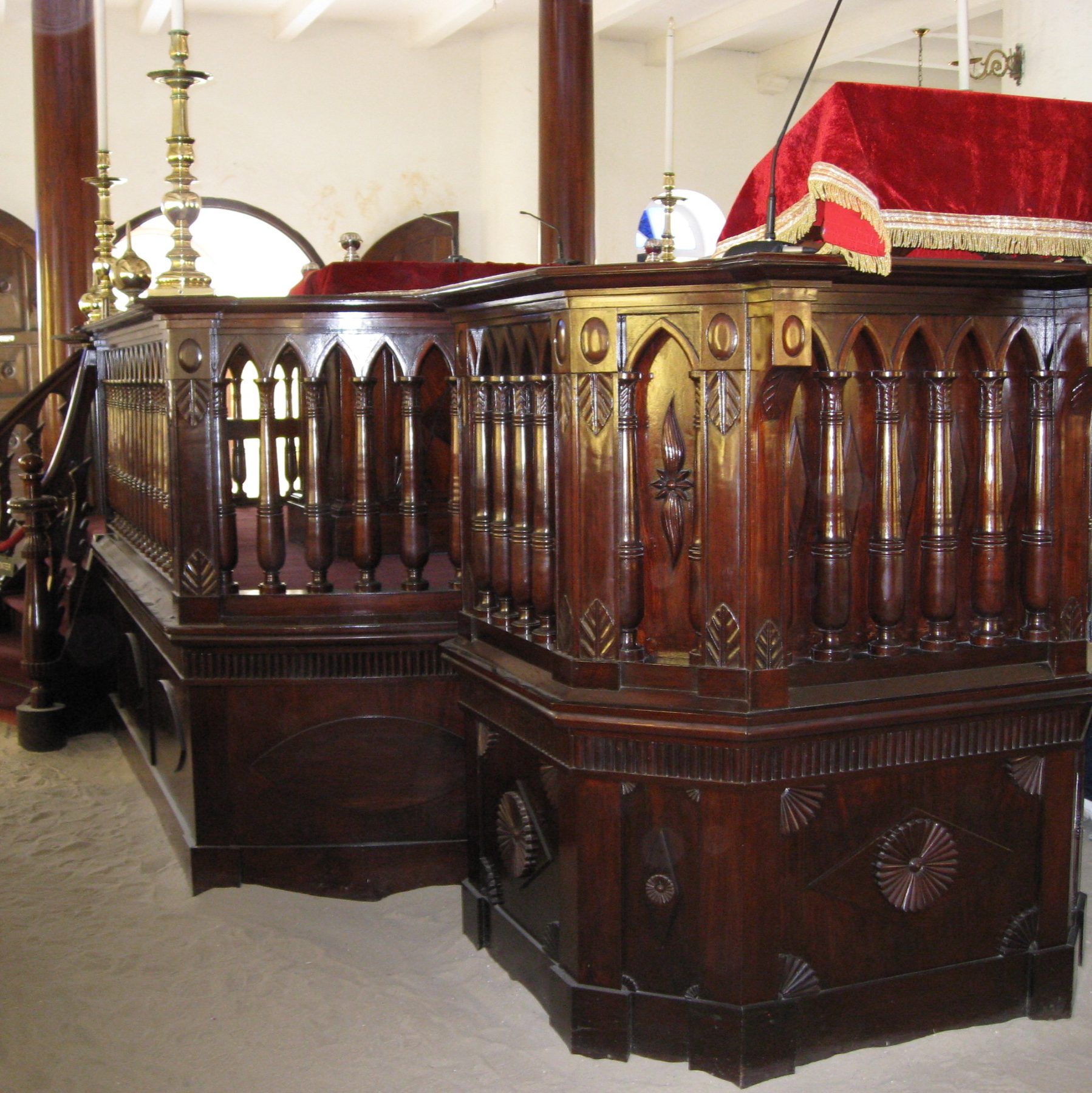
The community's confidence took architectural form early. The old grand synagogue of Livorno, first completed in 1603 and enlarged over time, was one of the finest in Europe. Visitors described a large and stately sanctuary, and by the late eighteenth century its renovated form ranked among the great synagogue interiors of the continent. It was not hidden away in embarrassment. It belonged to a city accustomed to several nations, several tongues, and a lot of shipping.
Then came the long thinning. Livorno's commercial primacy depended on the peculiar advantages of the free port, and those advantages weakened as trade routes shifted, empires reconfigured the Mediterranean, and modern Italy absorbed the old order. The community declined in numbers and in wealth through the nineteenth century. The twentieth finished the damage with a brutality trade statistics cannot match. The old synagogue was severely damaged by wartime bombing in 1943-44, then demolished. After the war, a new synagogue was built on the same site and inaugurated in 1962, preserving fragments and memory while acknowledging, without much sentimentality, that one age had ended.
Even in decline, Livorno remains a portrait worth keeping because it shows a version of diaspora life too seldom centred: not the Jew as furtive survivor, nor the Jew as mere victim of the next decree, but the Jew as public merchant, patron, printer, rabbi, linguist, litigant, neighbour, and citizen of a port that knew his value. For a while on the Tuscan coast, Sepharad stepped off the gangplank and stood upright.
One great synagogue destroyed, another raised
Livorno's old synagogue was completed in 1603 and grew into one of Europe's most admired Sephardi synagogues. It was severely damaged by wartime bombing in 1943-44 and later demolished. The present synagogue, built on the same site and inaugurated in 1962, reused elements saved from the earlier building and remains the community's principal house of worship. Jewish history can be heartbreakingly continuous like that.
Old Synagogue / New Synagogue of LivornoFurther reading