Leviticus 23:40 calls for "the fruit of a goodly tree", and rabbinic tradition identifies it as the etrog: the citron held with lulav, myrtle and willow during Sukkot. That sounds liturgical and neat. In practice it meant growers, brokers, rabbis, shipping lanes, and anxious householders peering at a yellow fruit for the smallest scar. Few ritual objects ask to be both beautiful and botanically innocent. The etrog does.
The joy of it lies partly in the absurd ambition. A fruit with thick fragrant rind and the temperament of a prima donna had to be cultivated without grafting, guarded against blemish, kept from losing its pittam, packed, shipped, inspected, sold, and carried into Jewish homes in time for one autumn week. Sukkot itself carries the wider festival architecture, as told in A Roof You Can See the Stars Through. The etrog narrows the lens. It asks how a command became commerce, and how commerce became a yearly lesson in taste, trust, and timing.

A fruit that had to arrive perfect
An etrog is not rare because citrons are rare. It is rare because Sukkot trained generations of Jews to want one particular kind of citron under one particular set of conditions. It had to be a true citron and not a graft. It had to look handsome. Its skin could not be badly spotted or torn. The blossom end mattered enough to produce whole vocabularies of inspection. Buyers turned the fruit in the light as if examining a jewel and, in a sense, they were. The difference is that jewels do not bruise in transit.
That fragility is what made the etrog such powerful material culture. Synagogue life needed it, but domestic life absorbed it too. Families stored it carefully through the festival. Silversmiths made boxes for it. Housewives and children learned to treat it as a small sovereign object on the table or shelf. After the week ended, some preserved the rind, candied it, or turned it into jam. Ritual did not stop at the blessing. It moved through the kitchen.
Leviticus 23:40 and the four species
The Torah commands the taking of "the fruit of a goodly tree", together with palm, myrtle, and willow, as part of rejoicing before God during Sukkot. Rabbinic tradition identifies that fruit as the etrog. The phrase is brief. The interpretive and commercial afterlife is not.
Leviticus 23Mediterranean routes, autumn deadlines
Once Jews lived far from reliable citron orchards, the etrog became a supply chain problem. Warm coastal regions with long memory and suitable climate gained prestige. Calabria in southern Italy became famous for the Diamante citron, favoured in many Ashkenazi circles and carried north through Italian ports. Corfu supplied large numbers in the modern period. Morocco sustained its own esteemed lineages. Later, growers in the Land of Israel and Yemen strengthened other trusted traditions. What joined these places was not only sun. It was rabbinic confidence that the fruit remained pure enough for use and sturdy enough to survive the journey.
That journey was never merely commercial. Communities wanted provenance. Merchants wanted reputation. Rabbis wanted assurance against grafting. Buyers wanted splendour in the hand on the first morning of the festival. The result was a yearly Mediterranean choreography: orchards inspected in summer, fruit selected early, crates packed with care, and Jewish communities from London to Vilna waiting on a botanical arrival schedule. One week of liturgy created a recurring map of trust.
Bar Kokhba coinage
Coins struck during the Bar Kokhba revolt depict the lulav and etrog together, making the fruit part of Jewish public symbolism as well as ritual practice. That matters because coinage is never casual iconography. The etrog was already legible enough to stand for Jewish life in metal, not only in an orchard or prayer hand.
Bar Kokhba Revolt coinageCalabria, Corfu, Morocco, Jerusalem
Each famous growing region carried more than climate. Calabria offered antiquity, reputation, and the celebrated Diamante type. Corfu gained scale and visibility in the eighteenth and nineteenth centuries, making it hard to ignore. Morocco retained esteem as a source thought by many to be free from the taint of grafting. Then the Land of Israel, with local varieties such as the balady, and - as a separate tradition of its own - Yemen, with its distinct Yemenite etrog, reshaped the emotional geography of the market. Buying an etrog could become a minor declaration about tradition, authenticity, or attachment to a place.
The nineteenth century made those preferences sharper. Corfu's etrog trade became both successful and contentious. Some rabbis and communities objected to dependence on Corfu because of concerns over grafting, pricing, coercive trade practices, or simple distrust of the market's claims. Others defended the fruit's standing. Jews have argued over text for centuries. Naturally they also argued over citrus. A ritual object that depends on lineage, appearance, and local supervision is almost designed to produce dispute.
Synagogue mosaics
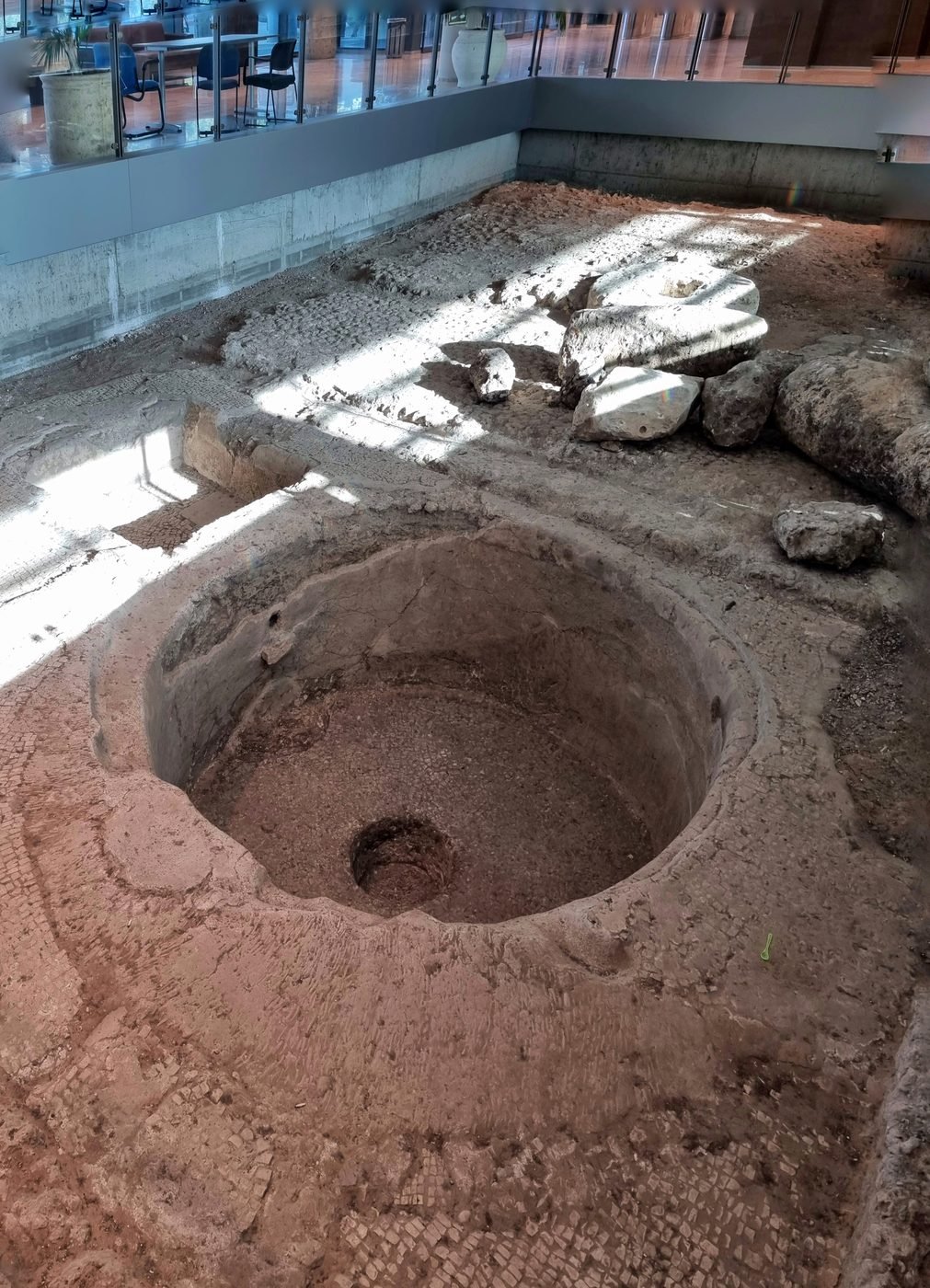
Late antique synagogue floors, including well-known mosaics such as Beth Alpha, use the four species among their ritual symbols. The etrog appears there not as fresh produce but as image and emblem. By this point its symbolic life was secure enough to be tessellated into stone underfoot.
Beth Alpha and related synagogue mosaicsThe box on the sideboard
There is a reason the etrog box belongs in this story. A fruit that travels, bruises, and matters needs housing. The box is the domestic answer to the trade route. It protects the rind during the festival, keeps the fruit separate and honoured, and turns a perishable object into part of the furnished Jewish home. Some are plain wood or card. Others are silver, pierced, engraved, and made to look almost too grand for produce. Almost.
This is where the etrog becomes especially lovable as material culture. It is not only a symbol in scripture or on coins. It is a thing in the hand, a scent in the room, a purchase made with opinions, a fruit checked for flaws by lamplight, and then a box put back into the cupboard until next year. The whole Mediterranean, for a brief season, conspires to place one fragrant citron on one Jewish table.
That long symbolic life matters. The etrog appears in revolt coinage and synagogue mosaics because it had already become a visual shorthand for festival and peoplehood. It still does the same work now, only with parcel services and modern supervision folded into the miracle. The command remained ancient. The network around it kept updating.
Further reading
Story & Stone · The Lived Life
Then step back to the wider festival: Sukkot and the week of gladness →