A Jewish year doesn't begin by explaining itself. It begins with a table, a blessing, a sound. Apples in honey. A shofar blast that is less tune than alarm. Then a fast. Then a meal in a roof you can see through. Then, half a year later, flat bread in a hurry and children asking why this night is different. The theology arrives edible. It always has.
That matters, because the Jewish calendar is not a filing cabinet of anniversaries. It is a structure of claims. Rosh Hashanah says human beings can be judged. Yom Kippur says they can return. Sukkot says security is a flimsy hut and joy is still compulsory. Pesach says freedom is the engine of the whole story. Shavuot says freedom without obligation is not yet a people. Hanukkah and Purim, smaller and later, insist that survival is not only endured but lit, staged, sung, and laughed over. Beneath all of it sits Shabbat, once every seven days, the base note under the year.
The result is less a calendar than an argument rehearsed in public. Judaism does not usually state its deepest ideas as abstract propositions and leave them on a shelf. It performs them. It turns them into meals, fasts, booths, songs, pages of law, and dates that arrive whether you're ready or not. The year teaches by recurrence. It comes back because the point has not yet exhausted itself.

The week underneath everything
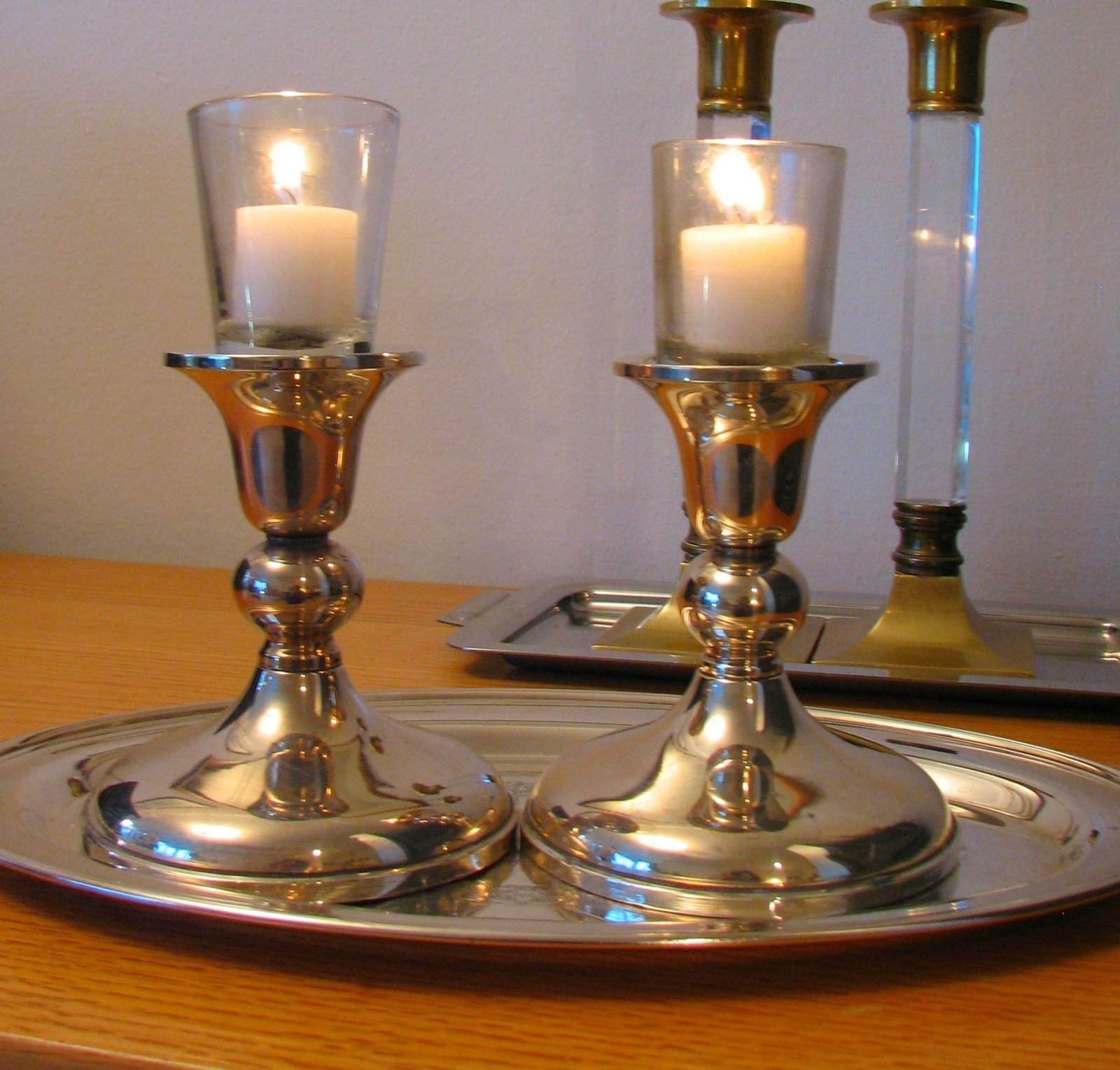
Before there is festival, there is rhythm. Shabbat is the grammar of Jewish time. Every seventh day the world is interrupted, and the interruption is the point. In Exodus, the day is tied to creation. In Deuteronomy, it is tied to slavery and release. Cosmology and social memory, side by side. The year will elaborate those themes at length, but the weekly version comes first: the world is made, the slave must rest, time does not belong wholly to power.
That is why the festivals do not float free as occasional peaks. They are variations on a discipline already learned. Jews stop on Shabbat, then stop differently on the festivals. They bless wine on Friday night, then bless wine again at seder tables and festival meals. The year does not abandon the week. It enlarges it.
Then autumn arrives and the argument sharpens. Rosh Hashanah and Yom Kippur are the most severe claim the calendar makes. The Mishnah describes Rosh Hashanah as a day on which all creatures pass before God for judgment. Later liturgy turns that into courtroom drama and cosmic theatre, but the core thought is already there: a year is not merely elapsed. It is assessed.
Then Yom Kippur answers the fear Rosh Hashanah creates. If there is judgment, there must also be return. The fast, the confessions, the repeated insistence on teshuvah - return, not merely regret - amount to a refusal to believe that people are fixed in the shape of their worst act. The Jewish year begins not with a party but with an audit, and even that audit is finally hopeful. You are answerable, yes. You are not finished.
Seder Moed in the Mishnah
The second order of the Mishnah is Moed - appointed time - and its tractates treat Shabbat, Pesach, Yom Kippur, Sukkot, Rosh Hashanah, Purim and the festival calendar more broadly. This is not a stray cluster of customs later gathered under one heading. By the time the Mishnah was compiled under Rabbi Judah ha-Nasi, sacred time had already become a system. The year had been organised into law.
Mishnah, Seder Moed; preserved in the rabbinic canon and major Jewish libraries worldwideJoy in a fragile place
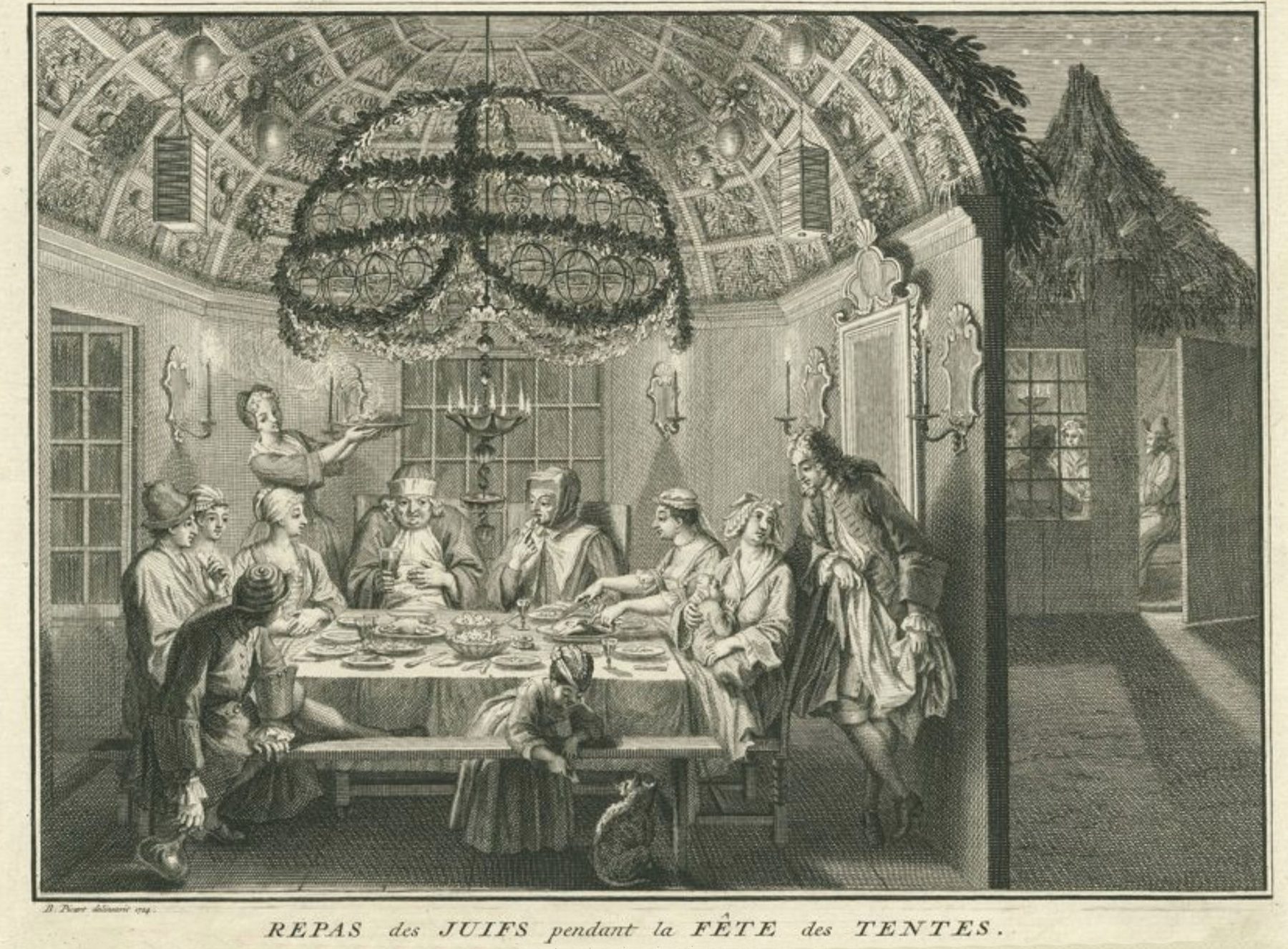
And then, immediately after all that scrutiny, comes Sukkot. That sequence is not accidental. First the soul is weighed, then the family goes outside. The Torah ties Sukkot to booths and to rejoicing, and rabbinic Judaism keeps both halves together with almost comic stubbornness. The booth is intentionally temporary. The roof must be fragile enough for the stars, or at least daylight and weather, to make a claim on the space. A house, only less so.
The message is not that insecurity is good. The message is that security was never the deepest truth to begin with. The sukkah says that permanence is the illusion. So rejoice anyway. Better: rejoice there. Eat in the fragile place. Invite guests into the fragile place. Wave the lulav in the fragile place. It is one of the boldest things the Jewish year says, and it says it with fruit and branches rather than philosophy.
Sukkot also keeps memory from becoming merely inward. The booths recall wilderness dwelling after the exodus, but they do so through architecture so light it is almost anti-architecture. A people that once travelled with no fixed walls now reenacts precarity on purpose, but under festival rules, with a tablecloth. The argument is subtle and slightly defiant: trust cannot wait for perfect conditions.
Freedom, then a book
Pesach is the hinge. It is difficult to exaggerate how central the exodus is to Jewish time. The Torah returns to Egypt constantly, and the seder makes sure memory does not drift into admiration for the ancestors. The Haggadah, drawing on Mishnah Pesachim, insists that in every generation a person must regard himself or herself as if personally brought out of Egypt. Not their grandparents. Not the tribe in general. You.
This is an astonishing demand. It means memory is not archival. It is participatory. Matzah is eaten because haste matters. Bitter herbs are eaten because affliction matters. Questions are staged because freedom must be taught, not merely announced. Even praise is regulated. The meal is an argument against distance. If liberation becomes something that happened once to somebody else, it stops doing its work.
That is why Pesach drives the whole cycle. It provides the grammar of Jewish politics and Jewish piety at once. The stranger is treated differently because you were strangers in Egypt. Labour is interrupted because you were slaves in Egypt. The poor are invited in because you know the taste of constriction. Freedom is not one topic among many. It is the engine room.
And then comes Shavuot, which the Torah names as a harvest festival and a festival of weeks, counted from Pesach. The association of Shavuot with the giving of the Torah at Sinai is rabbinic and liturgical rather than explicit in the biblical text, but it became one of Judaism's decisive readings of the day. That reading makes a fierce claim of its own: liberation is not the end of the story. A freed people still has to become a people.
So the year moves from Egypt to Sinai, from escape to obligation. Freedom without form can drift into appetite. Sinai says no: the liberated are not merely loose. They are bound, this time by covenant. Judaism's famous attachment to books is really attachment to that moment and to what followed from it. A people defined not by one king or one landscape alone, but by a text argued over in every landscape available.
Hillel II and the fixed calendar
Rabbinic tradition, first attested centuries later by Hai Gaon and transmitted by medieval writers, links Hillel II to the fixing of the calculated Hebrew calendar in 358-359 CE. Modern scholarship is more cautious: the calendar in its present form seems to have developed over time, and some evidence suggests important rules were still unsettled centuries after Hillel. What is secure is the larger fact. Judaism moved from a calendar declared by witnesses to one sustained by calculation, and diaspora life became much more stable because of it.
Later rabbinic tradition; discussed in medieval sources and modern calendar scholarshipThe smaller feasts, no less pointed
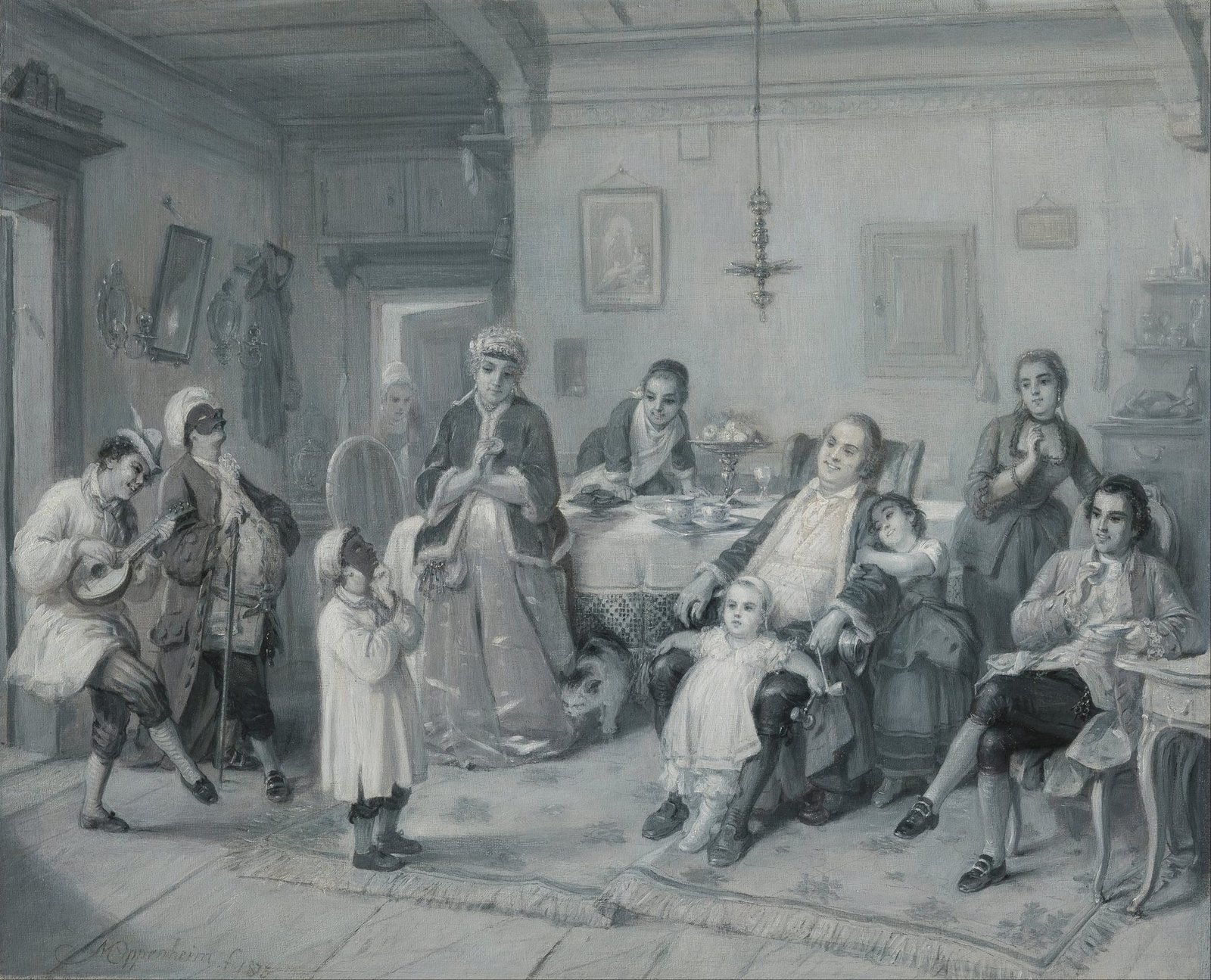
Hanukkah and Purim are later and smaller, but they are not decorative extras. They are what the year says when empire closes in and the world becomes absurd. Hanukkah answers with light, dedication, and memory of rededicated space after the Maccabean revolt against Seleucid rule. Purim answers with masks, reversal, gifts to the poor, festive food, and a scroll in which nothing looks straightforward until the whole plot turns inside out.
Neither festival is solemn in the way Yom Kippur is solemn, and that is part of the theology. Survival cannot live forever on gravity alone. It also needs comedy, candles, noise, and the right to be glad that the decree failed. Purim in particular refuses dignity in the narrow sense. It rattles, drinks, dresses up, and announces that history sometimes turns on hiddenness, courage, and timing. Hanukkah is more disciplined, but still luminous. A people remembers by kindling.
What these festivals add to the argument is not new doctrine but tonal range. Judaism does not meet danger in only one register. Sometimes it fasts. Sometimes it confesses. Sometimes it builds a hut. Sometimes it opens the Book of Esther and boos at the villain. The year is theological, yes, but it is not monotone.
The Jewish year does not explain its ideas and then ask to be believed. It cooks them, times them, and brings them round again.
The Beit Alpha synagogue mosaic
Discovered in 1928 and excavated under Eleazar Sukenik in 1929, the synagogue floor at Beit Alpha preserves a zodiac wheel at its centre. The outer ring pairs the twelve signs with the Hebrew months, the corners hold the seasons, and the centre carries Helios in his chariot. It is a late antique Jewish image of time ordered, named, and made habitable. The year is not hovering in the background. It is underfoot.
Beit Alfa Synagogue National Park, IsraelKeeping spring in spring
All of this depends on a peculiar and elegant machine. The Jewish calendar is lunisolar. Months follow the moon. Years must answer to the sun. Left alone, twelve lunar months would drift away from the seasons, and Pesach would eventually arrive in winter, then autumn, then wherever it pleased. The Torah will not allow that. Pesach must remain in the month of Aviv, the spring month, so the calendar inserts an extra month when needed.
This is not technical housekeeping. It is theology with arithmetic. History must stay married to season. The exodus belongs with spring not because spring is sentimental, but because freedom in Jewish memory is tied to ripening, beginning, emergence. Shavuot must arrive after counting. Sukkot must come at ingathering. Time is not generic. It has shape and sequence.
And that, finally, is the argument the year keeps making. Human beings are not only what they think. They are what they repeat. So Judaism built a cycle in which judgment, return, fragility, freedom, covenant, survival, and rest are not abstract nouns but recurring appointments. You hear them in synagogue, but you also taste them at the table and carry them home in leftovers.
That is why the Jewish year survives translation from land to land, language to language, empire to empire. Its theology is portable because it is embodied. A date arrives. A candle is lit. A page is opened. A child asks. The argument starts again, exactly where it left off.
Further reading