Picture the scene in Babylonia in the eighth and ninth centuries: academies, judges, responsa, an enormous inherited argument about what Sinai had given and who had the right to say what the law meant. Then into that world came a movement with a brutal economy to it. Read the text again. Read it for yourself. If the Written Torah says it, keep it. If it doesn't, don't smuggle it in later and call it ancient. The people who pressed that claim came to be called Karaites - from the root qara, to read or proclaim - and for several centuries they became the great internal challenge to rabbinic Judaism.
That challenge was real, but it wasn't foreign. The Karaites were a Jewish movement, arguing with other Jews about how Jews were to live. They rejected the binding authority of the Oral Torah and, with it, the Mishnah and Talmud as divinely given law. The rabbis answered that the written text had never stood alone, that Sinai had delivered both scripture and an authorised way of reading it. The argument could be technical, legal, ferocious. It also did something unexpectedly fertile. It pushed the rabbinic mainstream, above all Saadia Gaon, to define and defend oral tradition with unusual clarity. And it pushed the Karaites themselves into pioneering work in grammar, exegesis and the exact handling of the Hebrew Bible.

Anan, and the movement larger than one man
The traditional founder is Anan ben David, the eighth-century exilarchal claimant around whom later Karaite memory organised itself. The record is a little messier than the legend. Modern scholarship, and the great encyclopaedic literature on Karaism, treats the movement as an amalgam of anti-traditional currents in Babylonian and Persian Jewry, not a tidy one-man invention. Even so, Anan matters. The precursor movement was called the Ananites; the name Karaites seems to have taken hold only in the ninth century. Later Karaite writers cast him as the opening standard-bearer. Rabbanite writers cast him as an ambitious dissenter who lost a succession struggle and built a theology out of resentment. Civilisations rarely resist that kind of story about their opponents.
What is less disputed is the shape of the claim. Anan and the movements around him insisted that law had to come from scripture itself, read with relentless seriousness. That didn't mean a world without interpretation. Karaites developed rules of interpretation, accepted communal custom where the text required application, and built a tradition of their own. What they denied was the rabbinic claim that the Talmudic tradition possessed binding authority because it too had been revealed at Sinai. On that point the disagreement was clean. The Torah in writing, said the Karaites, was the source. The rest had to prove itself.
Saadia's refutations
Britannica and the standard encyclopaedic literature agree that Saadia ben Joseph was the first major Rabbanite scholar to attack the Karaites systematically. By his early twenties he had already written against Anan's followers, and in the 920s he completed Kitab al-Tamyiz, the "Book of Distinction", a defence of rabbinic tradition and calendar against Karaite claims. Much of the work is lost, but its existence and influence are well attested in later citations. Arguments have a way of surviving the paper they were written on.
Encyclopaedia Britannica; Encyclopedia.comThe core dispute
The great fault-line was written Torah against written-plus-oral Torah, but that principle turned quickly into practice. The calendar was one battlefield. Rabbinic Judaism used a fixed calculated calendar; Karaite teaching insisted on observation of the new moon and the state of the barley for intercalation, and read the dating of Shavuot literally enough that it always fell on a Sunday. The Sabbath was another. Early Karaite teachers read the biblical ban on kindling fire so strictly that lights already burning were extinguished before nightfall. Later Karaite authorities softened that practice, permitting light as a human need and for the joy of the day. But the stricter reputation stuck, because reputations usually do.
There were disputes over slaughter, purity, marriage law, feast days and what counted as a legitimate legal inference from the text. Rabbanites said the Karaites were pretending to avoid interpretation while actually inventing a new one. Karaites answered that the rabbis had buried scripture under precedent and then asked everyone to mistake the pile for Sinai. Neither side was casual about any of this. That is one reason the argument mattered. People who don't care don't produce libraries.
How the Karaites sharpened the rabbis
This is where Saadia Gaon enters properly. He was not the only rabbinic defender of the Oral Torah, but he was the great early one: polemicist, exegete, philosopher, communal leader, and the first major rabbinic writer to work extensively in Judeo-Arabic. In the face of Karaism he did not merely say no. He systematised. He explained why a revealed text still required an inherited reading community, why law could not be reconstructed afresh by each capable reader, and why a people that lived by scripture alone would not in fact remain in agreement for very long. He had evidence for that last point.
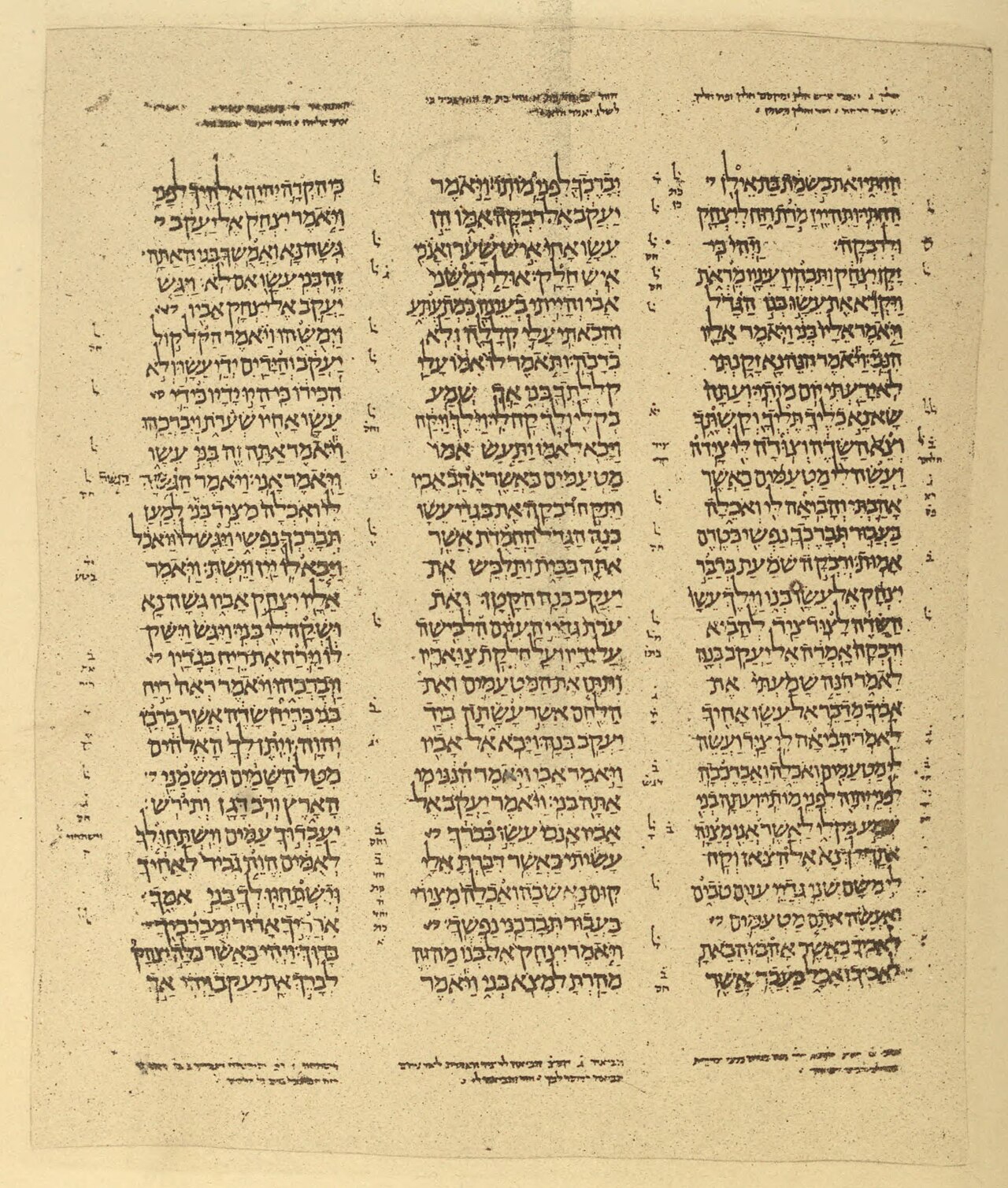
The Karaites, for their part, were no less serious about learning. Their commitment to the plain sense of the text pushed them towards exact grammar, careful lexicography, and close commentary. Late antique and early medieval Jewish history is full of people saying they honour the Bible. Karaites built toolkits for reading it. The great Jerusalem Karaite scholars of the tenth and eleventh centuries - Joseph ben Noah and Japheth ben Eli in the tenth, Abu al-Faraj Harun in the eleventh - produced commentaries and linguistic work of real weight. The old scholarly view that some of the first great Masoretes and grammarians, most famously Aaron ben Asher, were Karaites remains debated; many scholars see the Karaite case as plausible or even likely, but it is not settled. If so, one of the most exacting custodians of the biblical text stood inside the very movement accused of making interpretation too free.
The Karaite challenge did not make Jews stop reading. It made both camps read harder, and explain themselves better.
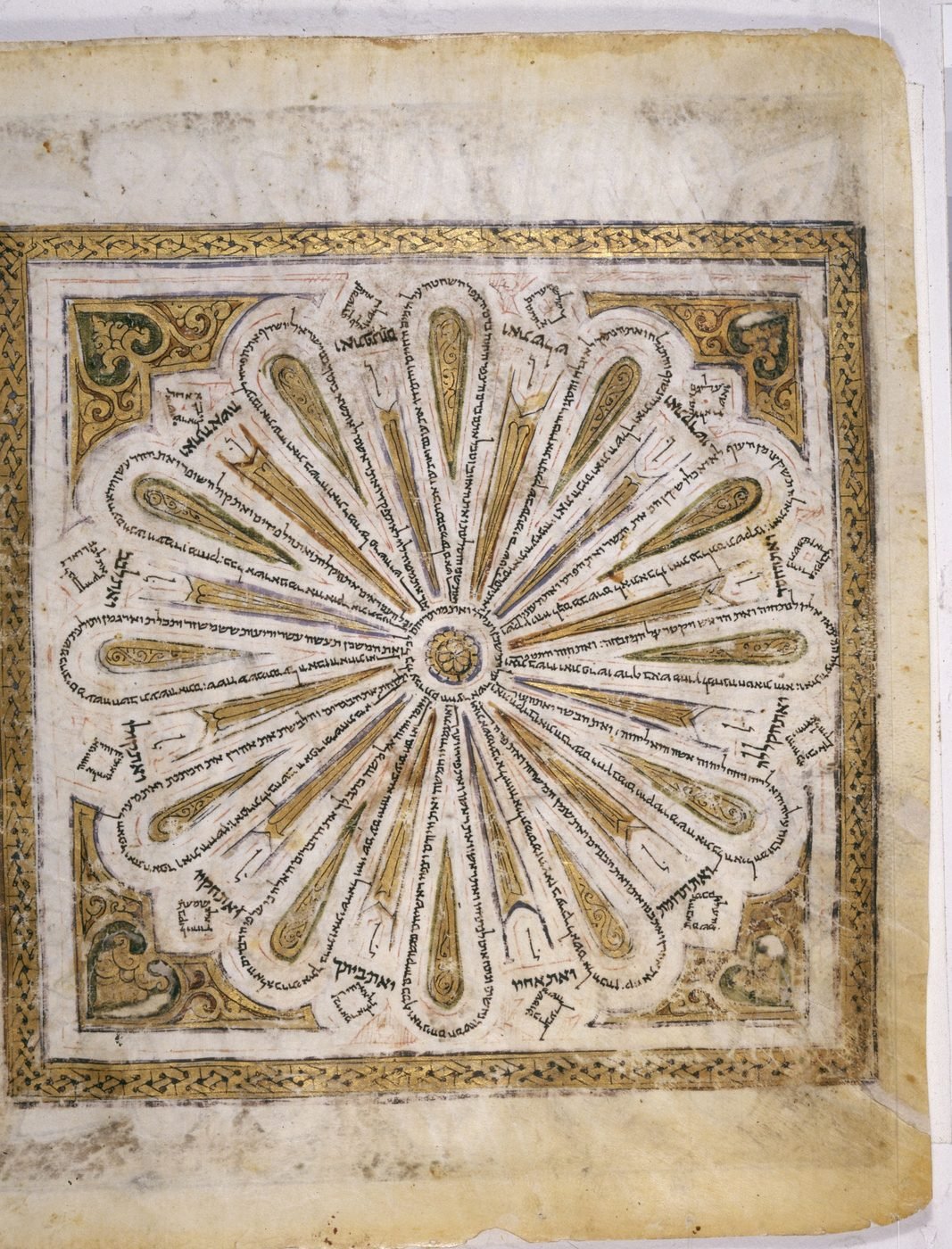
Halper 225, a Karaite prayer-book fragment
This Cairo Geniza fragment, now at the University of Pennsylvania, is catalogued as a Karaite prayer text in Hebrew on paper, vocalised in the Tiberian system. It preserves a liturgical sequence of biblical verses containing the divine name, copied not for theory but for use. That matters. Karaism was not only a set of polemics about authority. It was a lived liturgical culture with books, scribes and congregations.
OPenn, University of Pennsylvania LibrariesJerusalem, Cairo, and the long afterlife
By the late tenth century Jerusalem had become the outstanding spiritual centre of Karaism. Scholars wrote there, taught there, translated there. Later the movement's institutional life shifted in important measure to Egypt. The Cairo Geniza is one of the reasons we can still see that world in motion: prayer books, legal texts, letters, communal records, the paper traffic of a serious civilisation. The Geniza does not preserve an abstract theory called Karaism. It preserves Karaites doing ordinary Jewish things with unusual intensity.
From the eastern Islamic world the communities spread and changed. There were flourishing Karaite centres in Byzantium and the Ottoman lands. In time there were enduring Karaite communities in Crimea and Lithuania, where the story took on new languages and local habits without ceasing to be recognisably Karaite. The movement declined from its medieval strength, but it did not vanish. Karaite communities survive to this day, above all in Israel, and in smaller numbers elsewhere, including Lithuania, Turkey and the United States. The old sentence still has living readers attached to it.
It is tempting to tell the story as if one side won and the other simply lost. History is rarely that tidy. Rabbinic Judaism remained the mainstream of Jewish life. But it emerged from the Karaite challenge more explicit about what the Oral Torah was for and why it mattered. Karaism, for its part, left behind far more than dissent. It left philology, commentary, liturgy, manuscript culture, and a stubborn reminder that Jewish history has often advanced by internal argument rather than by calm agreement. The tribe has rarely read in only one voice.
The Letter of the Karaite elders of Ascalon
Discovered in the Cairo Geniza and published by S. D. Goitein, this Judeo-Arabic letter was sent by six Karaite elders of Ascalon to Alexandria about nine months after the fall of Jerusalem to the Crusaders. It reports ransom efforts for Jewish captives and sacred books, including hundreds of volumes and Torah scrolls. The letter is precious not because it proves a doctrine, but because it catches a community in action: fundraising, mourning, transporting books, trying to keep Jews alive after a catastrophe.
Cairo Genizah Collection; S. D. GoiteinFurther reading