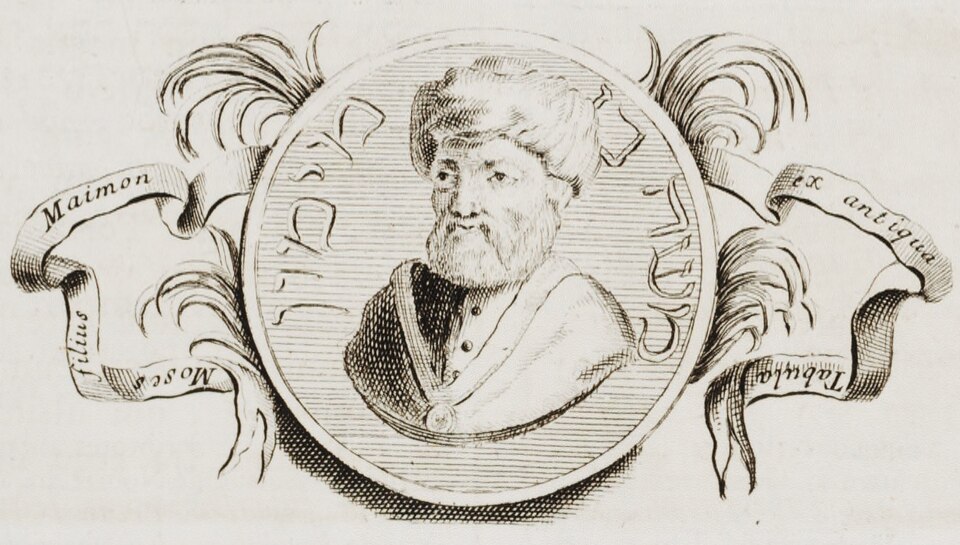
Rabbinic Judaism was not born as a neat shelf of books. It was born as memory, dispute, commentary, reply, correction, another reply, and then the reply to that. The thing had grandeur, but it also had sprawl. If you wanted to know what the tradition thought, you often had to know where the arguments were buried, who had written against whom, and which academy your question had reached. Then Saadia ben Joseph came along and did something almost rude in its confidence: he translated, codified, arranged, defined, and explained. He didn't end the argument. He made it possible to carry the whole argument without dropping the law.
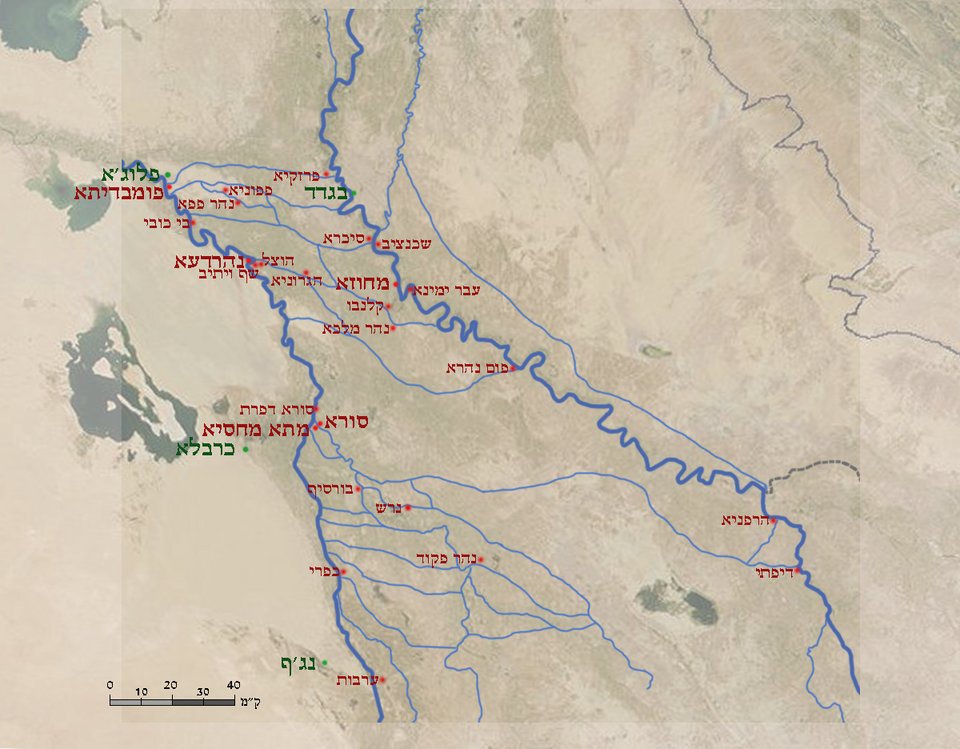
He was born in Egypt, in the Fayyum, probably in 882 and perhaps in 892, which is the sort of discrepancy medieval biography shrugs at and later scholarship worries over. The large outlines are firmer than the arithmetic. By 913 he had completed the Agron, an early Hebrew dictionary and lexicographical work for poets. By 922 he was already a public force, helping defeat Aaron ben Meir's calendar challenge and so helping keep one Jewish calendar from becoming two. In 928 David ben Zakkai, the exilarch of Babylonia, appointed him gaon - head - of the academy of Sura. That mattered. Babylonia was still the old centre of rabbinic authority. Egypt produced Jews; Sura produced verdicts. Saadia crossed that line and, for a while, remade it.
What he produced from that crossing is astonishing in range. He produced a Judaeo-Arabic translation and commentary of the Torah and translated and commented on additional biblical books in the language Jews actually used in the Abbasid world. He wrote on Hebrew grammar and lexicography. He composed a siddur that gathered and ordered prayer. In 933 he completed the Arabic Kitab al-Amanat wal-I'tiqadat, later known in Hebrew as Sefer Emunot ve-De'ot, the first full-scale Jewish philosophical theology: not a few bright remarks scattered through commentary, but a book that asked what Jews believe, why reason matters, what revelation is for, and how certainty is possible at all. He defended rabbinic Judaism against the Karaites, who rejected the Oral Torah. He argued like a man who assumed the tradition was true and worth the labour of explanation. Which, to be fair, is exactly what he thought.

Order was his gift
That range was not accidental. Saadia seems to have understood, very early, that a tradition living across languages and distances needed tools. Not slogans - tools. A lexicon so Hebrew could be handled with precision. Grammatical work so the language of scripture could be read as language and not only as inheritance. A translation into Judaeo-Arabic so scripture could be understood by people whose serious reading happened in Arabic. A siddur so prayer was not merely remembered locally but arranged and transmissible. And a philosophical theology so Jews living in an intellectual world formed by kalam and Arabic reasoning did not have to choose between being thoughtful and being loyal.
That last point is the hinge. Before Saadia, Judaism had theology, obviously, and arguments about God, creation, commandments, reward, punishment, prophecy, and the soul. What it did not yet have was a single book that set these matters out in ordered sequence and subjected them to sustained rational treatment from inside rabbinic Judaism. Sefer Emunot ve-De'ot, completed in Arabic as Kitab al-Amanat wal-I'tiqadat, does exactly that. Saadia begins from sources of knowledge - sense, reason, inference, reliable tradition - and then works through the great themes of Jewish belief with a composure that still feels modern. He is not embarrassed by revelation, and he is not frightened of reason. He assumes the two belong in the same room and then gets on with the furniture.
Kitab al-Amanat wal-I'tiqadat - later Sefer Emunot ve-De'ot
Completed in 933 in Judaeo-Arabic, this is Saadia's great philosophical work and the first systematic Jewish theological treatise of the medieval rabbinic tradition. The Stanford Encyclopedia of Philosophy describes it as the core of his effort to join reason and revelation as grounds for knowledge and life. The book proceeds by order: sources of knowledge first, then the large questions - God, creation, revelation, commandment, soul, reward. He was not improvising piety. He was building an architecture.
Stanford Encyclopedia of PhilosophyThe fight was part of the work
Systematisers are often imagined as serene men at desks, but Saadia's order was hammered out in controversy. He had already made his name in the calendar dispute of 922, when Aaron ben Meir's proposed reckoning threatened to split the festival calendar between Palestine and Babylonia. Saadia wrote against it and helped prevent schism. He would spend much of the rest of his career doing a version of the same thing on a larger scale: drawing lines around rabbinic Judaism and defending the authority of its inherited argument against rivals who wanted something cleaner, narrower, or more scriptural in the thin sense.
The Karaites were the chief internal rival. They accepted the written Bible and rejected the binding authority of the Oral Torah. Saadia answered them not by pleading for rabbinic sentiment, but by arguing - philologically, legally, philosophically - that scripture without tradition does not stay scriptural for long. Someone still has to decide what words mean, how laws are applied, when festivals fall, and what counts as continuity. The so-called plain reading has a habit of arriving with its own invisible commentary tucked in its sleeve. Saadia preferred commentary that admitted what it was.
Then came the clash with David ben Zakkai. History can date the rupture to 930 and trace it to a probate case in which Saadia refused to sign what he regarded as an unjust verdict from the exilarch. Matters escalated in the old robust style. Each deposed the other. David installed a rival gaon at Sura; Saadia recognised David's brother Hasan as anti-exilarch. Pamphlets were written. Allegiances split. Babylonian Jewry, never in danger of under-producing argument, produced rather a lot of it. The quarrel ended in reconciliation in 937, but it revealed something important. Saadia did not believe order meant obedience to office. It meant fidelity to law, even against office.
That same mixture of order and steel explains why later generations treated Saadia as a hinge figure. He stands at the height of the geonic world - the age of the Babylonian academies - but he also points beyond it. The Rishonim who come later, from Spain, Provence, North Africa and France, inherit a Judaism increasingly carried by portable books: codes, commentaries, lexicons, philosophical treatises, ordered liturgies. Saadia did not create the whole shelf by himself, but he is one of the first figures on it who looks unmistakably like the later shelf. Maimonides does not appear from nowhere. Someone had already shown that Judaism could be argued whole.
He did not end the argument. He taught the tradition how to carry its argument in order.
Tafsir Rasag - Saadia's Arabic Torah
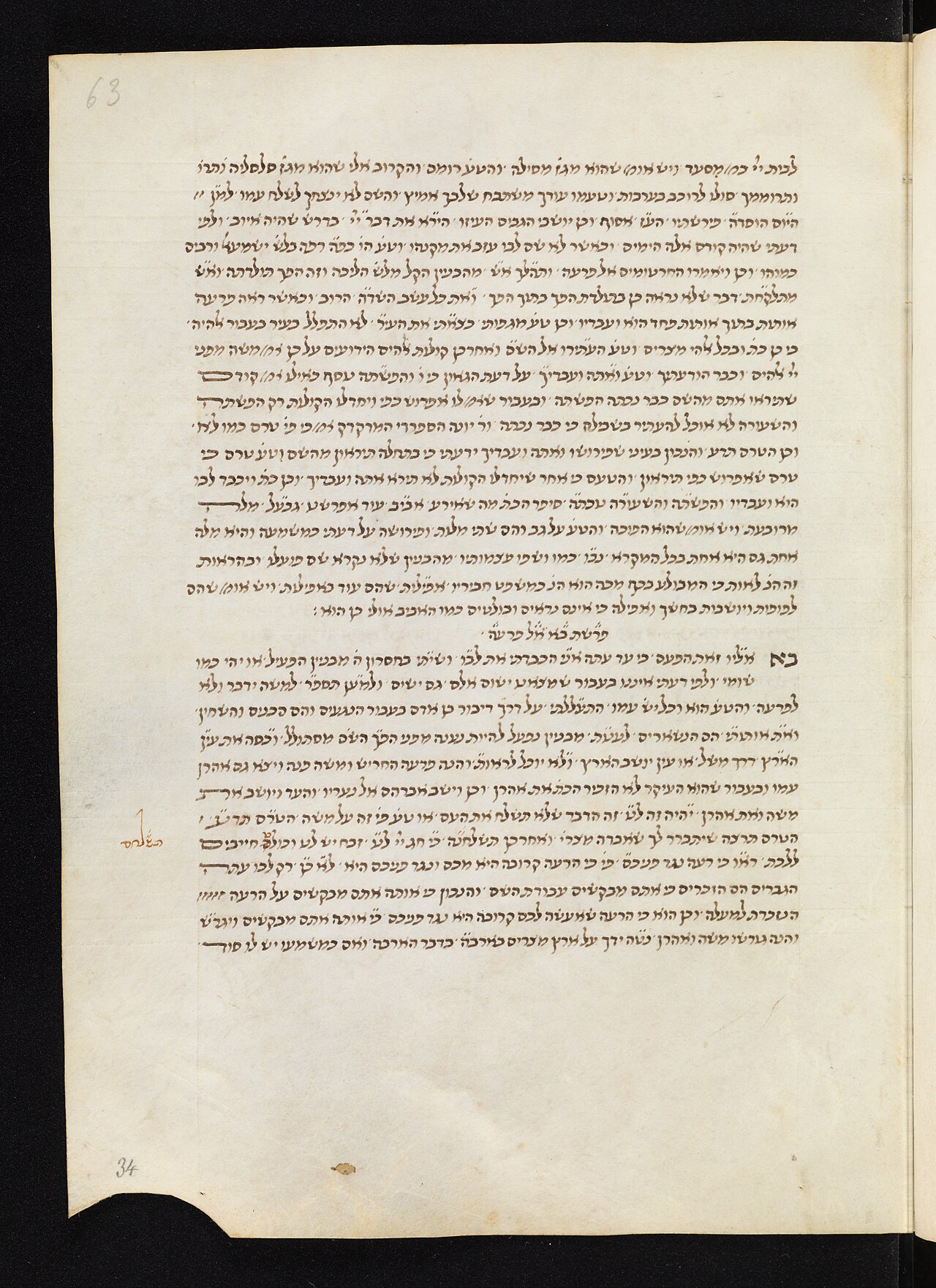
Saadia translated the Torah into Judaeo-Arabic and accompanied it with commentary. Sefaria preserves the text under the title Tafsir Rasag. Later evidence shows how widely it travelled: Yemenite Jewish scribes copied Saadia's Arabic translation into their handwritten codices for centuries. This was not merely translation as convenience. It was translation as jurisdiction - the Bible made legible in the intellectual language of its age without surrendering rabbinic control of meaning.
SefariaWhat survives, and why
Not all of Saadia's work survives equally well. Some writings come whole, some in fragments, some by quotation inside later books. That is normal enough for the 10th century. What is unusually generous is the trail left by the Cairo Geniza. The Jewish community of Fustat stored worn manuscripts and documents in the Ben Ezra Synagogue for centuries, and in 1896-97 Solomon Schechter brought the immense Taylor-Schechter collection to Cambridge. Those fragments do not preserve Saadia alone, of course. They preserve the world in which he wrote, argued, copied, was copied, and mattered. But that is precisely the point. A man who spent his life trying to make a civilisation intelligible is himself now known through the storeroom habits of that civilisation. Jewish continuity has often been a filing system with theology attached.
The siddur belongs in that story too. Saadia's prayer book is not the first Jewish liturgy ever written down - Rav Amram came earlier - but it is among the earliest surviving attempts to order weekday, Sabbath and festival prayer into a single usable whole, with Judaeo-Arabic commentary and Saadia's own piyyut. Again the same instinct appears: gather, arrange, transmit. If the Bible needed Arabic, prayer needed sequence. If sequence existed only locally, it could fray. If it could be set in a book, it could travel.
This is why "bridge from the geonim to the Rishonim" is more than a flattering phrase. The geonic world had authority because Babylonia still stood at the centre. The rishonic world would have authority because books travelled farther than centres do. Saadia belongs to both arrangements. He is a gaon in office, but already a rishon-like presence in method: systematic, textual, portable, cited far from where he sat. He made Sura speak in a form that could outlive Sura.
The Cairo Geniza reaches Cambridge
Cambridge Digital Library records that Solomon Schechter brought 193,000 manuscripts from the Ben Ezra Synagogue's genizah in Fustat to Cambridge in 1896-97, creating the Taylor-Schechter collection. Among the categories preserved there are Bibles, prayer books, legal texts, letters, accounts, and medieval Jewish manuscripts of every description - the sort of archive from which Saadia's world can still speak in its own handwriting. Medieval Jews kept everything. Blessedly, they were right.
Cambridge Digital LibraryThe man after the books
Saadia died in 942. By then he had given rabbinic Judaism something it had not previously possessed in one figure: a disciplined confidence in its own ability to think across the whole field. Scripture, language, liturgy, law, polemic, philosophy - he worked all of them. He did so in Hebrew and Arabic, which is another way of saying he refused the false choice between fidelity and fluency. The tradition could speak the language of the surrounding civilisation and remain entirely itself. Indeed, on his view, it had better.
Tradition later remembered him as one of the great defenders of rabbinic Judaism, and history has no reason to object. But defence is only half the matter. Saadia was not great because he said no to the Karaites, or no to an unjust exilarch, or no to a rival calendar. He was great because he knew what sort of yes had to stand behind those refusals: yes to intelligibility, yes to order, yes to the proposition that inherited argument need not remain scattered in order to remain alive. That is a civilisational gift.
After him, the Jewish bookshelf looks different. The argument is still there - thank God - but it is arranged, indexed, translated, and ready to travel. Saadia took the tribe's old noise and gave it form enough to cross a thousand years.
Further reading