Every people keeps a few characters it can summon in a sentence, and the tribe is no exception. Moses, of course. David. And, a little further down the list, a stranger: Balaam son of Beor, the seer from the east whom a frightened Moabite king once hired to curse the Israelites camped on his border. The story in Numbers is one of scripture's great comic reversals. Balaam saddles his donkey, the donkey sees the angel he does not, and three times he is brought to a ridge to deliver a curse - and three times the words that come out are blessing. "How goodly are your tents, O Jacob." He was paid to damn us and could only praise us. It is the kind of thing the tribe enjoys remembering.
For a long time that was all Balaam was: a figure inside our own book, vivid but unverifiable, the way most ancient characters are. Then, in 1967, a Dutch expedition digging a mound in the Jordan Valley found him written on a wall - in someone else's language, telling someone else's story. He had been famous next door, too.

The night the gods came to Balaam
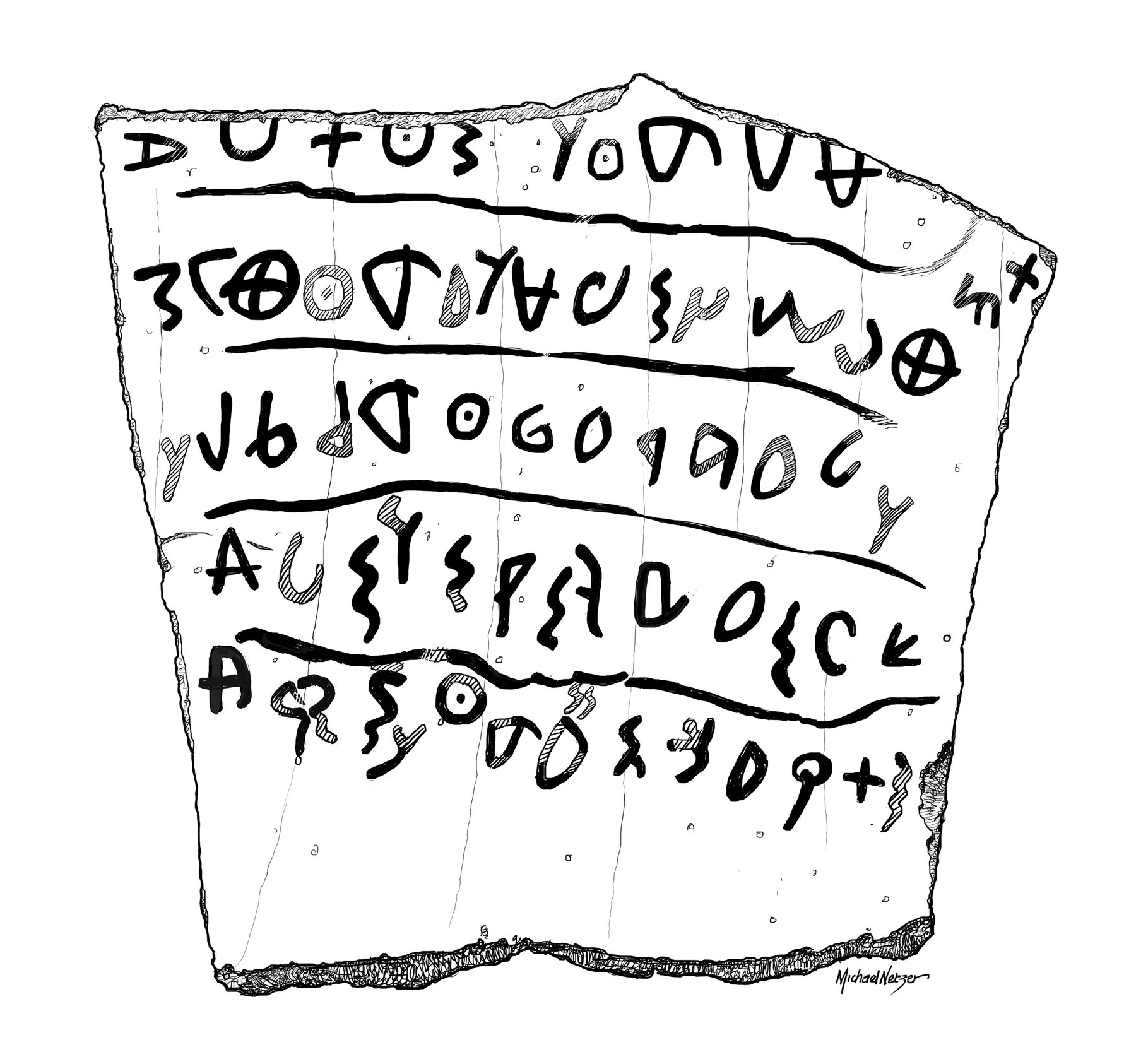
The text was not carved in stone. It was written in ink, black with headings picked out in red, across a wall of white plaster - the oldest surviving example we have of a book set down in a West Semitic alphabet, and it survived only because the building fell on it. An earthquake brought the wall down around 800 BCE, and the plaster shattered into more than a hundred pieces, which is why the thing reaches us as a jigsaw rather than a page.
What the surviving lines tell is a vision. Balaam is introduced as a "seer of the gods". The gods come to him in the night and show him something terrible - a coming darkness, the natural order turned upside down, the small birds shrieking at the eagle, the order of creatures undone. He wakes, and he weeps, and he fasts. His people come to him and ask why he is grieving, and he tells them what the gods, the Shaddayin, have resolved to do. It is a prophecy of doom, delivered by a seer the whole district seems to have known by reputation. None of it is in our book. And yet the man at the centre of it has exactly the name our book gives him: Balaam, son of Beor.
The Deir Alla plaster inscription
A text written in ink on a plastered wall at Tell Deir Alla in the central Jordan Valley, uncovered in 1967 by a Leiden University expedition under Henk Franken. Its opening words name "Balaam son of Beor, a seer of the gods", and recount a night vision of catastrophe that he relays to his people. The wall collapsed in an earthquake around 800 BCE; the surviving plaster was lifted, conserved and reassembled, and is now in the Jordan Archaeological Museum, Amman.
Jordan Archaeological Museum, Amman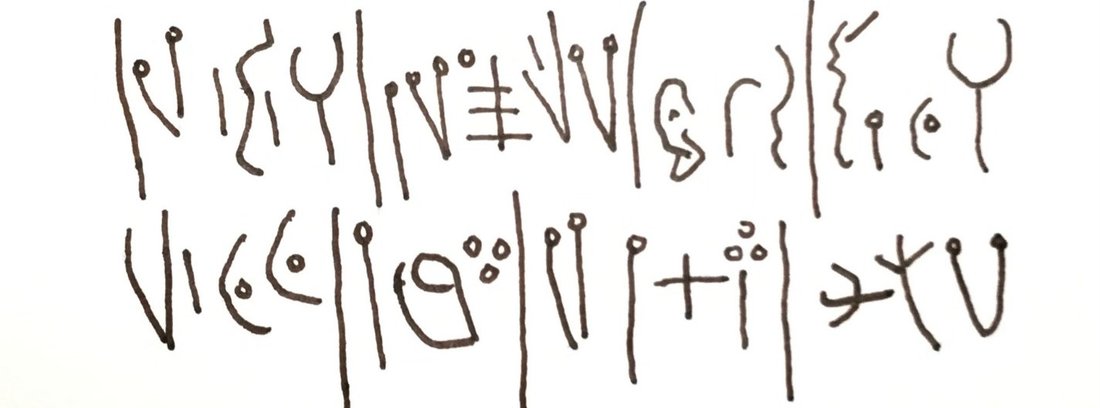
The same man, a different memory
It is worth being precise about what this does and does not show. The Deir Alla Balaam is not the biblical Balaam transcribed. There is no Balak here, no donkey, no Israel, no blessing-instead-of-curse. The seer on the wall belongs to the religion of his neighbours: he serves the Shaddayin, the gods of the place, and the doom he sees is theirs to send. This is not a Jewish text. It is the local memory of a figure the Jewish text also kept - a holy man famous across the whole region of Gilead and Moab, important enough that two traditions, ours and theirs, wrote him down separately.
That is the quietly remarkable thing. A character we might have assumed was a literary invention turns out to have been a shared property of the ancient Near East, a name that travelled, a reputation that crossed the river. The Bible did not make Balaam up. It received him - and then did with him what it does with so much it receives: it bent the story to its own purpose, turned the famous curser into an unwilling blesser, and used him to say something about who Israel was. Both walls, the one in Amman and the scroll in the synagogue, are remembering the same man. They simply wanted different things from him.
Numbers 22-24
The Torah's Balaam is a diviner from Pethor on the Euphrates, summoned by Balak king of Moab to curse the Israelites encamped on the plains of Moab. On the road his donkey sees the angel barring the way and speaks; brought to curse, Balaam blesses Israel three times, including the oracle that opens "How goodly are your tents, O Jacob, your dwellings, O Israel". The text names him, like the wall does, as Balaam son of Beor.
Hebrew Bible: Numbers 22:5-24:25The earliest name to surface twice
This is what makes the plaster more than a curiosity. Other inscriptions name biblical people - the Mesha Stele names Omri king of Israel, the Tel Dan stele names the House of David, Assyrian records name a string of later kings. But all of those people stand late in the story, in the age of the divided kingdoms. Balaam stands much earlier: the Torah places him in the wilderness years, before Israel has so much as crossed the Jordan. Of every figure in the Bible's narrative who comes before that moment - the patriarchs, Joseph, Moses, the whole wandering generation - he is the only one we have so far found named in a contemporary-ish source outside the Bible itself.
The claim is a precise one. The Deir Alla wall is not the oldest such inscription; the steles of Moab and Dan are about the same age or a little younger. The point is not the age of the writing but the place of the man in the story. Reading the Bible forward, Balaam is the first character to step off the page and turn up, by name, on someone else's wall. Everyone earlier than him remains, for now, a figure we know only from the inside.
He was hired to curse us and could only bless us. He is also, so far, the oldest of our story's cast to be found abroad.
Tell Deir Alla
A settlement mound on the east bank of the Jordan, in the valley of Gilead north of the Jabbok, excavated from 1960 by Leiden University. The plaster text came from a building in a phase ended by an earthquake about 800 BCE. The site is sometimes identified with biblical Succoth, though the identification is not certain. It lay on the seam where Israelite Transjordan met Aramean and Ammonite territory - exactly the kind of crossing-place where a story might be told on both banks.
Tell Deir Alla, Balqa Governorate, JordanPersistence on a fallen wall
Most of what survives from three thousand years ago survives because someone meant it to: a king cut his victory in basalt, a scribe sealed a jar. This survived by accident. A wall fell, the plaster broke, the pieces lay in the ruin until a trowel reached them in 1967. There is something fitting in a prophet of doom being preserved by a disaster, but the deeper pleasure is simpler. The tribe's story is old enough, and was woven tightly enough into the life of its region, that its characters left fingerprints on other people's houses.
We did not need the wall to believe in Balaam; he was already ours, donkey and all. What the wall gives is something better than proof. It gives company. It tells us that the people who lived next door, who worshipped other gods and feared other futures, knew the same name we knew, and thought it worth writing on the wall of a room. Our book did not echo in an empty country. It was written by a people who were thoroughly, durably, unmistakably there.
Further reading
Story & Stone · Persistence & Evidence
Next on the shelf: Moab answers back - the Mesha Stele →