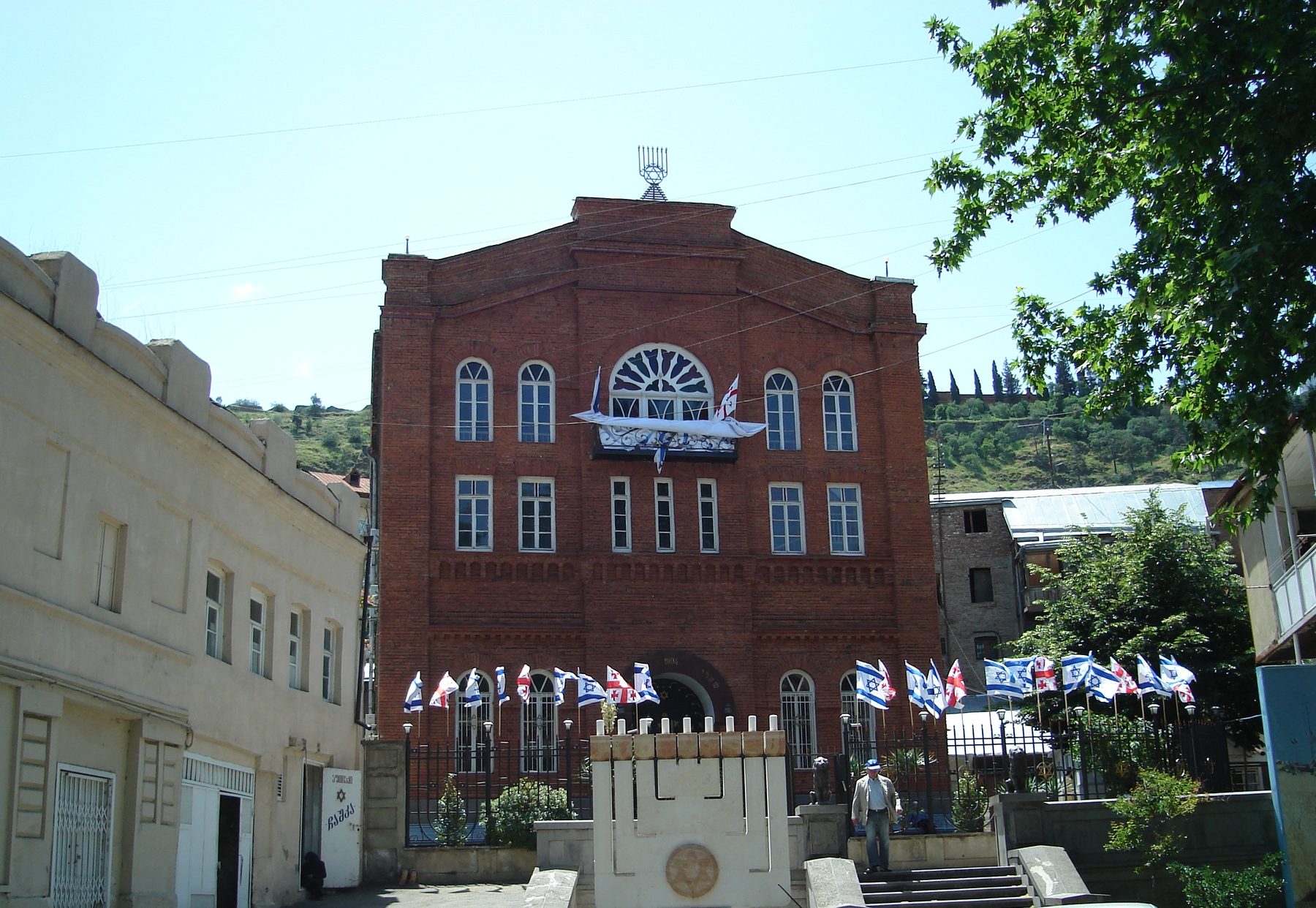
There is a town in northern Azerbaijan, on the bank of the Gudialchay River, where a community of several thousand people has been living as Jews - observing Shabbat, maintaining synagogues, circumcising their sons, keeping the calendar - for longer than anyone can precisely establish. The town is called Krasnaya Sloboda, the Red Settlement, and it sits across the river from the Azerbaijani Muslim town of Quba, close enough to see the lights from the opposite bank on a Friday evening. It is, by any reasonable account, one of the more extraordinary facts in the contemporary Jewish world: an almost entirely Jewish village, one of the few remaining anywhere, where Jewish life has continued in an unbroken line from the pre-modern period into the present. It did not survive because it was protected, or concealed, or situated in a backwater. It survived because the people who lived there were very good at surviving - in an environment that made the same demand of everyone.
The Mountain Jews - Juhuro in their own language, also called Caucasian Jews or, in Russian, Kavkazskie Yevrei - are the Jewish community of the eastern Caucasus. Their historical heartland runs along the Caspian coast and into the mountain districts of what are now Dagestan, Azerbaijan, and parts of the North Caucasus: a landscape of high ridges, fortified villages, and river valleys that have always been the passage between the steppe to the north and the settled civilisations to the south. They are not a community that fits comfortably into the standard Jewish diaspora narrative. Most diaspora Jewish communities were primarily urban, primarily mercantile, and primarily positioned at the edge of power rather than inside it. The Mountain Jews were farmers and warriors. They lived in the same villages, by the same codes of honour and blood feud and hospitality, as their Lezgin and Avar and Azerbaijani neighbours. They were simply also Jews - with all that entailed.
That combination is the thing worth pausing on. The Caucasus has never been a soft environment. The communities that persisted there did so because they were capable of defending themselves, and the Mountain Jews were no exception. They were known as horsemen. They carried arms in a region where arms were carried as a matter of course. They feuded, as their neighbours feuded. They also lit the Shabbat candles on Friday evening, studied Torah, and observed kashrut. The scholar and the swordsman were not different people. They were the same person, at different moments in the same week.

A language carried from Persia
The language of the Mountain Jews is called Juhuri, or Judeo-Tat, and it is one of the more remarkable linguistic facts in the Jewish world. It is a southwestern Iranian language - the same broad family as modern Persian, Tajik, and Dari - related to Tat, a Persian-family language spoken by communities in the eastern Caucasus. Its roots lie in a form of Persian that was carried into the region in antiquity, probably along the trade and administrative routes of the Achaemenid and Parthian empires. It is not modern Persian. It preserves archaic features that standard Persian abandoned centuries ago, features that linguists use to date and trace the language's origins. It is a piece of very old language, maintained in a very particular place.
Like Bukhori, like Ladino, like Judeo-Arabic - like every Jewish language - Juhuri is a form of a majority tongue that the Jewish community made its own. It was written in Hebrew script, in the traditional form, which meant that the same letters that carried Torah also carried the daily vocabulary of Caucasian village life. Under Soviet rule, Hebrew script was first replaced by Latin in the 1920s, then by Cyrillic; the alphabet changed twice, but the language itself persisted. A Juhuri-language newspaper was published in the Soviet period. Poets wrote in Juhuri. A literary tradition was encouraged - briefly, imperfectly, and under the usual Soviet conditions - before the suppression of religious and minority cultural life tightened.
Juhuri is now estimated to have between 100,000 and 130,000 speakers worldwide, which makes it considerably more robust than many endangered Jewish languages - more speakers than Bukhori, probably more than Judeo-Tat's nearest relatives. But "endangered" remains the accurate description. The community's diaspora - in Israel, in the United States, in Moscow - is raising the next generation largely in Hebrew, English, and Russian. The language survives most strongly in Krasnaya Sloboda and among older members of the diaspora communities. Whether it survives into the century's second half in a living form depends on choices that are being made right now, in living rooms in Holon and Queens.
Juhuri · Judeo-Tat
Juhuri is a southwestern Iranian language, ISO code jdt, spoken by the Mountain Jews of the eastern Caucasus and their diaspora communities worldwide. It is related to Tat, the Iranian language of non-Jewish Caucasian communities, but has developed independently for a period that linguistic evidence suggests is considerable - at least several centuries, and probably longer. It was traditionally written in Hebrew script; Soviet-era publications used Cyrillic. The language has a documented literary tradition from the Soviet period, including poetry and prose. Estimated speaker population: 100,000-130,000, primarily in Israel, Russia, the United States, and Krasnaya Sloboda, Azerbaijan. The language is classified as endangered by UNESCO and by academic linguists, though its speaker population is larger than many endangered Jewish languages.
ISO 639-3: jdt · UNESCO endangered language · Literary corpus documented · Soviet-period publications held at Russian state archivesOrigins along the old routes
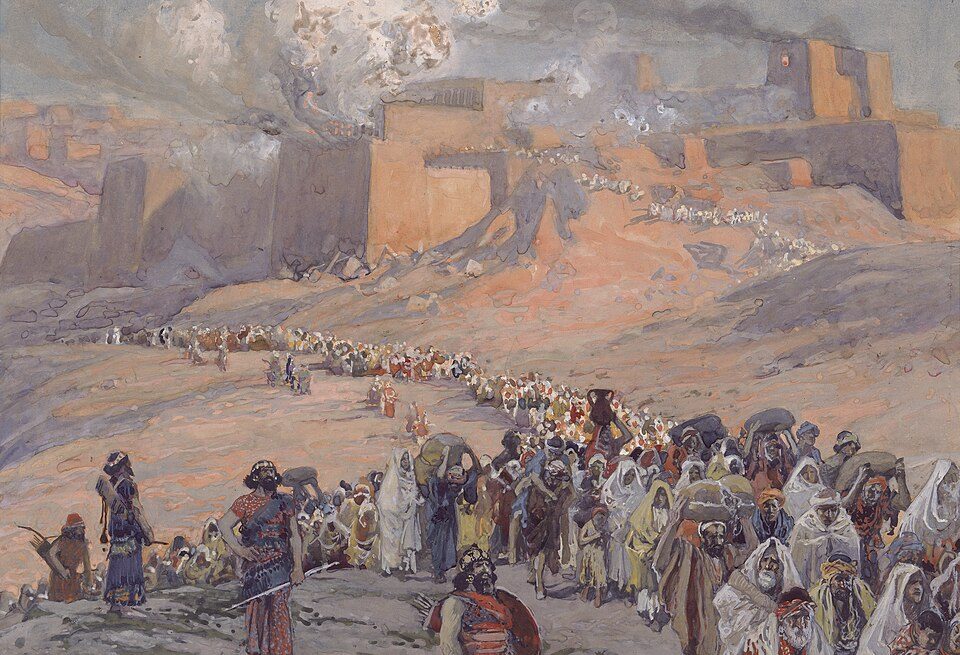
Where the Mountain Jews came from, and when, is a question that the historical record handles with characteristic incompleteness. Community oral tradition - passed from generation to generation - traces the origins to the Assyrian exile and the dispersal of the northern tribes, with later waves arriving through Babylonia and Persia along the trade routes that the Achaemenid administration opened across its vast territory. Some scholars connect the Mountain Jews' ancestors with the Jewish communities of Media and Persia mentioned in the Hebrew Bible, communities that were settled in the region centuries before the Common Era. The evidence for any specific origin in the earliest period is sparse; the migration of an Iranian-language-speaking Jewish community into the Caucasus at some point in antiquity is linguistically plausible and historically consistent with what we know of Jewish movement along Persian imperial routes, but it cannot be pinned to a date.
What the medieval record does establish is a Jewish community in the eastern Caucasus - in what is now Azerbaijan and Dagestan - that was present and distinctive by the early medieval period. Arab geographers and historians who described the Caucasus in the ninth and tenth centuries noted Jewish populations in the region. The city of Derbent, on the Caspian coast in what is now southern Dagestan, appears in these sources as a major settlement with a documented Jewish quarter. Derbent was a strategic chokepoint - the narrow coastal strip between the Caucasus mountains and the Caspian sea was the land route between the steppe and the civilisations to the south, and whoever held Derbent held the key. The city was valuable enough to be fought over by every power that reached the Caucasus, from the Sassanid Persians to the Arabs to the Mongols to the Russians. And its Jewish community persisted through all of it.
There is also the question of the Khazars - the Turkic empire of the Pontic-Caspian steppe whose ruling elite converted to Judaism, according to most accounts, in the eighth or ninth century CE, though the conversion itself has been questioned by some historians. The Khazar empire occupied the steppe to the north of the Caucasus; the Mountain Jewish communities lived to the south, in the mountains and along the Caspian coast below. Whether there was meaningful contact, or influence in either direction, between the Khazar Jewish elite and the established Mountain Jewish communities is historically uncertain. The Khazar question is one of the most debated in medieval Jewish history, and the debates mostly concern the Khazars themselves rather than their relationship to the Mountain Jews. What is fair to say is that the Mountain Jews are older than the Khazar conversion - they were there before the Khazar elite adopted Judaism - and that the connection, if it existed, remains speculative.
The warrior community
To understand what is unusual about the Mountain Jews, it helps to understand what the Caucasus expected of everyone who lived in it. The eastern Caucasus in the pre-modern period was a patchwork of small communities - some Muslim, some Christian, some Jewish, some following older practices - living in fortified villages on steep hillsides, farming the narrow valleys, and maintaining the independence of their communities by force when necessary. This was not a landscape that rewarded passive accommodation. The same mountain villages that the Lezgins and Avars defended with their lives were the same mountain villages where the Mountain Jews lived. The same codes of hospitality and vendetta that governed Caucasian social life governed the Jewish communities within it. You could not be a guest in the Caucasus without eventually also being a fighter, and the Mountain Jews were guests in the fullest Caucasian sense - which is to say, not guests at all, but participants.
The community's reputation for martial culture appears across the historical record with enough consistency to be taken seriously. Mountain Jews served in armed formations; they are recorded as skilled horsemen in accounts from the Russian imperial period, when the conquest of the Caucasus brought outside observers into contact with communities they had not previously documented. They carried weapons as a matter of course - not as an exception to their Jewish identity, but alongside it, as an aspect of where they lived and how that place required them to live. The Torah commanded certain things. The Caucasus commanded certain other things. The community did both.
This matters not because martial culture is inherently admirable, but because it tells us something specific about how Jewish identity can adapt to its environment without losing its core. The Mountain Jews did not become less Jewish by becoming Caucasian fighters. They became a particular kind of Jewish community - one shaped by the eastern Caucasus in its landscape, its social grammar, and its physical demands, while remaining shaped by Torah in its calendar, its practice, and its self-understanding. The combination was not a compromise. It was its own synthesis, as complete in its way as the Bukharan Jewish poet working in Persian metres, or the Kaifeng community writing Hebrew in Chinese characters.
Derbent, Dagestan
Derbent, on the Caspian coast of what is now the Republic of Dagestan, Russian Federation, is among the oldest continuously inhabited cities in Russia, with settlement reaching back to at least the eighth century BCE. Its strategic position - in the narrow coastal corridor between the Caucasus mountains and the Caspian sea - made it a fortified chokepoint on the routes between the steppe and the south, and it was held in succession by Sassanid Persians, Arab caliphates, Mongols, and various Caucasian powers before Russian annexation in the nineteenth century. Medieval Arab and Persian geographers document a Jewish population in Derbent from at least the ninth and tenth centuries. The city's Jewish quarter is documented in historical sources through the medieval and early modern periods. A Jewish community was present in Derbent through the Russian imperial period; a smaller community remains today. The Derbent fortress (Naryn-Kala) is a UNESCO World Heritage Site.
Derbent, Republic of Dagestan, Russian Federation · UNESCO World Heritage Site · Jewish community documented from medieval periodThe Red Settlement
The most remarkable surviving expression of Mountain Jewish community life is Krasnaya Sloboda - the Red Settlement - a town of several thousand people on the bank of the Gudialchay River in northern Azerbaijan, directly across the water from the Azerbaijani Muslim town of Quba. Krasnaya Sloboda is, by the accounts of those who have studied it, one of the most unusual Jewish settlements in the former Soviet Union - possibly in the world. It is not a Jewish quarter in a larger city. It is not a neighbourhood within a mixed town. It is a town that is nearly entirely Jewish, in which Jewish life has been maintained continuously, in which the synagogues are active and the calendar is observed and the community has not dispersed.
The settlement sits at a slight remove from Quba - the river between them is not a great barrier, and there has been trade and contact across it for centuries, but it provides just enough separation to have allowed the community to develop and maintain its own internal life. The relationship between Krasnaya Sloboda and Quba has been, by most historical accounts, peaceful and commercially productive: two communities in adjacent spaces, each with something the other needed, able to coexist across a short stretch of water and a long stretch of established custom. This is not a simple story about tolerance, and it should not be romanticised - the twentieth century tested the relationship, as it tested everything in the Soviet south. But it has held.
What makes Krasnaya Sloboda significant is not its size or its picturesque position on the river. What makes it significant is that it represents something genuinely rare: a Jewish community in a traditional village setting, living as a majority in their own place, with the physical fabric of Jewish life - the synagogues, the community buildings, the domestic arrangements shaped by the Jewish calendar - intact and in use. In a world where Jewish communal life outside Israel is almost exclusively urban, minority, and institutional, Krasnaya Sloboda looks different. It looks like a community that never quite made the transition from the pre-modern village model to the modern diaspora model, because it never had to.
Krasnaya Sloboda · Red Settlement
Krasnaya Sloboda (Qırmızı Qəsəbə in Azerbaijani) is a settlement on the Gudialchay River in the Quba district of northern Azerbaijan, directly across the river from the city of Quba. It is widely described as the largest predominantly Jewish settlement in the former Soviet Union outside of Israel, and one of the few surviving examples anywhere in the world of a Jewish community living as a majority in a traditional village setting. The settlement has multiple active synagogues, a Jewish community centre, and maintained Jewish educational and cultural institutions through the Soviet period and after. The community is Juhuri-speaking and maintains the religious practices of the Mountain Jewish tradition. Population figures have fluctuated with emigration waves; the community is smaller than at its Soviet-era peak but remains resident and active. The settlement is part of the Quba-Khachmaz region, which historically was the heartland of the Mountain Jewish population in Azerbaijan.
Quba district, Azerbaijan · Active synagogues · Juhuri-speaking majority communityThe Soviet century
Soviet power reached the Caucasus in the early 1920s, and it reached into the Mountain Jewish community in the same ways it reached into every community under its authority. The early Soviet period brought something paradoxical: a brief official promotion of Mountain Jewish culture that was also, in the same gesture, an attempt to detach it from its religious content. A Juhuri-language newspaper was published - in Cyrillic, as Soviet language policy required. A Juhuri literary tradition was encouraged, with writers producing poetry and prose that could be presented as expressions of a national culture rather than a religious one. The distinction was important to the Soviet system and more or less meaningless to the community itself, whose culture and religion had never been in separate compartments.
Then the promotion contracted and the suppression began. Religious practice went indoors - as it did for Jewish communities across the Soviet Union. The synagogues were closed in many settlements, or repurposed, or left to deteriorate. Many Mountain Jews were settled in cities: Baku, Makhachkala, Nalchik. The dispersal was not always coerced in a direct sense, but it followed the logic of Soviet modernisation, which had no interest in maintaining traditional village life of any kind, let alone a Jewish village life. The community adapted, as it had always adapted - keeping what could be kept privately, observing what could be observed at home, maintaining the thread of identity through a period that was designed to sever it.
After 1991, the emigration accelerated sharply. The dissolution of the Soviet Union and the conflicts that followed in the Caucasus - particularly the war over Nagorno-Karabakh, which produced widespread instability across the region - prompted many Mountain Jews to leave. Israel absorbed the largest number; a significant community settled in Moscow, where Mountain Jews had been moving since the Soviet period; another community grew in the United States, concentrated in parts of Queens, New York, overlapping in geography and in social world with the Bukharan Jewish community that had settled in the same neighbourhoods. A smaller community settled in Germany.
The same story the tribe carries everywhere - Torah, Shabbat, the covenant. In the Caucasus, it was kept in a warrior culture, in an ancient Iranian tongue, in a village on a river that has never stopped being home.
The diaspora and what it carries
The Mountain Jewish diaspora today is concentrated in Israel, the United States, and Russia. In Israel, the community has settled primarily in the coastal cities - Holon, Ashdod, Netanya - and has established synagogues, cultural organisations, and community associations that maintain the specific practices of the Mountain Jewish tradition: the Juhuri liturgical customs, the distinctive food culture, the particular community social structures that developed over centuries in the eastern Caucasus. The Israeli Mountain Jewish community is estimated at over 100,000 people, making it one of the larger non-Ashkenazi communities in the country.
In the United States, the Queens community is the most significant concentration. The overlap with the Bukharan Jewish community in Rego Park and Forest Hills is not accidental: both are post-Soviet Jewish communities from the Turkic-Iranian cultural sphere, both arrived in significant numbers after 1991, and both have found the same neighbourhoods hospitable to their particular combination of religious traditionalism and post-Soviet immigrant ambition. They are distinct communities with distinct languages and histories, but they are neighbours in Queens as they are sometimes neighbours in Israeli cities.
What the diaspora carries from Krasnaya Sloboda and Derbent is harder to enumerate than what the Bukharan Jews carried from Samarkand, because the Mountain Jewish tradition is less visually spectacular - no ikat robes in glass cases. It carries a language that 100,000 people still speak, a liturgical tradition with its own accent and its own customs, a food culture shaped by the eastern Caucasus, and a self-understanding that includes the memory of being the kind of Jews who did not simply endure but also, when necessary, fought. Whether that self-understanding translates into anything the next generation can use is, as with every diaspora community, an open question.
The sword and the candle
There is an image that the Mountain Jews' history keeps returning to, and it is worth stating plainly: a community that maintained Jewish practice in the villages of the eastern Caucasus, in an environment that demanded they be as tough as their neighbours and as observant as their tradition required. They were both. This is not a metaphor. It is a description of how Jewish life actually worked in a specific place, under specific conditions, for a very long time.
The persistence thread here is not primarily the survival of buildings or objects - it is the survival of practice. Torah was read. Shabbat was observed. Boys were circumcised. Kashrut was maintained. Hebrew literacy was preserved, at least among the learned members of the community, even as the spoken language of daily life was Juhuri and the written language of official life was, eventually, Cyrillic. The community kept its obligations to the covenant in a place where the covenant was kept in proximity to weapons and horses and blood feuds and mountain winters. They did not find this contradictory. It was simply what it meant to be Jewish in the Caucasus.
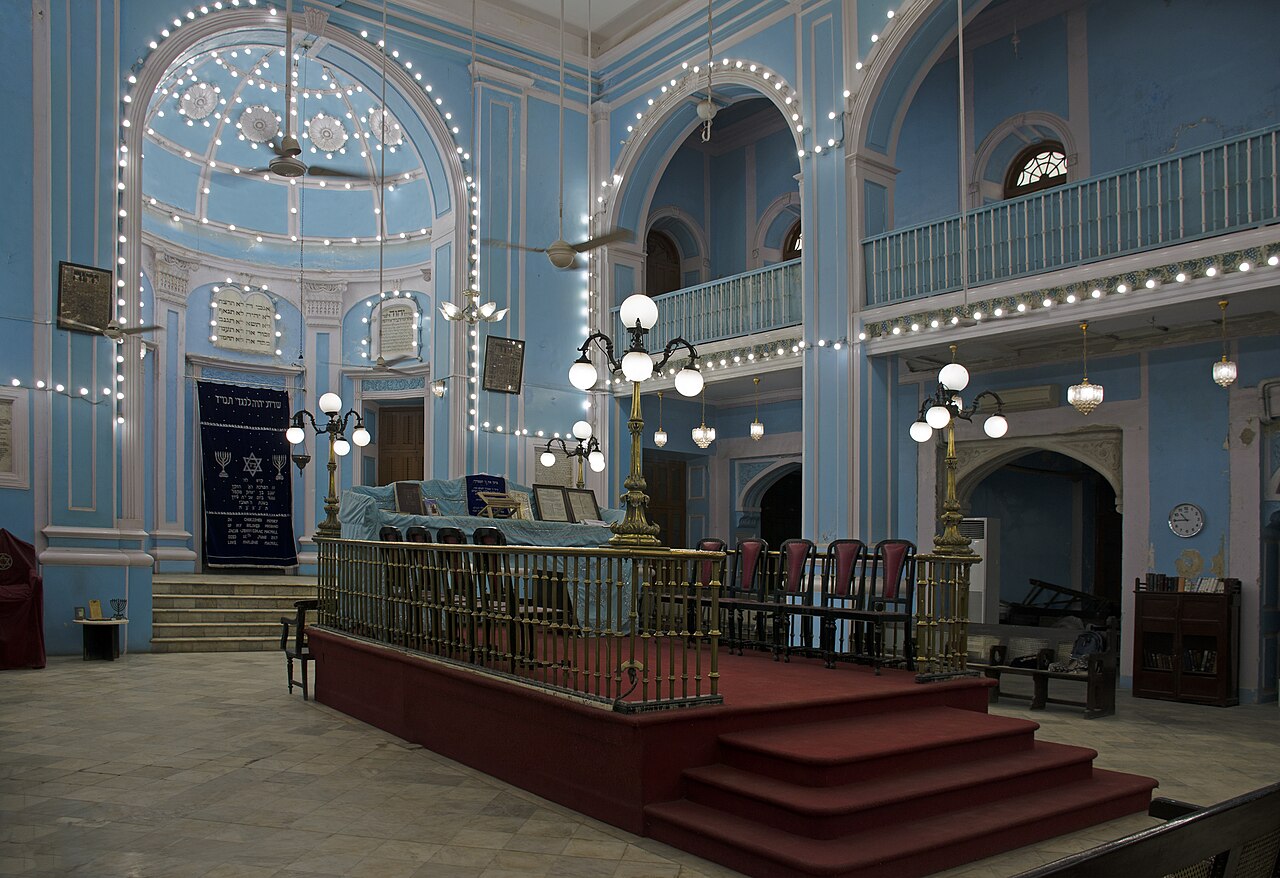
In Krasnaya Sloboda, on a Friday evening, the synagogues are lit. The prayers are chanted in the community's own accent - not Ashkenazi, not Sephardic, not quite like anything else in the Jewish world, because it developed in a place that was not quite like anywhere else in the Jewish world. The river runs between the settlement and Quba, as it has run for all the generations the community has been there. The language the prayers are chanted in is Juhuri, or Hebrew, or both. The community is smaller than it was. It is still there.
Further reading