The astonishing fact is not that they survived. The astonishing fact is that they existed at all - that a man running a military campaign against the most powerful empire the ancient world had produced sat down and wrote, in his own hand, a letter demanding palm branches and citrons for a religious festival. The letter is still there. You can look at the ink on the papyrus and read what he wrote. The name at the bottom is Shimon bar Koseva. History knows him as Bar Kokhba.
The letters were found in 1960 and 1961 by the Israeli archaeologist Yigael Yadin in a crevice deep inside what is now called the Cave of Letters - Nahal Hever, in the Judaean Desert above the Dead Sea. They had been bundled into a leather bag and pushed into a crack in the rock. Alongside them, in the same cave, were the skeletal remains of the people who had carried them there: refugees from the collapse of the revolt, who had retreated into the desert with their most precious possessions and had not come out again. The documents outlasted the people who hid them by nineteen centuries.
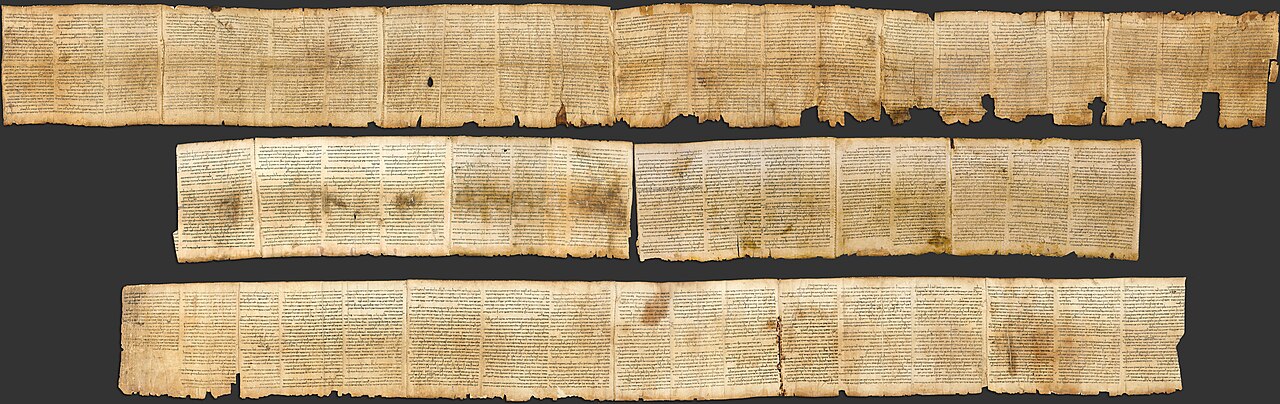
This is the object: not a single letter but a constellation of documents - military dispatches, administrative orders, religious requests, and one of the most remarkable personal legal archives ever recovered from the ancient world. Together they amount to a portrait of a moment so vivid and particular that you stop thinking of the second Jewish revolt against Rome as an historical abstraction and start thinking of it as a set of individuals in the middle of an impossible situation, writing notes to each other about festival supplies and overdue legal papers.

A commander who observed Sukkot
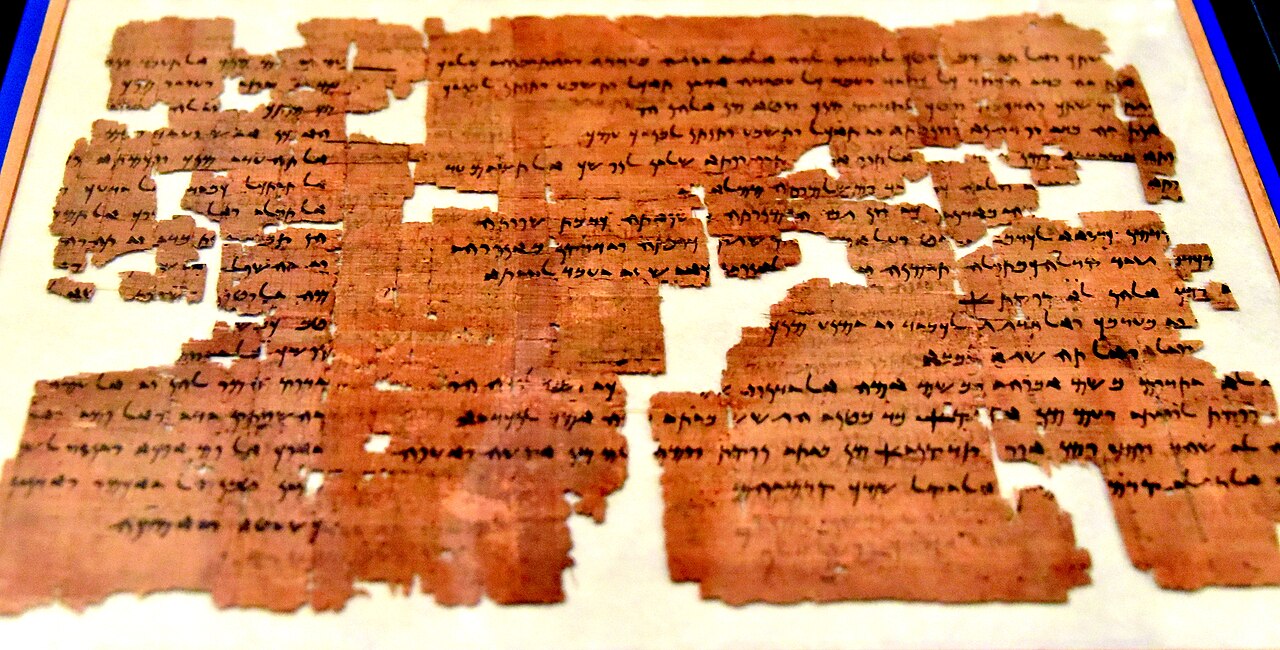
P. Yadin 57 is what the catalogue calls it. What it is, is a letter from the commander of a Jewish revolt to one of his officers, a man called Yehuda bar Menashe, instructing him to arrange transport and supplies. The letter includes a specific demand: send palm branches, citrons, myrtles, and willows - the four species, the arba minim, the plants required for the celebration of Sukkot. Bar Kokhba does not explain this request. He does not need to. The festival is coming. Soldiers need what soldiers need.
Both things are happening at the same time. This is not a man who set aside his religious life while fighting Rome; it is a man for whom fighting Rome and observing Sukkot were not separate categories of existence. The revolt was, among other things, a religious act - a reclamation of the Temple calendar, of the land, of the Jewish right to live as Jews. Demanding the four species is not a distraction from the military campaign. It is part of what the military campaign was for.
Other letters from the same cache show the texture of his command. He is brisk, demanding, sometimes furious. In one letter he threatens to put his officers in irons if they continue to "ease the life" of men from a settlement called Tekoa - men Bar Kokhba felt were not pulling their weight in the fight. In another he complains about non-compliance with a direct order. He writes the way a man writes when he is accustomed to obedience and has recently not been receiving it. But the letter about the four species is different in tone: it is businesslike, almost matter-of-fact. The festival needs its plants. Please arrange.
Cave of Letters, Nahal Hever
Yigael Yadin's excavation of the Cave of Letters, Nahal Hever, Judaean Desert, in 1960-61, recovered a leather bag containing military dispatches, administrative documents, and personal papers from the period of the Bar Kokhba revolt (132-135 CE). The same cave contained the skeletal remains of Jewish refugees who died there during or after the revolt's collapse. Documents are held by the Israel Antiquities Authority; key items including P. Yadin 57 are displayed at the Israel Museum, Jerusalem.
Israel Antiquities Authority / Israel Museum, JerusalemThe woman who carried her entire life into a cave
In the same leather bag, or very close to it, was a different archive entirely. Thirty-five documents spanning nearly forty years, from 93 CE to 132 CE, covering the life of a single woman named Babatha bat Shimon, from a village called Maoza near the Dead Sea. Marriage contracts. Property documents. Guardianship petitions. Court papers from a legal dispute over her son's inheritance. Tax receipts. A deed of gift from her second husband. Loan documents she was owed and documents recording what she owed.
Babatha was not a commander. She was a property owner - a woman of some means, in the middle of a legal life that was complicated enough to fill a satchel. When the revolt collapsed and the Roman forces moved through the region, she, like the others who sheltered in the cave, gathered what mattered most and fled into the desert. What mattered most to Babatha was her legal archive. The documents that proved what she owned, whom she had married, what she was owed, and who was responsible for her children. She took them into the cave and she never came back for them.
The archive Babatha assembled tells you something that very few ancient sources do: what ordinary legal life looked like for a Jewish woman in Roman-era Judaea. The documents are written in Aramaic, Greek, and Nabataean. They show a woman who navigated courts in at least two languages, who knew how to draw up a contract and how to pursue a claim, who had opinions about property and was not reluctant to assert them. She is not a background figure. She is the protagonist of her own archive, and she carried it to a cave and died near it, and nineteen centuries later Yigael Yadin found it exactly where she had left it.
The Babatha Archive
Thirty-five legal and personal documents belonging to Babatha bat Shimon, spanning 93-132 CE. The archive covers her life from before the Bar Kokhba revolt to its final year and includes marriage contracts, property deeds, court papers relating to her son's guardianship, tax receipts, and a deed of gift. Documents are written in Aramaic, Greek, and Nabataean. Found alongside Bar Kokhba's military dispatches in the Cave of Letters, Nahal Hever, during Yadin's 1960-61 excavation. Held: Israel Antiquities Authority.
Israel Antiquities AuthorityShe gathered what mattered most and fled into the desert. What mattered most to Babatha was her legal archive.
The language question
Bar Kokhba's letters are written in three languages: Aramaic, Hebrew, and Greek. This is not random. It is a snapshot of the complicated linguistic reality of Judaea in the second century CE - a world in which Aramaic was the everyday spoken language of most Jews, Greek was the administrative language of the Roman empire and a practical necessity for anyone dealing with its institutions, and Hebrew was something more freighted than either.
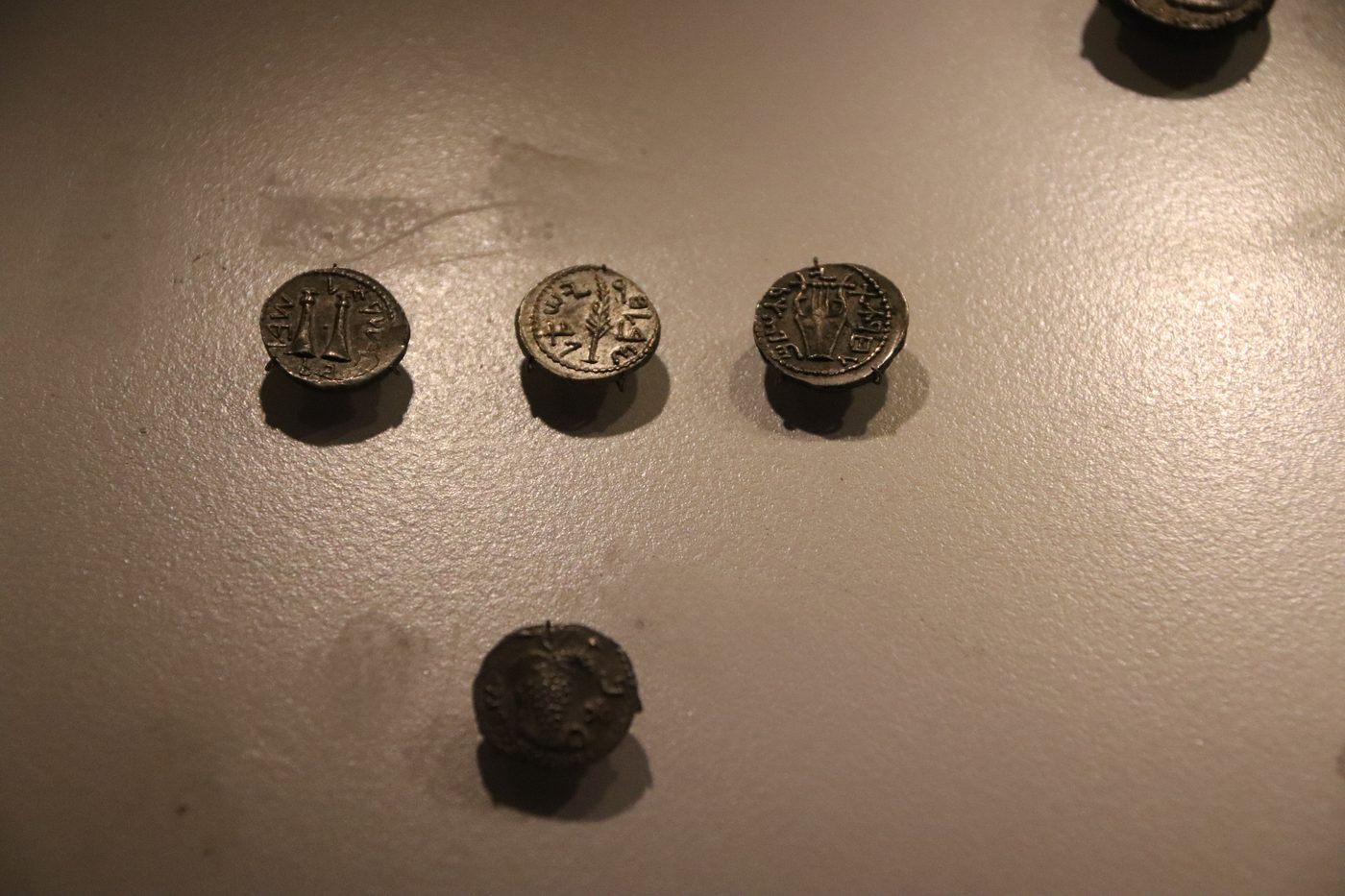
One of the most striking documents in the cache is a letter that includes an apology. The letter is written in Greek, and the writer explains why: there is no one at this location, the letter says, who knows Hebrew. The apology matters. The revolt was, in part, an effort to revive Hebrew as a living language - the coins Bar Kokhba minted during the revolt bear Hebrew inscriptions, using a deliberately archaic script. Hebrew was the language of assertion, of reclamation. Writing in Greek when you needed to communicate was a concession, and the writer knew it, and said so.
The persistence thread runs here in an unexpected direction. The language Bar Kokhba was trying to revive in his letters and on his coins - the language his officer apologised for not being able to write - is today the spoken, administrative, literary, and everyday language of the state that was founded eighteen centuries after the revolt failed. Bar Kokhba lost the military campaign. He did not lose the argument about Hebrew.
What the cave held, and what it cost
Nahal Hever is a canyon in the Judaean Desert, steep-sided and exposed, reaching down to the Dead Sea shore. The Cave of Letters sits high on the canyon wall, accessible only by rope from above or by a difficult climb from below. In the revolt's final years, as Roman forces systematically reduced the rebel-held areas, people fled into these caves - not as a tactical retreat but as a last refuge, with food and water and their most important possessions, hoping to outlast the siege or find a way out.
They did not find a way out. Yadin's excavation found their remains alongside their objects: keys to houses they would never return to, wooden combs, mirrors, clothing bundles. The leather bag with Bar Kokhba's dispatches and Babatha's archive was found in a crevice near the deepest part of the cave, tucked away as if for safekeeping - or as if whoever carried it there had wanted to protect it to the last possible moment. The documents had been packed carefully. The people who packed them were not, in the end, careful enough to save themselves.
The archive's survival is therefore inseparable from the circumstances that produced it. These documents exist because people died holding them. The festival letter exists because the revolt collapsed before anyone had time to retrieve what they had hidden. History is full of objects that survive by accident; the Bar Kokhba letters survive by catastrophe. The extraordinary thing - the thing that earns the article - is that what survives is not wreckage. It is a commander ordering citrons, a woman's forty years of legal papers, and a scribe's apology for writing in the wrong language. It is, in other words, a life.
Shimon bar Koseva - the names
The revolt's leader is known in ancient sources as "Bar Kokhba" (son of a star) - a messianic title attributed by the Talmud to Rabbi Akiva - and as "Bar Koziba" (son of a lie), the mocking counter-title applied after the revolt's failure. His actual name, Shimon bar Koseva (also rendered Kosiba), was unknown from primary sources until Yadin's excavation produced letters signed in that name. The distinction matters: Bar Kokhba is a legend; Shimon bar Koseva is a person. The letters in his hand are the evidence of the difference.
Israel Museum, JerusalemThe object and the thread
There is a thread that runs from the cave at Nahal Hever to the present, and it is not metaphorical - it is linguistic and liturgical, woven through nineteen centuries of interrupted continuity. Bar Kokhba minted coins with the slogan "for the freedom of Jerusalem" in Hebrew. He demanded the four species for Sukkot from a military camp in a desert canyon. He apologised, through a subordinate, for using Greek. All of these acts point in the same direction: towards a life that is not separate from its obligations, where the religious calendar is not suspended for emergencies because the religious calendar is part of what you are fighting to sustain.
The revolt failed. The Romans destroyed the revolt's infrastructure, scattered its survivors, renamed the province, and forbade Jews from entering Jerusalem. Bar Kokhba died. Babatha died in a cave. Rabbi Akiva, who had declared Bar Kokhba the messiah, was executed by the Romans.
And the Sukkot festival continued to be observed. The four species continued to be gathered. The Hebrew language continued to be carried, in prayer and study and aspiration, across the dispersal. The letters sat in the cave for nineteen centuries and when they came out they were still readable, in a language that was by then spoken again in the streets of a city Bar Kokhba had tried to free. The object in the cave is a dispatch about fruit and palm fronds. The thread it pulls on runs from a Roman-era canyon to everything that came after.
Further reading