The object is smaller than you expect. Room 52 of the British Museum - Ancient Iran - is not the most visited gallery in the building; there are no monumental winged bulls here, no relief panels running thirty metres of wall. There is instead a series of cases holding smaller things: seals, tablets, pottery, metalwork. The Cyrus Cylinder sits in one of these cases, barrel-shaped, about 22.5 centimetres long, baked clay the colour of old sand. It has been broken and repaired. It looks, in photographs, like something a serious person found in a field. Which is more or less what happened: an Assyrian-born excavator named Hormuzd Rassam dug it out of the foundations of Babylon in 1879.
Pick up - in imagination, it is behind glass - this cracked clay object, and you are holding a Babylonian administrative record of Cyrus's restoration policy for the peoples he had just conquered. It is not the biblical account of the exile's end, not the prophecy that anticipated it, not the rabbinic memory of it - and it does not by itself confirm that the exile ended or that Jewish exiles returned. The cylinder was made in 539 BCE, within months of Cyrus the Great's conquest of Babylon. It records, in Babylonian cuneiform, his policy toward the subject peoples of the empire he had just acquired - a policy the Hebrew Bible, in extraordinary and grateful detail, describes as: go home.
The series has visited Assyria, Rome, Babylon, the Seleucids, and Egypt, looking at the objects that record Jewish history from the outside - the view of the empire, not the community. This is the entry that is different. Every other empire in this series oppressed, exiled, or destroyed. Persia, in the Hebrew Bible's telling, is the empire that opened the door. The Cyrus Cylinder is the doorstep record of that opening. It does not name the Jews. It confirms the policy was real.

What the cylinder actually says
The first thing to establish - because the cylinder has been surrounded by claims that outrun it - is what the text contains and what it does not.
The cylinder is a Babylonian religious and royal propaganda text. Its primary purpose is to present Cyrus as the legitimate king of Babylon, chosen not by his own Persian god Ahura Mazda but by Marduk, the chief god of Babylon. The framing is that Marduk had grown angry with the previous Babylonian king, Nabonidus, who had neglected the god's cult and disturbed the city's religious order. Marduk searched among all the lands for a worthy king, found Cyrus of Persia, and guided him to Babylon without a battle. Cyrus, in this telling, is not a foreign conqueror - he is Marduk's chosen instrument, the rightful restorer of proper Babylonian order.
The relevant passage for Jewish history comes in the latter portion of the text. Cyrus states that he has returned the divine images of various peoples to their sanctuaries, and that he "gathered all their former inhabitants and returned them to their homes." He describes allowing exiled peoples to return to their places and rebuild their cultic sites. The text also refers to restoring the cities of Sumer and Akkad. The cylinder does not mention Jews, Judeans, Jerusalem, or the Temple. It is a general statement of restoration policy, not a specific edict about any particular group.
This is not a diminishment. The absence of a specific Jewish reference is exactly what you would expect from a Babylonian administrative document announcing general policy. What the cylinder establishes is that Cyrus's policy of permitting exiled peoples to return and rebuild their temples was not a biblical invention, not a later tradition that dressed up a more coercive reality in pious clothing. The policy was real. It was real enough to carve into clay and deposit in a temple foundation. The exilic community in Babylon, reading the decree that Ezra records, was reading something with the same administrative texture as the inscription in Room 52.
Ezra and the cylinder: the same policy, two versions
The Book of Ezra opens with one of the most dramatic sentences in the Hebrew Bible: "In the first year of Cyrus king of Persia, that the word of the LORD by the mouth of Jeremiah might be fulfilled, the LORD stirred up the spirit of Cyrus king of Persia, so that he made a proclamation throughout all his kingdom and also put it in writing." The decree that follows (Ezra 1:2-4) is specific in a way the cylinder is not: Cyrus states that the God of heaven has charged him to build a house at Jerusalem, in Judah, and he directs the Jewish exiles to go up and do so, with the support of their neighbours.
The relationship between this text and the cylinder is a live question among scholars, and it is worth being honest about what is and is not known.
One reading holds that they describe the same event: the cylinder is the Babylonian version of the same decree, made in terms that would resonate with a Babylonian audience, while the Ezra version is the formulation directed at - or remembered by - the Jewish community. On this reading, Cyrus issued multiple versions of his restoration policy, each tailored to the relevant audience; the Ezra text is the Jewish version of a genuine multilateral proclamation.
A second reading holds that the cylinder represents a general policy stance, of which the Ezra decree is a specific instance: Cyrus's general openness to restoring displaced peoples made the specific direction to the Jewish exiles plausible and administratively consistent. The Ezra version may reflect the actual terms given to the Jewish community, or it may reflect how the community understood and remembered those terms. The two do not need to be the same text to both be, in their different ways, authentic.
A third reading notes that the Ezra version has features - particularly Cyrus speaking in the name of the God of heaven, the God of Israel - that look shaped by later tradition, and questions how much of the Ezra decree represents Cyrus's actual words versus the community's theological interpretation of his act. Scholars working in this tradition do not deny that Cyrus issued some form of restoration decree; the cylinder makes that certain. They question whether the precise formulation in Ezra represents the original terms or a later theological framing.
What the cylinder settles is the most important question: did Cyrus actually have a policy of returning exiled peoples and restoring their temples? Yes. The policy existed, it was real, and it was public enough to be recorded on a cylinder deposited in a temple foundation in 539 BCE. Whether the exact words in Ezra are Cyrus's words or the community's memory of them, the underlying action they describe was not invented.
The Cyrus Cylinder
Baked clay barrel cylinder, approximately 22.5 cm long. Inscribed in Babylonian cuneiform. Discovered at Babylon in 1879 by Hormuzd Rassam during excavations conducted for the British Museum. The text presents Cyrus the Great as the legitimate king of Babylon, chosen by the god Marduk to replace the neglectful Nabonidus. It records Cyrus's policy of restoring exiled peoples to their homelands and permitting the rebuilding of their sanctuaries. No specific mention of Jews, Judah, or Jerusalem. A joining fragment identified at Yale in 1970 by Paul-Richard Berger was physically joined to the main cylinder in 1972. On display in Room 52 (Ancient Iran), British Museum, London. Registration: 1880,0617.1941.
British Museum, London · Room 52 · Registration 1880,0617.1941Ezra 1:1-4 - The Biblical Decree
The opening of the Book of Ezra records a proclamation attributed to Cyrus king of Persia, directing the Jewish exiles to return to Jerusalem and rebuild the Temple. The decree is given in Hebrew in Ezra 1:2-4 and in a slightly different Aramaic administrative form in Ezra 6:3-5. Both versions are set in the first year of Cyrus (539/538 BCE). The Hebrew version attributes the charge directly to "the LORD, the God of heaven," and explicitly names Jerusalem and Judah. The Aramaic memorandum version specifies dimensions for the Temple building and the return of the Temple vessels taken by Nebuchadnezzar. The book of Ezra also quotes the Second Book of Chronicles (2 Chr 36:22-23), which records the same decree in nearly identical language. The relationship between these texts and the Cyrus Cylinder is a subject of ongoing scholarly discussion.
Ezra 1:1-4; 6:3-5 · 2 Chronicles 36:22-23Isaiah calls him anointed
The cylinder was made in the court of Cyrus. Chapters 40-55 of the Book of Isaiah - what scholars call Second Isaiah, composed during the Babylonian exile - were written among the exiles, and possibly before the cylinder, possibly contemporaneously with it. The two texts describe the same events from opposite ends of the world and opposite ends of the power relationship. Together, they are extraordinary.
Isaiah 44:28 addresses Cyrus directly: "He is my shepherd, and shall perform all my purpose; he says of Jerusalem, 'She shall be built,' and of the temple, 'Your foundation shall be laid.'" And then, in 45:1, one of the most remarkable designations in the entire Hebrew Bible: "Thus says the LORD to his anointed, to Cyrus, whose right hand I have grasped, to subdue nations before him."
The Hebrew word translated "anointed" is משיח - mashiach. It is the same word that gives us "messiah." In the Hebrew Bible, the term is applied to kings, priests, and occasionally the patriarchs - it denotes someone consecrated and specially designated by God. It is applied to Cyrus, a Persian king who almost certainly knew nothing of the God of Israel and whose own religious life, such as we can reconstruct it, centred on Ahura Mazda and the traditions of the Persian court. Isaiah calls a foreign king by the same title reserved for David's line. He does so in the service of one point: that God's purposes are larger than any community's assumptions about who counts as an instrument of the divine.
The cylinder, made in Cyrus's court, presents Cyrus as chosen by Marduk. Isaiah, composed among the exiles, presents Cyrus as chosen by the God of Israel. Neither text is aware of the other. Both are reaching for the same figure from different angles. A Persian king, at the hinge of 539 BCE, is being claimed simultaneously by the Babylonian priestly establishment he has just displaced and by the exiled Jewish community he is about to release. That is what a great historical pivot looks like when the documents survive.
Isaiah 44:28 and 45:1 - The Anointed
Chapters 40-55 of Isaiah, composed during the Babylonian exile, address Cyrus of Persia directly and by name. Isaiah 44:28 identifies Cyrus as God's "shepherd" who will authorise the rebuilding of Jerusalem and the Temple. Isaiah 45:1 applies to Cyrus the designation mashiach - "anointed" - the same word applied to Israel's kings and the root of the term "messiah." The passage is notable for applying this consecrated designation to a foreign, non-Jewish king. It is the earliest text that names Cyrus in the context of a divine mandate, and it predates or is contemporaneous with the cylinder itself. The Hebrew text is part of the Masoretic canon; it also appears in the Dead Sea Scrolls (Great Isaiah Scroll, 1QIsa-a, from Qumran, c. 150-100 BCE).
Isaiah 44:28; 45:1 · 1QIsa-a (Israel Museum, Jerusalem)The "first human rights charter" and why historians hesitate
In 1971, a replica of the Cyrus Cylinder was presented to the United Nations, where it remains on display. It has been described, in various official and popular contexts, as the world's first human rights charter - a document establishing principles of tolerance, freedom of religion, and the rights of peoples to live in their homelands. This framing has had considerable success in the public imagination. It is worth saying clearly that professional historians of the ancient Near East are substantially more cautious.
The caution is not cynicism. The cylinder is a genuine and important document, and Cyrus's policy of restoring exiled peoples was a real departure from the practices of the Assyrian and Babylonian empires that preceded him. Assyria deported peoples as a deliberate strategy of destabilisation; Babylon used exile as a tool of social control; both empires destroyed sanctuaries and suppressed local cults when it suited them. The Persian approach was genuinely different in this respect: allowing subject peoples to maintain their religious identities and return to their homelands was a consistent policy, not an anomaly.
But "first human rights charter" is a claim that imports modern conceptual categories into a text that does not share them. The cylinder is a piece of royal propaganda. Its primary purpose is to legitimise Cyrus's rule over Babylon by presenting him as Marduk's chosen king - not to articulate universal human rights. The restoration policy it describes was at least partly pragmatic: subject peoples who were permitted to worship their own gods and live in their own cities were more manageable, and potentially more loyal, than populations maintained in resentful exile. Tolerance, in the Persian imperial model, was also good administration.
None of this makes the cylinder less remarkable or the policy less consequential. The Babylonian exile ended, the Jewish community returned to Jerusalem, and the Temple was eventually rebuilt - among the most significant events in Jewish history. The cylinder is evidence for the restoration policy behind them; it does not by itself confirm the end of the exile or the return of Jewish exiles. That is, on any account, a document of unusual historical weight. It does not need to be a human rights charter to matter enormously.
Persia in the Hebrew Bible - the exception
Stand back from the individual object and look at the shape of the whole. The Hebrew Bible's treatment of the great empires is not uniform. Assyria: enemy, destroyer, instrument of punishment that overreached. Babylon: enemy, destroyer, instrument of exile - but also the place where the community invented portable Judaism, so the assessment is complicated. Egypt: the original oppressor, the land of slavery, though also refuge and ambivalence in later books. Rome: not named, but the Books of Daniel and others write toward it with barely coded hostility. And then Persia.
Persia is the empire that the Hebrew Bible treats, with remarkable consistency, as something close to an ally. Cyrus is the anointed of God. The books of Ezra and Nehemiah describe successive Persian kings - Cyrus, Darius, Artaxerxes - actively supporting the Jewish restoration project: permitting the return, authorising the rebuilding, providing resources, protecting the community from local opposition. Esther takes place in the Persian court of Ahasuerus (probably Xerxes I), and while it is a story of threat and survival, its resolution depends on Persian royal justice functioning as it should. Daniel is set in both Babylonian and Persian courts, and the Persian chapters are notably less hostile. The portrait of Persia across these books is strikingly positive by comparison with every other imperial power in the canon.
The Cyrus Cylinder helps explain why. Persian policy toward subject peoples - whatever its pragmatic motivations - was genuinely different from what preceded it. The community that had lived under Babylonian and Assyrian domination, that had been deported and scattered by policies of deliberate cultural dissolution, encountered in Persia something they had not encountered from an empire before: a great power that told them to go home and rebuild. That experience shaped how Persia appears in the texts the exile produced. The cylinder is the administrative baseline that makes the biblical testimony historically legible.
The cylinder does not mention Jews. The exiles' God does not appear on it. It records, in bureaucratic cuneiform, the policy that ended the exile. That is what corroboration looks like.
The object in the glass case
Go back to Room 52. The cylinder sits in its case, a barrel of baked clay with a crack running through it - broken at some point in the twenty-five centuries between its deposit and its excavation, repaired since. The cuneiform runs in neat columns around its surface, dense and precise. It was written by a Babylonian scribe in the service of a Persian king, in the administrative language of an empire that no longer exists, about a policy that changed the course of a community that is still here.
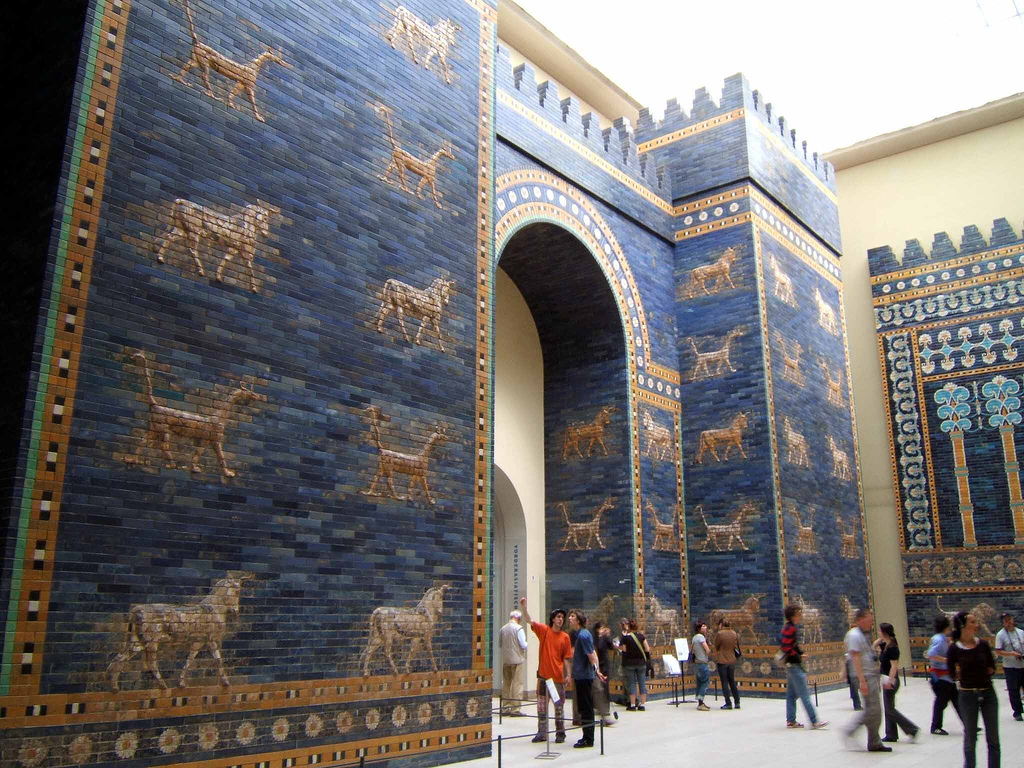
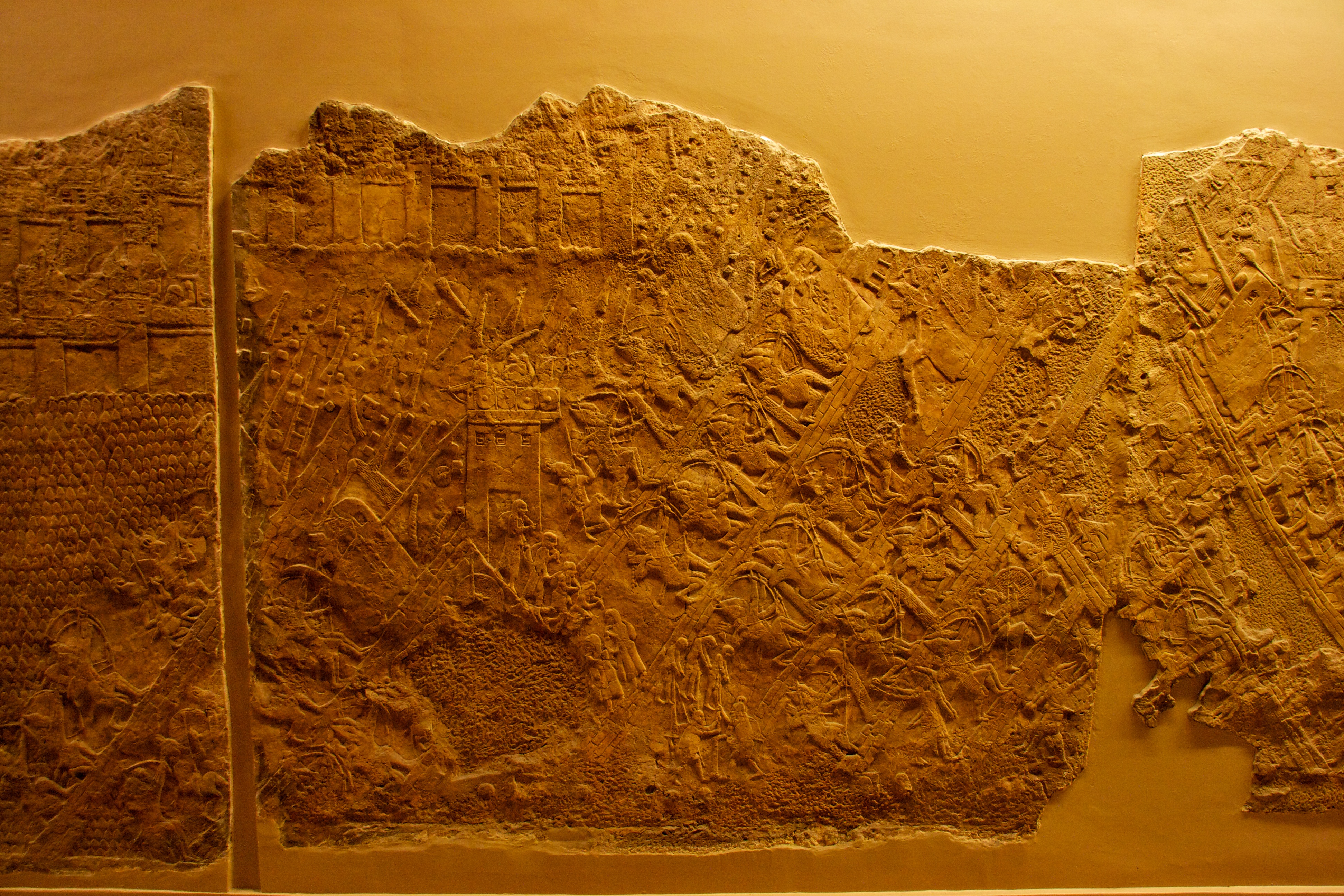
This series has stood in front of the Lachish reliefs in the British Museum and seen the Judahites led away. It has been to the Pergamonmuseum in Berlin and looked up at the Ishtar Gate that Babylon built while the exiles sat by its rivers and wept. It has stood under the Arch of Titus in Rome and seen the menorah carried off. In every other entry, the object in the glass case is evidence of something done to the community. This is the entry where the object in the glass case is evidence of something done for it - or at least, of a policy whose consequence was liberation, whatever its motivation.
Hormuzd Rassam dug it out of the foundations of Babylon in 1879 and sent it to London. The British Museum put it in a case in what is now Room 52. Visitors file past. Some recognise it. Most do not stay long enough to read the label fully. In the community whose moment of return this cylinder records, the memory of that moment has been carried without interruption - in the books of Ezra and Nehemiah, in the liturgy that thanks God for the restoration, in the name כורש that appears again and again in the Hebrew text with a weight of gratitude that a Babylonian administrative document, read cold, does not fully explain.
The cylinder explains it. The policy was real. The return happened. The community rebuilt. The chain of continuity that runs from the exilic texts to the rebuilt Temple to the rabbis of late antiquity to every generation since goes through this object - not through it alone, not because a piece of clay made it possible, but because the piece of clay confirms that the hinge on which the whole subsequent story turned was not a story. It was a clay cylinder, sitting now in a glass case, in a room in London, waiting for someone to stop and read the label.
Further reading