Judaism usually asks what you're doing before it asks what formula you're reciting. Keep Shabbat. Give tzedakah. Eat this, not that. Marry under a chuppah. Sit shivah. Put the mezuzah on the door. The tradition has arguments about God, of course it does, but it has never really behaved like a church with a catechism in its pocket. There is no ecumenical Jewish council that once gathered, cleared its throat, and announced the authorised list of doctrines. Which is why it remains one of the great Jewish surprises that the closest thing to such a list came from Moses Maimonides - the Rambam - in the 12th century, and that his list did not stay tucked away in a commentary. It got sung.
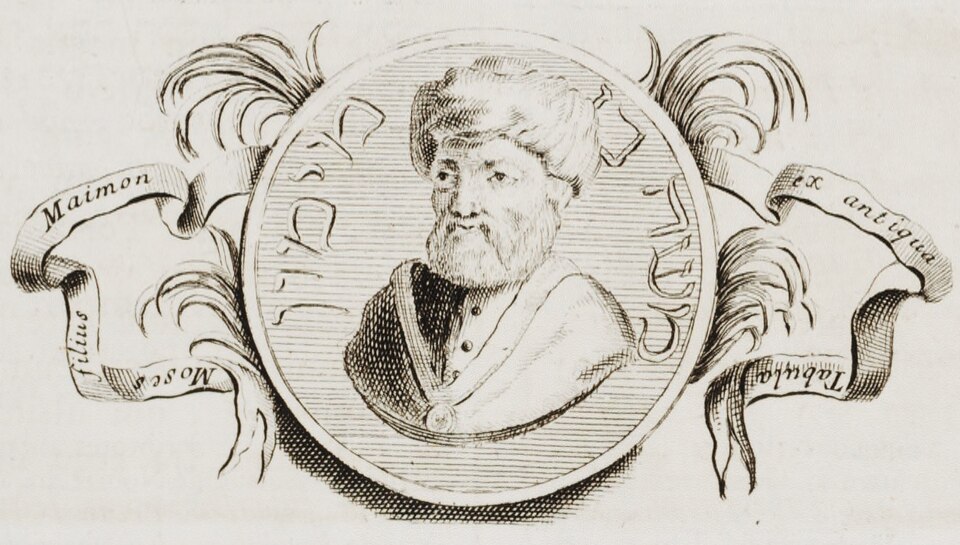
Maimonides set out the Thirteen Principles of Faith in his Commentary on the Mishnah, in the introduction to the tenth chapter of tractate Sanhedrin - the chapter known as Perek Chelek - completed around 1168 while he was in Egypt. The principles are recognisable to anyone who's opened a traditional siddur: God exists, God is one, God has no body, Moses is the greatest of the prophets, the Torah comes from Sinai and will not be replaced, God knows human deeds, there is reward and punishment, the messiah will come, the dead will rise. It is a formidable list. More to the point, it is a list at all. Maimonides was taking a civilisation of covenantal practice and saying that some propositions were not merely true, but foundational.

One man, not a council
That point matters. The Thirteen Principles were never adopted by a Sanhedrin, never promulgated by a pope-like office, never sealed by a vote. They came from the most commanding Jewish mind of the Middle Ages, which is not the same thing at all. Maimonides had the authority of brilliance, not the machinery of a church. His commentary was written in Judeo-Arabic, for readers who needed law and thought set in order, and in the course of explaining a mishnah about who has a share in the world to come, he gave Judaism a structure of belief sharper than anything it had previously carried in one place.
It was an audacious move. Maimonides was, among many other things, a codifier. He liked order. He liked distinctions. He liked saying that this belongs here, that belongs there, and that confusion is not a form of piety. So he arranged the principles in a sequence that begins with God and ends with resurrection. The first cluster concerns God - existence, unity, incorporeality, eternity, exclusive worship. The second concerns revelation - prophecy, Moses, Torah from Sinai, Torah's permanence. The third concerns providence and the future - divine knowledge, reward and punishment, messianic redemption, resurrection of the dead. It is a map of Jewish theology drawn by a man who distrusted muddle.
The introduction to Perek Chelek
In his Commentary on the Mishnah, tractate Sanhedrin, chapter 10, Maimonides set out thirteen principles as the foundations of Jewish belief. They include the existence and unity of God, God's incorporeality and eternity, prophecy, the supremacy of Moses' prophecy, Torah from Sinai, the unchangeability of Torah, divine knowledge, reward and punishment, the coming of the messiah, and the resurrection of the dead. The closest thing to a Jewish creed begins here - not in a council chamber, but in a commentary.
Maimonides, Commentary on the Mishnah, Sanhedrin 10Then the arguments began
Or rather, continued in a new key. The question was not whether the principles were pious. Of course they were. The question was whether Judaism should have this sort of list at all. A religion built on mitzvot can be suspicious of summaries. Once you say these beliefs are the essentials, what happens to the rest of Torah? Once you mark off the minimum, do people start treating the minimum as the whole house? Jews have worried about narrower things than that, but not many.
Maimonides' successors did not simply salute and move on. Hasdai Crescas, writing in the late 14th century, reduced the fundamentals to a different and shorter structure in Or Adonai. Joseph Albo, in the 15th century, built his Sefer ha-Ikkarim around three root principles rather than thirteen. Others disputed particular items, or disputed the very enterprise of ranking beliefs this way. Marc Shapiro's modern reappraisal presses the point hard: medieval Jewish authorities argued over every one of Maimonides' principles somewhere along the line. That is not evidence that the list failed. It is evidence that it entered the bloodstream.
The irony is excellent. The man who gave Judaism its most famous creed did so in a tradition that never quite agreed to become a creedal religion. No council ratified him. No universal Jewish office enforced him. The principles remained influential because Jews kept finding them useful, memorable, and somehow singable. That last part is the hinge.
The closest thing to a Jewish creed was written by one man, argued over by many more, and then carried into prayer by everybody else.
Yigdal
Yigdal is a metrical hymn built on Maimonides' thirteen principles, with one line for each principle in the Ashkenazi form and a fourteenth summative line in many Sephardi versions. Its authorship is disputed - tradition often names Daniel ben Judah and gives a completion date of 1404, while other scholars have proposed different authors - but its function is clear enough. A philosophical list became a congregational song and entered the siddur across much of the Jewish world.
Yigdal in the siddurThe prayer book did what no council did
Yigdal is not the original list turned into rhyme by accident. It is the tradition domesticating Maimonides. Once the principles become a hymn, they stop feeling like a scholastic intervention and start feeling like part of the furniture. You sing them at the beginning of morning prayers, or at the close of evening prayers on Shabbat and festivals, depending on the custom. Children hear them before they can analyse them. Communities inherit them in melody before they inherit them in philosophy. This is how Jewish canon often works in practice. The page matters; the tune finishes the job.
Then there is Ani Ma'amin, the prose formulation beginning "I believe with perfect faith". It follows Maimonides' order, but the popular liturgical wording is later and not identical to his original Judeo-Arabic text. Its authorship is unknown. That distinction matters because history should be allowed to keep its edges. The Thirteen Principles belong to Maimonides. The prayer-book forms belong to later Jewish devotion. Tradition did not preserve the list in amber. It translated it, regularised it, sang it, and, in the case of Ani Ma'amin, made it sound as if every Jew had always said it this way.
There is something lovely in that. Judaism did not become a religion of dogma because Maimonides wrote thirteen clauses. It remained what it was - legal, liturgical, narrative, argumentative - and found room for the clauses anyway. The siddur accepted what the council never had to vote on. Not because dispute vanished, but because prayer is one of the places where Jews store what they want to keep close.
Ani Ma'amin
Ani Ma'amin is a later prose rendering of the thirteen principles, each line beginning "I believe with perfect faith". It is based on Maimonides' list in Sanhedrin, but the familiar prayer-book version is not simply his text copied out. It is of later date, of unknown authorship, and in many communities is recited toward the end of the morning service. Even a creed, in Jewish hands, acquires commentarial layers.
Ani Ma'amin in the siddurBeloved without being uncontested
That is probably the most Jewish outcome available. Maimonides' principles were never beyond debate, and they did not need to be. Crescas and Albo remained in the canon too. So did the anti-dogmatic instinct built into Jewish life. The halakhic tradition still cares fiercely about what Jews do. Communities still differ over what they sing and when they sing it. Some liturgical traditions trimmed Yigdal; some embraced it warmly; some took up Ani Ma'amin in daily prayer. None of this looks much like a church issuing articles of faith from a central desk. It looks like Judaism being itself.
And yet the Rambam's thirteen endure. They endure because they are clear, because they are memorable, because they answer a real question, and because the prayer book gave them a second life. In a religion of deeds, they were never the whole thing. They were not meant to be. They were the nearest thing to an official creed a creed-shy people ever adopted - by argument, by repetition, and finally by song.
Further reading