Most Jewish books are admired. The siddur is used. It is carried to synagogue, left on kitchen tables, bent open at weekday pages, inherited with names written inside the cover. A person may never finish the Talmud, never own a manuscript Bible, never see the inside of an archive. The siddur, though, is the book he actually touches. That everyday intimacy can make its history look older and more fixed than it really is. In truth, the prayer book took shape slowly. What became familiar began as something looser: remembered blessings, biblical passages, regional habits, and a rhythm of worship shared more securely than its precise wording.
The tradition itself traces the broad architecture of prayer back to the Men of the Great Assembly. Scholars are warier about tidy origin stories, as they should be. Still, the claim tells you something important. Jewish memory wanted the central act of standing prayer - the Amidah - to feel ancient, communal, and ordered, not improvised by whim. That instinct mattered. Long before there was a bound siddur, there was already a sense that Israel did not merely pray, but prayed in company, in sequence, and with inherited forms.
The earliest core is recognisable enough. The Shema, drawn from the Torah, framed morning and evening with the declaration of divine oneness. The Amidah became the standing centre of the service. Around them gathered blessings, psalms, petitions, scriptural passages, and local usages. Three daily services - Shacharit, Mincha, and Ma'ariv - settled the day into a recurring Jewish shape. Not every community said everything in exactly the same order, and not every rubric was fixed. But the grammar was there. The siddur was beginning to exist before it entirely existed on paper.

From memory to manuscript
Rabbinic literature preserves the transition in motion. The prayers have a shape, but not always a single locked text. One can feel the balance being negotiated: enough form to keep the people one people, enough flexibility to let prayer remain prayer rather than recital. That is why the story of the siddur is not the story of invention from nothing. It is the story of selection, ordering, and gradual fixing. The words already existed in pieces. The achievement was arranging them into a durable order that a scattered people could share.
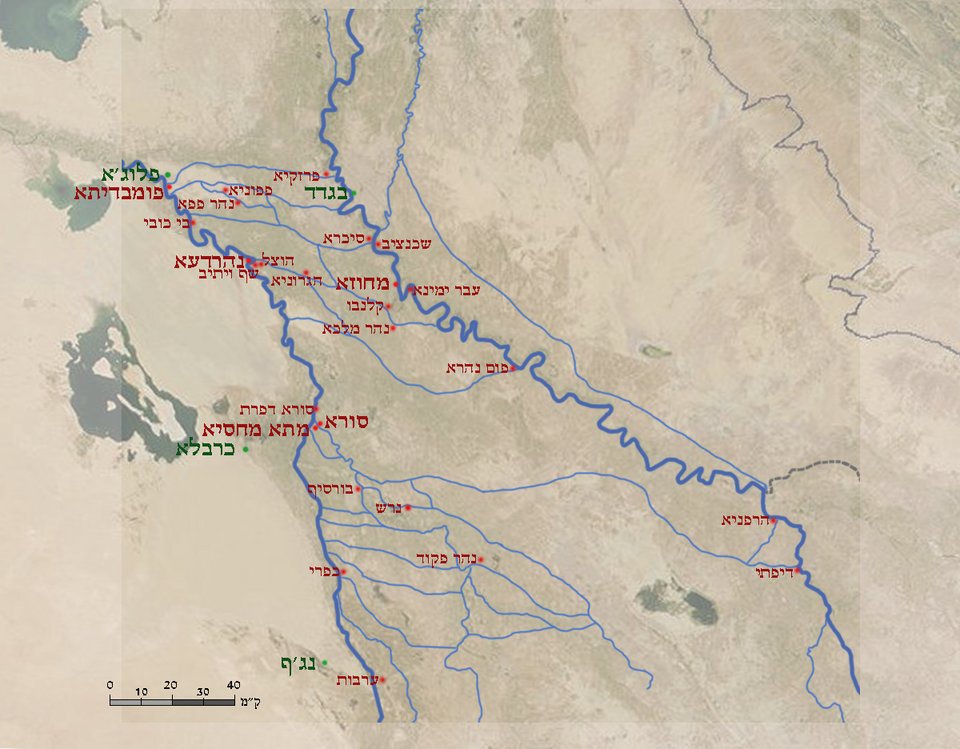
The Geonic period matters here because Babylonia had both authority and administrative habit. If a community in Spain or North Africa wanted to know not only what to pray but in what order, Babylonia was where one wrote. The same postal civilisation that carried responsa also carried liturgical instruction. This is where prayer begins to look like a book even before the printing press: copied, sent, glossed, explained, and adapted far from the desk where the answer was first composed.
Seder Rav Amram travels from Babylonia to Spain
Amram Gaon of Sura is credited with the first full prayer order to survive in recognisable form: a liturgical responsum sent to the Jews of Spain. That detail matters as much as the text itself. A siddur emerges here not as a private notebook but as an answer to a diaspora question. What should we say, and in what order? Babylonia replied with something far larger than a ruling. It sent a portable architecture of daily worship.
Sura, Babylonia · Sent west to al-AndalusThe Geonim make order visible
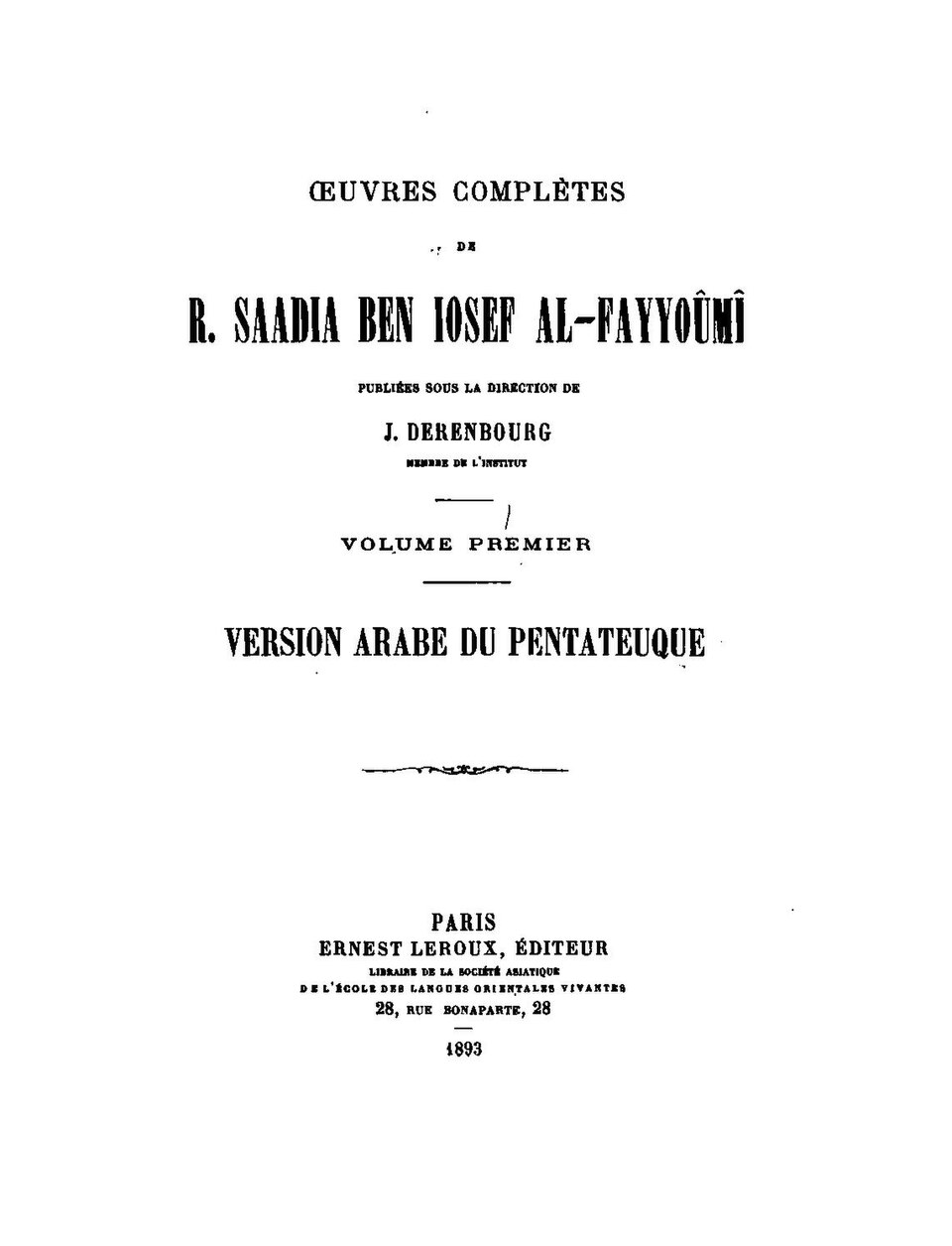
The two great Geonic prayer books stand close enough together to feel like a hinge. First comes Seder Rav Amram in the ninth century, born in Babylonia and dispatched to Spain. Then, in the tenth, the siddur of Saadia Gaon, with prayer text accompanied by Judeo-Arabic explanation and commentary. Between them one can see the siddur becoming a serious literary object: not merely words to be said, but an ordered, explained, transmissible guide to how a Jewish day and year should sound.
Saadia's importance is not only chronological. He wrote for a Jewish world that spoke Arabic, argued across distances, and needed clarity. His siddur is therefore both prayer book and teacher. It preserves text, but also tells the reader what he is doing. That combination proved decisive. Once the order of prayer could travel with explanation attached, a diaspora did not need to rely solely on local memory. The siddur had become infrastructure.
Even then, fixity had limits. Manuscripts preserve variation. Communities chose different piyyutim, different phrasings, different emphases. Some rites leaned toward the old Palestinian inheritance, others toward the Babylonian. No serious history of the siddur should pretend that one perfect master copy suddenly conquered the Jewish world. Jewish standardisation is rarely that simple. It usually arrives as a long argument that eventually becomes custom.
Saadia Gaon's siddur fixes text and explains it
The siddur associated with Saadia Gaon is the earliest substantial prayer book to survive with broad textual witness. It includes the prayers themselves, liturgical poetry, and Judeo-Arabic commentary. That alone tells the story. The book is not only preserving inherited worship - it is interpreting it for actual readers in the language they use. The siddur becomes a companion, not merely a script.
Sura and the wider Arabic-speaking diasporaOne order, many nuschaot
Once a prayer book exists, it does not stop changing. It multiplies. The siddur's paradox is that a fixed order generated stable variety. Ashkenaz developed its own local wording and melodies. Sepharad formed another family of rite. Edot haMizrach preserved the eastern and Ottoman-Sephardi inheritance. Nusach Sefard, a Lurianic-influenced hybrid, spread widely in the later Hasidic world, with the narrower Nusach HaAri as a related kabbalistic form. The headlines differ, but the underlying confidence is the same: there is a shared Jewish grammar of prayer, and within it there are ancestral accents.
That is why the siddur is both conservative and intimate. It binds Jews together across centuries, yet a person usually notices first the version his own people use. Which line is omitted. Which piyyut is sung. Whether a page says nusach Ashkenaz, Sepharad, or something more local. The differences matter because the shared frame is already secure enough to carry them.
The centres of gravity remain constant. The Shema still marks the receiving of divine sovereignty. The Amidah remains the heart, prayed standing. Morning, afternoon, and evening still divide the day into Jewish time. The siddur can absorb poetry, lament, mysticism, legal precision, local tune, and typographic experiment, but it keeps returning to the same recurring spine. That is what made it portable. A Jew could be in Worms, Fez, Aleppo, Vilna, or London and still know where he was inside the page.
Print finishes what manuscript began
Printing did not create the siddur, but it changed its authority. What manuscripts had transmitted with variation, print began to stabilise. By the sixteenth century, editions could regularise order, freeze local choices into reproducible form, and spread a community's version far beyond one scribe's reach. The page learned to insist on itself. Once a congregation owned printed books in quantity, "our custom" increasingly meant "the text in front of us".
That standardisation was never absolute. New editions kept appearing. Communities argued over wording, kabbalistic insertions, translation, typography, and the proper shape of inherited rite. Still, the broad result is unmistakable. Manuscript culture allowed wide variation inside a recognisable frame. Print narrowed the range and made each rite easier to reproduce faithfully. The siddur stopped being only a tradition carried by memory and became, more fully than before, a tradition carried by copies.
And yet the joy of it is not bureaucratic. The siddur is not beloved because it is standardised. It is beloved because it is handled. It is the Jewish book with fingerprints on it. The one opened before work, after mourning, on festival mornings, in hospital waiting rooms, beside graves, under wedding canopies. The order of the words became fixed so that Jewish life, which is not fixed at all, would always have somewhere to stand.
The siddur is the most-used Jewish book because it does not ask to be admired. It asks to be opened.
Further reading