In February 1349 the Jews of Strasbourg were marched to their own cemetery and burned alive in a wooden house built for the purpose. The plague had not yet reached the city. The killing came first, on the strength of a rumour that Jews had poisoned the wells, and it was carried out by the guilds against the wishes of the town's own magistrates, who were deposed for trying to protect them. Roughly two thousand people died. It is one of the worst single days in the long history of the Rhineland Jews, and it is where any honest account of Jewish Strasbourg has to begin - not because the story is one of victimhood, but because the city is still here, and so, against every odds, are its Jews.
Strasbourg sits on the Rhine, in Alsace, on the seam between France and Germany. That position made it a crossroads for Jewish life and, repeatedly, a flashpoint. The community is attested from the twelfth century, with a synagogue, a ritual bath and a cemetery. It was expelled, it returned, it was expelled again. And each time the river border did its strange double work, pulling Jewish settlement back toward the city even after the law had pushed it out into the surrounding Alsatian villages.
Banished, and back
After the 1349 massacre, the survivors who had fled were gradually readmitted under an ordinance of 1375. It did not last. In 1389 the city banished its Jews again, and this time the order held for four centuries. From the late fourteenth century until the French Revolution, Jews could not live in Strasbourg. They could enter for trade, paying a toll at the gate like cattle, but they had to be gone by nightfall. The famous Strasbourg clock and cathedral rose over a city that legally contained no Jewish homes at all.
The Revolution changed everything. In 1791 France became the first country in Europe to grant Jews full citizenship, and the gates of Strasbourg opened for the first time in four hundred years. Jews from the Alsatian villages moved back into the city they had been locked out of since the Middle Ages. By the nineteenth century Strasbourg had a consistory, a grand synagogue and a confident bourgeois community - one of the anchors of French Judaism on the eastern frontier.
The Saint Valentine's Day massacre
During the Black Death persecutions, the Jewish community of Strasbourg - some two thousand people - was burned to death before the plague itself reached the city. The town council that had opposed the killing was overthrown by the guilds beforehand. The episode is among the most fully documented of the Black Death massacres in the Rhineland.
Strasbourg massacre, 1349The Synagogue of Peace
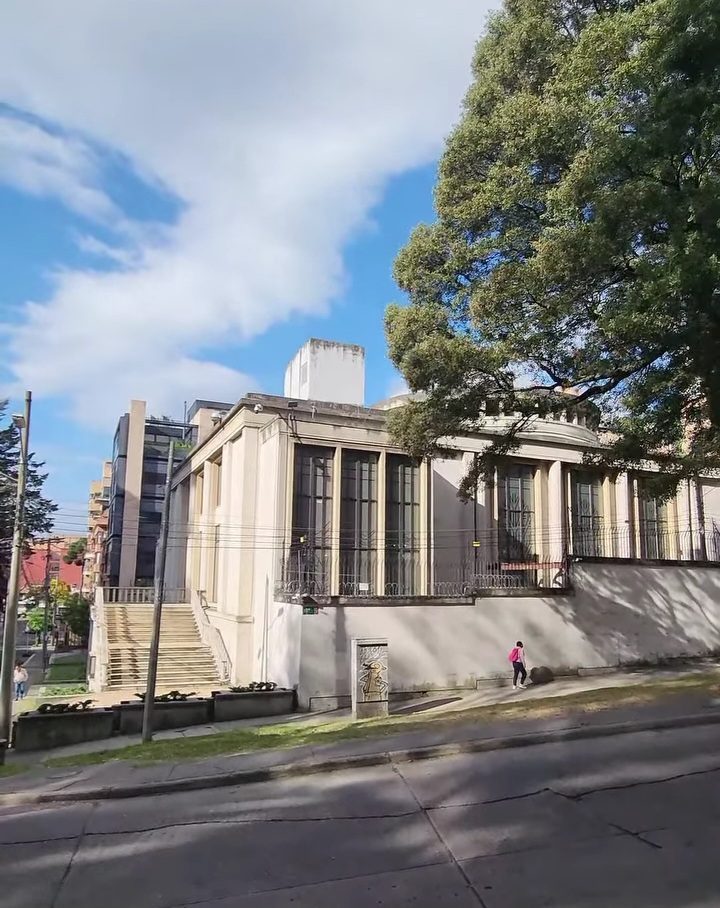
The twentieth century took Alsace from France to Germany and back more than once, and the Jews went with it each time. When the Nazis occupied Strasbourg in 1940 they expelled the Jewish population and burned the great Quai Kléber synagogue to the ground. The community that returned after 1945 chose not to rebuild on the ruins but to make a new statement. Work began in 1954, and on 23 March 1958 the Synagogue de la Paix - the Synagogue of Peace - was inaugurated, a frankly modern building in concrete, its façade covered in stars of David, seating some 1,650 worshippers. It became the seat of the Chief Rabbinate of the Bas-Rhin and the centre of communal life.
The name was not chosen lightly. A community that had been burned in 1349, locked out from 1389, emancipated in 1791 and burned out again in 1940 did not call its rebuilt synagogue anything as ordinary as Beth Israel. It called it Peace, and meant it as both a hope and a verdict. Today around sixteen thousand Jews live in Strasbourg, the community predominantly Ashkenazi, with the schools, kosher provisioning and institutions of a city that takes its Jewish life as a permanent fixture rather than a fragile remnant.
Burned in 1349, locked out for four centuries, burned out again in 1940. The community rebuilt and called its new synagogue Peace.
The Synagogue de la Paix
After the wartime destruction of the Quai Kléber synagogue, the community built a new one to the designs of the architect Claude Meyer-Lévy. Begun in 1954 and inaugurated on 23 March 1958, the modern concrete building seats around 1,650 worshippers and serves as the seat of the Chief Rabbinate of the Bas-Rhin.
Grande synagogue de la Paix, StrasbourgThe city of return
The standfirst calls Strasbourg a city of return, and the phrase earns itself the hard way. This is not a community that has been continuously present since the Middle Ages; it is one that kept being expelled and kept coming back, each time refilled from the deep Jewish countryside of Alsace and then, after 1945, from the survivors of catastrophe. That is the Rhineland pattern in miniature - not unbroken continuity, but stubborn return. The cathedral and the synagogue both still stand over the river, which is the only ending the story was ever going to accept.
Further reading
Story & Stone · Atlas Places Nº 23
Next on the shelf: Caracas: The Capital’s Jews →