Atlanta did not inherit its Jews. It grew them along with everything else - a railroad junction that became a regional capital, and a Jewish community that rose with the skyline from a handful of German storekeepers to one of the largest Jewish populations in the United States. There is a particular Southern flavour to the story: peddlers turned merchants, merchants turned department-store names, a Reform congregation that wanted very much to belong, and a city that, after one terrible test, decided that it did belong.
The community took organised shape just after the Civil War. A Hebrew Benevolent Society formed in 1860 to secure a burial ground and care for the Jewish poor; out of it, in 1867, came the Hebrew Benevolent Congregation - the synagogue everyone simply calls The Temple. Its early members were largely German Jews, fast to assimilate and eager to be civic. Then, in the late nineteenth century, a second and very different wave arrived: poorer, Yiddish-speaking immigrants from Eastern Europe who made the community larger, louder and more various than its founders had been.
1915, and the lesson of Leo Frank
The South's promise to its Jews was tested savagely in 1913. Leo Frank, a Jewish factory superintendent from New York, was convicted on flimsy evidence of murdering thirteen-year-old Mary Phagan in his Atlanta pencil factory. The trial ran on open antisemitism. When the governor commuted his sentence, a mob of prominent local men abducted Frank from prison and lynched him in 1915. Some of the same men climbed Stone Mountain soon after and helped revive the Ku Klux Klan.
The Frank case shattered a sense of security that Atlanta's Jews had spent decades building, and it did not return quickly. For a generation the community kept its head down. That is the harder half of the story, and it should not be smoothed over. But it is not the whole of it, because the city's next test produced almost the opposite answer.
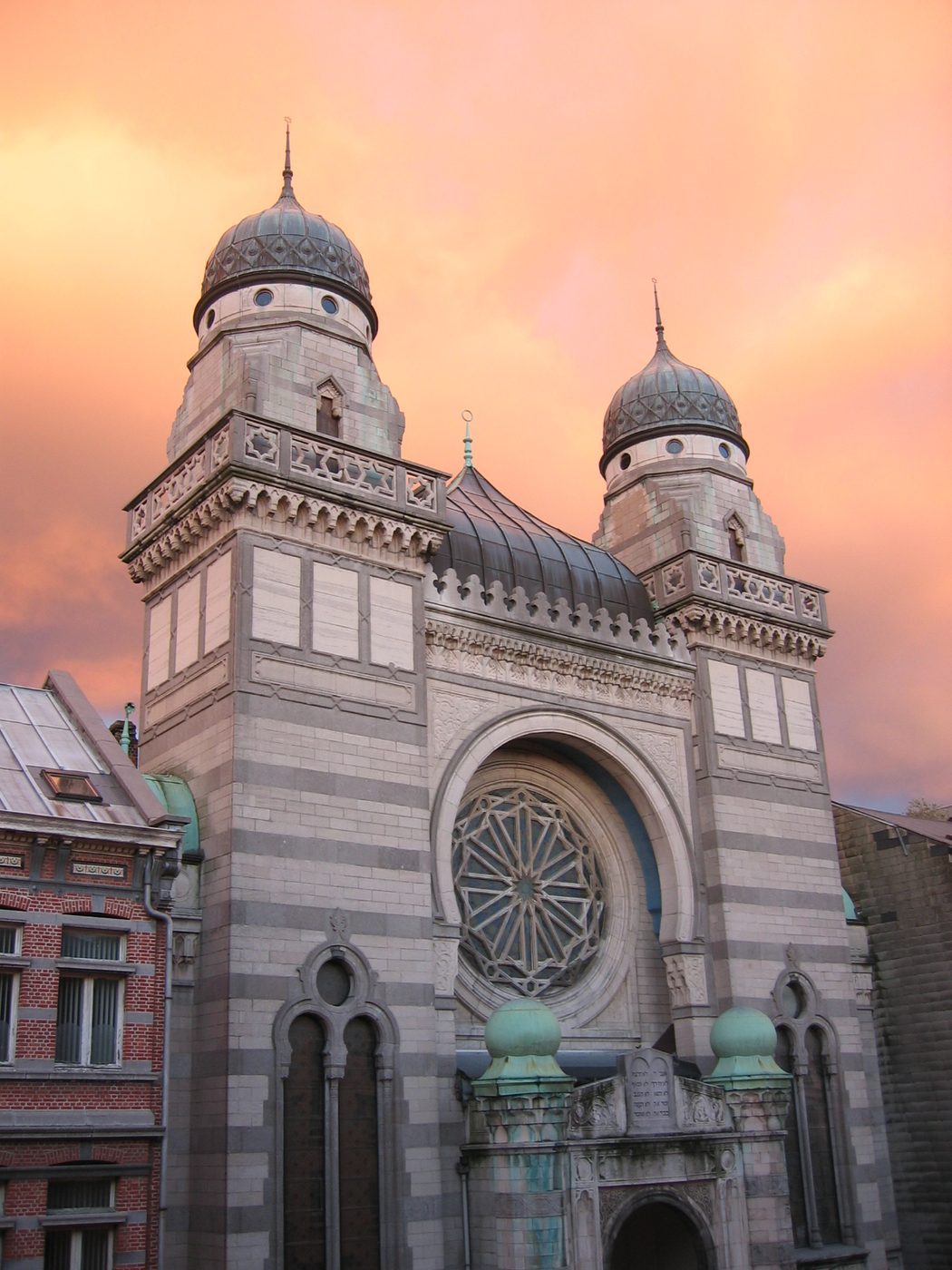
The Hebrew Benevolent Congregation
Atlanta's Hebrew Benevolent Society was organised in 1860 to provide a Jewish burial ground and poor relief; the Hebrew Benevolent Congregation - The Temple - was founded out of it in 1867 and became the city's leading Reform congregation. It built its first permanent downtown sanctuary in 1875 and remains an active congregation today.
The Temple, Atlanta; New Georgia EncyclopediaThe lynching of 1915 taught Atlanta's Jews to keep quiet. The bombing of 1958 taught the rest of Atlanta to stand up.
The Temple bombing
Around fifty sticks of dynamite tore through The Temple, whose rabbi, Jacob Rothschild, was an outspoken supporter of civil rights. No one was hurt. Unlike 1915, the white South largely rallied to the congregation: Mayor William Hartsfield condemned the attack, and Atlanta Constitution editor Ralph McGill won a Pulitzer Prize for an editorial denouncing it.
New Georgia Encyclopedia; The Temple, AtlantaThe new centre
Then the city took off, and the Jewish community took off with it. From fewer than 30,000 Jews in metropolitan Atlanta around 1980, the population climbed past 86,000 by 2000 and well above 120,000 in the years that followed, as Jews from the North-east and Midwest poured into the Sun Belt's booming capital. By recent estimates greater Atlanta is now home to one of the largest Jewish communities in the country, complete with day schools, a kosher infrastructure, a heritage museum and the full range of denominational life.
What looks inevitable in hindsight was nothing of the kind. A community that had been taught caution by a lynching, and then handed an extraordinary act of civic solidarity after a bombing, grew into one of American Jewry's great Southern centres. Atlanta's Jews are not a footnote to the city's rise. They are part of how it rose - and a reminder that the American Jewish story did not stay in New York.
Further reading