Venezuelan Jewry did not begin in the capital. It began on the coast, at Coro, where Sephardi families from the Dutch island of Curaçao crossed the water in the 1820s and set up as traders, bringing with them a cemetery, a rite and the long memory of expulsion from Spain. Caracas came later. But the capital is where the community gathered, organised and made itself national - and where, in the lean years of the present century, most of those who stayed have stayed.
That gathering tells you something true about diaspora life. A scattered minority survives by concentrating. When the institutions, the schools, the synagogues and the worries all live in one city, the community can be small and still be visible, organised and answerable to itself. Caracas became that city, and it has had to keep choosing to be it, over and over, as the country around it changed.
Two communities, one capital
Modern Caracas Jewry is built on two pillars, kept distinct and worked in tandem. The Sephardim - many of Moroccan and Mediterranean origin - are organised in the Asociación Israelita de Venezuela, whose roots reach back to a society founded in 1919 and which took its lasting form in 1930. The Ashkenazim, Europeans who arrived between the wars and as refugees and survivors around the Second World War, founded the Unión Israelita de Caracas in 1950. Over both sits an umbrella, the Confederación de Asociaciones Israelitas de Venezuela, and around them the ordinary furniture of a confident community: synagogues, a sports club, a burial society, and the Colegio Moral y Luces "Herzl-Bialik", a community day school that has taught generations of Caracas children.
For most of the twentieth century the direction of travel was upward. Sephardim came from North Africa and the Mediterranean, Ashkenazim from a Europe that was busy making itself unliveable for Jews, and the two streams met in a prosperous oil-boom capital that had room for them. By the 1990s Venezuelan Jewry numbered somewhere around twenty-five to thirty thousand, the great majority in Caracas - a community with schools, newspapers and a settled middle-class confidence.
The institutions take shape
The Sephardi Asociación Israelita de Venezuela grew from a society founded in 1919 and was formally established in 1930. The Ashkenazi Unión Israelita de Caracas was founded in 1950. They are the two principal communal bodies of Caracas Jewry, coordinated since 1966 by the Confederación de Asociaciones Israelitas de Venezuela.
Asociación Israelita de Venezuela; Unión Israelita de CaracasThe years of pressure
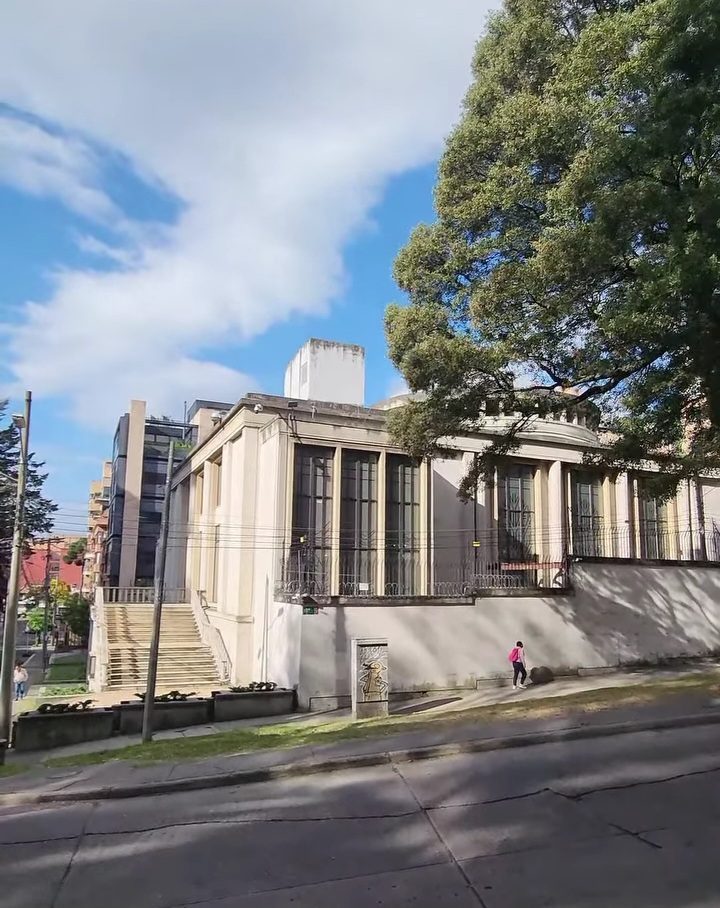
The new century reversed the climb. Under the governments of Hugo Chávez and then Nicolás Maduro, official ties with Israel were cut, anti-Israel rhetoric grew sharp, and the economy fell into a slow collapse that sent millions of Venezuelans of every background abroad. The community shrank with the country. The most violent single moment came on the night of 31 January 2009, when an armed gang broke into the Tiféret Israel synagogue, the oldest in Caracas, vandalised it, daubed antisemitic graffiti and made off with a register of community members. Several police officers were later among those arrested. It was a wound, and the community treated it as one - but it did not pack up.
The Tiféret Israel attack
On the night of 31 January 2009, an armed group broke into the Tiféret Israel synagogue in Caracas, the city's oldest, ransacking offices, defacing the building with antisemitic graffiti and stealing a database of community members. Arrests followed within weeks, several of them of serving police officers. The attack came amid a sharp deterioration in official relations with Israel.
World Jewish CongressA scattered minority survives by concentrating. Caracas is where Venezuela's Jews chose to hold together.
The capital that kept the centre
What is left in Caracas is smaller, older and more determined than what was there a generation ago. Many of the young have gone - to Miami, to Israel, to Panama and beyond - and the institutions have had to do more with fewer. Yet the centre has held. The synagogues still open, the school still teaches, the confederation still speaks for the whole, and the capital remains, by every account, the heart of Venezuelan Jewish life. A community that began on the coast at Coro and gathered itself in the mountains at Caracas has spent two centuries learning the same lesson the diaspora always teaches: a people can be few, and far from home, and still keep a centre worth defending.
Further reading
Story & Stone · Atlas Places Nº 24
Next on the shelf: Glasgow: Garnethill and Beyond →