First came the relief. Not theology, not philosophy, not even politics - relief. To step into seventeenth-century Amsterdam after Iberia was to step out of the whisper. For generations these families had lived as outward Christians in Spain and Portugal, baptised in public, watched by neighbours, watched by priests, watched by the Inquisition, and in many cases carrying only fragments of what had once been ordinary Jewish life. Then the Dutch Republic offered something rarer than kindness and more useful than sentiment: room. In Amsterdam, they could return to Judaism openly, under their own names, in daylight.
That return was not simple. Many of these men and women were conversos - descendants of Jews forced to convert at the end of the fifteenth century and after, some of whom had preserved Jewish practices in secret, others of whom had inherited only memory, instinct, family caution, and the knowledge that they were not quite what the church said they were. When they reached Amsterdam in the late sixteenth and seventeenth centuries, they did not enter a finished world. They had to build one. Rabbis had to teach adults what Jewish law required. Children had to be educated properly. Hebrew had to be learned, prayers relearned, calendars recovered, marriages regularised, communities organised. A people was coming home to itself, and some of it had to be taught almost from the alphabet up.

Learning to be visible
Amsterdam did not offer modern equality and it was not utopia. It offered toleration, commercial opportunity, and a city shrewd enough to understand talent when it saw it. That was enough. Sephardi merchants from Iberia and its Atlantic networks arrived with languages, contacts, capital, and discipline. They formed congregations, then merged them. They created schools, charitable structures, rabbinic courts, and a communal style at once stately and alert. Seventeenth-century Amsterdam was called the Dutch Jerusalem, and the phrase was not mere ornament. It named a city where Jewish life could be practised openly and with confidence.
What emerged was the Western Sephardi world in one of its most brilliant forms. These Jews were not simply refugees who happened to survive. They were institution builders. They gave their children the Jewish education they themselves had often lacked. They trained rabbis. They argued. They printed. They buried their dead in their own ground. They raised money, regulated conduct, cared for the poor, and developed a communal language that could hold both fresh returnees and people already more secure in Jewish learning. Joy first, then order. That is usually the sensible sequence.
The Esnoga opens
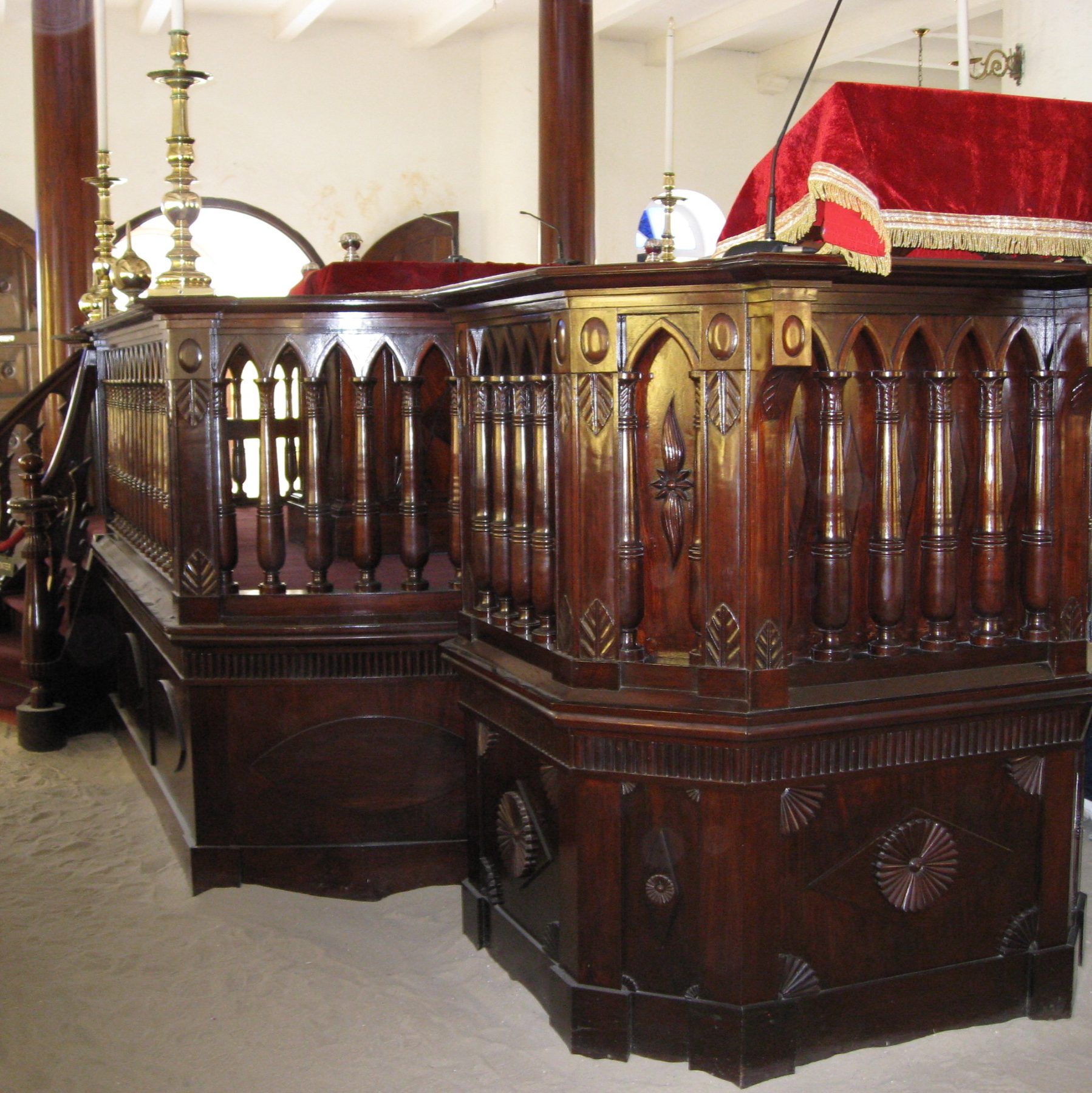
The Portuguese Synagogue of Amsterdam - the Esnoga - was completed and inaugurated on 2 August 1675, after the site had been acquired in 1670 and building had begun in 1671. The synagogue still serves as a house of prayer. Its great sanctuary remains lit by hundreds of candles rather than electric lamps, and its scale was a public declaration that the Portuguese Jewish community meant to stand in the city as Jews, not as rumours.
Jewish Cultural Quarter / Portuguese SynagogueA synagogue built like an answer
The Esnoga is magnificent because the community wanted magnificence. That matters. Too often Jewish history is narrated as if our public architecture were an afterthought granted by others. This building was a statement made by Jews themselves. Vast, orderly, self-possessed, it took the long, concealed life of Iberian crypto-Judaism and turned it inside out. Here were chandeliers, sanded floors, towering windows, a tebah and hechal placed with old Sephardi assurance, and a sanctuary large enough to be seen by Christian visitors who came precisely because it was famous. The point was not modesty. The point was arrival.
And yet the grandeur sat on top of something humbler and harder won: learning. A congregation of returnees required teachers as much as benefactors. The community's institutions worked to restore practice where generations of coercion had broken continuity. Amsterdam's Portuguese Jews became known not only for wealth but for seriousness about study. The return had to become durable. Feeling Jewish again was not enough. You needed prayers, books, schools, discipline, judges, and ordinary repetition. You needed Tuesday as well as Yom Kippur.
Menasseh and the printed return
If the Esnoga gave the Portuguese Nation its grand public room, Menasseh ben Israel gave it a voice that travelled. Born Manoel Dias Soeiro and raised in Amsterdam after his family fled Iberia, Menasseh became rabbi, scholar, diplomat, and printer. In 1626 he founded the first Hebrew printing press in Amsterdam. That alone would earn him a place in the story. Printing is not decoration in Jewish civilisation. It is logistics for memory.
Menasseh wrote for a readership larger than one city. His books moved through the republic of letters and the Jewish diaspora alike. He addressed learned Christians as well as Jews. He corresponded widely. In him the restored confidence of Amsterdam's Sephardim became exportable - composed, articulate, and unembarrassed. A community relearning itself was already producing books for the world.
His most famous political intervention came in England. In 1655 Menasseh travelled to London to press the case for Jewish readmission, presenting arguments to Oliver Cromwell's government. The Whitehall Conference of December 1655 did not produce a neat legal proclamation, which history rarely bothers to do on cue, but it helped establish that there was no parliamentary law barring Jews from England. The readmission that followed was gradual rather than ceremonial. Even so, Menasseh had shifted the argument. A rabbi from Amsterdam's Portuguese Nation had become one of the men who helped reopen England.
They did not merely find a haven in Amsterdam. They rebuilt the grammar of Jewish life and then spoke it loudly enough for Europe to hear.
Menasseh ben Israel at Whitehall
The Whitehall Conference was convened by Oliver Cromwell to consider whether Jews might be readmitted to England. Menasseh ben Israel was in London that winter pressing the case. The conference ended without a formal decree, but leading lawyers stated that no law barred the Jews' return because the medieval expulsion had rested on royal action, not an act of Parliament. No trumpets, then. Just a door unlocked.
Whitehall Conference records / Menasseh ben IsraelA community and its boundary
No portrait of Amsterdam's Portuguese Nation can avoid Baruch Spinoza, but he should not be made to swallow the whole picture. He was born into this community in 1632, educated in its orbit, and in 1656 was placed under herem - excommunication - by its leaders. The sentence was severe and never rescinded. The reasons are plain enough in outline even if the precise process remains partly obscure: Spinoza's views on God, scripture, the soul, and Jewish law had moved well beyond what the congregation could tolerate.
That episode is often told as though it proves either the community's smallness or Spinoza's singular heroism. It proves neither so neatly. This was a community only recently restored to public Jewish life, still consolidating its norms, teaching its returnees, and defending a fragile legitimacy in a Christian society that was tolerant but not infinitely so. Boundaries mattered. So did intellectual seriousness. Spinoza crossed one of those boundaries with extraordinary force. The congregation answered as a congregation. He went on to become one of early modern Europe's most radical philosophers. They went on to remain a Jewish community. Both things are true.
Ets Haim - Livraria Montezinos
The library of Ets Haim was founded in 1616 and has been housed in the Portuguese Jewish complex since 1675. It is widely described as the oldest functioning Jewish library in the world. Its holdings were later recognised by UNESCO's Memory of the World programme. A returned people kept books the way Jews always do - as if tomorrow might need them.
UNESCO Memory of the World / Ets HaimThe Dutch Jerusalem
The phrase fits because it names more than prosperity. Amsterdam became the Dutch Jerusalem not simply because Jews lived there in safety relative to elsewhere, but because Jewish life there acquired confidence, architecture, scholarship, and civic weight. The Portuguese Nation made that possible first. Ashkenazi Amsterdam would grow larger later, but the Western Sephardi achievement set an early tone: urbane, learned, Atlantic, disciplined, and fully aware that public Jewish life could be beautiful without apology.
The candles still burn in the Esnoga. The library still stands. Menasseh's books still exist. Spinoza's ban still lies in the archive. These are not relics of a vanished mood. They are the surviving furniture of a community that remade itself in the open after generations of concealment. That is the joy at the centre of the story. Not that Amsterdam was perfect. That Jews got to be visible there again, and made something magnificent of the chance.
Further reading