There is a coat in a glass case at the Jewish Museum in New York. It is made of silk - Bukharan silk, ikat-dyed in the technique that the community's craftsmen spent centuries perfecting - and its stripes run in bold, slightly blurred chevrons of crimson and gold and deep indigo, colours that bleed into one another at the edges where the resist-dyed threads met the loom. It was made as a wedding gift. The groom would have worn it; later, perhaps, it would have been passed to a son. It is not a garment that whispers. It announces. And when you stand in front of it, the thing it announces is not simply wealth or craft, though it speaks to both - it is the particular confidence of a community that knew exactly who it was, and had been certain of that for a very long time.
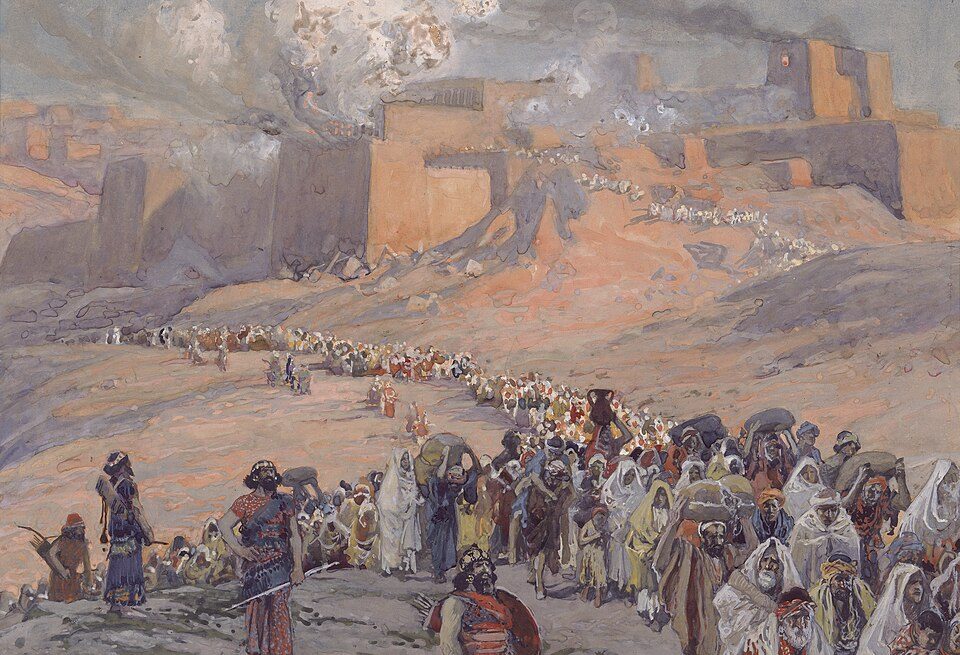
The Jews of Bukhara - the community that settled in the Silk Road cities of what is now Uzbekistan and Tajikistan, principally Bukhara and Samarkand - are among the oldest diaspora communities outside the Levant. How old is a question that merits care: tradition places the first settlement in the period of the Babylonian exile, in the sixth century BCE, when Jewish captives and exiles scattered across the Persian empire and some, the tradition holds, kept going east along the trade routes that the empire opened. Direct documentary evidence from those earliest centuries is sparse. What the record shows clearly is a Jewish community with deep roots in the region by the medieval period - with its own language, its own liturgical tradition, its own craft economy, and its own considerable self-possession.
The language was Persian, or rather the Jewish variant of it. Bukharan Jews adopted Tajik - the Persian dialect of Central Asia - as their spoken tongue, eventually developing from it a distinct dialect of their own, written in Hebrew script, called Bukhori, or Judeo-Tajik. It was not a makeshift pidgin or a language of concealment. It became a full literary vehicle: a tradition of religious poetry in Persian metres, biblical translations that brought the Torah into the rhythms of the world the community actually inhabited, liturgical commentaries, ethical literature. They read Genesis in Tajik. They wrote about Shabbat in the same metres that Persian poets used for love and springtime and the ephemeral beauty of the rose. This is worth dwelling on: a community that could have kept its religious life in a separate compartment, sealed off from its cultural surroundings, chose instead to make the synthesis complete. Torah, in Persian verse.

The craft that ran the road
The Silk Road is a modern name for a very old reality: a web of trade routes crossing Central Asia that carried not just silk but cotton, spices, dyes, horses, paper, and ideas between China, India, the Persian world, and the Mediterranean. For much of its history, the road passed through the cities where Bukharan Jews lived - through Samarkand, where the paper-makers worked, through Bukhara, where the caravanserais were thick with merchants from a dozen languages and faiths. And in the economy of that road, Bukharan Jews occupied a specific and important position.
They were dyers and merchants. In particular, they were silk dyers - and at various periods they held something close to a monopoly on the craft in certain cities, a specialisation that gave the community both economic security and a particular material legacy. The ikat technique, which produces the characteristic blurred, feathered stripes of Bukharan textiles, requires dyeing the warp threads before weaving - a process of binding, dipping, and releasing that demands precision and patience and rewards both. Bukharan Jewish dyers were practising this technique for centuries, and the results - the khalat, the long striped coat that became the community's signature garment - became prized objects across Central Asia, worn by rulers and merchants, given as gifts of honour, and wrapped around brides as the most eloquent expression of what the family could offer.
That the same craftsmen who dyed the silk also kept Shabbat and observed the kashrut laws and sent their questions about Jewish law to responsa authorities in Baghdad or Istanbul was not, to them, a paradox. It was the point. The same hands that bound and released the threads on Tuesday were the hands that lit the candles on Friday evening. The Silk Road and the Shabbat table were the same life, not two lives running in parallel.
The Bukharan Khalat
The Israel Museum, Jerusalem, holds documented examples of Bukharan Jewish ikat-dyed silk robes - khalats used as wedding and ceremonial garments within the community; related pieces from this tradition have appeared in loan exhibitions at the Jewish Museum, New York, and are held at the British Museum, London. The robes are made using the ikat resist-dyeing technique: warp threads are bound, dyed in sequence, released, and then woven, producing the characteristic stripes in which colours bleed slightly at the edges where bound and unbound threads met the dye bath. These were not everyday garments. They were made to mark occasions, to be given and received, to be worn at moments the community wished to remember. The craft that produced them was Jewish craft; the silk economy that valued them was the Silk Road economy. The same community occupied both worlds simultaneously, for centuries.
Israel Museum, Jerusalem · British Museum, London · Jewish Museum, New York (loan exhibitions)The poets and the rabbis
Shimon Hakham was born in Bukhara in 1843 and died in Jerusalem in 1910 - having moved there in 1890 to print the books Bukhara had no press to produce - and in the years between he wrote religious poetry in the Persian tradition that stands as the highest expression of what Bukharan Jewish literary culture could produce. His metres were the metres of classical Persian poetry - the same forms that Hafez and Rumi had used - and his subjects were Torah, Shabbat, the festivals, the longing for Jerusalem. He translated biblical books into Bukhori. He worked, in other words, at the intersection of two great literary traditions, and he did it with complete confidence that the intersection was exactly where he was supposed to be.
Hakham was not exceptional in having that confidence. He was exceptional in the quality of what he made from it. Bukharan Jewish literary culture had been producing religious poetry in Judeo-Persian for centuries before him - he inherited a tradition, refined it, and left it richer than he found it. Behind him, unnamed and less documented, were generations of poets and translators and teachers who had been doing the same work of cultural synthesis - keeping the covenant in the language of the land, making Torah legible to people whose minds thought in Persian metres.
The rabbinic structure that sat alongside this literary culture was, by the standards of the wider Jewish world, necessarily improvised. Bukhara was far from the main centres of Jewish learning. For centuries, the community had limited contact with the great academies of Babylonia, the Rhineland, Poland, or Palestine. They sent questions when they could; responsa came back when the trade routes permitted. They maintained a functioning bet din - a rabbinic court - and they kept their practice recognisably intact. But they were working at the edge of the network, and they knew it.
The rabbi from Morocco
Around 1793 - the date comes from community tradition and is approximately reliable rather than precisely documented - a Moroccan-born rabbi named Joseph Maman Maghribi arrived in Bukhara. He had travelled a long way from North Africa, through the Ottoman lands and eastward along routes that Jewish merchants still kept open, and when he arrived he found a community that, by the account the tradition preserves, had allowed its practice to drift. The specific nature of the drift varies in the telling: some accounts emphasise dietary laws, others marriage practice, others the standard of Torah learning. What the tradition agrees on is that Maman Maghribi set about reviving and enforcing stricter observance, and that the community came to regard him as a transformative figure.
The story of Joseph Maman Maghribi is worth holding carefully. It is community memory, and community memory is always partly retrospective - it remembers what it wishes to have been the case as well as what actually occurred. But something real underlies it: the arrival of an outside authority with the standing and the knowledge to adjudicate questions of practice, to reconnect the community to the wider network of Jewish law from which its geographic isolation had partly cut it off. What he represented, more than his individual rulings, was contact - the restoration of a thread to the broader fabric of Jewish legal and communal life. That thread had never been completely severed. His arrival made it visible again.
In the nineteenth century, contact widened further and more formally. The Alliance Israélite Universelle, the Paris-based Jewish educational organisation founded in 1860, began extending its network into Central Asia and established schools in the region. Sephardic rabbis from the Land of Israel came to serve the community. The isolation that had characterised Bukharan Jewish life for centuries was not ending - the distances were still immense - but it was becoming less total. The community was being reconnected, gradually, to the broader Jewish world.
The Bukhori Literary Tradition
Bukhori - Judeo-Tajik, written in Hebrew script - has a documented literary tradition spanning several centuries, comprising religious poetry, biblical translation, ethical literature, and liturgical commentary. The language is distinct enough from standard Tajik to be classified as a separate language by linguists. Shimon Hakham (1843-1910) is the most studied Bukharan Jewish poet; his works, composed in Persian poetic forms with explicitly Jewish content, are held in academic libraries and have been the subject of scholarly editions and studies. The language is now endangered: it is spoken primarily by elderly members of the Bukharan Jewish diaspora in Israel, the United States, and Austria. Efforts to document and transmit it are ongoing, led by community organisations and academic linguists.
Various academic collections · YIVO Institute · National Library of IsraelThe Soviet century
When Soviet power reached Central Asia in the early 1920s, it reached into the Bukharan Jewish community as it reached into every community in its path. The institutions that had organised Jewish life - the bet din, the synagogues as centres of community governance, the religious schools - came under pressure. Jewish cultural life was initially permitted in a Soviet-approved, Yiddish-inflected form; Bukhori newspapers appeared; there were Bukharan Jewish theatrical and cultural organisations. Then, as the ideological climate hardened in the late 1930s, those too came under attack. Religious practice did not disappear - it rarely does, under any suppression - but it went private, domestic, hidden from official scrutiny.
For seventy years, the community navigated this. They kept what they could keep. Shabbat happened behind closed doors. The language persisted in homes even as its public expression was curtailed. Some degree of Jewish education continued in private. The khalat was folded away but not discarded. This is recognisable behaviour - this is what Jewish communities have done, in one form or another, in every place where the public expression of Jewish life has been made dangerous or impossible. You take the practice indoors. You wait.
When the Soviet Union dissolved in 1991, the community did not wait. The emigration that followed was rapid and nearly total. The majority of Bukharan Jews left Uzbekistan and Tajikistan within a decade, most of them going to Israel, with a large secondary movement to New York - specifically, to the Queens neighbourhoods of Forest Hills, Rego Park, and Kew Gardens Hills, which became the centre of the largest Bukharan Jewish community outside Israel and Central Asia. Smaller groups settled in Vienna, which had served as a transit point and retained a community. A small number of Bukharan Jews remain in Uzbekistan and Tajikistan today.
The same story the tribe carries everywhere - Torah, Shabbat, the covenant. In Bukhara, it was written in Persian verse, and woven into silk.
What the coat carries
There are things the Bukharan Jewish community carried out of Central Asia that cannot be put in a glass case. The memory of what a Bukharan Shabbat table looks like - the specific dishes, the specific songs, the way the prayers are chanted in the community's own accent. The Bukhori words for things that no other Jewish community would have had Bukhori words for. The knowledge of how to bind the silk threads before the dye bath, so the colours run together at exactly the right place.
Some of these things are fragile. Bukhori is spoken fluently by the generation that grew up in Central Asia; the next generation speaks it partially or not at all; the generation after that, in Queens and in Jerusalem, is growing up in English and Hebrew. The language may not survive in a living form much beyond the present century, though there are determined efforts to record it, teach it, and give it a digital life. This is not a story unique to Bukharan Jews - it is the story of every immigrant language, every minority tongue that finds itself in competition with the dominant language of the country that has become home. It is simply that Bukhori is a particularly ancient and particular loss if it goes.
But the coat in the glass case is still there. And on a Saturday morning in Forest Hills, in a synagogue that might as easily be on a Queens street corner or in a Silk Road caravanserai for all the disruption to the liturgy, the community is doing what it has been doing in one form or another for a very long time. Torah, Shabbat, the festivals. The covenant, kept. The same story, in a key that took two millennia of Persian poetry and Silk Road commerce and Soviet patience to develop - and that came out the other side carrying the khalat, the Bukhori word, and the Friday candles, intact.
Further reading