There is a special pleasure in hearing a roomful of people sing a psalm without knowing it. Put "Rivers of Babylon" on at a wedding and the floor fills; nobody pauses to consider that the chorus is a lament torn from the Hebrew Bible, written by people who had just watched Jerusalem burn. The words came out of one exile and have been carried through several others since. They have been sung in Aramaic-flecked Hebrew, in Jamaican patois, in the cheerful German-engineered English of a disco group. The accent keeps changing. The river stays the same.
That is the thread worth following here. A text composed beside the canals of Babylon became, two and a half thousand years later, one of the best-selling singles in British history. It did not get there by accident, and it did not get there alone. It travelled through the one community in the modern world that read its own dispossession straight out of the Jewish scriptures and made a music of it: the Rastafari of Jamaica, for whom Babylon was never only ancient. The song is a relay, and every runner who held it understood exactly what they were carrying.

From the canals to the recording studio
The song everyone knows begins with Psalm 137, the great exile poem that opens "By the rivers of Babylon, there we sat down and wept." In 1970 Brent Dowe and Trevor McNaughton of the Jamaican vocal group the Melodians set those words to a slow, aching rocksteady melody, stitching in a line from Psalm 19 - "let the words of my mouth and the meditation of my heart be acceptable" - as a closing prayer. The pairing was not arbitrary. Rastafari read the captivity of ancient Israel as a description of their own condition in the Caribbean, and Psalm 137 gave them a scriptural language for it that was already three thousand years tested.
From there the relay ran on. The Melodians' recording reached a wider world through the 1972 film The Harder They Come, the soundtrack that introduced Jamaican music to audiences far beyond the island. Six years later a German-based pop group called Boney M. recut the song as glossy Euro-disco, and it detonated. It sold by the million, sat at the top of the British charts through the summer of 1978, and became a permanent fixture of the radio. Most of the people humming it had no idea they were grieving over a ruined Temple. That is not a betrayal of the text. It is the oldest trick the text knows: outlasting the people who wrote it.
The Melodians put the psalm to rocksteady
Brent Dowe and Trevor McNaughton of the Melodians wrote and recorded "Rivers of Babylon" in Jamaica in 1970, drawing the lyric from Psalm 137 and the closing line from Psalm 19. It was produced by Leslie Kong. The song spread through Jamaica and then internationally after it appeared on the 1972 soundtrack to The Harder They Come.
The Harder They Come soundtrack (1972)Boney M. take it to number one
Boney M. released a disco version in 1978. It spent five weeks at number one in the United Kingdom, was the biggest-selling single in Britain that year, and went on to become one of only a handful of singles ever to sell more than two million copies there. The same exile lament that began beside the canals of Babylon had become a stadium chorus.
UK Singles Chart, 1978Why a sad song keeps dancing
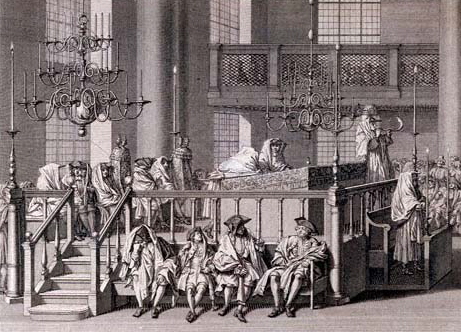
It is tempting to feel that disco somehow cheapened the psalm, but that gets the direction of travel wrong. The psalm survives because it can be carried. A lament too brittle to leave the synagogue would have died in the synagogue. This one went out into reggae, into pop, into a hundred languages of complaint and longing, and came home still recognisable. The grief at its centre is portable precisely because it is honest, and honesty travels light. A people that learned, by Babylonian rivers, to hang up its harps and remember anyway had already worked out the trick that every later singer would borrow: you do not need to be home to sing about home.
And so the thread that left a Judean canal in the sixth century BCE keeps coming back through the speakers. That is not the dilution of a tradition. It is the tradition doing exactly what it was built to do.
A lament too brittle to leave the synagogue would have died in the synagogue. This one went out into the world and came home still singing.
Further reading