Williamsburg is a neighbourhood that never intended to become a holy address. That happened after the Holocaust, when Satmar survivors and their families began rebuilding their world in Brooklyn and found that the old city could hold a new court.
By the 1950s, Williamsburg had become one of the most visible Hasidic streets in New York - not a museum of lost Europe, but a living machine of schools, prayer, rules and family life.
Refuge with a routine
The move to Williamsburg was not random. It offered cheap housing, access to work, and enough distance from the old centres of dislocation to let a devastated community organise itself again. Satmar did not arrive looking for a nostalgic tableau. They arrived wanting a future that could keep Shabbat.
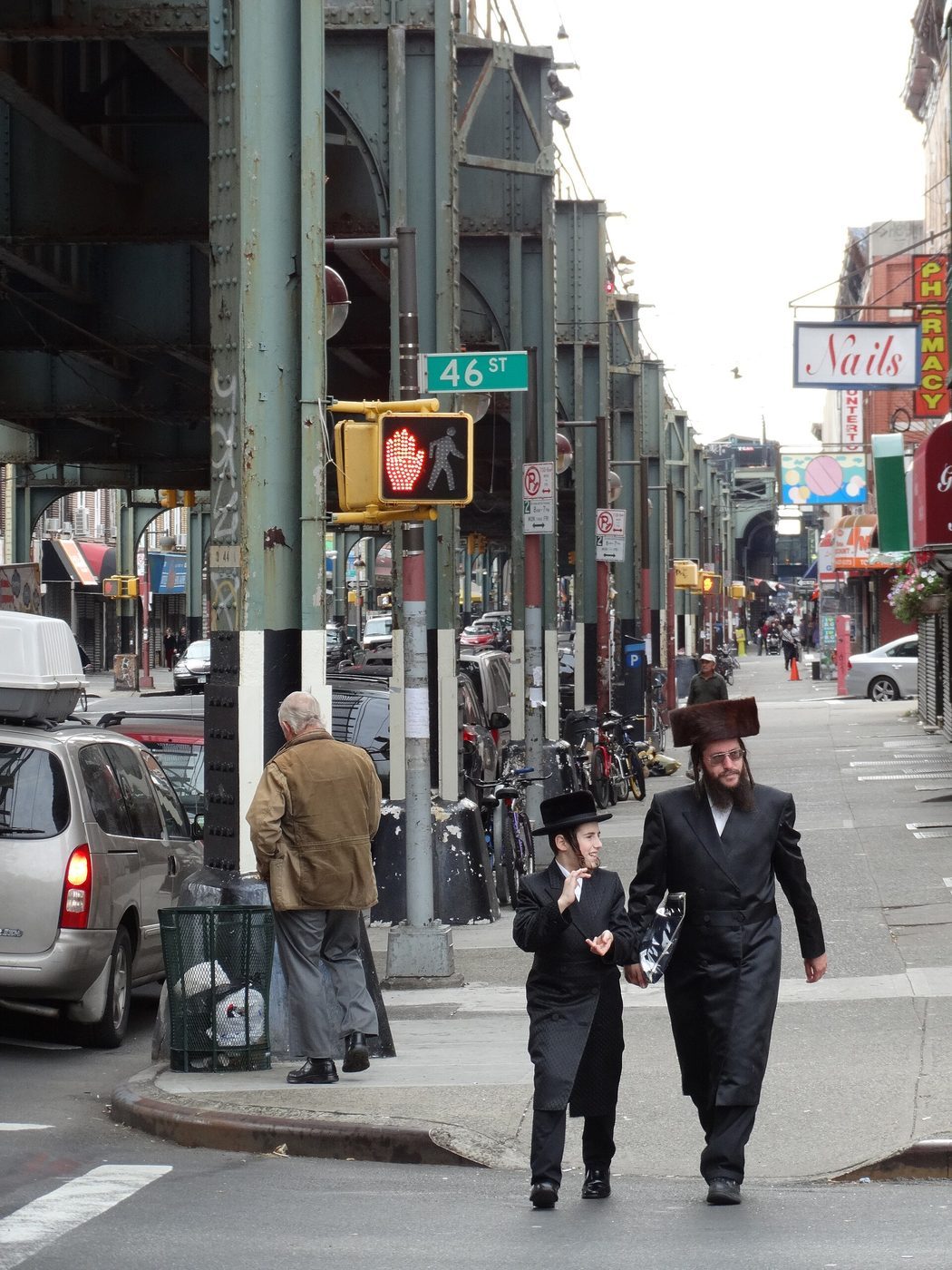
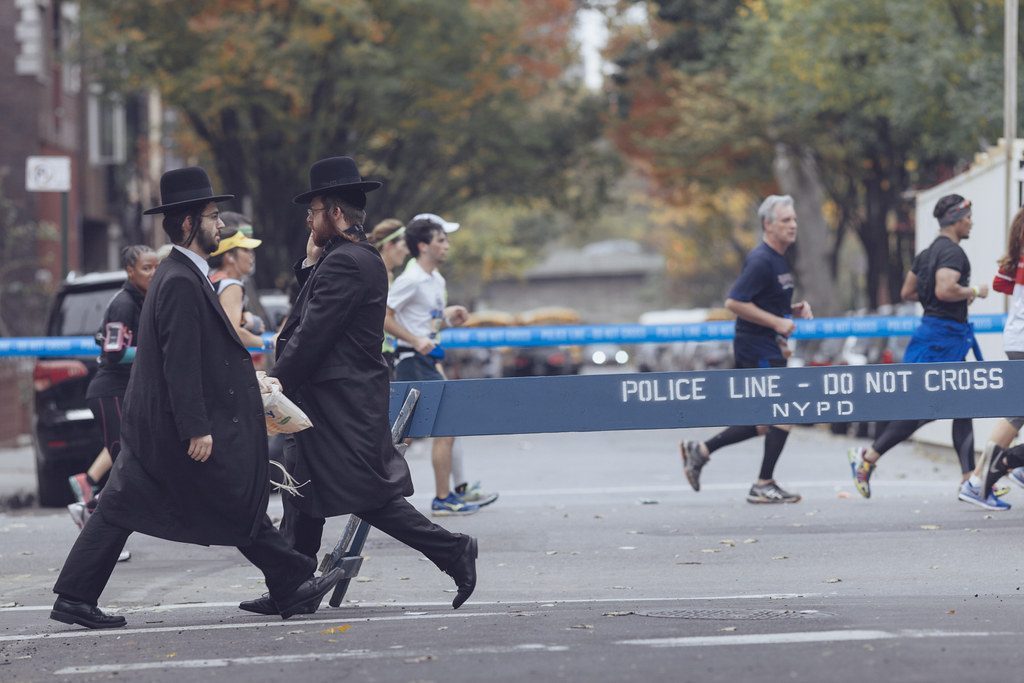
That future became visible in the streets: black coats, separate institutions, Yiddish speech, and a neighbourhood rhythm shaped by the court rather than the other way round. If the American city is usually understood through speed, Williamsburg answered with density and repetition.
Rebuilding after 1945
After the war, Rabbi Joel Teitelbaum and many Satmar survivors made Williamsburg their base. YIVO and other historical surveys of postwar Hasidic life place the neighbourhood at the centre of the movement's American reconstitution. The street became an answer to devastation: one that spoke in institutions, not slogans.
YIVO Encyclopedia; Satmar historyA court in the city
What makes Williamsburg interesting is not merely that Hasidim live there. It is that the neighbourhood behaves like an urban court. Marriage networks, schools, food stores, charity systems and daily prayer all reinforce one another until the place has its own social weather.
That weather has made Williamsburg a symbol, sometimes admired and sometimes misunderstood, of how a minority can inhabit a metropolis without dissolving into it. The community did not become less Jewish in Brooklyn. It became more legible as itself.
Schools, courts and bounded streets
By the 1950s the Satmar presence in Williamsburg had become institutionally dense, with schools, prayer houses and welfare systems anchoring the community. The move from refugee cluster to durable neighbourhood was complete by the time later generations inherited the address as a way of life. Brooklyn did not flatten the court; it made the court urban.
Local histories; YIVO; NYC community recordsBrooklyn, with rules
Williamsburg is not a symbol because it is strange. It is a symbol because it worked. A neighbourhood in New York became, for a time and still now, a place where the old disciplines could be carried forward without apology.
That is not a footnote to modernity. It is one of modernity's clearest rebuttals.