Satmar was once a north-eastern Hasidic centre in the Carpathian orbit, and then history moved the court across the ocean. What survived was not the town but the dynasty, which learned how to become a Brooklyn reality without ceasing to be itself.
That journey made Satmar one of the sharpest examples of Hasidic continuity after the Holocaust. The place changed. The court did not stop speaking in its own accent.
A court in the Carpathians
The Satmar court is most closely associated with Rabbi Yoel Teitelbaum, who became one of the defining Hasidic leaders of the twentieth century. The prewar world was north-eastern European; the postwar one was New York.
That shift did not make the movement less coherent. If anything, it made the boundaries clearer.
Yoel Teitelbaum and prewar Satmar
Rabbi Yoel Teitelbaum, later the Satmar Rebbe, was born in 1887 and served the court before the destruction of Hungarian Jewry. His leadership became the bridge between the old Transylvanian base and the postwar diaspora.
YIVO Encyclopedia; Satmar dynastic historyWilliamsburg and beyond
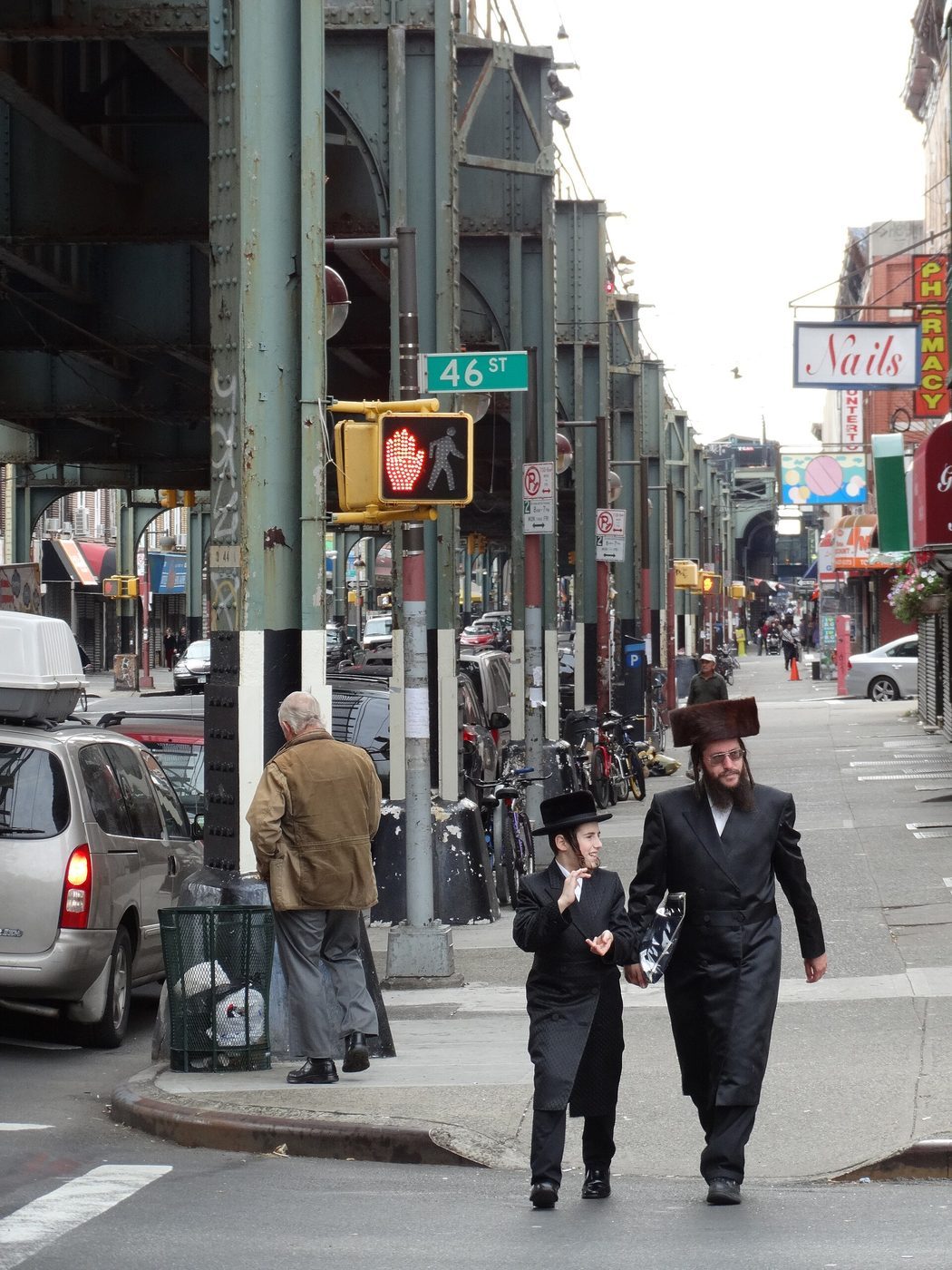
After the war, Satmar rebuilt in Williamsburg and later in other Hasidic centres, becoming one of the strongest anti-assimilationist Orthodox currents in the city. The community answered loss with more density, more schools and more discipline.
That can look severe from outside. Inside, it is simply the court keeping the line intact.
Satmar in Brooklyn
By the late 1940s and early 1950s, Satmar had re-established itself in New York, especially in Williamsburg, where its institutions grew into one of the largest Hasidic complexes in the city. The Brooklyn chapter is the continuation of the old court, not a separate story.
YIVO Encyclopedia; Brooklyn Hasidic historyWhat the name keeps
Satmar matters because the name never let go of the place. Even in New York, it keeps a Transylvanian memory with the lights on.
That is one way a court survives: by refusing to treat exile as a clean break.