Rome in the second century BCE was a city that collected peoples - slaves, merchants, diplomats, soldiers from a dozen nations - and it generally tolerated what it collected, so long as the foreign presence kept quiet and did not presume too much. Jews had been arriving in Rome since at least the Maccabean period, partly as envoys of the Hasmonean court seeking alliances, partly as traders moving through the Mediterranean world, partly as the incidental traffic of an empire in the making. They worshipped differently. They kept a day of rest that confused their neighbours. They would not eat at the common table in the way Romans expected. And, most critically in Roman eyes, they recruited: a gentile might be drawn into Jewish practice, and that made Judaism, in official Roman estimation, a foreign cult with imperial ambitions of a peculiar, subversive kind.
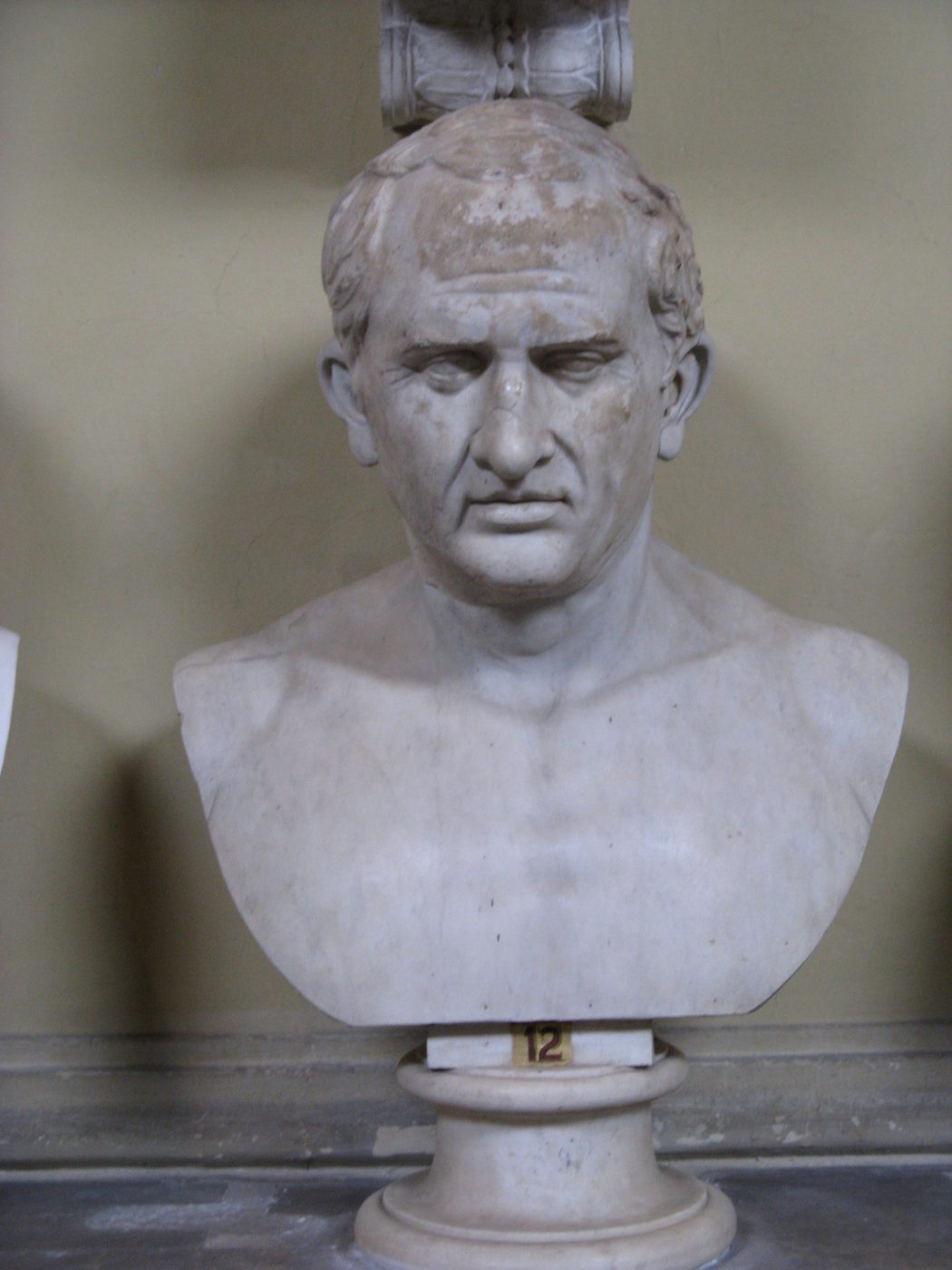
So in 139 BCE, Gnaeus Cornelius Scipio Hispalus, serving as Praetor Peregrinus - the magistrate responsible for foreigners - issued an order. The Jews were to leave Rome. Their rites had been corrupting Roman customs, the charge ran, and they were corrupting the minds of Roman citizens with them. It was the first recorded expulsion of Jews from Rome, and it was not the last. What no one at the time could have predicted was that the community expelled in 139 BCE would, within living memory, have rebuilt itself - and that the city it was expelled from would, two centuries later, become the seat of one of the most enduring Jewish communities in the world.
The record
The expulsion of 139 BCE is recorded by the Roman writer Valerius Maximus in his Facta et Dicta Memorabilia (Book I, chapter 3, section 3), composed under the emperor Tiberius in the early first century CE. Valerius writes that Hispalus expelled Jews "who attempted to transmit their sacred rites to the Romans" and also expelled astrologers in the same edict. The passage survives in two epitomised versions - those of Julius Paris and Januarius Nepotianus - and is the earliest Latin text to mention Jews in Rome by name. Leon, Harry J., The Jews of Ancient Rome (Jewish Publication Society of America, 1960), remains the standard English study of the documentary record.
What strikes, reading the charge two thousand years later, is not the hostility but the inadvertent compliment. You do not expel a community for proselytising unless that community is visibly attractive to its neighbours. The Romans who encountered Jews in 139 BCE apparently found something worth adopting - the Sabbath, the ethical monotheism, the dignity of a people with an old book and old laws. Rome was not immune to the appeal. The expulsion order is, among other things, evidence of Jewish confidence in that early period: they were not cowering in a corner. They were living publicly enough for a magistrate to feel threatened.
The community came back. We know this because the record of Jewish life in Rome does not go dark after 139 BCE - it expands. By the time of Julius Caesar, Jews in Rome were numerous enough that Caesar's death was mourned publicly by the Jewish community at his funeral pyre, a fact noted by Suetonius. Under Augustus, the Jewish quarter in Trastevere was well established. The catacombs cut under the Via Nomentana and the Via Appia, filled with menorah carvings, Greek epitaphs and the titles of synagogue officers, show a settled community with deep local roots. The expulsion did not end the Roman Jewish story. It was, in retrospect, the first chapter.
The record
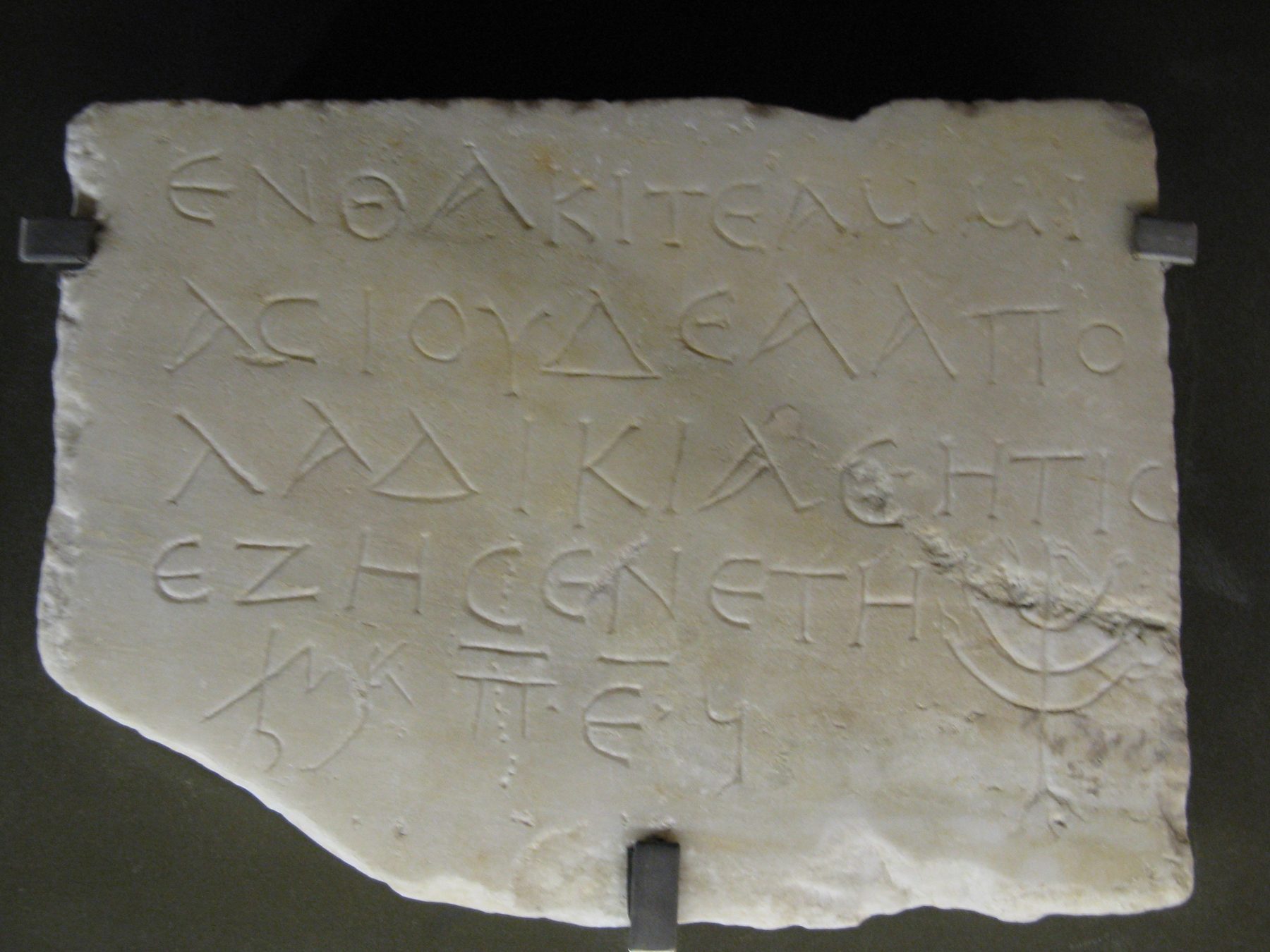
The epitaph of Ammias now held in the Musei Capitolini (inventory NCE2771) is among the thousands of Jewish funerary inscriptions recovered from the ancient catacombs of Rome. The inscription is in Greek - the dominant language of Roman Jewish epigraphy, used by roughly three-quarters of all known Roman Jewish epitaphs - and the menorah carved beside the text identifies the deceased as Jewish beyond any ambiguity. The Musei Capitolini, Rome, hold the object; its language and symbol place it in a community whose presence in Rome spans from the Republic into Late Antiquity. Margaret Williams, The Jews Among the Greeks and Romans: A Diasporan Sourcebook (Duckworth, 1998), provides a selection of the documentary evidence in translation.
There is something characteristically Jewish about the pattern that begins here. The edict is issued. The people leave - or most of them do, or they leave long enough to satisfy the magistrate's attention. Then they return, because Rome is a city where things happen, where commerce flows, where the world comes to be seen, and a community with the instincts of this one does not stay away from the centre of things by choice. By the time a second expulsion comes - under Claudius, around 49 CE - the Jewish community in Rome is large enough that its disruption troubles the city noticeably. By the time the catacombs are dug, the community has been Roman for three centuries. The stone that Ammias's family cut for her grave is not the inscription of newcomers. It is the inscription of people who belong.
The record
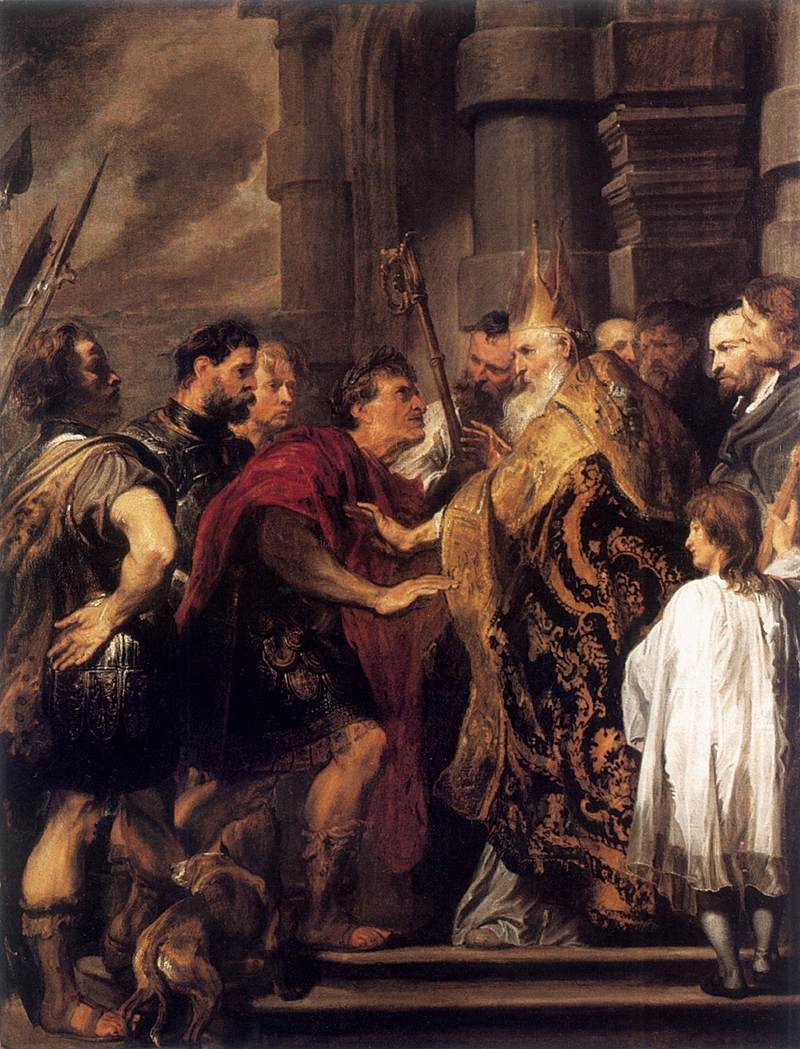
A second expulsion of Jews from Rome, attributed to the emperor Claudius, is mentioned in Suetonius (Vita Claudii, 25.4), who writes that Claudius expelled Jews who "were constantly making disturbances at the instigation of Chrestus." This is independently corroborated in Acts 18:2, which records that a Jew named Aquila had recently left Italy "because Claudius had ordered all the Jews to leave Rome." The date is generally placed around 49 CE. The Jewish community in Rome reconstituted itself after this expulsion as it had after 139 BCE. Erich S. Gruen, Diaspora: Jews amidst Greeks and Romans (Harvard University Press, 2002), examines the dynamics of Jewish resilience in the Roman world with particular attention to the Roman community.
Expulsion is a statement about power. It announces that a community is present on sufferance, that its belonging is conditional, that the host city can revoke the arrangement at will. What the Roman Jewish story reveals, across the centuries, is that the announcement rarely holds. The community expelled in 139 BCE built the catacombs. The community disrupted under Claudius produced the apostle Paul's Roman correspondents. The community scattered after 70 CE eventually produced the Great Synagogue of Rome, one of the oldest continuously serving Jewish congregations in the world. Rome's Jews were not guests. They were, in the end, Romans - and they stayed long enough to prove it.