There is a peculiar gift that hostile witnesses sometimes give: they are so confident in their disdain that they forget to be vague. In 59 BCE, Marcus Tullius Cicero - consul, lawyer, the most celebrated prose stylist the Roman Republic produced - rose to defend Lucius Valerius Flaccus against a charge of extortion from his time as governor of Asia. Among the accusations: Flaccus had confiscated gold that Jewish communities in the province had collected to send to Jerusalem. Cicero's defence was not that the money was innocent. It was that the money was Jewish, and that Jewish things were, by definition, beneath Roman concern.
What he said in court that day is unflattering. It is also, almost accidentally, the most detailed Latin account we have of Jewish communal life in Rome and the eastern provinces at the end of the Republic - how organised the communities were, how they moved gold across the empire, how they turned out in public, and how seriously the Romans around them took all of it, even when they preferred not to admit it.
The record
Cicero's speech Pro Flacco, delivered in 59 BCE and preserved in manuscript tradition, includes a passage at section 66-69 in which Cicero explicitly names the Jewish communities of four eastern cities - Apamea, Laodicea, Adramytteum and Pergamon - as having had gold confiscated by Flaccus, and names the total at Rome that Flaccus also seized as approximately one hundred pounds of gold. Cicero refers to the crowd in the gallery as a large, hostile assembly of Jews. The speech is preserved among Cicero's collected orations and was edited by Albert Clark in the Oxford Classical Texts series (1909, reprinted). The passage is the earliest datable Latin text to name Roman Jews as an organised urban presence.
The gold Cicero mentions was not a private transaction. Each year Jewish communities across the diaspora collected contributions and sent them to Jerusalem to support the Temple and its operations - an annual act of solidarity and religious obligation that stretched across thousands of miles and many jurisdictions. The fact that Flaccus chose to confiscate it, and that four separate provincial communities appear by name in the court record, tells us something important: the collection system was regular, substantial, known to local governors, and sufficiently well organised to create paper trails. Communities in Asia Minor were sending money to Judaea in the same way that communities in Rome, Antioch and Alexandria did. The network was not hidden. It was simply theirs.
As for Rome itself: Cicero complains that Jews packed the gallery of the trial in numbers and moved in gangs. He says this to imply that the court should not be swayed by such pressure. He is not making it up to score points - a courtroom fiction would have been too easy to rebut. What he is recording, dressed up in contempt, is a community organised enough to turn out in solidarity when one of their concerns was at stake, and confident enough to make its presence visible in the heart of the Roman legal system. They were not hiding. They had seats at the show.
The record
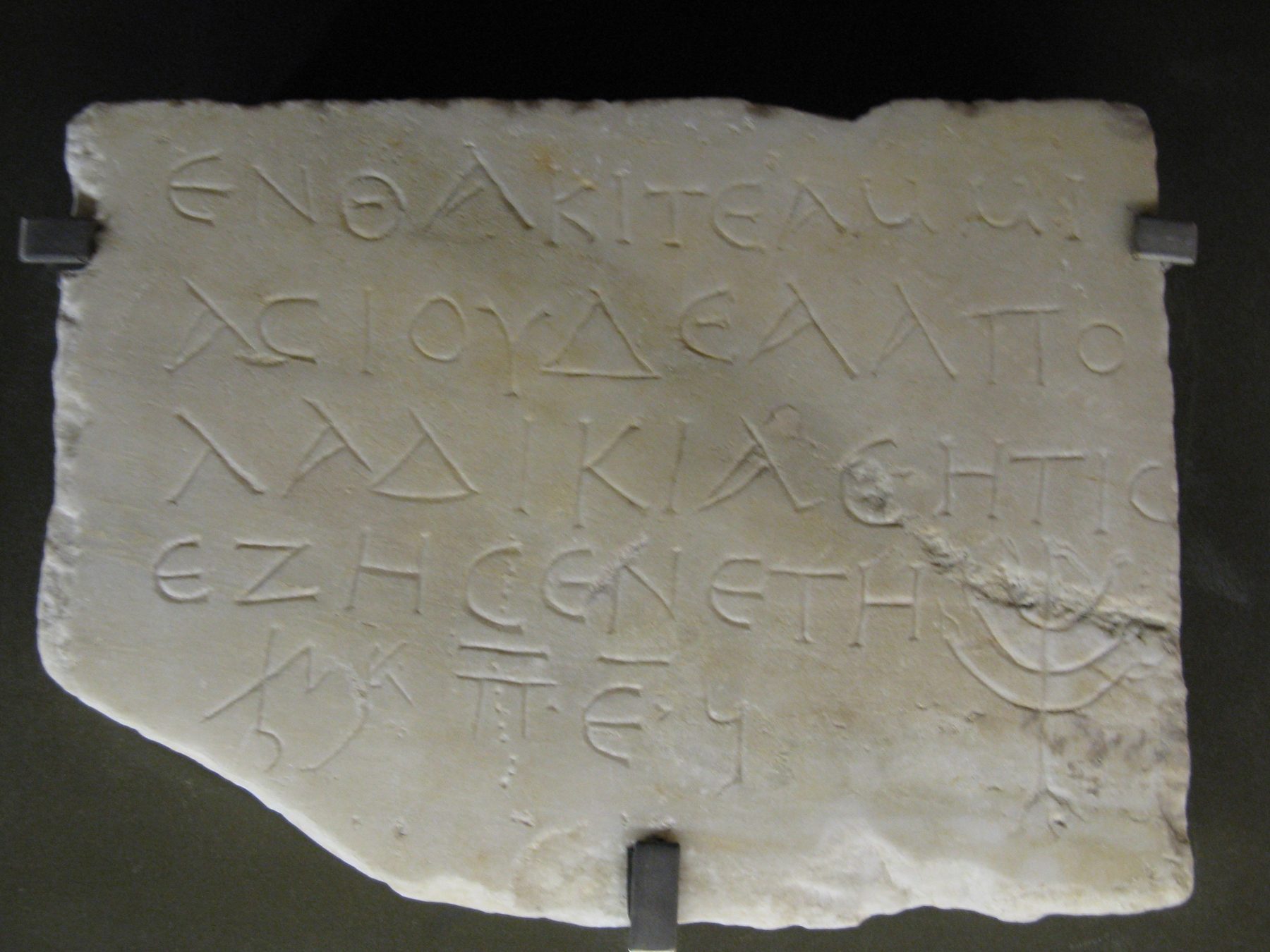
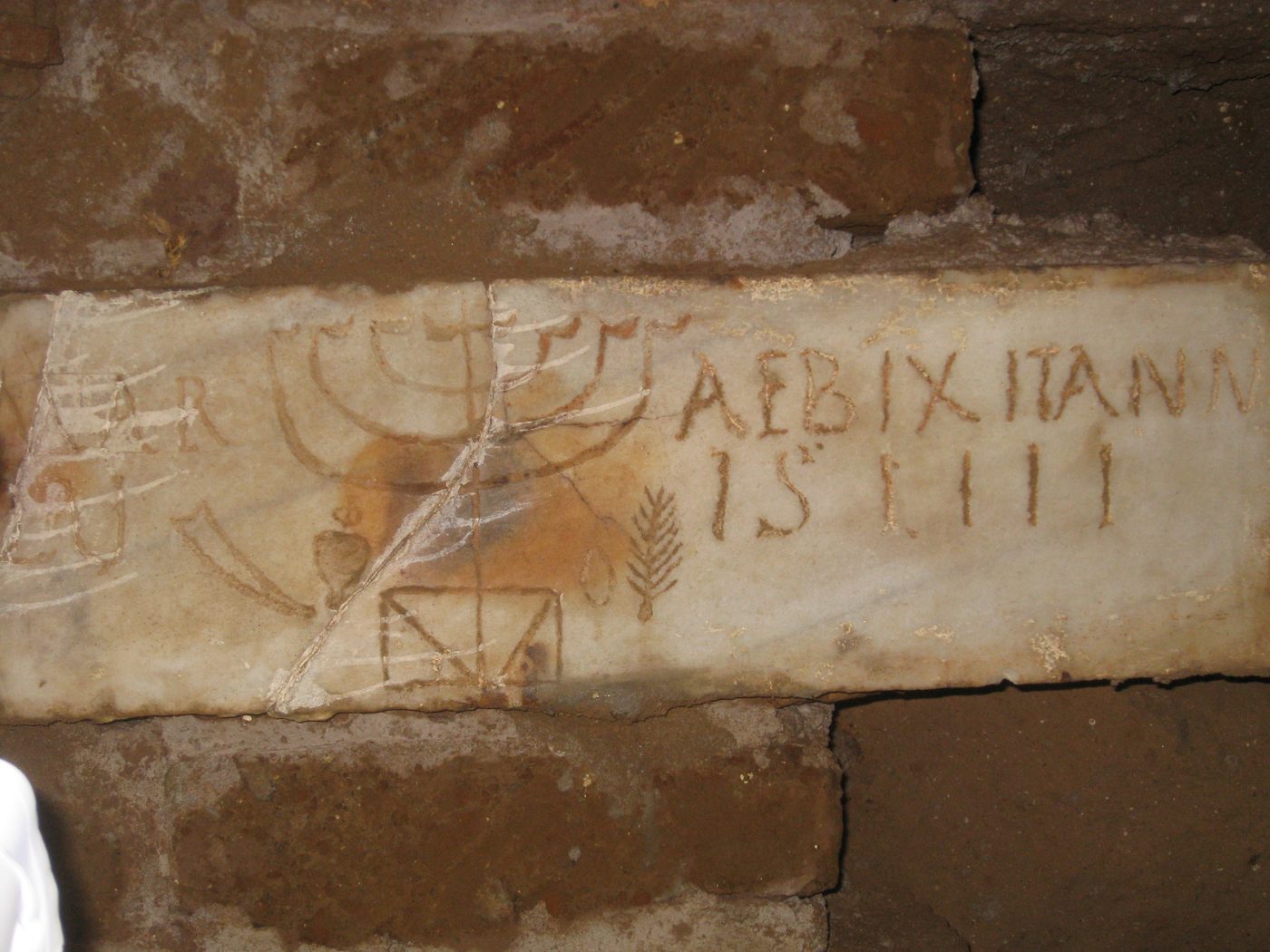
The Roman Jewish community of the first century BCE is also documented through inscriptions, burial archaeology, and later literary sources. The Jewish catacombs of Rome - principally those at the Villa Torlonia and the Via Appia, excavated in the nineteenth and twentieth centuries and studied in detail by Harry J. Leon in The Jews of Ancient Rome (The Jewish Publication Society, 1960) - preserve hundreds of Greek and Latin epitaphs naming Jewish individuals and family groupings. Leon counted six or more distinct congregations (synagogues) named in the epitaphs. The catacombs confirm that a substantial, largely Greek-speaking Jewish population was settled in Rome by the late Republic and early Empire, organised into named congregational communities with their own burial grounds.
What is striking about Cicero's portrait, once you strip away the rhetoric, is how normal it is. He objects to the Jews not because they are invisible and alien but because they are present and coordinated. They have money moving through the empire. They have a building in Jerusalem that the money supports. They have networks of obligation across provinces. They have enough people in Rome that they can fill a public gallery. His complaint is, at its core, that they act like a people - which, of course, they are. The tribe had been in Rome since at least the second century BCE; by Cicero's day the community was several generations deep, Greek-speaking, economically active, and well acquainted with how a Roman courtroom worked. The orator who set out to belittle them ended up, three lines into his complaint, documenting exactly why they could not be ignored.
Hostile witnesses occasionally give better evidence than friendly ones, because they are not trying to make things look good. Cicero was trying to win a case. In doing so he preserved the names of four diaspora communities, described the Temple tax network in operation, and sketched - in acid - a Roman Jewish community confident enough to pack a gallery in its own defence. The speech is a loss for Cicero's best instincts and a windfall for the historical record.