Rangoon drew Jewish merchants because empire moved through it. The Baghdadi network, carried via Calcutta and wider Indian Ocean routes, found Burma useful and then found a home there.
The city’s Jewish life was compact, commercial, and surprisingly durable until the war broke it open.
A synagogue on the waterfront
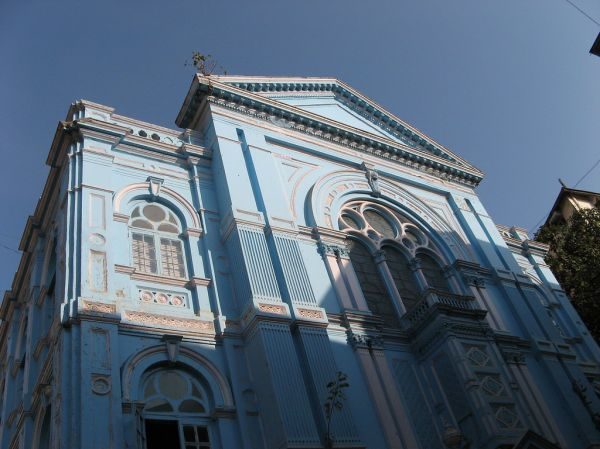
The Musmeah Yeshua Synagogue, first built in the mid-nineteenth century, gave the community a visible centre. It stood for prayer, yes, but also for the ordinary business of being a recognisable minority in a colonial port.
The port made everything legible, including Jews.
Musmeah Yeshua Synagogue opens and rebuilds
Musmeah Yeshua, the old synagogue of Rangoon, was built in 1854 and rebuilt in 1896. It remains the clearest architectural witness to the city’s Jewish past.
Musmeah Yeshua Synagogue; Jewish Virtual LibraryWar scatters the port
By the 1930s Rangoon had a Jewish community of a few thousand, spread across commerce, civil service, and the harbourfront. The Japanese occupation in 1942 scattered most of that world and the postwar city never fully recovered it.
The synagogue stayed. The old scale did not.
The Baghdadi families who settled here kept their ties to Calcutta, Singapore, and the Iraqi homeland even as they put down roots on the Irrawaddy.
Rangoon was a port where Jews learned the grammar of empire and then lost the port to war.the grammar of empire
A small but durable community before the war
By the 1930s the Jewish population of Rangoon numbered in the low thousands and was tightly linked to the city’s commercial life. The Japanese occupation then dispersed the community across Burma and beyond.
Musmeah Yeshua Synagogue; Jewish Virtual LibraryThe city by the water
Rangoon proves that an Indian Ocean port can hold a Jewish world without ever becoming large.
Small does not mean slight. Not when the harbour does the work.