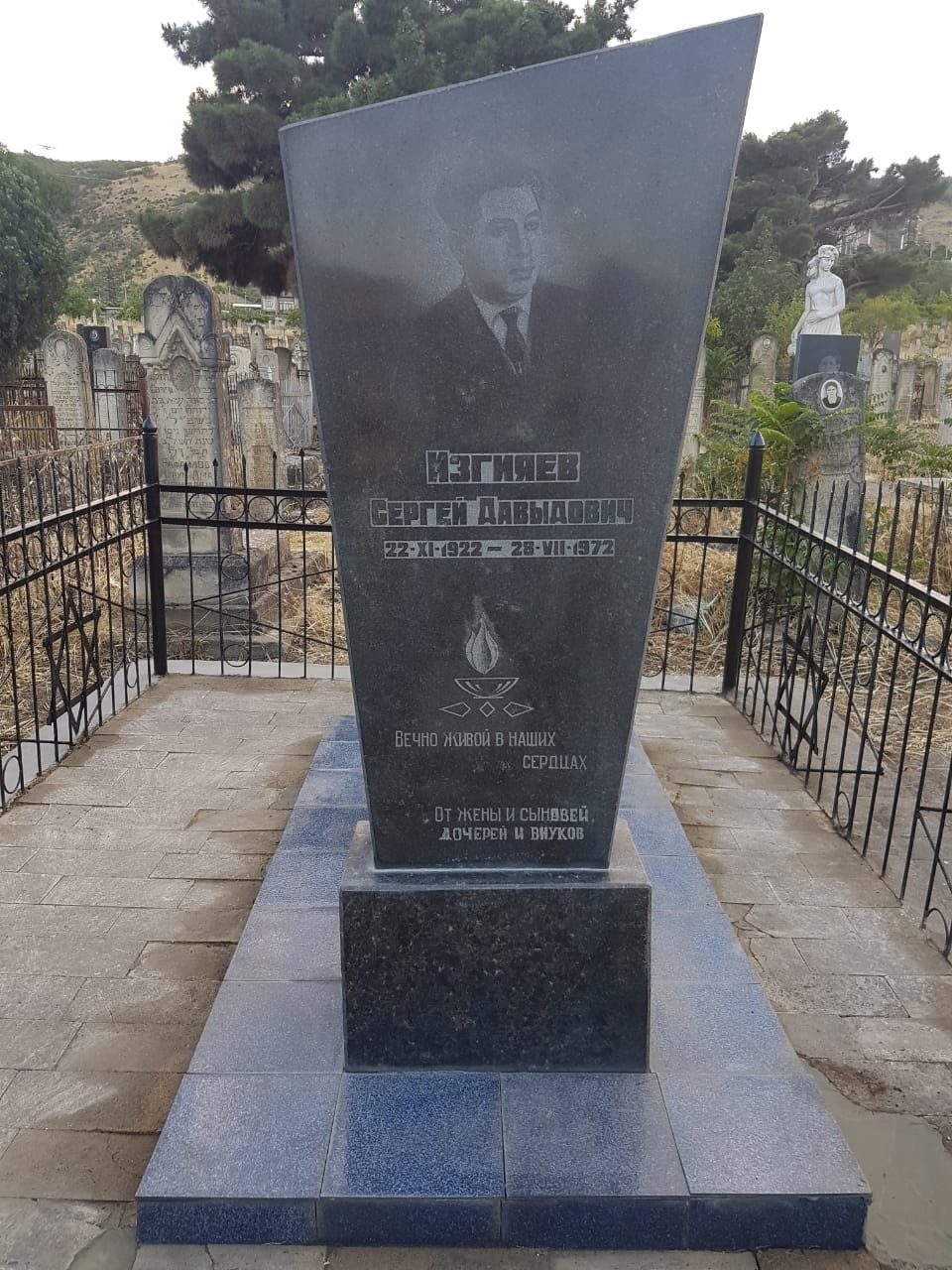
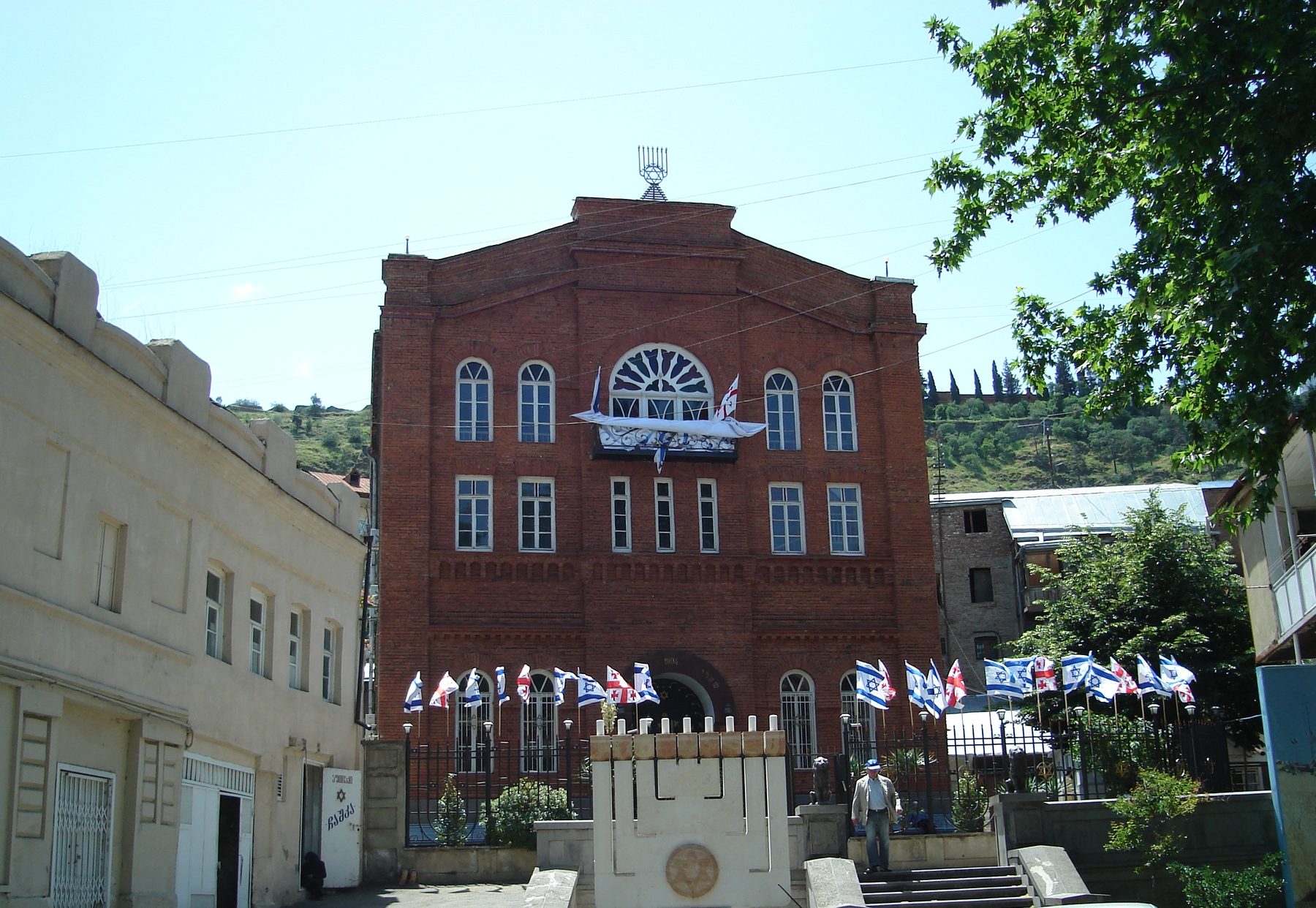
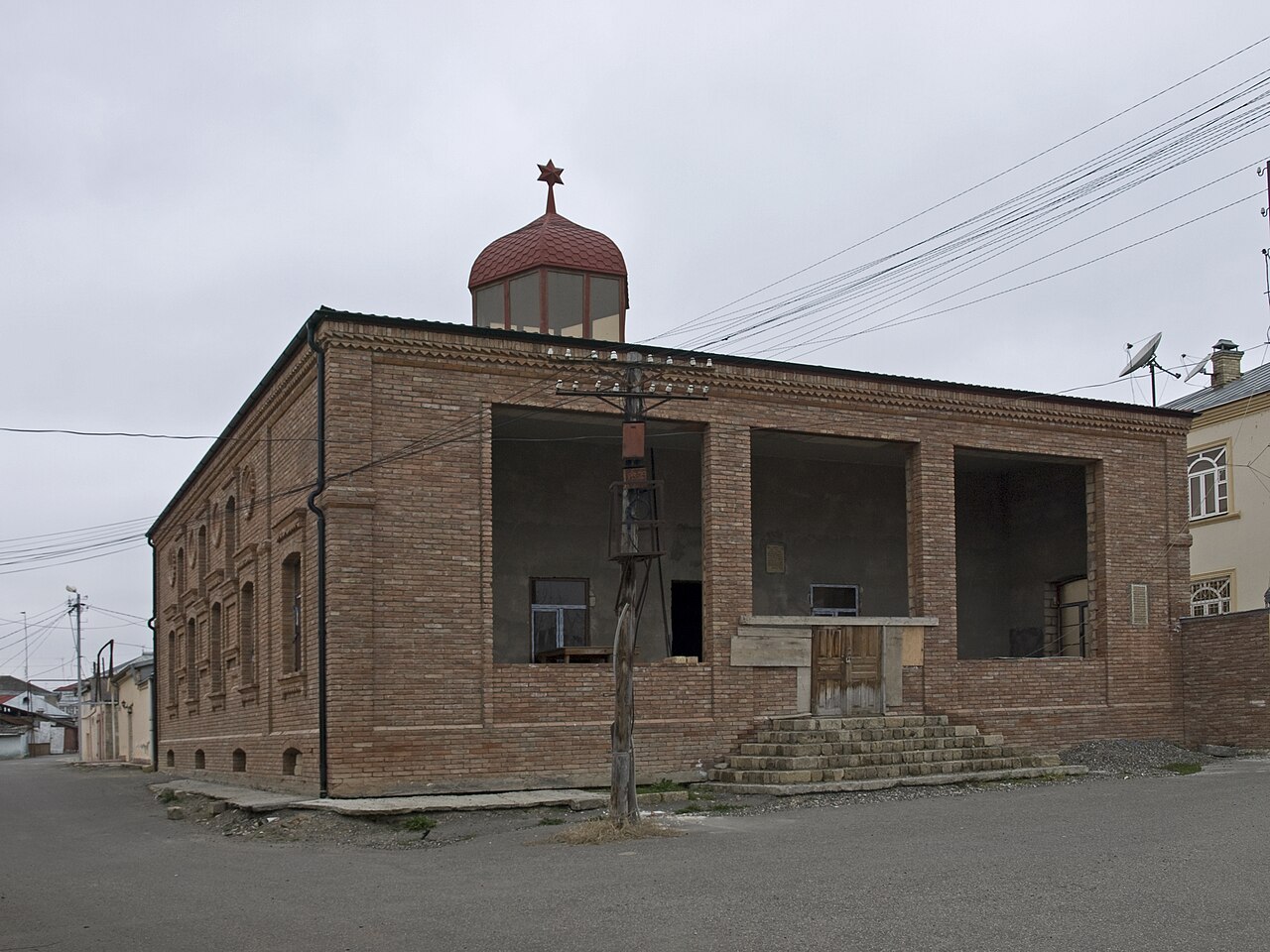
Cross the Qudyal river from the Azerbaijani town of Quba and you arrive at something the rest of the world mostly believes no longer exists: a town that is entirely Jewish. Qirmizi Qasaba, the Red Town, sometimes still called by its Soviet name Krasnaya Sloboda, is widely described as the last all-Jewish shtetl outside Israel and America. Its people are the Mountain Jews, the Juhuro, who speak a Judeo-Persian tongue called Juhuri and have lived in the eastern Caucasus for a very long time. The river is narrow. What it separates is a Muslim town and a Jewish one, side by side, on civil terms, for the better part of three hundred years.
That arrangement was a deliberate act, not an accident of drift. In 1742 Huseynali Khan, ruler of the Quba Khanate, granted the Jews land across the river and the right to live there free of persecution. They came partly to escape the chaos of Nader Shah's wars to the south, and they built a town of their own, with its own synagogues, its own bathhouse, its own cemetery, and its own quiet confidence. The khan's son Fatali Khan continued the protection. It is one of the cleaner bargains in diaspora history: a ruler who decided his Jews were worth keeping, and kept them.
A town built on a bargain
Through the nineteenth century the Red Town flourished. The Mountain Jews of the Caucasus had taken firmer shape as a community after the Russian Empire annexed the region under the Treaty of Gulistan in 1813, and Qirmizi Qasaba became their unofficial capital: a place where you could grow up speaking Juhuri, study in a Jewish school, and never feel like a minority, because here you were the majority. The town raised synagogues in numbers that would shame far larger cities. The Six-Dome Synagogue went up in 1888, the Giliki Synagogue in 1896, and accounts of the pre-Soviet town count as many as eleven or thirteen houses of prayer in all.
Then came the Soviet century, which was hard on everyone's God and harder on small ones. The Communists closed nearly all the synagogues, sent rabbis into exile, and renamed the place Krasnaya Sloboda, the Red Settlement, swapping one meaning of red for another. Yet the town did not die. Even under official atheism the community held on to its annual Askara memorial services and its sense of itself. When the Soviet Union fell, the synagogues that had survived reopened, and the Red Town was still standing, still Jewish, still there.
Huseynali Khan grants the land
In 1742 Huseynali Khan of the Quba Khanate gave the Mountain Jews permission to settle, free of persecution, on the bank of the Qudyal river opposite Quba. His son Fatali Khan continued to protect and favour the community. The settlement that grew there, Qirmizi Qasaba, is widely held to be the only town outside Israel and the United States whose population is overwhelmingly Jewish.
Qirmizi Qasaba · WikipediaA town that empties and fills
The numbers tell a story of their own. In the late Soviet period the town held something like eighteen thousand people. Today its registered population is around three and a half thousand, but that figure conceals a stranger rhythm. Many of the Red Town's sons made fortunes in Moscow, Brooklyn and Baku, and their families are scattered across three continents. In winter perhaps five hundred people keep the place running. In summer the émigrés come home, and the population swells past three thousand again, the houses fill, weddings happen, and the town that the rest of the year looks half-asleep wakes up and remembers what it is.
That diaspora wealth has flowed back into the stones. Three Moscow-based businessmen born in the town, among them God Nisanov, paid for the museum that opened in 2020. It helps that they have a partner of sorts in the Azerbaijani state, which is unusually proud of its Jews; the country has a long-standing reputation, noted even in United States government reporting, for being largely free of the antisemitism that has poisoned so much of the region. A homeland does not have to be sovereign. Sometimes it is one town, one river, and a bargain that held.
From eighteen thousand to a seasonal town
Qirmizi Qasaba's population peaked at roughly 18,000 around 1991, then fell as families emigrated; recent figures put the registered population near 3,500, with perhaps 500 year-round residents swelling to over 3,000 each summer as émigrés return. The Museum of Mountain Jews opened in the town in 2020.
JTA · WikipediaA khan in 1742 decided the Jews were worth keeping. Almost three centuries later, the bargain is still standing on both banks of the river.
What the river keeps
Quba and the Red Town belong in any honest atlas of the Jewish world because they answer a question most people never think to ask: what does an unbroken, undramatic, un-exiled Jewish place actually look like? Not a museum, though it has one now. Not a ruin. A working town with a synagogue you can pray in, a language you can still hear in the street, and a cemetery whose oldest stones predate most of the nations now arguing about whose history is whose. The Mountain Jews did not survive by being loud. They survived by being there, on their own bank of their own river, since a khan said they could.
Further reading
Story & Stone · Atlas Places Nº 21
Next on the shelf: Porto Alegre: The Southern Anchor →