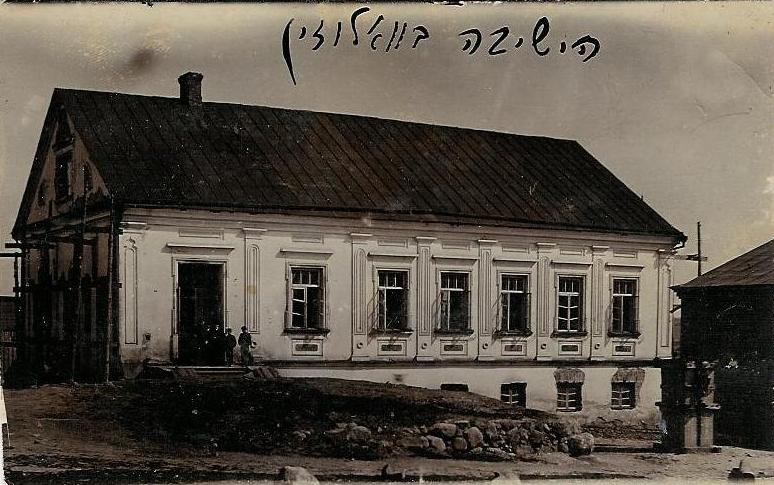
The Lithuanian yeshiva world produced one of Judaism's grandest compliments to the mind. It trusted the page. It trusted argument. It trusted the long table and the sharper student and the sentence that only yields after an hour of pressure. That world is the background to the Mitnagdim and to Volozhin, and it deserves the admiration it usually gets. But admiration is not quite the same thing as immunity. Rabbi Israel Salanter, born Yisrael Lipkin in 1809, looked at that same world and asked a question severe enough to be useful: what if Torah learning by itself does not automatically make a person good?
That was not a rejection of study. It was a refusal to flatter it. Musar, the movement Salanter set in motion, insisted that the inner life has its own evasions and its own disciplines. Character traits - middot - do not polish themselves merely because the owner can parse a difficult sugya. Pride survives scholarship very comfortably. So do irritability, envy, self-importance, and the little theatre by which a person explains his motives to himself in terms far nobler than the truth. Salanter's wager was that Jewish life needed a more deliberate psychology.

What Salanter thought learning could miss
Salanter belonged to the very Lithuanian world he challenged. He was no outsider muttering against bookishness from a safer hill. He was a formidable talmid chacham who concluded that human beings are experts at hiding from themselves. Long before modern psychology made a profession of the matter, Musar treated self-deception as one of the central facts of religious life. The problem was not that Jews lacked texts about virtue. The problem was that people can admire virtue, teach virtue, even lecture on virtue, while remaining curiously unaltered by the performance.
That is why Musar put pressure on repetition, feeling, and attention. A truth absorbed only at the level of information may remain decorative. A truth repeated aloud, dwelt on, sung into the nerves, and measured against daily conduct has a better chance of becoming character. The movement's seriousness can sound stern from a distance. Up close it is more humane than gloomy. It assumes that people are difficult, mixed, improvable creatures and that the work of becoming decent deserves structure rather than pious vagueness.
The result was not anti-intellectualism. Quite the opposite. Musar grew inside the study-house and demanded that the study-house expand its account of what a person is. Torah remained central. The claim was simply that cognition is not the whole person. Will matters. Habit matters. Fear matters. The subterranean appetite for honour matters rather a lot, especially in rooms full of brilliant men.
Rabbi Israel Salanter's life frames the movement
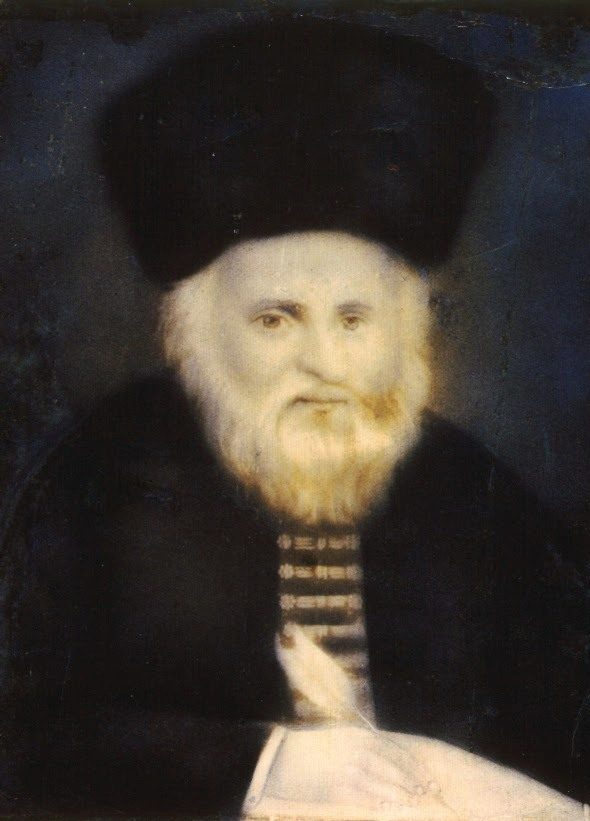
Yisrael Lipkin of Salant was born in 1809 and died in 1883. In between he turned Musar from a body of ethical literature into a distinct programme of religious discipline. The novelty was not the existence of Jewish ethics. It was the insistence that ethical labour required scheduled attention within the same learned world that prized Talmud at the highest pitch.
Israel Salanter and the birth of MusarThe practice: saying the words until they say you
Musar had its books, and they were not obscure. Mesillat Yesharim, Cheshbon ha-Nefesh, Chovot ha-Levavot, and related classics became manuals for the repair of character. The innovation lay in how they were used. Students did not only read them for content. They studied them aloud, with emotional force, often in a low voice that rose and fell until the sentence lodged deeper than the clever part of the mind. This was the musar seder: a regular study session devoted not to Talmudic analysis but to ethical and inward formation.
Accounts of the movement often mention darkened rooms, hushed repetition, and the strange spectacle of disciplined young men murmuring ethical texts to themselves with visible feeling. To modern ears it can sound theatrical. It was meant to be practical. Musar assumed that a person is moved not only by propositions but by atmosphere, cadence, embarrassment, longing, and the sharp discomfort of recognition. If the ego is stubborn, the remedy may need more than a footnote.
There was variety among the schools that followed. Kelm preferred order, poise, and almost architectural calm. Slabodka famously stressed the dignity and greatness of the human being - gadlut ha-adam - as a reason to behave nobly. Novardok went further into confrontation with ego, fear, and dependence on public opinion. A movement about self-improvement, in other words, immediately proved that there is more than one way to scold a soul into honesty.
Classic ethical texts become a curriculum
Mesillat Yesharim, published in the 18th century, and Cheshbon ha-Nefesh, printed in the early 19th, became part of the Musar canon. Salanter and his heirs did not write on blank parchment. They took an older literature of ethical instruction and turned it into a repeated discipline inside the yeshiva timetable.
Musar literature in regular studyMusar enters the yeshiva
This is where the movement became controversial enough to matter. In the Lithuanian study-world, time is theology in disguise. What a yeshiva schedules, honours, and gives its best hours to reveals what it thinks a Jew most fundamentally is. Musar's claim was that ethical self-scrutiny deserved more than accidental leftovers. It required a place in the day. That meant carving out a distinct curricular space beside the overwhelming prestige of Talmud study.
Some schools embraced the experiment and gave it institutional form. Kelm developed a Musar-inflected environment of exacting character education. Slabodka and Novardok, each in their own style, produced generations of students shaped by the movement's assumptions. The result was not one homogeneous method but a family resemblance: the soul could be trained, and a yeshiva ought to take responsibility for helping do it.
And yet the resistance was intelligible. Critics feared imported emotionalism, exaggeration, and the possibility that a young man might spend so much effort examining himself that he became self-dramatising rather than holy. Others suspected innovation on principle. The Lithuanian world had already fought one great argument over reordered priorities in the age of the Mitnagdim. It was not eager for another. Musar's defenders replied, with some justice, that the supposed old balance had left enough room for arrogance to flourish under a black hat.
Kelm, Slabodka, and Novardok give Musar an address
The Kelm Talmud Torah emerged in the 1860s under Simcha Zissel Ziv, while Slabodka and later Novardok became the best-known institutional heirs of the movement. Each school translated Musar into a social form: schedules, teachers, recurring exercises, and a local language for what it meant to repair a human being rather than merely impress one.
Kelm, Slabodka, NovardokMusar did not say that Torah was unimportant. It said that the self can hide inside Torah unless someone drags it into the light.
Joy before grievance
Musar is easy to caricature as Jewish gloom with better books. That misses the point and the pleasure. Its real confidence lies in the belief that people can change, that conscience can be trained, and that moral seriousness need not be left to temperament. It is a humane tradition because it does not confuse failure with fate. The person is difficult, yes. The person is also educable.
That is why Musar belongs naturally beside the Lithuanian cult of learning rather than against it. Volozhin taught what it means to build a civilisation around study. Musar asked what sort of people such a civilisation hopes to produce. Not just sharper minds. More truthful souls. Less vanity in religious dress. More patience, more honesty, more command of the twitch between impulse and action. Serious goals, and very Jewish ones.
The movement's afterlife has been larger than its formal institutions. Even where a yeshiva no longer stages the classic Musar seder in quite the old way, the assumption remains familiar: a Jew is answerable not only for what he knows, but for what kind of person he is becoming while knowing it. That is a hard sentence. It is also a liberating one. It means the inner life is not an accident. It is work. Blessedly, repeatedly, work.
Further reading