Melbourne’s Jewish story is one of accumulation. The first Jews arrived with the city itself, then more came in the gold-rush years, then survivors after the war, then families from everywhere else the twentieth century had made unstable. Each wave found the previous one had already laid a table.
That is how a southern city becomes central. Not by declaring itself so, but by building enough life that everyone else starts looking up to it. Synagogues, schools, kosher shops, museums, youth groups, politics - Melbourne learned to hold them all at once.
Arrival on arrival
The Melbourne Hebrew Congregation began in 1841, when the city itself was still young. That first generation gave the community a proper public face. Later arrivals multiplied it. By the postwar years refugees from eastern and central Europe had changed the scale again, bringing with them schools, languages, memory and the determination to start properly rather than start small.
By 1970, Jews made up about 1.4 per cent of Melbourne’s population - proportionally the largest Jewish population of any Australian city at the time. Numbers are tidy; the life behind them was not. The city became a place where survivor memory, Orthodoxy, secular Jewish culture and communal organisation all had room to breathe.
The first synagogue life
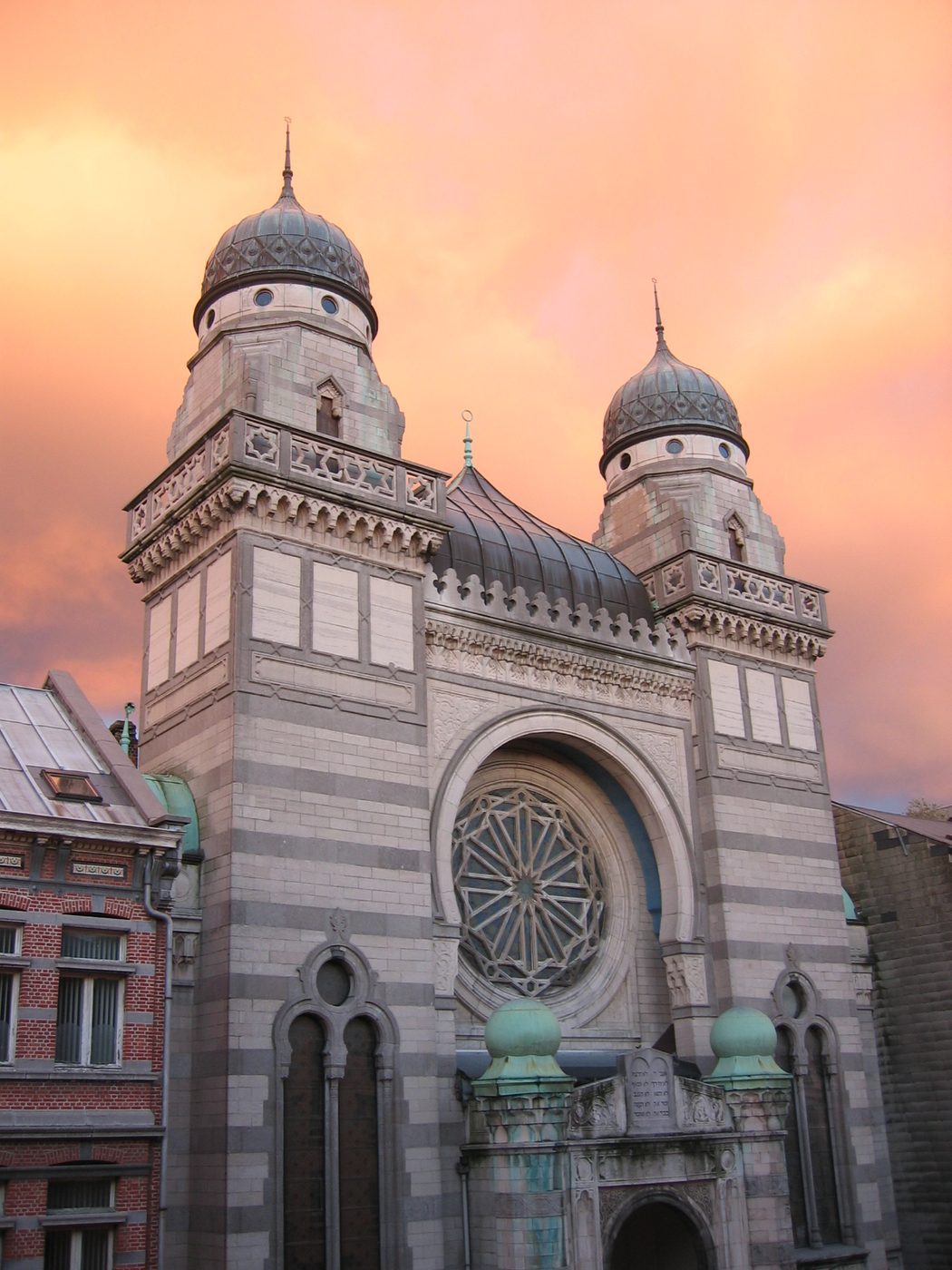
The Melbourne Hebrew Congregation formed in 1841 and built its first synagogue in Bourke Street in 1847. That makes it the oldest Jewish congregation in the city and the first clear sign that Jewish life in Melbourne was not an accident of arrival but a civic fact.
Melbourne Hebrew CongregationAfter the war
The postwar city was remade by Jewish refugees who knew exactly what they were doing. They created schools, youth movements, communal institutions and, eventually, a Holocaust museum that turned testimony into public memory. Melbourne became a place where Jewish continuity could be both warm and serious, social and exacting.
That combination is its real strength. It is not simply that the city kept Jews safe. It is that it let them build at scale without having to explain themselves every five minutes.
It is not simply a safe city. It is a place that let Jews build at scale.
Refugee city, then Jewish capital
After World War II, Melbourne took in a large influx of European Jewish refugees, many from eastern and central Europe. By 1970 the city had the largest Jewish population proportionally of any Australian city. The Melbourne Holocaust Museum, founded in 1984 by survivors, is one visible record of that postwar transformation.
History of MelbourneStill layered
The city’s Jewish life still reads as layered rather than singular: Orthodox and progressive, survivor and local, public and private. That is a healthy arrangement. It means the city is still making room. Melbourne earned its place by keeping the door open long enough for the community to become itself.