Edirne, the old Adrianople, was already a Jewish city before the Spanish expulsions. Then the exiles of 1492 arrived and made it more so. The city's Jewish life grew under Ottoman rule, and for a long time it had the confidence of a capital that expected to matter.
That confidence survived even after the capital moved to Constantinople. Edirne remained one of the Ottoman world's important Sephardi centres, with trade, scholarship and public Jewish life all taking the city seriously.
A city with a learned memory
The city also generated rabbinic learning and responsa. That matters because cities are not only built by traders and rulers. They are also built by the questions people ask there. Edirne asked serious ones and preserved the answers.
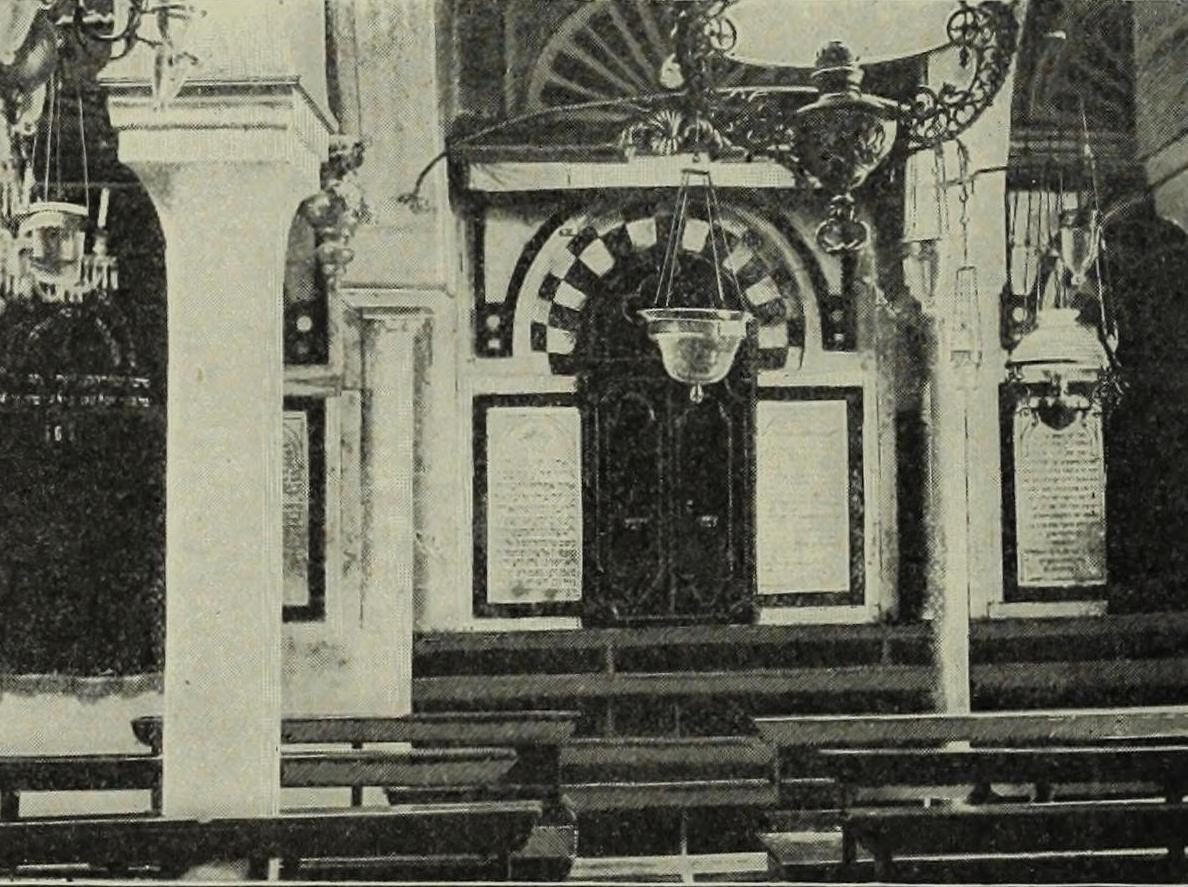
The Great Synagogue, built after the 1905 fire, became the visible emblem of the community in its later phase. By then the old population had already begun to shrink, but the building still said what the city had once been.
Europe's third-largest synagogue
The Great Synagogue of Edirne was built after the 1905 fire and opened in 1909. It was one of Europe's largest synagogues and the clearest public sign of the city's Sephardi scale.
Foundation for Jewish Heritage; Great Synagogue of EdirneAfter the exodus
Most of the community had left by the late twentieth century, emigrating to Israel, Europe and North America. That departure was not a single clean break. It was a thinning. The city lost volume, then noise, then some of the habits that had made it feel Jewish in public.
Yet the restored synagogue, reopened in 2015, made the old relationship visible again. Edirne no longer carries a large Jewish population, but it still carries the shape of one.
The point of Edirne is that an imperial capital can outlive its own empire in memory if the community keeps enough of its institutions standing. The synagogue, the archives and the Ladino afterlife are all part of that endurance.
This is a city that knows how to keep its dignity after the centre has shifted elsewhere.
A capital can lose its throne and keep its Jewish memory. Edirne did exactly that.
The restored building returns to use
The synagogue reopened in 2015 after a five-year restoration led by the Turkish Foundations Institution. That reopening did not restore the old population, but it did restore the city's public memory.
Turkish Foundations Institution; Directorate General of Press and InformationThe empire moved. The memory stayed.
Edirne still matters because it proves that a city can lose political rank without losing Jewish significance. The building and the books keep the argument alive.
The lamps are fewer now, but the old capital has not gone dark.