First comes the sightline. Grey water. Harbour fog. Then, if the weather is kind, the statue. By the time the ship edges into New York, the real work has already been done: the leaving, the packing, the railway jolting west, the nights in transit barracks, the Atlantic in steerage, the decision not to turn back. The great Jewish migration from eastern Europe is often told as a story of flight, which it was. It is also, and more importantly, a story of arrival. A million little arrivals, really. A father finding Hester Street. A sister learning the stairs of a tenement. A child discovering that English can be chewed into shape. A table laid on Friday night in a room that still smells faintly of ship and coal smoke.
Between the early 1880s and the immigration restriction of 1924, roughly two million Jews left the Russian Empire and neighbouring parts of eastern Europe for the wider world, with the United States taking the largest share by far. Historians count the exodus in slightly different ways, because borders moved, categories wobble, and some totals stop in 1920 while others keep going to 1924. The scale does not wobble. This was the largest migration in Jewish history. It remade New York, Philadelphia, Boston, Baltimore and Chicago. It also remade Jewish life, shifting its centre of gravity westward and proving, once again, that Jews can carry a whole country in memory and unpack it somewhere else.

Why they went
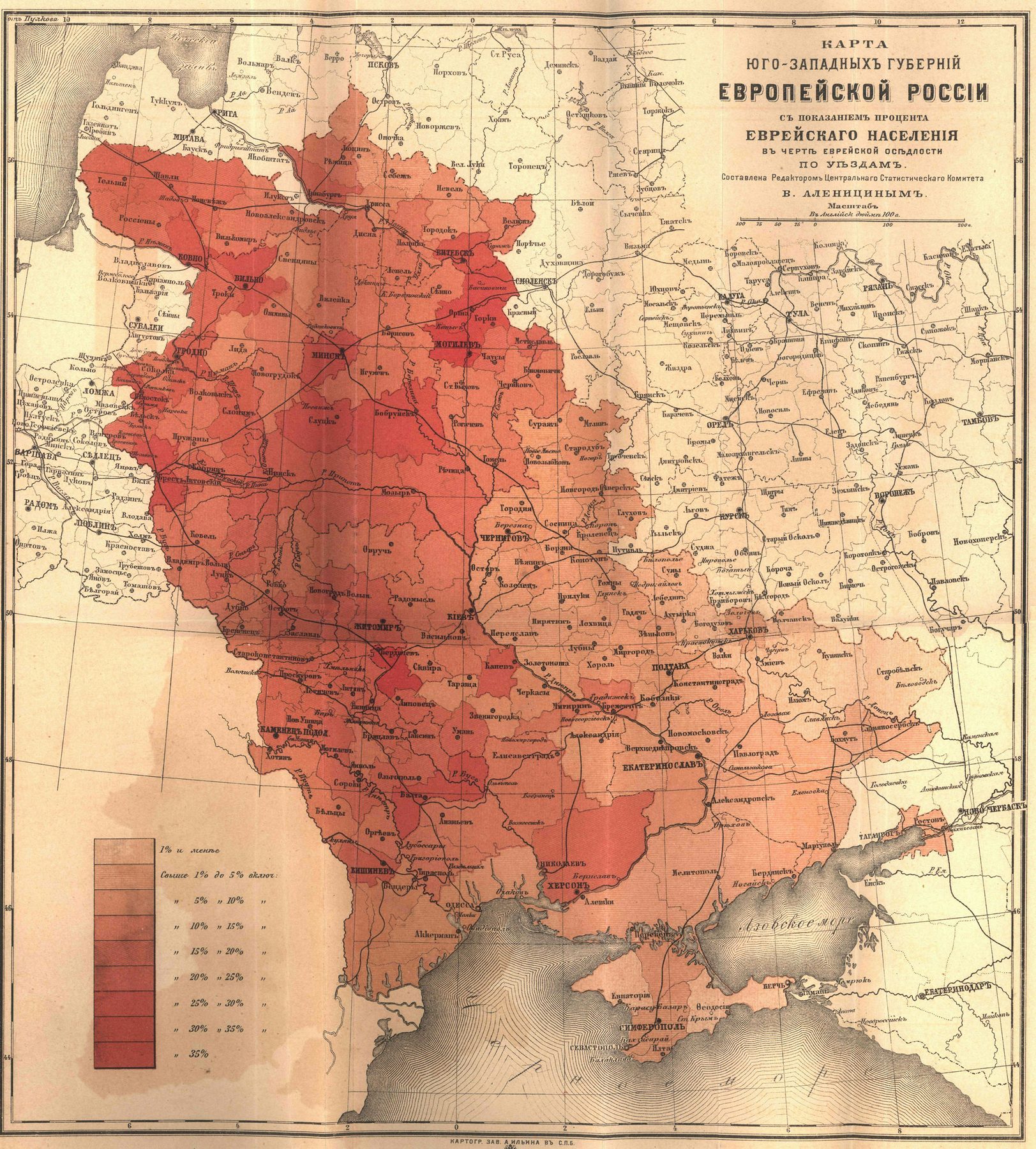
No serious telling omits the pressure. After the pogroms of 1881-1884, the Russian Empire tightened the screws rather than loosening them. The May Laws of 1882 restricted where Jews could live and what kinds of property and business arrangements they could hold. Poverty was already common. Legal humiliation now joined it. Then came further shocks, including the Kishinev pogrom of 1903 and the violence that accompanied the revolutionary years after 1905. Not every family left because of one riot or one law. Many left because the whole arrangement had gone sour at once - too little money, too little room, too much uncertainty, too many reminders that one was tolerated only provisionally.
And yet the pull matters just as much. America was not a fantasy land, but it was legible. Wages could be earned. Letters came back across the ocean with addresses and dollars tucked inside. A cousin had a bed for three nights. An uncle knew a foreman. A landsman from the old town had already worked out which bakery sold a decent black loaf and which street held the cheapest boots. The route west became, in its own way, a communal craft. Jews had done this before in other languages and under other empires. This time the destination had elevated tracks, factory whistles and a harbour full of answers.
The numbers of the crossing
Counts vary by method, but the scholarly centre of gravity is clear. More than two million Jews left the Russian Empire between 1881 and 1920, and totals for the wider eastern European exodus are often placed higher when Galicia, Romania and the last pre-quota years are included. YIVO's standard reference figures for the broader east European migration run into the low millions beyond that. Exact arithmetic is disputed. The magnitude is not.
YIVO Encyclopedia of Jews in Eastern Europe; Library of CongressThe road west
Very few of them walked straight from a shtetl to a steamship. First came the train. Families moved from market town to junction, from junction to border, from border to the great western ports. Many passed through Germany, heading for Hamburg and Bremen, and others went on through western European routes that included Antwerp. By the turn of the century the system was industrial in its efficiencies: ticket agents, baggage checks, medical inspections before embarkation, emigrant halls, company rules about baths and bedding and onward trains. Modernity, like so many things, arrived by timetable.
Then came steerage, which was no poem. Crowded bunks, communal food, too much waiting, too little privacy, children sick at awkward hours, adults trying to look composed while keeping one eye on their papers and the other on their bundles. But the crossing also had its own strange weather of anticipation. People met future neighbours there. Dialects collided and levelled out. News passed bunk to bunk. Someone had herring. Someone had better advice. Someone had wrapped two brass candlesticks in a wool shawl and was not letting them out of her sight. Civilisation, as it turns out, packs flatter than one might think.
The gate in the harbour
Ellis Island opened on 1 January 1892, which gave the age of mass migration its proper stage set: ferries, lines, inspectors, stairs, chalk marks, the registry room, the exhausting miracle of being asked a dozen questions and being allowed to continue. Not every Jewish immigrant entered through Ellis Island. Some arrived through other ports; some passed through New York after earlier processing. But Ellis became the emblem because it turned arrival into ritual. America liked a doorway, and here was one with paperwork.
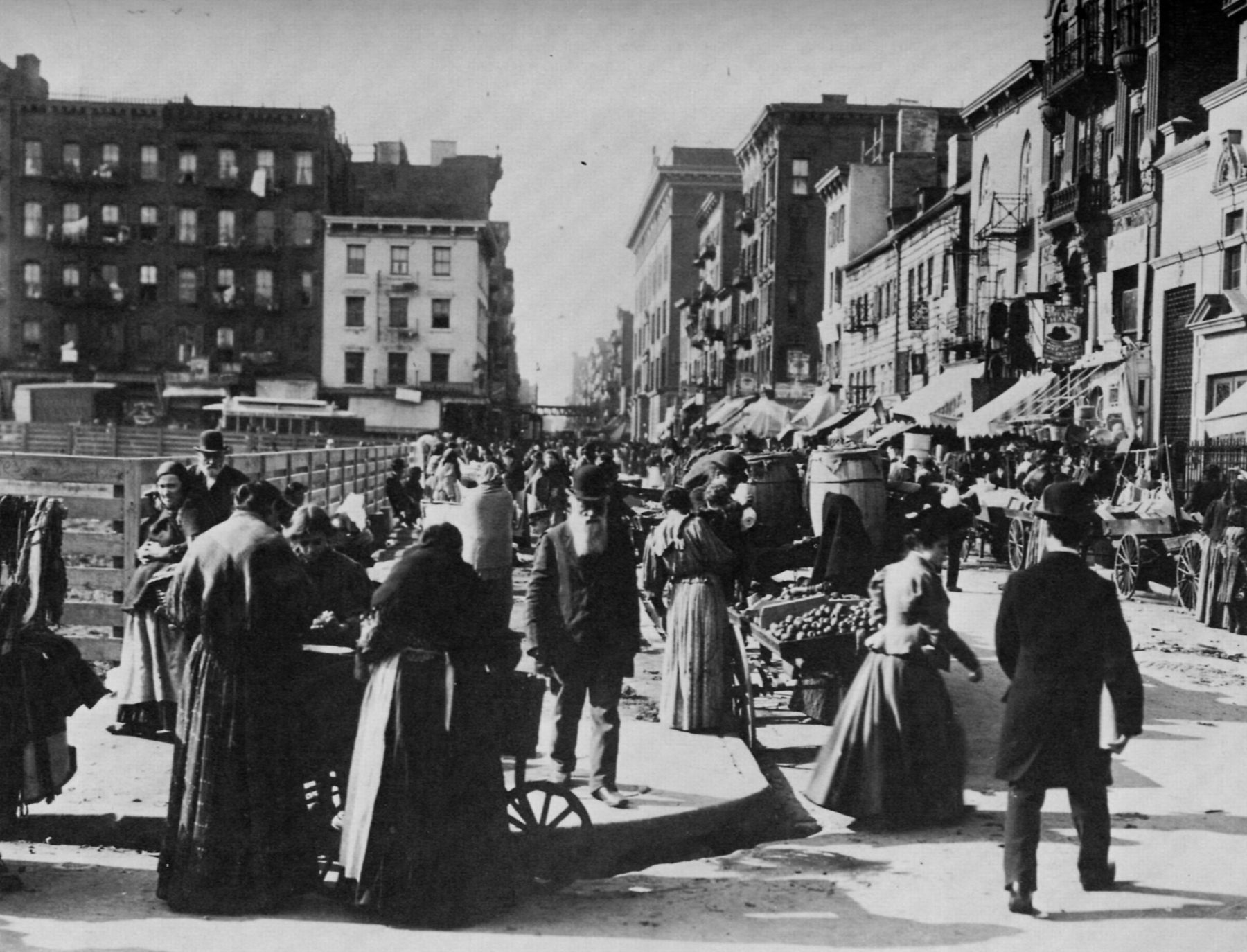
The best thing about Ellis Island was that, for most people, it was brief. The station processed millions, but the overwhelming majority were admitted after inspection and moved on within hours. The place was anxious because it mattered, not because it was designed for long dwelling. What mattered next was Manhattan. The Lower East Side received the new arrivals and let them become noisy. Synagogues appeared in converted rooms and former churches. Landsmanshaftn bound people from the same town into mutual aid societies with benefits, burial plots and a moral obligation to help the next arrival. The Yiddish press boomed. Second Avenue filled with theatre. The garment trade whirred and clattered, first in tenement rooms and small shops, later in lofts and factories. A Jewish city rose within the American city, not separate from it, but not dissolved by it either.
There was grit enough. Sweatshops were not romantic. Tenements were crowded. English arrived unevenly. But the achievement is too often described in tones of sociological drizzle. Better to state it plainly: they built. They built newspapers, unions, theatres, charities, schools, kitchens, strikes, songs, savings clubs, study circles, benevolent societies, picket lines and Sabbath tables. They built a New York that still hasn't quite stopped sounding faintly Yiddish if you listen at street level.
They did not arrive empty-handed. They brought a whole civilisation, wrapped as carry-on.
Ellis Island opens
The federal immigration station at Ellis Island opened on 1 January 1892. From 1892 to 1954, more than 12 million immigrants were processed there, though after the Immigration Act of 1924 its role changed sharply and it was used mainly for detention and special cases rather than for the old mass arrivals. In other words: the great hall kept standing, but the great tide had been checked.
Library of Congress; Statue of Liberty & Ellis Island FoundationWhat they made
By 1920 the Lower East Side had become one of the largest Jewish urban concentrations in the world. This was not merely a neighbourhood of refugees. It was a workshop of reinvention. Yiddish newspapers translated America to its readers and then argued with it in excellent prose. The theatre did what Jewish theatre tends to do at its best: it remembered the old place, mocked the new place, educated the audience a little and entertained it a lot. The garment trade, hard on the back and the lungs, also offered footholds - first wages, then skills, then shops, then ownership, then a child in school who would insist on cleaner cuffs and larger ambitions. That is how a diaspora grows bones.
There was also the subtler achievement of scale. Jewish life in America did not remain a row of private households keeping brave little fires. It became institutional. Hospitals, relief societies, literary circles, labour organisations, Hebrew schools, burial societies, political clubs, choirs, libraries, summer camps. The migration did not merely rescue individuals. It created density, and density is one of the oldest Jewish tricks. Put enough Jews in walking distance of one another and a civilisation starts reproducing itself before the paint is dry.
The Johnson-Reed Act narrows the door
The Immigration Act of 1924 cut immigration by national-origins quota, reducing visas to 2 per cent of each nationality's presence in the United States as recorded in the 1890 census and excluding immigrants from Asia altogether. The law's own official historical summary states its purpose bluntly enough: to preserve the ideal of U.S. homogeneity. For Jews from eastern and southern Europe, the great age of mass entry was over.
Office of the Historian, U.S. Department of StateThen the door shut
The Johnson-Reed Act of 1924 did not abolish Jewish immigration to the United States, but it ended the era that concerns us here. The door that had stood wide enough for a mass movement swung inward. Families still came, but not like before. The great chain migration - letter, ticket, cousin, lodging, first job - could no longer work at the old scale. One historical chapter closed in the dry language of quota arithmetic.
But by then the work had been done. The migrants had crossed, settled, argued, prospered, despaired, organised, translated and sung. They had made America more Jewish and Judaism more American without surrendering either noun. The ports, the trains, the inspection lines and the boarding houses belong to the story. So do the challah boards, the union cards, the theatre tickets and the ink on newsprint. Departure matters. Arrival built the world that followed.
That is the right last image for this crossing: not the gangplank, not the passport, not even the statue in the mist, but the first Friday night in a rented room on the Lower East Side, candles lit, a loaf cut, and the old words said again in a place that had never heard them before.
Further reading