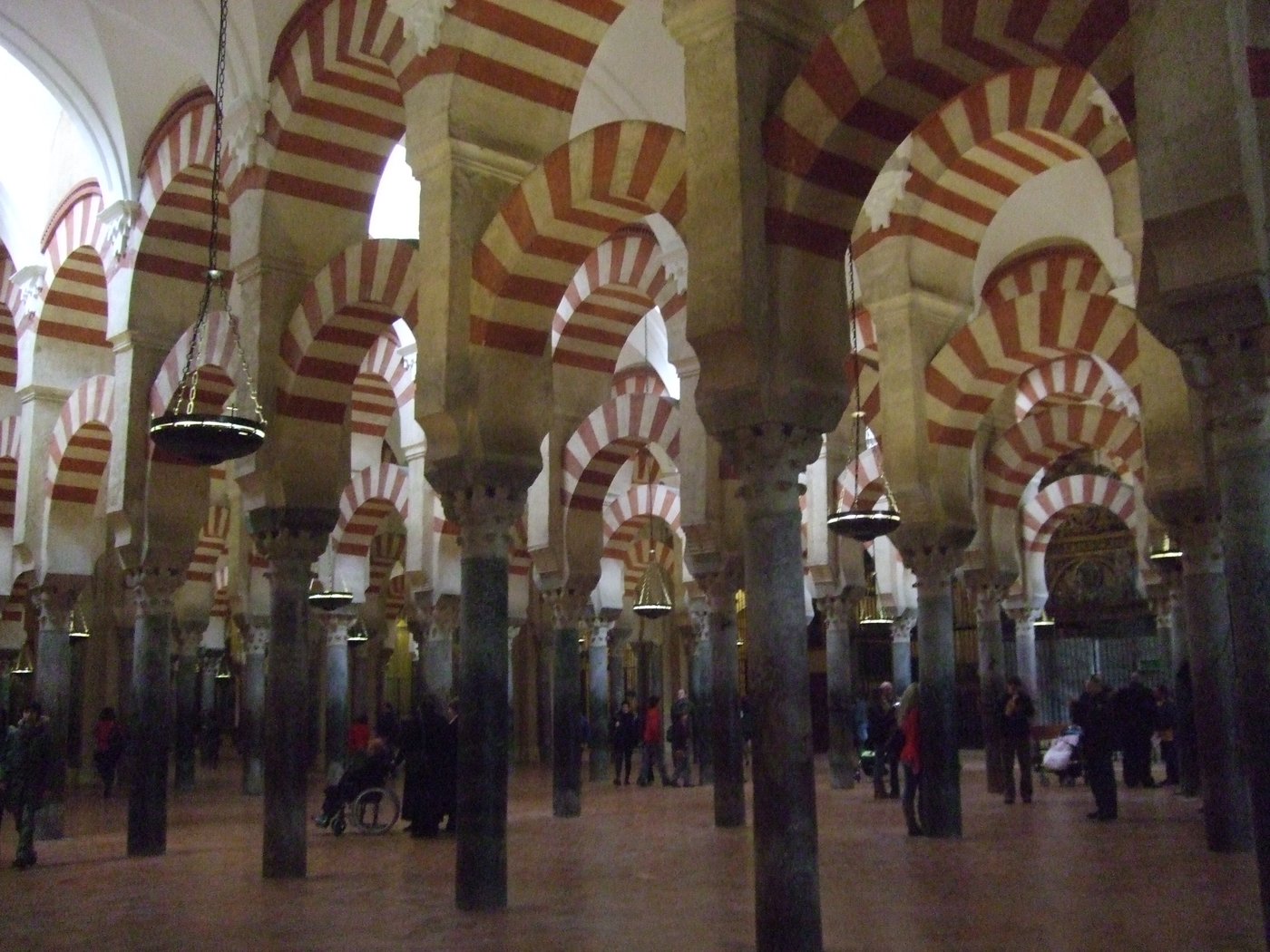
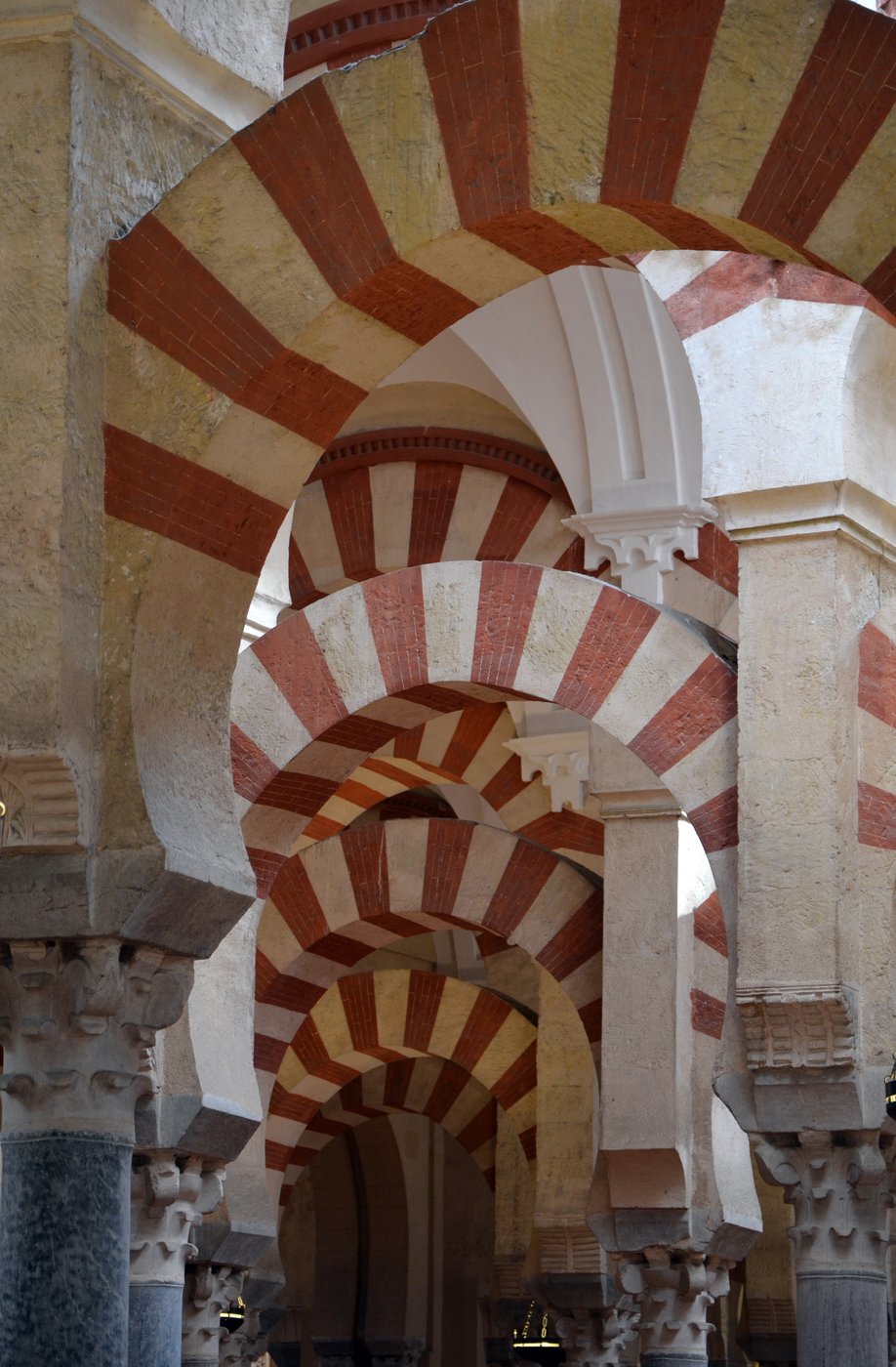
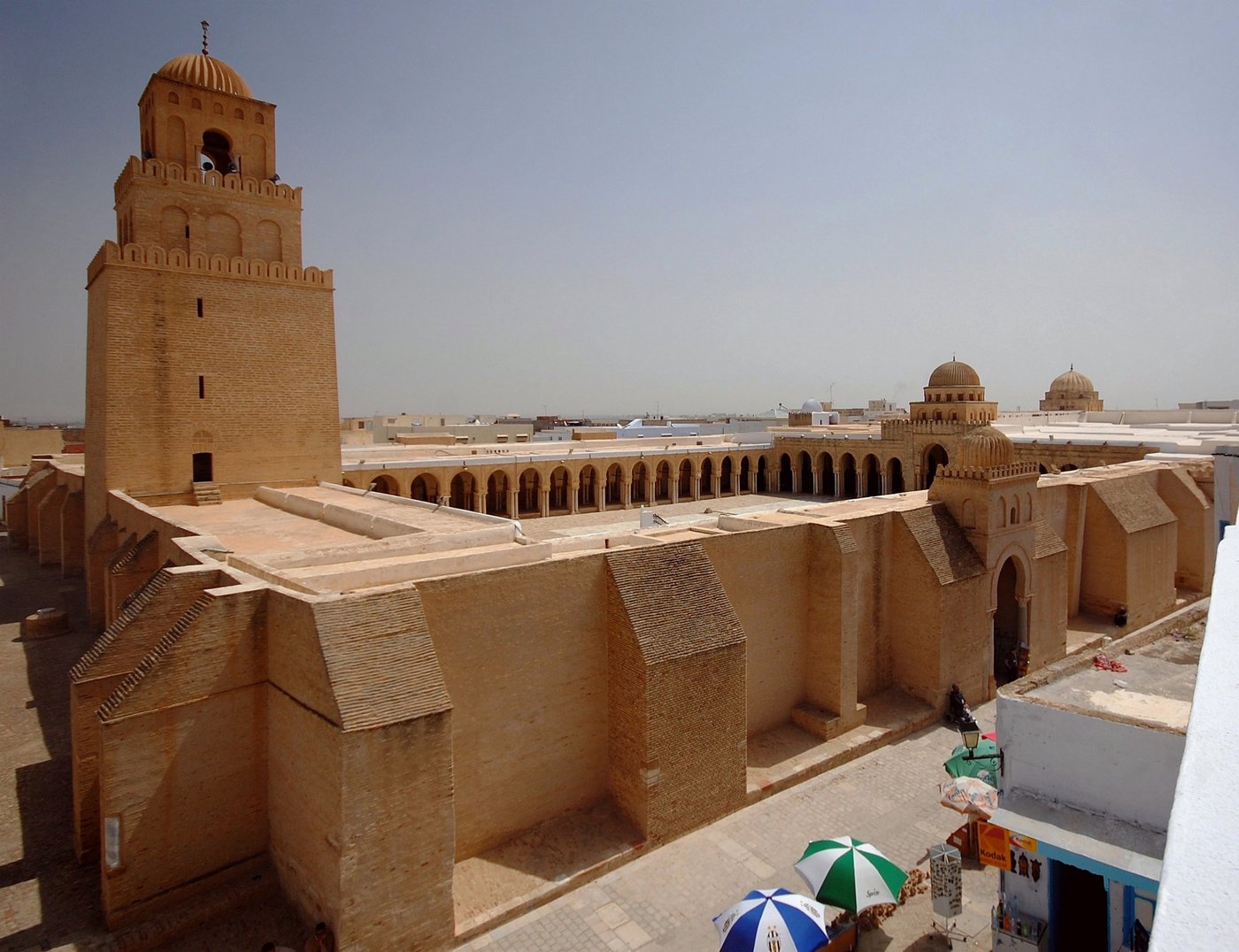
There are men whose position in history is so improbable that it takes a moment to credit the record. Hasdai ibn Shaprut was the head of customs and foreign diplomacy for the Caliph of Córdoba, the greatest ruler in the western world in the tenth century. He was also a practising physician, a Hebrew poet, a patron who subsidised scholars and poets from across the Jewish diaspora, and the man who wrote a letter to a king of the Khazars - a Turkic people whose ruling class had converted to Judaism - asking, with barely concealed wonder, whether a Jewish kingdom truly existed somewhere beyond the horizon of Christendom. He was, in short, one of the most consequential Jews of the mediaeval world, operating from a position at the centre of Umayyad power in al-Andalus at the height of its civilisation.
Hasdai's route to that position began with medicine and an aptitude that Abd al-Rahman III recognised. He became the Caliph's personal physician and, from there, was trusted with tasks requiring discretion, learning, and the ability to navigate between cultures: receiving embassies, conducting negotiations, translating Greek medical texts into Arabic with the monk Nicholas as collaborator. He was not merely tolerated at court; he was indispensable to it. That indispensability gave him something unusually rare for a Jew in the mediaeval world - leverage. And he used it deliberately, turning Córdoba into a magnet for Hebrew scholarship at a moment when the great Babylonian academies were beginning to lose their grip on the diaspora.
The record
Hasdai ibn Shaprut's diplomatic role is documented in Arabic chronicles and in the correspondence he conducted on behalf of the Caliphate. The historian Ibn Juljul, writing in Córdoba around 987 CE in his Tabaqat al-Atibba' wa'l-Hukama' (Classes of Physicians and Sages), records Hasdai as the court physician who collaborated with the Byzantine monk Nicholas to produce an Arabic translation of Dioscorides' De Materia Medica - a translation commissioned after the Byzantine Emperor Constantine VII sent the Greek manuscript as a diplomatic gift to Abd al-Rahman III around 948 CE. This collaborative translation, which fed directly into Arabic pharmacological scholarship, is one of the datable anchors of Hasdai's court career. (Ibn Juljul, Tabaqat al-Atibba', ed. Fu'ad Sayyid, Cairo, 1955.)
The patronage Hasdai exercised was not casual generosity. He understood that the Babylonian academies at Sura and Pumbedita - the twin engines of rabbinic authority for centuries - were weakening, and that Jewish communities across the Mediterranean were beginning to look elsewhere for legal rulings and intellectual leadership. He intervened directly. He brought the grammarian Menahem ben Saruq to Córdoba to compile the first comprehensive Hebrew dictionary, the Machberet, and he supported the poet and grammarian Dunash ben Labrat, who introduced Arabic quantitative metre into Hebrew poetry and began the revolution that would produce Shmuel HaNagid, Shlomo ibn Gabirol, Yehuda HaLevi, and Moshe ibn Ezra within a century. The literary culture of Sepharad - the golden age that Jewish memory returns to as one of its great flowerings - traces a direct line back to the choices Hasdai made with his position. He did not merely benefit from the Caliphate's tolerance. He used it to build something that would outlast the Caliphate itself.
The record
The letter Hasdai sent to Joseph, king of the Khazars, survives in Hebrew in the Judaeo-Arabic manuscript tradition and was first published in Constantinople in 1577 in a collection called Kol Mevasser. In the letter Hasdai describes his position at the Umayyad court, lists the countries from which he has sought news of the Khazar kingdom, and asks Joseph whether Khazaria is truly a Jewish-ruled state - and whether there are signs of when the exile will end. Joseph's reply also survives. The authenticity of both letters has been debated by scholars since the nineteenth century; the majority view today, represented by scholars including David Wasserstein and Norman Golb, accepts the correspondence as genuine in substance, composed in the mid-tenth century. (The Hebrew text is edited in Pavel Kokovtsov, Evreisko-Khazarskaya Perepiska v X Veke, Leningrad, 1932; English translation in Jacob Marcus, The Jew in the Medieval World, 1938.)
The letter to the Khazars reveals something that the purely diplomatic record does not. Hasdai was not simply a court official who happened to be Jewish. He was a man who felt the exile keenly - who asked, with genuine anxiety, whether there was somewhere on earth where Jews ruled themselves, and who wanted to know whether the messianic horizon was visible. He wrote that if he could learn that Jewish sovereignty still existed anywhere, he would renounce everything, leave Córdoba, and go there. He did not go. He stayed in Córdoba, continued to serve the Caliph, and continued to fund poets and scholars. Perhaps he concluded that what he was building in al-Andalus was its own kind of answer to the question.
Hasdai ibn Shaprut died around 970 CE, before Córdoba's golden decades gave way to the civil wars that would eventually fracture the Caliphate. He left behind a Hebrew grammar, a library of patronised poetry, a pharmacological tradition, and a set of diplomatic correspondences that historians still read. The Jewish community of Sepharad that flourished in the eleventh and twelfth centuries - and whose expulsion in 1492 is one of the defining wounds in Jewish memory - grew partly from the ground he prepared. A physician at a Caliph's court, asking a distant king whether the Jewish people were still sovereign somewhere: the question did not get the answer he hoped for, but the asking of it is its own kind of defiance, and the world he built around it was extraordinary.